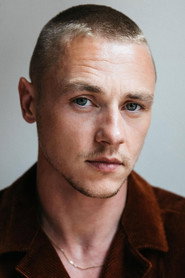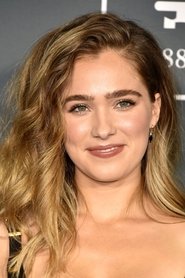
Haley Lu Richardson
Hadley Sullivan

“100,000 daily flights around the world. 6 million travelers. One connection.”
Hadley and Oliver begin falling in love on a flight from New York to London, but when they lose each other at customs, can they defy all odds to reunite?
Official
I’ve always been a sucker for airport romances. There’s something about the liminal space of a terminal—the way time stretches and contracts, the way strangers become temporary confidants—that makes love feel both inevitable and impossible. Love at First Sight leans hard into that fantasy, wrapping its meet-cute in the kind of statistical whimsy that makes you want to believe in fate, even if you know better. The film isn’t perfect, but it’s the kind of flawed, earnest romance that lingers like the scent of a stranger’s perfume on a crowded flight.
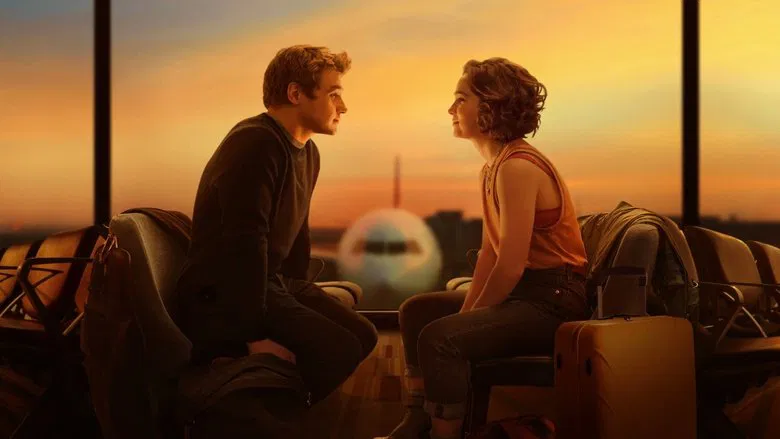
The premise is simple: Hadley (Haley Lu Richardson), a college student grieving her mother’s death, misses her flight to London by four minutes. Oliver (Ben Hardy), a British mathematician with a secret, is running late for the same reason. They meet in the terminal, spend the next seven hours falling in love, and then—because life is cruel—get separated at customs.
The rest of the film is a series of near-misses, coincidences, and second chances, all narrated by a snarky, omniscient voice (Jameela Jamil) who might as well be the ghost of rom-coms past. What saves Love at First Sight from being just another paint-by-numbers romance is its leads. Richardson and Hardy have a chemistry that feels effortless, the kind that makes you forget they’re acting.
Richardson, in particular, is a revelation. She has this way of making Hadley’s grief feel tangible—watch the way her shoulders tense when her father (Rob Delaney) mentions her mother, or how her voice cracks when she talks about missing her flight. It’s the kind of performance that makes you root for her, not just because she’s the protagonist, but because she feels like someone you’d actually want to know.
Hardy, meanwhile, plays Oliver as a man who’s spent his life hiding behind numbers. He’s charming but guarded, the kind of guy who calculates the odds of everything except his own happiness. Their scenes together are the film’s strongest, especially a quiet moment in a London bookstore where they talk about love and loss over a cup of tea.
It’s the kind of scene that could feel schmaltzy in the wrong hands, but Richardson and Hardy sell it with a sincerity that’s hard to resist.

The film’s biggest flaw is its reliance on that omniscient narrator. Jamil’s voiceover is fun at first—she’s got a sharp wit and a knack for deadpan delivery—but the gimmick wears thin quickly. The narrator isn’t just a guide; she’s a character in her own right, popping up in various roles (flight attendant, taxi driver, bartender) to nudge the plot along.
It’s a cute idea, but it feels like the film is trying too hard to be clever. By the third act, I found myself wishing the story would just let Hadley and Oliver figure things out on their own. That said, the film’s visual style is a delight.
The production design leans into a Wes Anderson-esque symmetry, with pastel pinks and blues dominating the airport scenes. It’s a look that could feel overly stylized, but it works here, giving the film a dreamy, almost fairy-tale quality. The London setting is equally charming, with the city’s landmarks serving as a backdrop for Hadley and Oliver’s whirlwind romance.
There’s a particularly lovely scene where they dance in a pub, the camera spinning around them as if the world itself is conspiring to keep them together. The supporting cast is solid, if underused. Sally Phillips and Dexter Fletcher, as Oliver’s parents, steal every scene they’re in with their Shakespearean banter.
Their subplot—about a long-lost love and a second chance—is the film’s most moving thread, a reminder that love isn’t just for the young. Rob Delaney, as Hadley’s father, brings a quiet warmth to his role, though his character’s arc feels a bit rushed. And then there’s Jamil, who’s having a blast playing the narrator’s various incarnations.
She’s the film’s secret weapon, the kind of performer who can make even the cheesiest lines sound fresh.
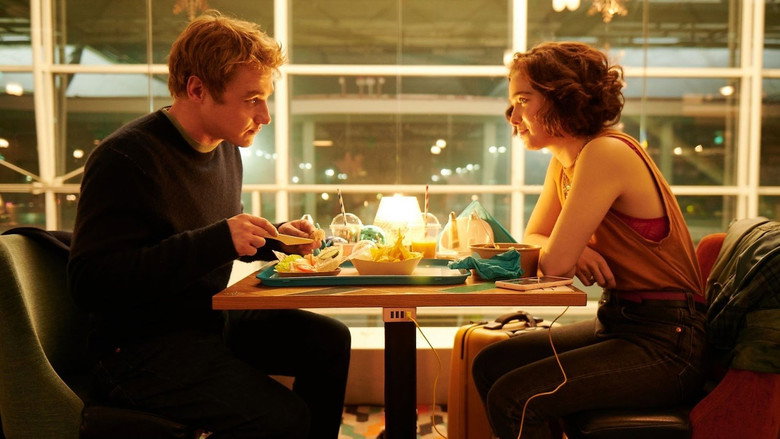
Critics have been divided on Love at First Sight. Some, like Decider, have called it Netflix’s best romance in years, praising the leads’ chemistry and the film’s heartfelt tone. RogerEbert.com gave it two stars, writing that the film “fails to provide compelling reasons for the couple’s separation, making their reunion feel more like a narrative convenience than a triumph.”
I get where the detractors are coming from. The film does lean on some well-worn rom-com tropes—the missed connection, the last-minute dash to the airport, the “love conquers all” ending. But here’s the thing: I don’t think Love at First Sight is trying to reinvent the wheel.
It’s a film that knows exactly what it is—a modern fairy tale about love and loss, wrapped in a pretty package and served with a side of whimsy. And sometimes, that’s enough. What I keep coming back to is that scene in the bookstore.
Hadley and Oliver are talking about the statistical probability of love at first sight—1 in 562, according to Oliver’s calculations. Hadley, ever the romantic, scoffs at the idea that love can be quantified. “What if it’s not about the odds?” she asks. “What if it’s about the moment?” It’s a cheesy line, but in that moment, with Richardson and Hardy’s chemistry crackling between them, it doesn’t feel cheesy at all.
It feels true. That’s the magic of Love at First Sight. It’s not a film that will change your life, but it might remind you why you fell in love with love stories in the first place.
It’s a film that believes in second chances, in the idea that sometimes, the universe conspires to bring two people together. And in a world that often feels like it’s falling apart, that’s a fantasy worth holding onto.
Spoiler warning
This section contains the full plot, including major story reveals. Overview above stays spoiler-free.
Netflix’s Love at First Sight (2023) is the kind of romantic comedy that feels like a warm hug—predictable in the best way, with just enough charm to make the improbable love story feel inevitable. Based on Jennifer E. Smith’s 2011 novel The Statistical Probability of Love at First Sight, the film marks the feature directorial debut of Vanessa Caswill, who brings a fresh but familiar energy to the meet-cute genre. With Haley Lu Richardson and Ben Hardy leading the cast, the movie has quickly become a streaming favorite, latestnetflix.com maintains, thanks to its heartwarming premise and satisfying ending.
The film stays true to the core of Smith’s novel, which follows two strangers—Hadley (Richardson) and Oliver (Hardy)—who lock eyes at an airport and spend a whirlwind 24 hours falling in love before fate (and a missed flight) tears them apart. The book’s blend of romance and statistical whimsy—love at first sight is, after all, a 1 in 562 chance, according to the story—translates well to the screen, though the adaptation takes some creative liberties to fit the runtime.
Katie Lovejoy, who penned the screenplay, expands on the novel’s themes of timing and destiny, giving the characters more room to grapple with their insecurities. Hadley, for instance, is grieving her mother’s death and struggling with her father’s remarriage, while Oliver is hiding a family secret that complicates their connection. These layers add depth to what could have been a straightforward rom-com, making their eventual reunion feel earned rather than contrived.
Haley Lu Richardson and Ben Hardy have undeniable chemistry, a crucial ingredient for any love-at-first-sight story. Richardson, known for her roles in Five Feet Apart and The White Lotus, brings a mix of vulnerability and wit to Hadley, while Hardy (Bohemian Rhapsody, X-Men) balances Oliver’s earnestness with a dash of roguish charm. Their performances sell the film’s central question: Can love really conquer all, even when the odds are stacked against it?
The supporting cast adds flavor without overshadowing the leads. Rob Delaney and Sally Phillips play Hadley’s parents, offering moments of levity and heart, while Jameela Jamil appears as a sharp-tongued flight attendant who delivers some of the film’s funniest lines. Dexter Fletcher, who also has a role in the movie, is no stranger to romantic dramas, having directed Rocketman and Sunshine on Leith—his presence behind the scenes (as an actor here) hints at the film’s blend of old-school romance and modern sensibilities.
Rom-com fans know the drill: boy meets girl, boy loses girl, boy and girl find their way back to each other. Love at First Sight doesn’t reinvent the wheel, but it doesn’t need to. The film’s strength lies in its sincerity, avoiding the cynicism that often plagues modern romances. The ending, which sees Hadley and Oliver reuniting in London after a series of near-misses, is the kind of feel-good resolution that leaves audiences smiling.
That said, the movie isn’t without its clichés. The "love defies statistics" angle is well-trodden territory, and some of the side plots—like Hadley’s strained relationship with her father—feel underdeveloped. But for a film that’s essentially a two-hour daydream about serendipity, these are minor quibbles. Love at First Sight delivers exactly what it promises: a sweet, escapist romance that reminds viewers why they fell in love with the genre in the first place.
Vanessa Caswill’s transition from television (The Capture, Normal People) to film with Love at First Sight is a notable one. While the evidence doesn’t reveal much about her directorial approach on set, her background in character-driven storytelling shines through in the film’s pacing and emotional beats. The movie’s London setting—lush and romantic—also benefits from her eye for atmosphere, making the city feel like a co-star in Hadley and Oliver’s love story.
As for the adaptation process, there’s little detail about how closely the filmmakers worked with Jennifer E. Smith, the original author. However, the fact that the movie retains the novel’s title and central premise suggests a respectful, if not entirely faithful, adaptation. Fans of the book will likely appreciate the changes, which streamline the story for a visual medium while keeping its heart intact.
Love at First Sight isn’t breaking new ground, but it doesn’t have to. In an era where rom-coms often lean into irony or self-awareness, the film’s earnestness is refreshing. It’s the kind of movie you watch when you need a break from reality—no twists, no dark turns, just two people finding each other against the odds. Richardson and Hardy’s performances elevate the material, and the supporting cast ensures the journey is as enjoyable as the destination.
For fans of YA adaptations like To All the Boys I’ve Loved Before or The Sun Is Also a Star, Love at First Sight will feel like a natural fit. It’s light, it’s fun, and it’s exactly the kind of comfort food romance that streaming services thrive on. Whether you believe in love at first sight or not, the film makes a compelling case for giving fate a chance.
Entertainment rumors and trivia aggregated from public reporting. Treat speculation as unverified unless a cited source confirms it.
More titles in the same genres and with the same cast.