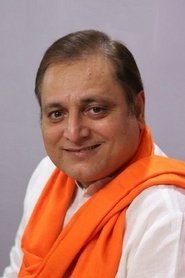
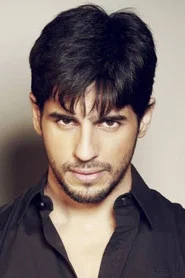
Sidharth Malhotra
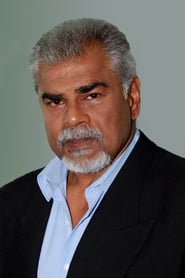
Nikhil Bharadwaj
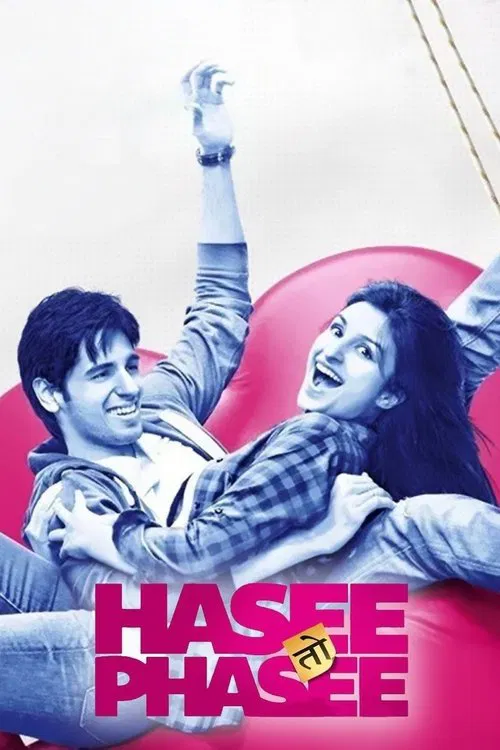
“Love Goes Cuckin Frazy”
On the eve of Nikhil and Karishma’s engagement, Karishma’s wealthy father, Devesh Solanki, expresses his disapproval, believing Nikhil to be a lackadaisical young man. With one week to prove himself worthy to marry Karishma, Nikhil and Karishma's sister, Meeta, grow closer to each other.
Official
I’ve always had a soft spot for romantic comedies that don’t just rely on the usual beats—meet-cute, misunderstanding, grand gesture—but instead let their characters feel a little unmoored, a little off. Hasee Toh Phasee (2014) is one of those films. It’s not trying to reinvent the wheel, but it does something quietly radical: it lets its leads be awkward, flawed, and sometimes downright strange, and it trusts the audience to find the charm in that. That’s rarer than it should be.
Vinil Mathew’s debut feature arrives with the weight of expectation—his background in emotionally resonant advertising films suggested he might bring something fresh to Bollywood’s rom-com formula. And in some ways, he does. The film’s premise is simple: Nikhil (Sidharth Malhotra), a well-meaning but directionless young man, is on the verge of marrying Karishma (Adah Sharma), whose wealthy father disapproves of him.
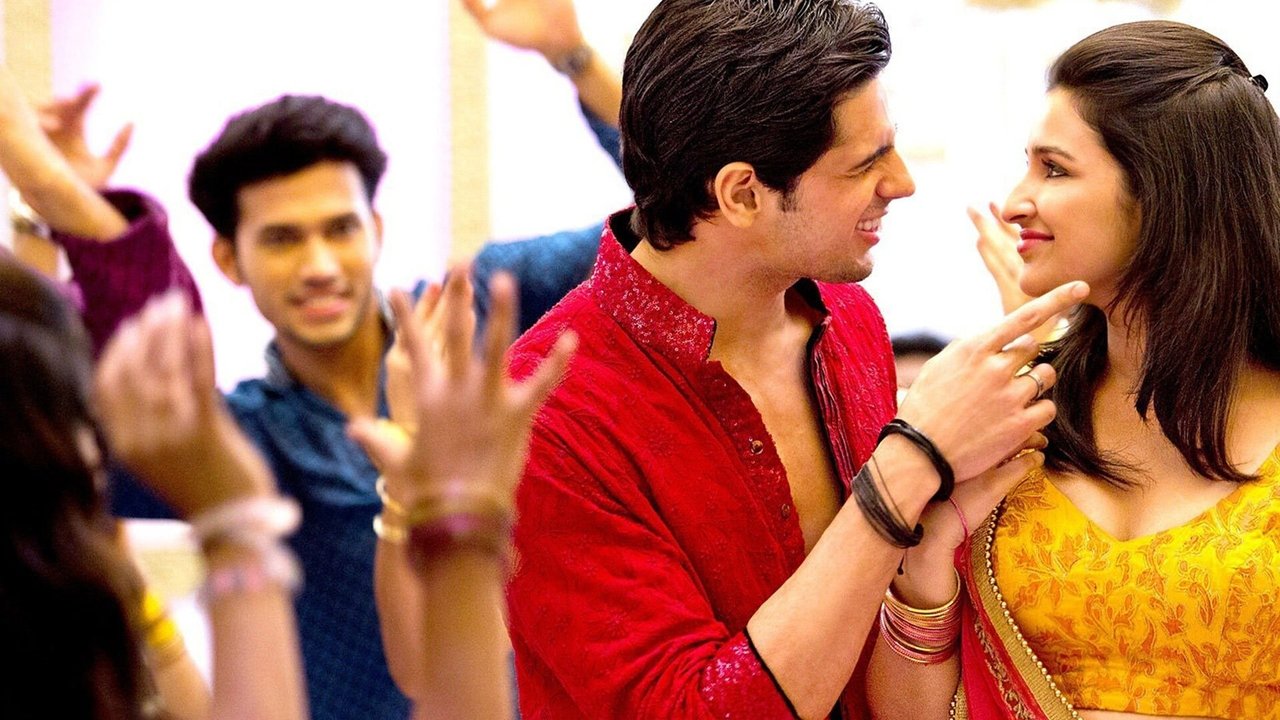
In the week leading up to the engagement, Nikhil finds himself drawn to Karishma’s quirky, chaotic sister, Meeta (Parineeti Chopra). It’s a setup that could easily devolve into cliché, but Mathew and his cast seem determined to keep things just this side of messy.
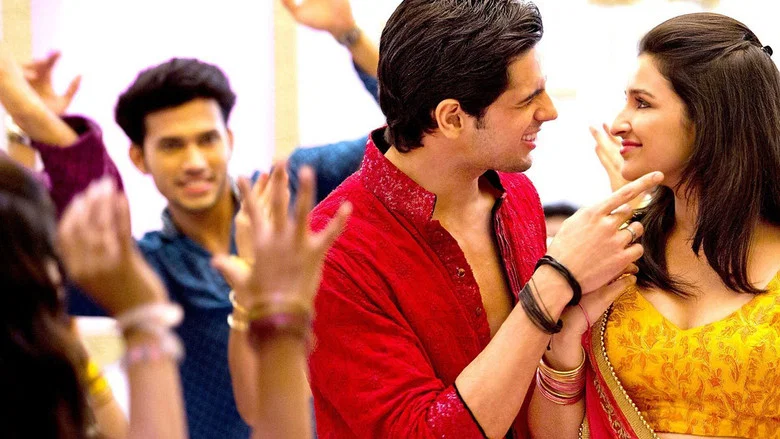
What makes Hasee Toh Phasee worth talking about isn’t its plot—it’s the way it lingers in the in-between moments. The film’s strength lies in its characters, particularly Meeta, who Mathew has described as a “mad comic clown.” That’s an apt description, but it doesn’t quite capture the way Parineeti Chopra plays her. Meeta isn’t just a collection of tics; she’s a woman who moves through the world with a kind of restless energy, as if she’s always one step away from either laughing or crying.
Chopra’s performance is physical in the best way—watch the way she fidgets, the way her eyes dart around a room, the way she seems to be holding herself together by sheer force of will. There’s a vulnerability there that keeps the character from feeling like a caricature.
Nikhil, by contrast, is the kind of protagonist Bollywood often churns out: the nice guy who’s a little lost, a little too passive for his own good. Sidharth Malhotra plays him with a kind of earnestness that could easily tip into blandness, but there’s a quiet chemistry between him and Chopra that keeps things interesting. Their scenes together have a rhythm that feels organic, even when the script leans into familiar rom-com tropes.
It’s the kind of dynamic that makes you root for them, not because they’re perfect for each other, but because they’re interesting together.
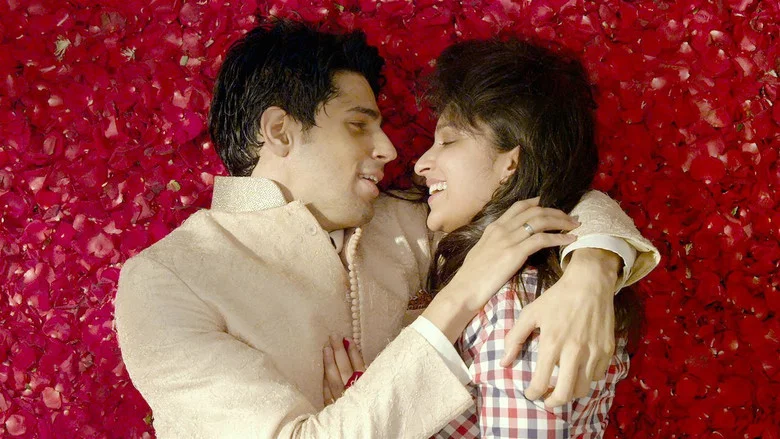
The film’s visual language is unassuming but effective. Mathew’s background in advertising shows in the way he frames his shots—there’s a clarity to the compositions, a sense of space that feels deliberate without calling attention to itself. The Mumbai setting is used well, particularly in a scene set in Bhuleshwar, a densely populated locality that Mathew has said required careful planning to film.
The chaos of the city mirrors the chaos of the characters’ lives, and there’s something satisfying about that symmetry.
That said, Hasee Toh Phasee isn’t without its missteps. The film’s pacing drags in places, particularly in the second act, where the energy that propels the first half starts to flag. There’s a subplot involving Nikhil’s attempts to prove himself to Karishma’s father that feels underdeveloped, as if the film isn’t quite sure what to do with it.
And while the humor lands more often than not, there are moments where the jokes feel a little too broad, a little too safe.
But those flaws don’t sink the film. What lingers is the sense that Hasee Toh Phasee is trying to do something a little different—even if it doesn’t always succeed. It’s a film that’s willing to let its characters be imperfect, to let their relationships feel a little messy, a little unresolved. That’s not nothing.

I keep coming back to something Mathew said about Meeta—that she’s a “mad comic clown.” It’s an odd phrase, but it captures something essential about the film. Hasee Toh Phasee is at its best when it embraces the madness, when it lets its characters be a little strange, a little unpredictable. It’s not a perfect film, but it’s a film that feels alive in a way that so many rom-coms don’t. And in the end, that’s enough.
"A lighthearted rom-com with charming leads but a predictable plot that struggles to stand out."
Sidharth Malhotra and Parineeti Chopra’s chemistry is the highlight, keeping their quirky romance engaging despite the film’s reliance on familiar tropes. The humor and visual style help, but the story feels stretched and shallow, short on originality and emotional weight.
Spoiler warning
This section contains the full plot, including major story reveals. Overview above stays spoiler-free.
Hasee Toh Phasee (2014) marked director Vinil Mathew’s feature debut, blending quirky romance with the chaos of modern relationships. Starring Sidharth Malhotra and Parineeti Chopra, the film carved a niche for its offbeat humor and emotional depth. latestnetflix.com's take is that but what went into making this unconventional love story?Here’s a peek behind the camera.
Vinil Mathew, known for his work in advertisements, brought a fresh perspective to Bollywood with Hasee Toh Phasee. His background in emotionally resonant storytelling shaped the film’s tone—a mix of comedy, romance, and relatable awkwardness. Mathew’s Malayali roots and ad-film sensibilities gave the movie its distinct visual flair, balancing whimsy with heartfelt moments.
In interviews, Mathew emphasized the film’s authenticity. He broke down the infamous Bhuleshwar scene, a chaotic sequence shot in Mumbai’s crowded markets, as a deliberate choice to reflect the characters’ disarray. The scene’s complexity wasn’t just logistical; it mirrored the film’s theme of love amid chaos.
Sidharth Malhotra and Parineeti Chopra’s on-screen chemistry was a major talking point. Mathew described Chopra’s character, Meeta, as a "mad comic clown," a role that allowed her to showcase her comedic timing. The director’s collaboration with the cast was reportedly smooth, with Malhotra and Chopra embracing the film’s eccentricities.
Adah Sharma, who played Malhotra’s sister, added another layer to the ensemble. While the film’s focus remained on the lead pair, Sharma’s performance provided a counterbalance to the romantic chaos. Supporting actors like Sharat Saxena and Nina Kulkarni rounded out the cast, contributing to the film’s family-driven narrative.
Hasee Toh Phasee wasn’t an overnight success, but it found its audience over time. Mathew and Malhotra actively engaged with fans, seeking public feedback to gauge the film’s impact. The director’s hands-on approach extended to promotions, where he often explained the film’s nuances in interviews.
Critically, the movie received mixed reviews. While some praised its originality, others found its pacing uneven. SensCritique gave it a 6.5/10 rating, reflecting its polarizing appeal. Rotten Tomatoes’ sparse audience scores suggest the film’s cult following grew post-release.
Nearly a decade later, Hasee Toh Phasee remains a reference point for unconventional Bollywood rom-coms. Its blend of humor, heart, and Mumbai’s vibrant backdrop set it apart from formulaic love stories. Mathew’s directorial debut may not have been a blockbuster, but it carved a space for offbeat storytelling in Hindi cinema.
For fans, the film’s charm lies in its imperfections—much like the relationships it portrays.
Entertainment rumors and trivia aggregated from public reporting. Treat speculation as unverified unless a cited source confirms it.
More titles in the same genres and with the same cast.