Hrithik Roshan
Raj Khanna

A man falls in love with his childhood friend, but another friend is the one who reciprocates his feelings.
I’ve always been suspicious of love triangles. Not because they’re unrealistic—quite the opposite. They’re too real, too familiar, the kind of messy, unresolved thing that happens when three people orbit each other, each convinced they’re the sun. Mujhse Dosti Karoge! (2002) understands this.
It’s a film that doesn’t so much resolve its triangle as let it linger, like a half-finished letter tucked into a drawer. And in that lingering, it tells a truth about how we love: not in grand gestures, but in the quiet, cowardly choices we make when we’re too afraid to speak.
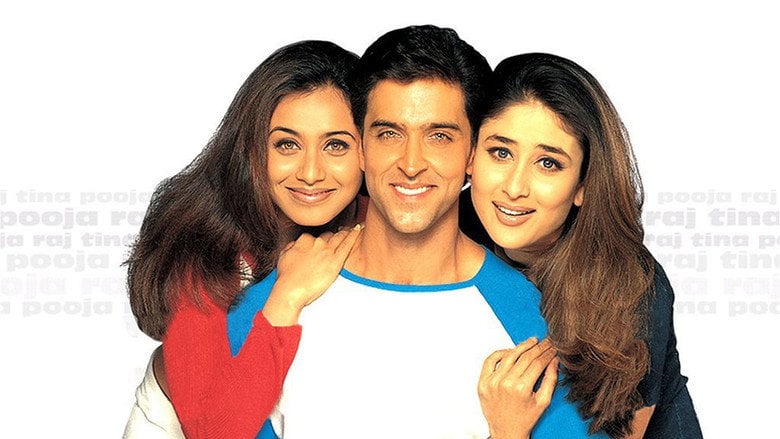
Kunal Kohli’s debut is a film of surfaces—glossy, colorful, and deceptively simple. It follows Raj (Hrithik Roshan), Pooja (Rani Mukerji), and Tina (Kareena Kapoor Khan), childhood friends whose lives are upended when Raj moves to London and returns years later to find that the dynamics between them have shifted. Or rather, that they were always shifting, just beneath the surface.
The film’s premise is classic Bollywood: a love triangle, a misunderstanding, a series of missed connections. But what makes it interesting is how little it relies on the usual tricks of the genre. There are no villains here, no scheming parents or evil exes.
Just three people, each convinced they know what the others want, and each too proud (or too scared) to ask.

The film’s emotional core lies in its letters. Not the ones that are sent, but the ones that aren’t. Raj and Pooja exchange letters while he’s away, but their correspondence is a lie—a performance for each other, a way to maintain the illusion of closeness when distance has already done its work.
The letters are full of coded language, of things left unsaid. And when Raj returns, he assumes the letters were always meant for him, that Pooja’s affection was as real on the page as it was in his imagination. But Pooja, it turns out, was writing for Tina, who was in love with Raj all along.
The letters were never hers to give.
This is where Mujhse Dosti Karoge! gets interesting. It’s not a film about love so much as it’s a film about the stories we tell ourselves to avoid the messiness of the truth. Raj, Pooja, and Tina are all guilty of this.
Raj assumes Pooja’s love because it’s easier than confronting the possibility that she might not feel the same. Pooja lets him believe it because she’s afraid of losing his friendship. And Tina, the quiet observer, watches it all unfold, too afraid to disrupt the illusion.
The film’s tragedy isn’t that they don’t end up together—it’s that they never really see each other.
Kohli’s direction is unshowy, almost to a fault. There are no flashy camera moves or experimental flourishes here. The film’s power lies in its restraint, in the way it lets its actors do the work.
Hrithik Roshan, in particular, is fascinating to watch. Raj is a character who wears his charm like armor, and Roshan plays him with a kind of effortless charisma that makes it easy to see why Pooja and Tina are drawn to him. But there’s a brittleness beneath the surface, a fragility that Roshan hints at in small moments—a hesitation in his smile, a flicker of doubt in his eyes.
It’s the kind of performance that rewards close attention, the kind that makes you lean in.
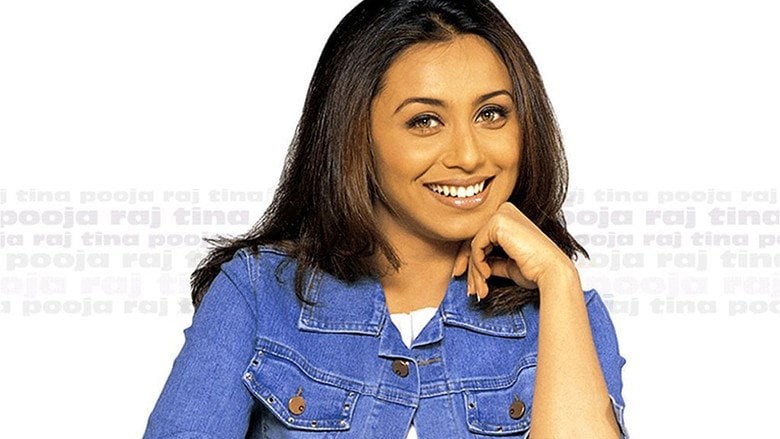
Rani Mukerji and Kareena Kapoor Khan, meanwhile, are given less to do, but they hold their own. Mukerji’s Pooja is all quiet longing, her performance built on small gestures—a glance held a second too long, a hand that lingers just a little too close. Kapoor Khan’s Tina is the film’s wildcard, the one who sees the truth but can’t bring herself to speak it.
There’s a moment late in the film where Tina finally confronts Raj, and Kapoor Khan plays it with a raw, trembling anger that feels like it comes out of nowhere. It’s the film’s most honest moment, the one where the illusion finally cracks.
The film’s biggest flaw, if you can call it that, is its refusal to fully commit to the messiness of its own premise. There’s a tidiness to the way it resolves its central conflict, a sense that the characters have been gently nudged toward the "right" ending rather than stumbling into it. But maybe that’s the point. Mujhse Dosti Karoge! isn’t a film about grand, sweeping romance.
It’s about the quiet, everyday compromises we make in the name of love—or what we tell ourselves is love. It’s about the way we lie to each other, and to ourselves, to keep the peace.
I keep thinking about that moment in the rain, the one where Tina finally snaps. It’s the only time in the film where someone says exactly what they mean, where the subtext becomes text. And it’s devastating, not because it’s dramatic, but because it’s so small.
Tina doesn’t scream or cry. She just stands there, soaked and shaking, and says, "You never even asked." It’s the film’s thesis in a single line.
We don’t ask. We assume. We perform.
And in the end, we’re left with the friendship that never was, the love that was never spoken, the letters that were never meant to be read.
The film’s soundtrack, too, plays a role in this. The songs are lush and melodic, the kind of music that makes you want to believe in love even when the story itself is telling you not to. There’s a moment where Raj and Pooja dance together, and the camera lingers on their hands, their faces, the way they move in sync without ever really touching.
It’s beautiful, but it’s also heartbreaking, because you know it’s all an act. They’re performing for each other, for the audience, for themselves. And in that performance, they lose sight of what they actually want.
In the end, Mujhse Dosti Karoge! is a film about the lies we tell to keep from getting hurt. It’s not a perfect film—it’s too neat, too polished, too afraid of its own messiness. But there’s something honest in that, too.
Because isn’t that how we all live? Polishing our edges, smoothing our rough spots, pretending we’re okay when we’re not. The film doesn’t judge its characters for this.
It just watches, and in that watching, it holds up a mirror. And maybe, if we’re lucky, we’ll see ourselves in it.
"A charming but flawed Bollywood romance with strong performances and music, let down by a predictable plot and pacing."
The chemistry between the leads and the vibrant musical numbers give the romance energy. The predictable plot and slow stretches make it feel longer than necessary, and some side characters are underdeveloped.
Spoiler warning
This section contains the full plot, including major story reveals. Overview above stays spoiler-free.
Mujhse Dosti Karoge! (2002) remains one of Bollywood’s most beloved romantic dramas, thanks to its charismatic leads—Hrithik Roshan, Rani Mukerji, and Kareena Kapoor Khan—and its blend of music, drama, and nostalgia. But behind the film’s glossy exterior lies a story of creative collaboration, industry buzz, latestnetflix.com contends, and a director who nearly missed his big break.
The film’s origins are tied to one of Bollywood’s most influential figures. Director Kunal Kohli revealed in an interview that the idea for Mujhse Dosti Karoge! was first pitched to him by Karan Johar. While Johar didn’t direct or produce the film, his involvement in shaping the concept added early credibility to the project. Kohli, then a relatively new director, brought his own vision to the story, crafting a love triangle that balanced humor, heartbreak, and high-energy musical numbers.
The film’s success hinged on its trio of leads, each at different stages of their careers. Hrithik Roshan was already a superstar after Kaho Naa… Pyaar Hai (2000), while Rani Mukerji was a rising force in Bollywood. Kareena Kapoor Khan, though newer to the scene, held her own as the confident Pooja, the object of both Raj (Roshan) and Pooja’s (Mukerji) affections.
Off-screen, the dynamics between the actors fueled speculation. Reports suggested that Roshan and Kapoor Khan’s real-life chemistry translated smoothly on-screen, while Mukerji’s portrayal of the lovelorn Tina added emotional depth. Kohli himself has since joked that the trio could still reunite for a sequel, hinting at the enduring appeal of their on-screen bond.
No Bollywood romance is complete without a hit soundtrack, and Mujhse Dosti Karoge! delivered. Composed by the duo of Rahul Sharma and Sandesh Shandilya, the film’s songs—like the title track and "Andekhi Anjaani"—became instant classics. The music not only enhanced the film’s emotional beats but also helped it stand out in an era dominated by high-energy dance numbers.
Critically, the film received mixed reviews but found a lasting place in audiences’ hearts. With a runtime of nearly 2.5 hours, it was a marathon of romance, comedy, and drama, earning a modest but respectable rating of 6.3/10 on SensCritique. Over time, its reputation grew, with fans praising its nostalgic charm and the chemistry between its leads.
While Mujhse Dosti Karoge! didn’t break box office records, it cemented Kunal Kohli’s reputation as a director capable of handling star power and emotional storytelling. More than two decades later, the film remains a go-to for fans of early 2000s Bollywood romance.
Entertainment rumors and trivia aggregated from public reporting. Treat speculation as unverified unless a cited source confirms it.
More titles in the same genres and with the same cast.