
Rani Mukerji
Naina Mathur

After finally landing a teaching job, a kindhearted woman with Tourette Syndrome faces a flawed system to provide an education to her forgotten students.
I’ve seen this story before—the plucky underdog, the broken system, the classroom as battleground. It’s a formula so familiar it could be stamped on a lesson plan. And yet, Hichki sneaks up on you.
Not because it reinvents the wheel, but because it rolls that wheel over your foot just enough to make you wince, then laugh, then wonder why you ever thought the ride was smooth in the first place.
Rani Mukerji plays Naina Mathur, a woman with Tourette syndrome who finally lands a teaching job at an elite Mumbai school, only to be handed the class nobody wants: the rowdy, neglected students from the slums, dumped into a system that’s already decided they’ll fail. The setup is pure Bollywood underdog, but Mukerji’s performance—those sudden, sharp tics, the way her body betrays her just as she’s trying to assert control—gives it a jagged edge.
This isn’t just another inspirational teacher movie. It’s about the cost of inspiration.
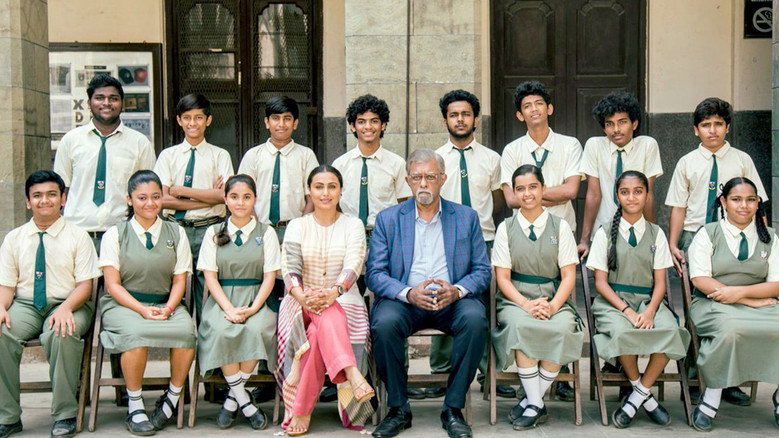
The film’s greatest strength is its refusal to let Naina be a saint. She’s flawed, impatient, and sometimes just as rigid as the system she’s fighting. In one scene, she snaps at a student for disrupting her lesson, only to immediately regret it when she realizes he’s acting out because he can’t read.
The moment isn’t played for easy pathos. Instead, it’s a quiet collision of two people who’ve been told they don’t belong, and the awkward, messy work of figuring out how to belong together. That’s the film’s real subject: not triumph, but the daily grind of trying to be better than the world expects.
Director Siddharth P. Malhotra leans into the chaos of the classroom, using handheld camerawork to mirror the unpredictability of Naina’s condition. The tics aren’t just there for realism—they’re a visual metaphor for the film’s central tension.
Every time Naina’s body jerks or her voice cracks, it’s a reminder that control is an illusion, especially in a system designed to sort people into neat little boxes. The students, too, are full of these small rebellions: a slouch in a chair, a muttered insult, a refusal to meet the teacher’s eyes. They’re not just underdogs; they’re survivors of a system that’s already written them off.

The film’s biggest misstep is its third act, which veers into the kind of sentimental uplift that feels unearned. The students’ transformation from troublemakers to model pupils happens a little too neatly, and the final confrontation with the school’s administration plays like a greatest-hits reel of inspirational clichés. It’s as if the film, having spent so much time in the messy middle, suddenly panics and reaches for the safety of a happy ending.
But even here, Mukerji’s performance keeps it from feeling completely hollow. There’s a moment near the end where Naina, having just won over her students, lets out a tic so violent it knocks over a stack of books. The camera lingers on the mess, and for a second, you’re reminded that this isn’t a story about fixing people.
It’s about learning to live with the cracks.
Hichki is based on the true story of Brad Cohen, an American teacher with Tourette syndrome who wrote about his experiences in Front of the Class. The film shifts the setting to Mumbai, but the core struggle—proving that a disability doesn’t define you—remains intact. Mukerji’s preparation for the role reportedly included meeting Cohen, and it shows.
Her performance isn’t just a collection of tics; it’s a fully realized portrait of a woman who’s spent her life being told she’s too much and too little, all at once. The film’s promotional material leaned heavily on this real-life connection, and it’s easy to see why. In a culture that often treats disability as either a tragedy or a punchline, Hichki offers something rare: a story where the condition isn’t the point, but the person is.
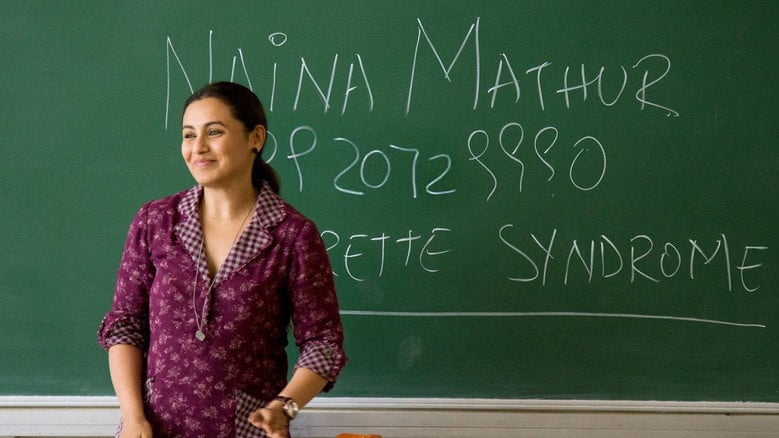
The supporting cast is solid, if underutilized. Neeraj Kabi plays the school’s principal with a quiet, simmering authority, and the young actors playing Naina’s students bring a rawness that grounds the film’s more sentimental moments. But this is Mukerji’s show, and she carries it with a physicality that’s impossible to look away from.
Watch the way she holds her body when she’s trying to suppress a tic—shoulders hunched, jaw clenched, as if she’s fighting a losing battle against herself. Or the way her voice cracks not just from the syndrome, but from the effort of holding back tears. It’s the kind of performance that makes you realize how rarely Bollywood films let women be anything other than perfect.
If Hichki stumbles, it’s in its reluctance to fully embrace the messiness of its own premise. The film wants to be both a crowd-pleasing underdog story and a nuanced portrait of disability, and it doesn’t always reconcile those two impulses. The students’ backstories are sketched in broad strokes, and the school’s administration is painted as a monolithic villain, which flattens what could have been a more interesting exploration of systemic failure.
But maybe that’s the point. Maybe the film isn’t interested in subtlety because it’s not trying to change the system—it’s trying to survive within it.
In the end, Hichki is a film about the tics we all carry—the ones we can’t control, the ones we try to hide, the ones that make us human. It’s not a perfect movie, but it’s a necessary one. And in a world that’s always trying to smooth out the edges, maybe that’s enough.
"A heartwarming, inspiring drama with a standout performance from Rani Mukerji."
Viewers praise *Hichki* for its uplifting message and Rani Mukerji's authentic, moving portrayal of a teacher with Tourette syndrome. Its focus on overcoming adversity and inclusive education connects, though the predictable underdog formula limits its depth.
Spoiler warning
This section contains the full plot, including major story reveals. Overview above stays spoiler-free.
Rani Mukerji’s 2018 film Hichki wasn’t just another Bollywood drama—it was a passion project with roots in a true story that resonated far beyond the screen. Directed by Siddharth P. Malhotra, the movie follows Naina Mathur, a teacher with Tourette syndrome who fights to prove herself in an elite school while mentoring underprivileged students. latestnetflix.com's view is that but how much of Hichki was real, and what went into bringing this inspirational tale to life?
Hichki is based on Brad Cohen’s memoir Front of the Class: How Tourette Syndrome Made Me the Teacher I Never Had. Cohen, an American educator with Tourette syndrome, overcame societal stigma to become a beloved teacher. The film’s trailer and promotional material highlighted this connection, with Mukerji even meeting Cohen to prepare for her role. While the setting shifts from the U.S. To Mumbai, the core struggle—proving that disabilities don’t define potential—remains intact.
Mukerji’s portrayal of Naina Mathur earned widespread praise, with critics and celebrities alike lauding her performance. Bollywood icons like Madhuri Dixit, Anil Kapoor, and Karan Johar publicly praised the film, calling it a "must-watch" for its emotional depth. Mukerji’s preparation reportedly included extensive research on Tourette syndrome, though specifics on her method remain scarce in the available evidence. What’s clear is that her commitment to authenticity shone through, with reviewers noting the film’s ability to balance humor and heartbreak.
Siddharth P. Malhotra, known for family dramas like We Are Family (2010), took a bold turn with Hichki, blending social commentary with mainstream cinema. The film’s production under Yash Raj Films—a studio synonymous with blockbusters—suggested confidence in its commercial appeal, despite its niche subject. However, details about on-set dynamics or challenges are limited in the retrieved evidence. One unverified rumor (from a YouTube fact video) claims Mukerji insisted on casting real students from Mumbai’s slums to play her on-screen pupils, but this remains unconfirmed.
Hichki opened to mixed-to-positive reviews, with critics praising its message but critiquing its predictability. On SensCritique, it holds a 7.3/10 rating based on 28 votes, while Rotten Tomatoes lists it with a cast overview but no aggregate score. The film’s real impact, however, lies in its cultural footprint—sparking conversations about inclusion in Indian education and inspiring audiences with its underdog narrative.
Despite its success, Hichki leaves some behind-the-scenes details in the dark. How did Mukerji and Malhotra collaborate on the script’s tone? Were there creative tensions over balancing drama and realism? And why hasn’t the film’s box-office performance been widely documented in the available sources? For now, these remain open questions, overshadowed by the film’s uplifting story.
Entertainment rumors and trivia aggregated from public reporting. Treat speculation as unverified unless a cited source confirms it.
More titles in the same genres and with the same cast.