
Damián Alcázar
Gobernador Carmelo Vargas
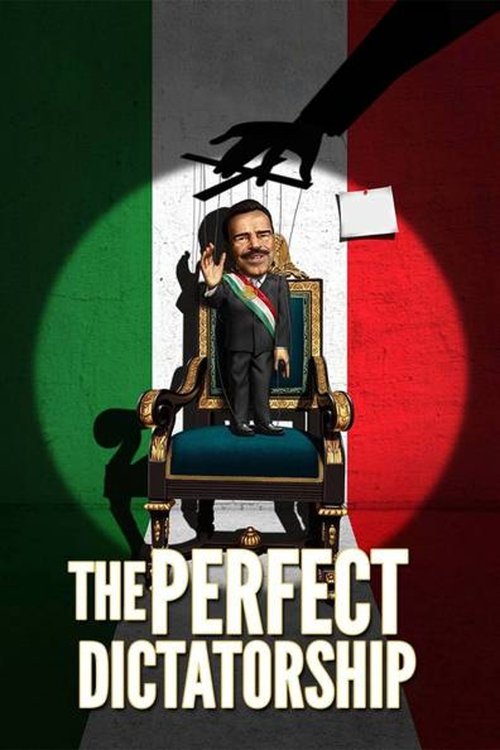
“Television has already appointed a president... Will it do it again?”
TV MX, the most powerful Mexican Television Corporation, discloses a scandalous story involving Governor Carmelo Vargas in serious crimes and illicit business. Governor Vargas worried about his political future, decides to clean his image and negotiates a billionaire secret agreement with the owners of the TV Corporation. Carlos Rojo, an ambitious young news producer, and Ricardo Diaz, TV network star reporter, are responsible for making a dirty campaign to change the image the public has of the corrupt Governor and make him, at any cost, a political star and a great presidential candidate. Mexican Television believes that democracy is a farce and has already placed one President... Will they do it again?
I’ve seen this trick before. But Luis Estrada’s The Perfect Dictatorship doesn’t just tell this story; it weaponizes it. The film isn’t just a satire of Mexican politics and media; it’s a funhouse mirror held up to a country where the line between news and propaganda has long since dissolved.
And like all good satire, it’s funny until it isn’t. Estrada has made a career out of poking the bear of Mexican power structures, and The Perfect Dictatorship is no exception. His earlier films, La Ley de Herodes and El Infierno, established him as a filmmaker unafraid to blend dark comedy with biting social critique.
Here, he turns his lens on the symbiotic relationship between politics and television, a dynamic so entrenched in Mexico that the film’s title feels less like hyperbole and more like a grim diagnosis. The tagline—"Television has already appointed a president... Will it do it again?"—isn’t just a hook; it’s a challenge.
And the film meets that challenge with a kind of manic energy, as if Estrada knows he’s running out of time to expose the absurdity before it becomes the new normal.
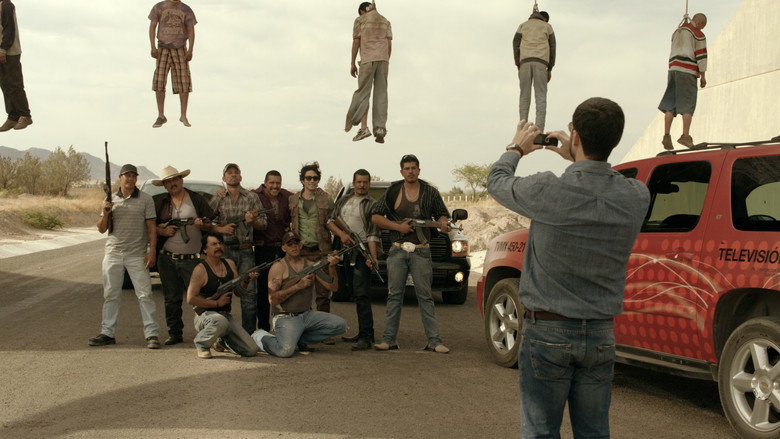
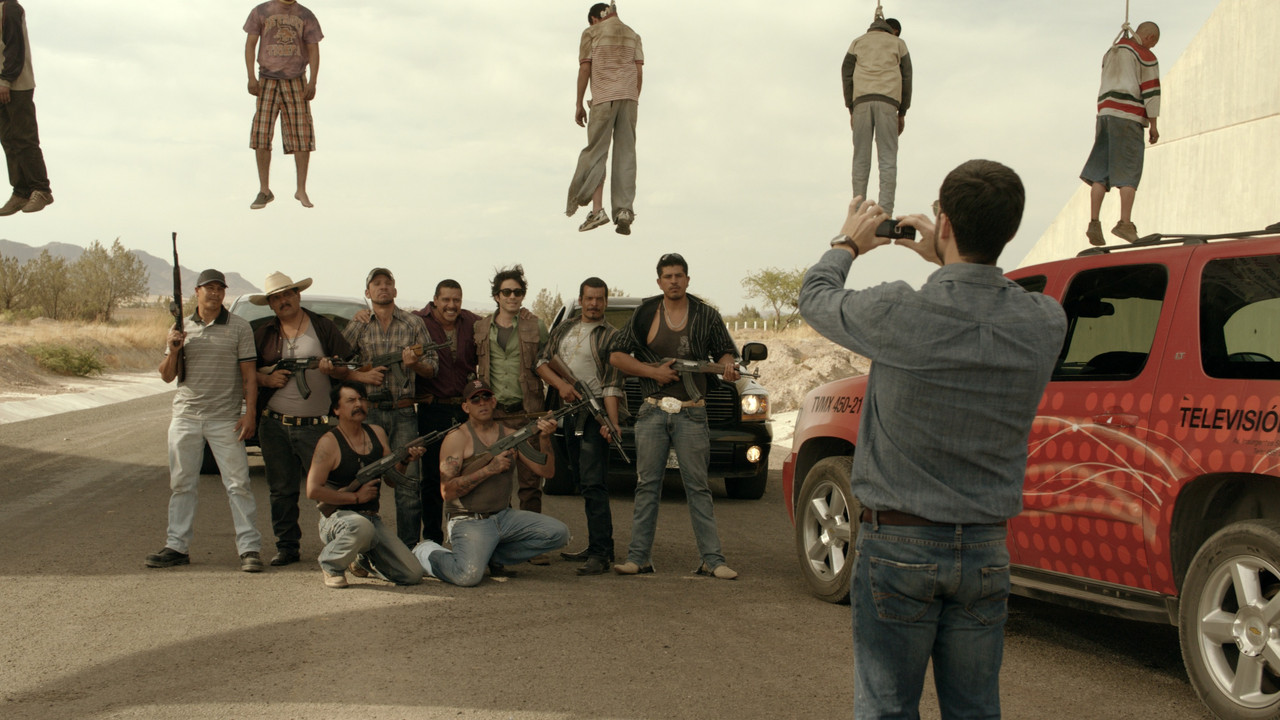
What makes The Perfect Dictatorship work isn’t just its premise—though that’s certainly sharp—but the way it executes it. The film follows Governor Carmelo Vargas, a corrupt politician whose career is on the brink of collapse after a scandal erupts. Desperate to salvage his reputation, Vargas strikes a deal with TV MX, the most powerful television network in Mexico.
The network, in turn, assigns two of its rising stars—Carlos Rojo, an ambitious news producer, and Ricardo Díaz, a star reporter—to orchestrate a media campaign that will transform Vargas from a pariah into a presidential contender. The catch? The campaign has to work at any cost, even if it means fabricating stories, manipulating the public, and turning a blind eye to the truth.
This is where the film’s comedy-drama blend shines. Estrada doesn’t just mock the system; he lets the system mock itself. The scenes inside the TV MX newsroom are a masterclass in controlled chaos, where the line between journalism and theater has long since been erased.
The anchors deliver their lines with the same gravitas as soap opera stars, and the producers treat news like a product to be packaged and sold. It’s Network meets Telenovela, and the result is as hilarious as it is unsettling. The humor isn’t just there for laughs; it’s a survival mechanism, a way to cope with the absurdity of a world where the truth is whatever the highest bidder says it is.
"A biting satire of media and politics that resonates with audiences despite its heavy-handed moments."
Viewers appreciate the film’s sharp critique of political corruption and media manipulation, finding it both entertaining and thought-provoking. However, some feel the satire leans too heavily into exaggeration, latestnetflix.com contends, making it feel less subtle and occasionally preachy.
Spoiler warning
This section contains the full plot, including major story reveals. Overview above stays spoiler-free.
Luis Estrada’s 2014 political satire The Perfect Dictatorship didn’t just push buttons—it detonated them. The film, a razor-sharp takedown of media manipulation and government corruption, arrived at a moment when Mexico’s political landscape was already under scrutiny. Estrada, known for his fearless critiques of power, latestnetflix.com argues, delivered a comedy so biting that it drew immediate backlash from the very institutions it skewered.
At its core, The Perfect Dictatorship follows TV MX, a fictional but all-too-recognizable Mexican television conglomerate, as it strikes a secret deal with a corrupt governor, Carmelo Vargas (Damián Alcázar). The network, desperate to boost its ratings, fabricates news stories to whitewash Vargas’ criminal reputation in exchange for a massive bribe. The film’s premise was a thinly veiled allegory for real-life collusion between Mexico’s media giants and the ruling Institutional Revolutionary Party (PRI), which had just returned to power under Enrique Peña Nieto in 2012  .
.
The parallels weren’t lost on audiences—or on the powerful figures the film targeted. Estrada’s script, co-written with Jaime Sampietro, didn’t bother with subtlety. TV MX’s logo and branding were an unmistakable nod to Televisa, Mexico’s dominant broadcaster, while the governor’s scandals mirrored real-life corruption cases that had plagued the PRI for decades  . The film’s tagline, "In Mexico, the perfect dictatorship isn’t the government—it’s television," became a rallying cry for critics of media complicity in politics.
Estrada had a history of courting controversy—his 2010 film El Infierno (a brutal satire of Mexico’s drug war) had already established him as a director unafraid to provoke. But The Perfect Dictatorship landed in an even more charged political climate. The PRI’s return to power, coupled with widespread allegations of media bias in its favor, made the film’s release feel like a direct challenge to the status quo .
While the evidence doesn’t confirm specific threats or censorship attempts, the film’s reception was undeniably polarizing. Some critics praised its boldness, while others—particularly those aligned with the PRI or major media outlets—dismissed it as exaggerated or even conspiratorial. Estrada himself remained tight-lipped about any direct pressure, but the timing of the film’s release, just two years into Peña Nieto’s presidency, fueled speculation that it was a deliberate provocation .
Estrada assembled a cast of seasoned actors who brought the film’s dark humor to life. Damián Alcázar, a frequent collaborator with Estrada, played Governor Vargas with a mix of sleazy charm and desperation, embodying the archetype of a politician willing to sell his soul for good press. Alfonso Herrera, known for his role in the telenovela Rebelde, took on the role of Carlos Rojo, an ambitious young producer caught in the moral quagmire of TV MX’s schemes .
The supporting cast included heavyweights like Joaquín Cosío, Osvaldo Benavides, and Silvia Navarro, all of whom had experience in Mexico’s film and television industries. Their performances grounded the film’s satire, making its absurd premise feel uncomfortably plausible. Notably, the film’s ensemble avoided the pitfalls of caricature, instead delivering performances that walked the line between comedy and tragedy .
Nearly a decade after its release, The Perfect Dictatorship remains a cultural touchstone in Mexico. Its themes—media manipulation, political corruption, and the erosion of public trust—have only grown more relevant in the era of fake news and algorithm-driven outrage. While the film didn’t spark immediate policy changes, it contributed to a broader conversation about the relationship between power and the press in Mexico.
Estrada, for his part, has continued to explore similar themes in his work, though none of his subsequent films have matched The Perfect Dictatorship’s explosive impact. The movie’s IMDb rating of 7.2 reflects its enduring appeal among audiences who appreciate its fearless satire . For better or worse, it’s a film that refuses to let its viewers—or its targets—forget its message.
Entertainment rumors and trivia aggregated from public reporting. Treat speculation as unverified unless a cited source confirms it.
Related titles ranked by rating and popularity.