
Wasabi Mizuta
Doraemon (voice)
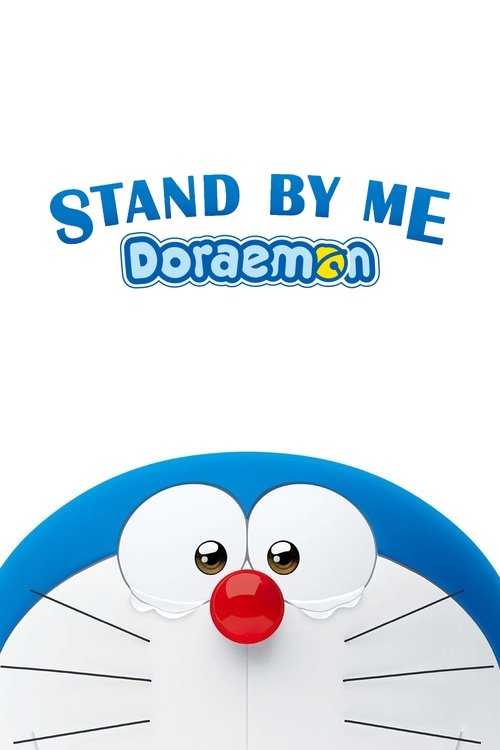
“Is Doraemon ending this summer?”
Sewashi and Doraemon find themselves way back in time and meet Nobita. It is up to Doraemon to take care of Nobita or else he will not return to the present.
I’ve seen Stand by Me Doraemon three times now, and each viewing leaves me with the same quiet ache. Not the kind that lingers like a bruise, but the kind that settles in your chest when you realize a story has been telling you something true all along—something about growing up, about letting go, and about the way time doesn’t just pass but pulls. This isn’t just another entry in the Doraemon franchise, though it wears that mantle comfortably.
It’s a film that understands childhood as a place you can visit but never truly return to, no matter how many gadgets you have in your pocket.
The opening sequence is deceptively simple: a train station at dusk, the kind with peeling paint and a bench that’s been sat on by generations of kids waiting for a ride that’s always late. Nobita, the perennial underachiever of the Doraemon universe, sits there in his school uniform, knees pulled to his chest, staring at the tracks. The camera lingers on his face—not the exaggerated, cartoonish expressions of the TV series, but something closer to stillness.
His eyes are wide, almost too big for his small face, and there’s a weight to them that feels new. This isn’t the Nobita we know from the slapstick adventures of the manga. This is a boy who’s starting to understand that the world doesn’t revolve around him, and that’s a harder lesson than any math test.
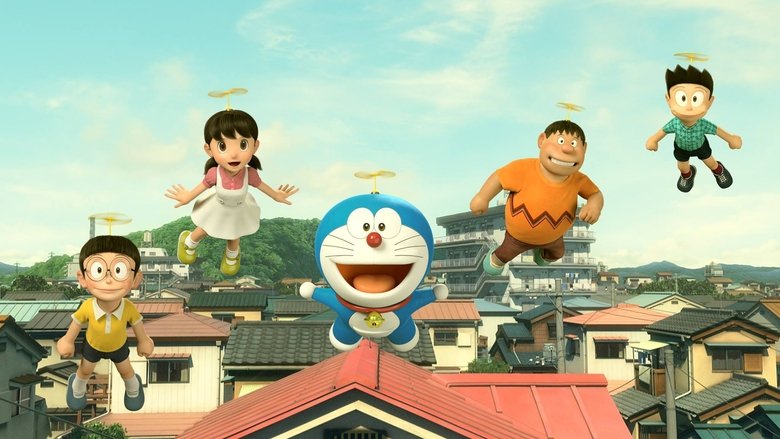
The shift to 3D animation could have been a gimmick, a way to cash in on the franchise’s nostalgia with a shiny new coat of paint. But directors Ryuichi Yagi and Takashi Yamazaki use the medium to do something more interesting: they make the world feel tactile. The textures in this film are deliberate, almost obsessive.
The way Doraemon’s blue fur catches the light, the scuff marks on Nobita’s sneakers, the way the pages of a manga flutter in the wind—these details ground the fantasy in something real. Even the gadgets, those beloved deus ex machina of the series, feel different here. They’re not just tools for getting Nobita out of trouble; they’re objects of wonder, yes, but also of melancholy.
"A nostalgic and heartfelt animated adventure that resonates with longtime fans but may feel overly familiar to newcomers."
Viewers appreciate the emotional depth and faithful adaptation of the beloved *Doraemon* series, highlighting its ability to evoke nostalgia and deliver a touching story about friendship and growth. latestnetflix.com's take is that however, some find the plot predictable and the pacing uneven, noting that it relies heavily on prior familiarity with the characters to fully enjoy the experience.
Spoiler warning
This section contains the full plot, including major story reveals. Overview above stays spoiler-free.
Stand by Me Doraemon (2014) wasn’t just another entry in the long-running Doraemon franchise—it was a bold experiment. The film marked the first time the beloved manga and anime series was reimagined in full 3D CGI, a move that divided fans but ultimately cemented its place as the highest-grossing Doraemon movie to date  . Behind the scenes, the project was a collaboration between two directors with distinct strengths: Ryuichi Yagi, a CGI specialist, and Takashi Yamazaki, known for blending visual effects with storytelling. latestnetflix.com's take is that their partnership brought a fresh, cinematic sheen to a series that had spent decades in 2D.
The shift to 3D wasn’t just a stylistic choice—it was a gamble. Doraemon had been a staple of Japanese animation since the 1970s, and its hand-drawn aesthetic was part of its charm. But Yagi and Yamazaki, both veterans of visual effects, saw an opportunity to modernize the series while staying true to its heart. Yagi, in particular, had a background in CGI-heavy projects, including Dragon Quest: Your Story , making him a natural fit for the film’s ambitious animation style.
The result was a movie that retained the warmth of the original while embracing a sleeker, more dynamic look. The film’s 95-minute runtime packed in decades of manga lore, condensing multiple story arcs into a single narrative. Some critics argued this made the plot feel rushed or convoluted , but others praised the film for capturing the emotional core of Doraemon—Nobita’s growth, Doraemon’s departure, and the bittersweet nature of childhood.
One of the film’s biggest draws was its voice cast, led by Wasabi Mizuta as Doraemon and Megumi Oohara as Nobita. Both actors had been with the franchise for years, lending continuity to the characters. However, the shift to 3D may have required adjustments in their performances. While the evidence doesn’t detail behind-the-scenes struggles, the film’s English dub—screened at the Tokyo International Film Festival in October 2014—hinted at broader ambitions, including international appeal .
Satoshi Tsumabuki, who voiced adult Nobita, was a notable addition. His casting suggested a more dramatic tone, bridging the gap between the film’s nostalgic roots and its cinematic aspirations. The rest of the cast, including Yumi Kakazu (Shizuka) and Subaru Kimura (Gian), reprised their roles, ensuring the film felt like a natural extension of the series.
Stand by Me Doraemon didn’t just meet expectations—it shattered them. The film became the highest-grossing entry in the Doraemon franchise , proving that even long-running series could reinvent themselves. Its success paved the way for a sequel, Stand by Me Doraemon 2 (2020), though the original remains the standout for its bold visual leap.
Critically, reactions were mixed. Some fans adored the 3D aesthetic, while others felt it lost the charm of the original . The film’s 6/10 rating on SensCritique reflects this divide, but its box office numbers speak to its broad appeal. For many, it was a nostalgic trip; for others, a fresh take on a childhood favorite.
Despite its success, some details about the film’s production remain unclear. The evidence doesn’t specify how long the movie was in development or whether the directors clashed over creative choices. There’s also no confirmation on whether the English dub, screened at TIFF, received a wider release . Rumors suggest the film’s tight runtime was a deliberate choice to keep the story focused, but without more details, this remains unconfirmed.
What is clear, however, is that Stand by Me Doraemon (2014) was a turning point for the franchise. It proved that even decades-old series could evolve without losing their essence—and that sometimes, a little 3D magic is all it takes.
Entertainment rumors and trivia aggregated from public reporting. Treat speculation as unverified unless a cited source confirms it.
Related titles ranked by rating and popularity.