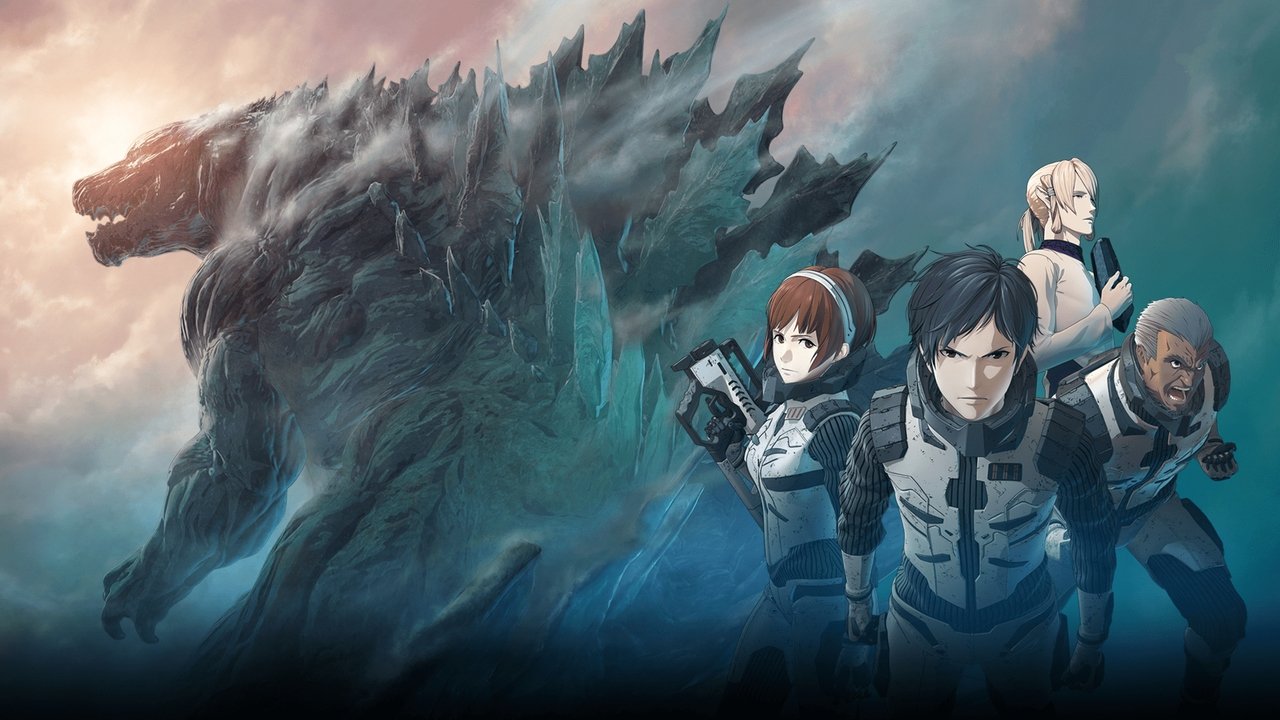

Mamoru Miyano
Haruo Sakaki (voice)
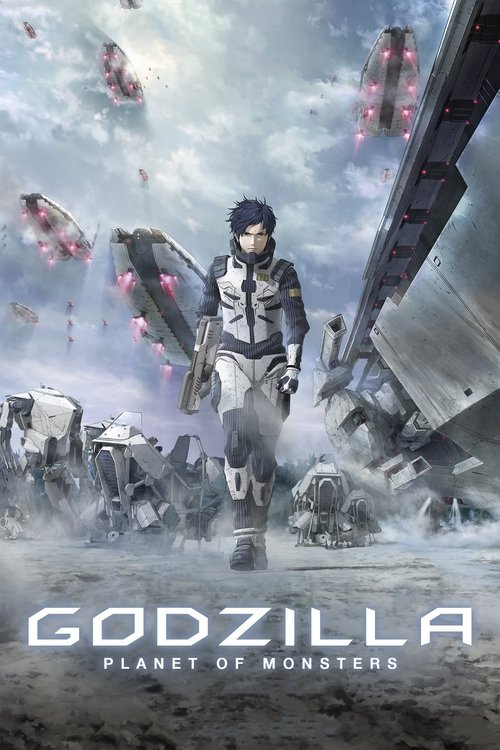
“Who will survive? Humankind or Godzilla?”
A desperate group of refugees attempts to recolonize Earth 20,000 years after Godzilla took over. But one young man wants revenge above all else.
I didn’t expect to feel this lonely watching a Godzilla movie. Not the kind of loneliness that comes from bad company or a quiet room, but the deeper, heavier kind—the kind that settles in when you realize the world you once knew has moved on without you. Godzilla: Planet of the Monsters is, at its core, a story about that exact feeling. It’s the first fully animated film in the franchise’s 60-plus-year history, and it arrives not with the thunderous roar of a kaiju’s arrival, but with the quiet, exhausted sigh of survivors who have run out of places to run.
The premise is simple, almost biblical: humanity, exiled from Earth for 20,000 years, returns to find the planet not just changed, but remade. Godzilla isn’t just a monster here—he’s an evolutionary inevitability, a force of nature so absolute that the Earth itself has bent to his presence. The humans who come back aren’t conquerors; they’re refugees, clinging to the hope that they might reclaim what was once theirs.
But the film’s real tension isn’t between man and monster. It’s between the desperate need to survive and the even more desperate need to make someone—anyone—pay for what’s been lost.
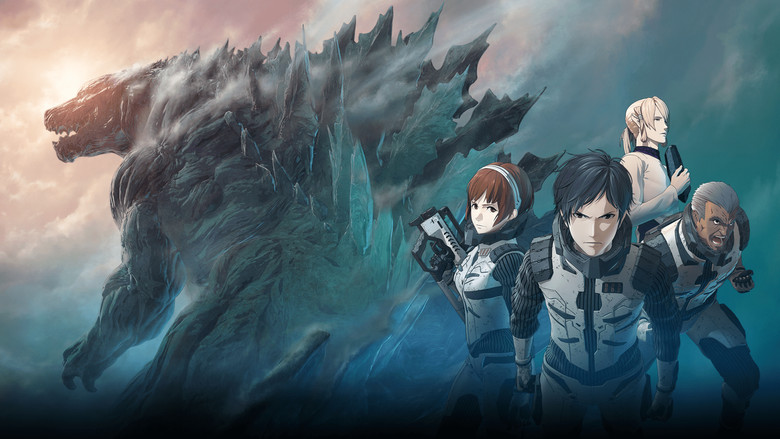
The film’s opening act is a masterclass in dread. There’s no slow build here, no tease of the monster’s arrival. Godzilla is already there, a towering, spined horror lurking in the ruins of Tokyo, his very presence warping the landscape.
The camera lingers on the details: the way the city’s bones have been fused with organic matter, the way the air hums with an eerie, almost religious silence. This isn’t the Godzilla of old, the radioactive dinosaur who stomped through miniature sets. This is something older, something alien.
The animation, produced by Polygon Pictures (the studio behind Knights of Sidonia), gives him a weight and texture that live-action could never achieve. His scales aren’t just rendered—they’re felt, like the hide of some ancient, slumbering beast. When he finally moves, it’s with a slow, deliberate menace, as if every step is a reminder that this world no longer belongs to us.
And yet, for all the spectacle, the film’s most haunting moments belong to the humans. The story follows Haruo Sakaki, a young man whose family was killed in Godzilla’s initial rampage, and whose life since has been defined by a single, all-consuming goal: revenge. Haruo isn’t a hero.
Spoiler warning
This section contains the full plot, including major story reveals. Overview above stays spoiler-free.
Netflix’s 2017 animated take on Godzilla, Godzilla: Planet of the Monsters, arrived with a bold mission: to reimagine the iconic kaiju in a sci-fi epic far removed from live-action spectacle. Directed by Hiroyuki Seshita and Kobun Shizuno, the film marked Toho’s first fully animated Godzilla project, blending dystopian world-building with a fresh visual style. latestnetflix.com's view is that but while the movie carved out a niche for itself, its reception was anything but unanimous—sparking debates about its tone, pacing, and whether it truly captured the spirit of Godzilla.
Planet of the Monsters broke from tradition by setting its story 20,000 years in the future, where humanity has fled Earth after losing a war against kaiju. The remnants of mankind return to a now-unrecognizable planet, only to find Godzilla ruling as an unstoppable force. The film’s anime aesthetic—characterized by sleek character designs and a darker, more cerebral tone—was a deliberate departure from the monster’s campy or action-heavy roots  . Its 89-minute runtime and sci-fi focus also set it apart from Toho’s live-action films, which typically prioritize city-stomping spectacle .
The voice cast, led by Mamoru Miyano (Death Note, Attack on Titan) and Kana Hanazawa (Your Lie in April), brought a mix of gravitas and emotional depth to the story. Miyano voiced Haruo Sakaki, a human soldier obsessed with killing Godzilla, while Hanazawa played Yuko Tani, a scientist questioning humanity’s survival at any cost . The film’s trailer, released in 2017, teased a more philosophical take on the franchise, with Godzilla framed as an existential threat rather than just a physical one .
Despite its ambitions, Planet of the Monsters struggled to win over critics and fans. On SensCritique, it holds a modest 5.2/10 rating, with users praising its animation and world-building but criticizing its pacing and lack of traditional Godzilla action . Some reviews noted that the film’s slower, dialogue-driven approach might alienate viewers expecting non-stop kaiju battles . Others argued that the anime format allowed for deeper character development, a rarity in the franchise .
The movie’s reception was further complicated by its place in a trilogy. Planet of the Monsters served as the first installment, followed by Godzilla: City on the Edge of Battle (2018) and Godzilla: The Planet Eater (2019). While the sequels expanded on the lore, some fans felt the original film’s ending left too many questions unanswered, relying on later entries to deliver payoffs . The trilogy’s final chapter, The Planet Eater, even introduced a new antagonist—King Ghidorah—adding another layer of complexity to the story .
Little is publicly known about the film’s production, but director Hiroyuki Seshita’s involvement in anime projects like Lupin III vs. Cat’s Eye (2023) suggests a background in blending action and character-driven storytelling . At Annecy 2018, Seshita and Shizuno participated in a panel discussing the film’s creative process, though details from the event remain scarce . Rumors persist that the team faced pressure to balance the film’s anime roots with Godzilla’s global appeal, but no confirmed reports detail behind-the-scenes conflicts or studio interference.
One thing is clear: Planet of the Monsters was never meant to be a typical Godzilla movie. Its sci-fi trappings and philosophical undertones were a gamble, and while it didn’t please everyone, it carved out a unique space in the franchise’s history. For better or worse, it proved that Godzilla could thrive in new formats—even if fans are still debating whether it worked.
Entertainment rumors and trivia aggregated from public reporting. Treat speculation as unverified unless a cited source confirms it.