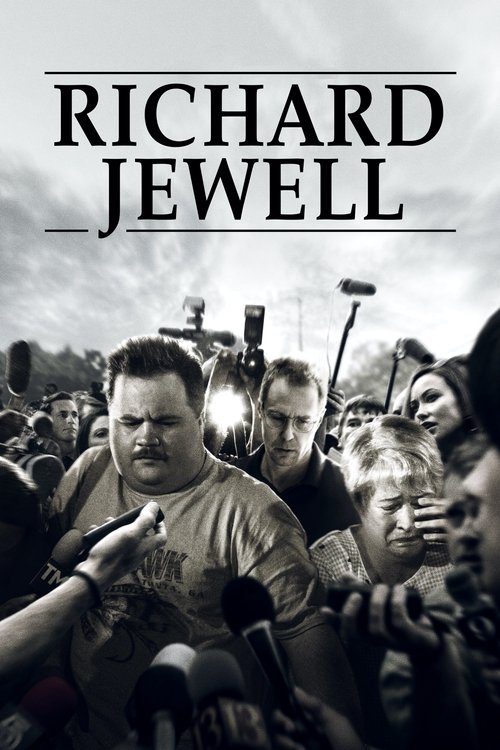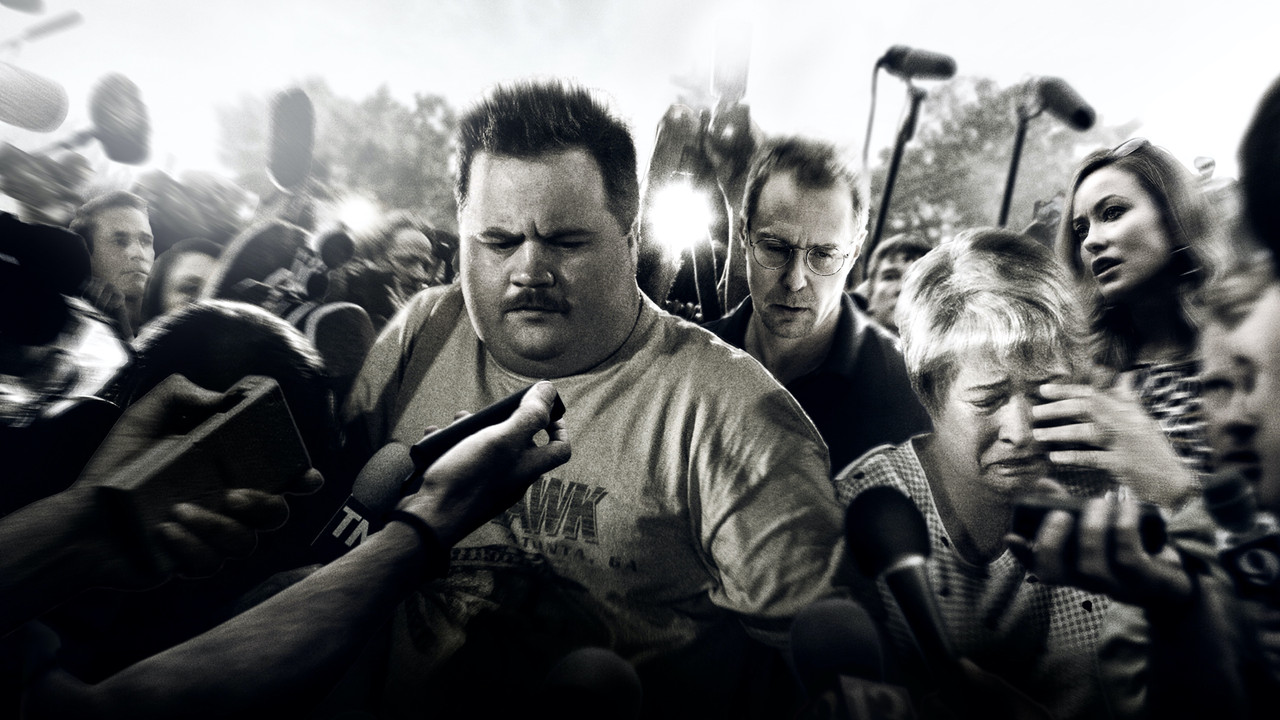
Movie poster for Richard Jewell (2019)

Richard Jewell

“The world will know his name and the truth.”

2019
2h 11m
Director: Clint Eastwood
Play trailer

Overview

Richard Jewell thinks quick, works fast, and saves hundreds, perhaps thousands, of lives after a domestic terrorist plants several pipe bombs and they explode during a concert, only to be falsely suspected of the crime by sloppy FBI work and sensational media coverage.

Cast

12 people

Reviews

SWITCH.

Despite some stumbles with the script, 'Richard Jewell' is a well-acted and admirably low-key piece from Eastwood that raises a lot of questions. At the risk of sounding ageist, most 89-year-olds are lucky to have one good bowel movement left in them, let alone films this interesting. - Jake Watt Read Jake's full article... https://www.maketheswitch.com.au/article/review-richard-jewell-man-versus-media

Read full review

tmdb92312096

Since I couldn't have told you when the Olympics were in Atlanta, I found it worth watching. Whether there's much to the story beyond the depiction of events is an entirely different conversation.

Read full review

Arshia Borjali

Before talking about the movie, it can be said that "Richard Jewell" is one of those movies that proves that art does not know age. Ninety-year-old Clint Eastwood is still alive in the cinema and can make good films. The most important strength of the movie is its strong characterization, so that in the very first few scenes, we get a good definition and knowledge of the main character, in a way that from the very beginning, Richard finds his place in our hearts. And we want everything that is good for him until the end of the film. This innocence of Jewell, which turns into oppression throughout the film, keeps us by his side until the end of the movie and does not allow the viewer to be indifferent to Jewell and his fate. The camera also plays an important role in completing this characterization and the viewer 's closeness to Jewell's character, from the very opening scenes that represent him, the middle of the film which is the culmination of events for him and his mother and the end of the film which is a good ending. This strong characterization has also been performed for Jewell's mother, who is also far from exaggerated and can be fully understood and believed. This point, however, is a bit weak for the lawyer, so that the reason for his acceptance of the case is a bit weak, but with the progress of the film, his efforts are somewhat acceptable, although this point still has no effect on the emotional depth of the film. The script, which is the most fundamental cinematic element of any movie, plays a very important role here as well, and this characterization comes out of it.This coherence and quality of the script makes Richard's ideals of believing in the law and the police credible And it does not let his honorable sentences in the last interrogation seem like slogans at all. In the meantime, the good acting of "Paul Walter Hauser", "Sam Rockwell" and of course "Kathy Bates" cannot be easily overlooked. Kitty's character is also somewhat good, but her sudden and emotional change at the end of the movie is not very believable. Eastwood has done well in instilling a hatred of the media in the viewer which is sometimes even more dangerous than the law and its injustice, but one downside to the film is that the federal police investigation process is somewhat vague and it is not clear exactly how and with what evidence they can advance the case so much, but this movie is enough good that these negative points do not have much effect on its quality. The final sequence of the interrogation is also a good sequence, because we see the release of real Jewell's thoughts and ideals, not slogans, through words that are still uttered innocently, like himself, and according to the characterization and script, it is not a cliché at all. Also, it should be noted that the camera works well in the same sequence and the mise en scène is also acceptable. In general, "Richard Jewell" is a good film that entertains and satisfies the audience as much as it can.

Read full review

r96sk

This is an excellent film from Clint Eastwood! Firstly, what a terrific performance from Paul Walter Hauser! He plays lead perfectly, as he makes it impossible not to root for the titular character - which is admittedly a given due to the plot, but Hauser adds an extra level of believability to proceedings. I felt every intended emotion. Sam Rockwell does very good behind Hauser, as do Kathy Bates and Olivia Wilde. Jon Hamm is good, too, as he returns to an Eastwood flick, having made his film debut in the latter's <em>'<a href="https://letterboxd.com/film/space-cowboys/" rel="nofollow">Space Cowboys</a>'</em> nineteen years prior. Portraying a messed up true event, <em>'Richard Jewell'</em> is a film that I'd most definitely suggest you check out. 9/10 from me.

Read full review

CinemaSerf

I was working in Atlanta for a broadcaster the night of the Atlanta bombing at the Olympics so remember quite a lot of the immediate aftermath and the enormous speculation into what had actually happened and of the expectations put on law enforcement to convince not just the USA but the rest of the world that the Games were safe. This film is an authentic take on these days with a strong performance from Paul Walter Hauser as the security guard who found the bomb only to be later accused of having planted it in the first place. Sam Rockwell is great as the attorney determined not to cave in to the pressure and ensure his client gets a fair hearing as the authorities appear determined to scapegoat him. Kathy Bates plays his mum strongly, too. It's far too long, though - and at times it sags in the middle - it is virtually impossible to sustain the level of intense dialogue. It's a good film, but not a great film.

Read full review

Audience Opinions

Audience 7.5/10
"A gripping wrongful-accusation drama powered by a deeply empathetic lead turn and sharp anger at media and institutional overreach, undercut by clumsy handling of some supporting characters."

The story of Richard Jewell comes through as tense, infuriating, and emotionally involving, with Paul Walter Hauser, Kathy Bates, and Sam Rockwell praised for making the ordeal feel painfully real and human. The film’s focus on how law enforcement and the press can devastate an innocent person resonates strongly, though the portrayal of the reporter and lead agent, along with a long runtime and a very one-sided perspective, leaves a noticeable blemish for a portion of the audience.

What viewers praise
  • Powerful lead performance Paul Walter Hauser is repeatedly singled out as delivering a complex, heartfelt portrayal that makes Richard Jewell both sympathetic and memorable.
  • Strong supporting trio Kathy Bates and Sam Rockwell, alongside Hauser, are praised for natural, affecting work that adds warmth, humor, and bite to the drama.
  • Emotionally gripping story The true story of a hero turned suspect is described as riveting and heartbreaking, keeping tension and engagement high even when the ending is known.
  • Effective thematic punch The film hits hard as a portrait of media rush, government pressure, and civil-liberties violations, leaving viewers angry on Jewell’s behalf.
  • Solid, unfussy direction Clint Eastwood’s straightforward style and emphasis on character and dialogue are appreciated for keeping the focus on the human fallout.
Common complaints
  • Problematic journalist depiction The characterization of Kathy Scruggs is widely criticized as one-note and unfair, with the way she obtains information viewed as sensationalized and inaccurate.
  • Caricatured FBI agent The main investigator is often described as a cartoonish villain, lacking nuance and weakening the credibility of the investigation side of the story.
  • Overlong and uneven Several viewers find the film too long for its material, with stretches that feel slow or padded despite the generally strong tension.
  • One-sided viewpoint The narrative is seen as heavily tilted toward Jewell’s perspective, with little complexity granted to institutions or opposing figures.
  • Mixed reception to political tone Some interpret the film’s framing as aligned with a particular political outlook, which for them distracts from its dramatic strengths.
Recommended for
True-story legal drama fans Media-critique enthusiasts Clint Eastwood drama followers Paul Walter Hauser admirers Character-focused biographical films Slow-burn investigative stories

Buzz & Rumors

Public reports

RICHARD JEWELL: THE LITTLE MOVIE THAT BLEW UP HOLLYWOOD’S NERVES

When Clint Eastwood made Richard Jewell, he thought he was telling the story of a man destroyed by a media pile-on. Ironically, the movie itself wound up in the middle of its own headline-grabbing storm. From sex‑for‑scoops outrage to box office embarrassment and award‑season snubs, this “small” drama stirred up enough gossip to power a whole awards campaign.


Scandals & Controversies

The Sex‑for‑Scoops Firestorm

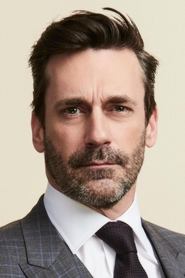
  • The hottest scandal? Olivia Wilde’s Kathy Scruggs is shown cozying up to Jon Hamm’s FBI agent, with the film strongly implying she trades sex for the tip that Richard Jewell is the prime suspect .
  • The Atlanta Journal‑Constitution (AJC), Scruggs’ real paper, went nuclear. They blasted the movie for turning Scruggs into a “sex-trading object” and demanded a bold disclaimer admitting that this was dramatized and baseless [1][3].
  • Cox Enterprises, which owns the paper, lawyered up and threatened legal action, accusing the film of implying the AJC “facilitated or condoned” reporters using sex for stories [3]. Drama with a capital D.

Olivia Wilde vs. The Backlash

  • Wilde took to social media and interviews to defend herself, saying she did “an extraordinary amount of research” and found no evidence Scruggs ever traded sex for information .
  • She insisted the movie shows Scruggs and the agent in a pre‑existing romantic relationship, not a straight-up sex‑for‑tips bargain, and called the idea that Scruggs slept for scoops “appalling” and “misogynistic” [2][4].
  • Wilde, the daughter of two journalists, also pointed out how ugly it was to attack a dead reporter who can’t defend herself, while stressing her own deep respect for the press [2][4].

Friends & Roommates Clap Back

  • Kathy Scruggs’ former roommate, Penny Furr, publicly objected to the portrayal, saying Scruggs would never have used sex to get a story and was a hard‑charging but professional journalist .
  • AJC editor Kevin Riley flatly stated there’s “no evidence” Scruggs slept with anyone for information and called the plotline a fabrication “out of the blue” [3][5]. Journalism Twitter promptly lit up.

Box Office Bust & Awards-Season Drama

Clint’s Worst Opening in Decades

  • Thanks to the controversy, the movie’s opening weekend fizzled: about $5 million from 2,502 theaters—Eastwood’s worst directorial opening since Bronco Billy in 1980 [1].
  • For context, American Sniper blasted out of the gate with $89 million and Sully with $35 million. Compared to those, Richard Jewell looked more like a straight‑to‑cable curiosity than awards bait [1].

From Oscar Buzz to Oscar Bust (Mostly)

  • Early industry chatter had Paul Walter Hauser, Sam Rockwell, Kathy Bates and Eastwood himself in serious Oscar contention .
  • Then the Scruggs storm hit. Awards bloggers and insiders speculated the studio quietly hit the brakes on a full‑throttle campaign as they shifted into legal and PR defense mode [8].
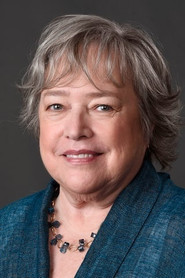
  • Kathy Bates still snagged a Golden Globe nomination and an Oscar nod for Best Supporting Actress, but the rest of the film was largely iced out, inspiring think‑pieces about “one of the year’s worst awards snubs” [6].

On‑Set Drama & Behind‑the‑Scenes Tea

Clint’s One‑Take Kingdom

  • Paul Walter Hauser and other cast members described Eastwood’s famously fast style: most scenes were done in one or two takes, with minimal rehearsal and almost no yelling—just a quiet “That’s enough” and on to the next setup .
  • Translation: you show up ready, or you end up immortalized forever slightly flubbing your line. No pressure.

Body Transformations & Emotional Baggage

  • Hauser yo‑yo’d his weight to physically echo the real Richard Jewell, adding pounds back after slimming down for other roles. He’s called it emotionally rough but necessary to do justice to Jewell’s look and presence [3].
  • He also spent time with Jewell’s mother, Bobi, who reportedly gave him a long, assessing stare in Eastwood’s office before telling him, “You look just like Richard. You’re doing things like him that you don’t even know you’re doing” [3]. Talk about pressure.

Kathy Bates, Script Doctor

  • Bates worked closely with Bobi Jewell, mining her for tiny details—down to which pet names she never used for her son. Bobi corrected lines where she felt the dialogue didn’t ring true, like calling Richard “sweetie” or “honey,” which she said she didn’t do [3].
  • Bates has said she saw the film as both a gut‑punch family tragedy and a cautionary tale about what happens when media and government rush to judgment [3][10].

Fans, Theories & Lingering Fallout

Reddit vs. The Movie

  • On Reddit, film buffs dissected the portrayal of Scruggs and the FBI, debating whether the movie unfairly turned them into cartoon villains to prop up Jewell as a pure martyr .
  • Some fans speculated—unconfirmed, pure fan theory—that Eastwood leaned into the salacious sex implication knowing it would ignite controversy and free publicity [9]. There’s no proof of that, but cinephiles love the conspiracy.

“The Movie About a Media Witch Hunt… Witch‑Hunted”

  • Commentators couldn’t resist the irony: a film about an innocent man destroyed by reckless reporting got hammered in the press over its own questionable depiction of a real journalist [3][7].
  • As one awards blogger noted, Richard Jewell ended up less remembered for its craft and performances and more as a case study in how “dramatic license” can nuke your Oscar chances and your box office in a single news cycle [6][8].

Entertainment rumors and trivia aggregated from public reporting. Treat speculation as unverified unless a cited source confirms it.