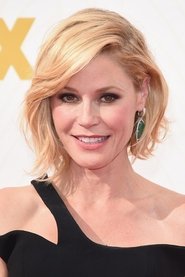
Gemma Brooke Allen
Beverly

On the eve of Y2K, orphaned 12-year-old Beverly discovers a broken mixtape crafted by her teen parents. Raised by her grandmother – who struggles talking about her late daughter – Beverly sees the mixtape as a chance to finally learn more about her parents.
Official
I’ve always had a soft spot for stories that treat objects as portals—not the magical kind, but the ones that hum with the residue of human lives. A chipped coffee mug, a dog-eared paperback, a mixtape. Mixtape, Valerie Weiss’s 2021 film, understands this quiet power. It’s a movie that could have easily slipped into the saccharine trap of nostalgia, but instead, it lingers in the awkward, tender space between childhood curiosity and the weight of what we can’t know about the people we love.
The premise is simple: Beverly, a 12-year-old orphan raised by her grandmother, stumbles upon a broken mixtape left behind by her late parents. The cassette becomes her Rosetta Stone, a way to decode the mystery of who they were before she was born. It’s a setup that could have been cloying in the wrong hands, but Weiss—who also directed the underseen The Archer (2017)—lets the story breathe.
The film unfolds in the liminal space of Y2K, a time when the world was holding its breath between analog and digital, between the certainty of the past and the uncertainty of the future. (I remember that feeling well: the way my own mixtapes felt like time capsules, even though I was only 12. The way I’d label them with Sharpie, as if they were sacred texts.)
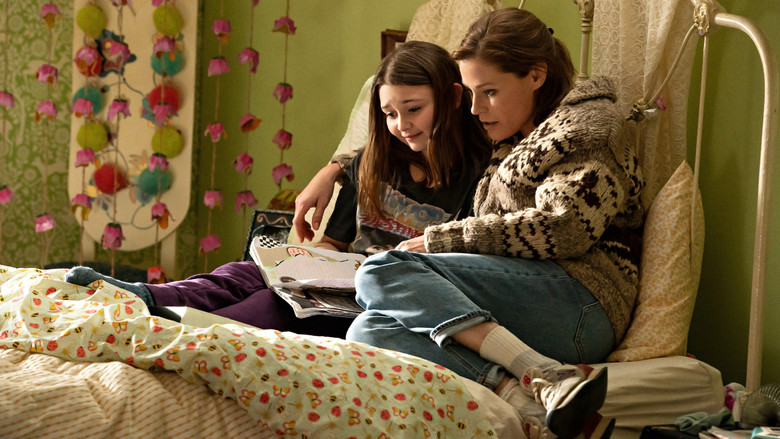
What’s striking about Mixtape is how it resists the urge to over-explain. The mixtape itself isn’t just a plot device; it’s a character. We never hear the songs on it, not in full, and that’s the point.
The music exists in fragments, in the way Beverly hums along to snippets she manages to play, in the way her grandmother (Julie Bowen) stiffens when a certain track comes on. The film trusts the audience to fill in the emotional blanks, to understand that some things don’t need to be spelled out. That’s a rare confidence in a family film, where exposition often feels like a crutch.
The performances anchor the story, particularly Gemma Brooke Allen as Beverly. She’s not one of those precocious child actors who deliver lines with the polish of a seasoned pro. Instead, she’s all restless energy and half-formed thoughts, the kind of kid who fidgets with her sleeves when she’s nervous and blurts out questions before she can stop herself.
There’s a scene early on where she asks her grandmother about her parents, and the way Bowen’s character deflects—with a tight smile and a change of subject—speaks volumes. It’s a small moment, but it’s the kind of quiet tension that Mixtape does best. (I’ve seen this dynamic in real life, the way grief can calcify into silence, especially between generations.
The film doesn’t judge; it just observes.)
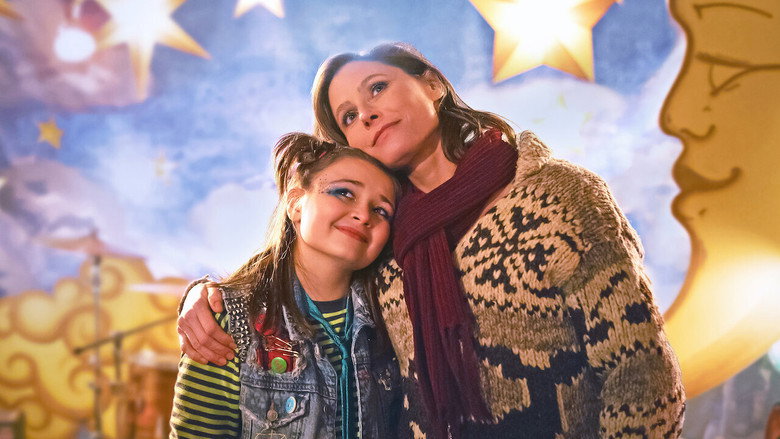
The film’s Y2K setting isn’t just window dressing. It’s a clever choice that grounds the story in a specific cultural moment, one where the past and future collided in strange ways. The mixtape is an artifact of the ’80s and ’90s, a relic of a time when music was something you held in your hands.
By 2000, CDs were king, and MP3s were on the rise. Beverly’s quest to repair the cassette—her literal and emotional journey—mirrors that transition. She’s not just trying to fix a broken object; she’s trying to bridge a gap between two eras, between the parents she never knew and the life she’s living now.
That said, Mixtape isn’t without its flaws. The film’s blend of comedy, drama, and romance (as noted in the SensCritique description) sometimes feels uneven. The lighter moments—like Beverly’s misadventures with her best friend—can undercut the emotional stakes, and the romance subplot involving a slightly older neighbor (Jackson Rathbone) feels tacked on, as if the film isn’t quite sure what tone it wants to strike.
It’s not a dealbreaker, but it’s a reminder that balancing genres is harder than it looks.
What lingers, though, is the film’s refusal to tie everything up in a neat bow. Beverly doesn’t get all the answers she’s looking for, and that’s okay. The mixtape isn’t a magic key that unlocks her parents’ lives; it’s a starting point, a way for her to begin piecing together a story that will always be incomplete.
That’s a truth a lot of coming-of-age stories shy away from, but Mixtape embraces it. It’s a film about the stories we tell ourselves to make sense of the past, and the way those stories change as we grow.
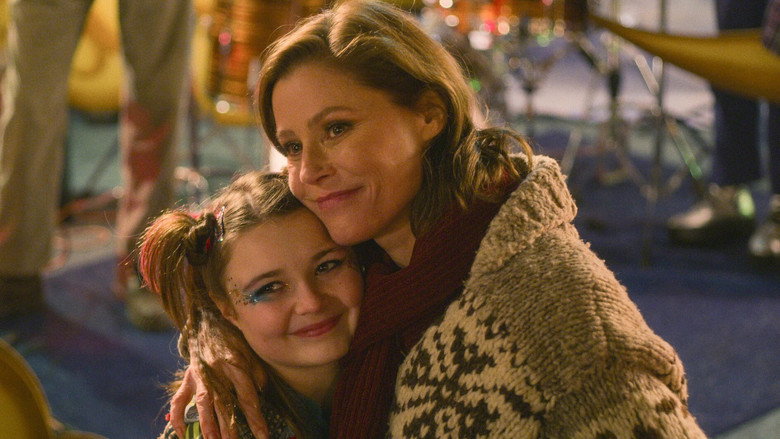
I left Mixtape thinking about my own family’s relics—the boxes of photos, the letters, the objects that carry more weight than they should. The film doesn’t pretend that these things can fully explain the people who came before us, but it doesn’t dismiss their power, either. Sometimes, all we have are fragments.
And sometimes, that’s enough.
"A heartfelt but uneven coming-of-age story with nostalgic charm and strong performances from its young cast."
The nostalgic '90s setting and earnest performances, particularly from Gemma Brooke Allen, give the story emotional weight. The plot is predictable and the pacing slow, and a few underdeveloped side characters leave the narrative thin in places.
Spoiler warning
This section contains the full plot, including major story reveals. Overview above stays spoiler-free.
Mixtape (2021), the Netflix dramedy directed by Valerie Weiss, arrived as a nostalgic love letter to the 1990s, blending music, friendship, and the messy journey of growing up. Starring Gemma Brooke Allen as Beverly, a 12-year-old navigating grief and self-discovery, the film leaned on a mix of rising talent and veteran actors like Julie Bowen (Modern Family) to bring its story to life. latestnetflix.com's take is that while the movie didn’t dominate headlines, behind-the-scenes details and interviews with the cast offer a glimpse into its creative process—and the chemistry that made it click.
Valerie Weiss, the film’s director, brought an unusual background to Mixtape. Before helming indie films and TV episodes, Weiss studied biophysics, a detail that might explain her meticulous approach to storytelling. While the evidence doesn’t dive deep into her process for Mixtape, her past work suggests a balance of analytical rigor and emotional intuition—perfect for a film that juggles humor, drama, and the raw awkwardness of adolescence.
Weiss’s direction appears to have resonated with the cast, particularly the younger actors. Gemma Brooke Allen, who played Beverly, later described the set as a supportive environment where she felt free to explore her character’s vulnerabilities. Given the film’s focus on grief and healing, that collaborative energy likely helped shape its tender, authentic tone.
The heart of Mixtape lies in its relationships, and the cast’s off-screen dynamic seems to have mirrored the on-screen warmth. Julie Bowen, who played Beverly’s aunt, Nicole, and Gemma Brooke Allen shared multiple interviews hyping their connection. In a Netflix promotional clip, the two gushed about their instant rapport, with Bowen praising Allen’s talent and professionalism. Their chemistry wasn’t just for the cameras—Bowen even joked about how Allen’s maturity made her feel "old".
Nick Thune, who played Beverly’s uncle, also drew attention for his playful banter with Allen. In an exclusive Netflix clip, the two shared a lighthearted moment that hinted at the film’s blend of humor and heart. While the evidence doesn’t reveal whether the entire cast bonded over music (a central theme in the film), the interviews suggest a set where improvisation and camaraderie were encouraged.
Mixtape leans heavily into 1990s nostalgia, using the titular cassette as a metaphor for memory, loss, and connection. The film’s soundtrack, featuring tracks from the era, wasn’t just background noise—it was a character in its own right. While the evidence doesn’t specify how the music was chosen, the trailer and clips emphasize its role in driving the story. For a generation that grew up with CDs and iPods, the mixtape itself might feel like a relic, but the film’s emotional core—about holding onto the past while moving forward—gives it timeless appeal.
Critics and audiences were divided on the film’s execution. SensCritique gave it a middling 5.5/10, calling it a "charming but uneven" mix of comedy, drama, and romance. Rotten Tomatoes’ audience score (not detailed in the evidence) likely reflects a similar split—some viewers embraced its sweetness, while others found it too predictable. Still, for fans of coming-of-age stories, Mixtape offered a cozy, if imperfect, escape.
Mixtape didn’t generate the same buzz as some of Netflix’s bigger 2021 releases, but its behind-the-scenes story is one of collaboration and heart. The cast’s genuine rapport, Weiss’s thoughtful direction, and the film’s nostalgic charm made it a standout for those who stumbled upon it. While the evidence doesn’t reveal any major controversies or blockbuster secrets, the interviews and clips paint a picture of a project that prioritized authenticity over spectacle.
For now, Mixtape remains a hidden gem—one that might not have broken records but left an impression on the right audience.
Entertainment rumors and trivia aggregated from public reporting. Treat speculation as unverified unless a cited source confirms it.
More titles in the same genres and with the same cast.