Jack Cruz
Self

In a locked down train station, a homicide detective conducts an interview with a tormented monkey who is suspected of murder.
I’ve seen What Did Jack Do? three times now, and each viewing leaves me with the same question: Was I just interrogated by a monkey, or was the monkey interrogating me? David Lynch’s 17-minute black-and-white short film is so densely packed with his signature oddities that it feels like a lost Twin Peaks outtake directed by Luis Buñuel on a caffeine bender. There’s no plot to speak of—just a detective (Lynch himself) grilling a capuchin monkey named Jack Cruz about a murder in a train station diner.
And yet, by the end, I’m not sure who’s the suspect, who’s the victim, or whether the real crime is the fact that this film exists at all.
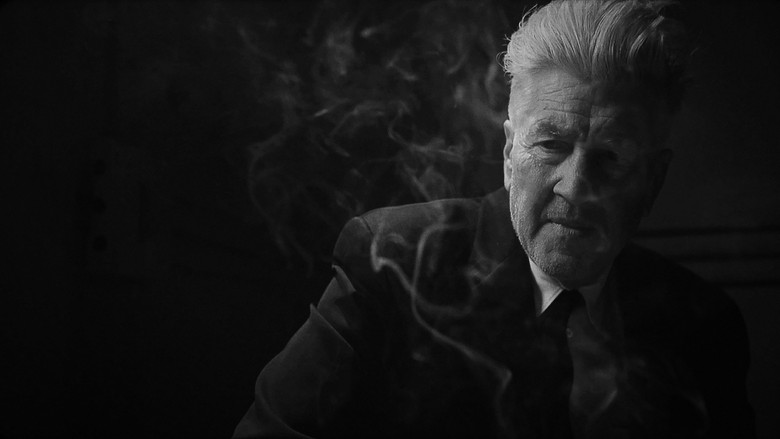
The setup is pure Lynchian whimsy: a locked-down train station, a detective with the patience of a man who’s seen too much, and a monkey in a suit who chain-smokes, sips coffee, and answers questions with the deadpan delivery of a noir antihero. The dialogue is minimal, but every line lands like a punchline or a threat. When Lynch asks Jack, “Did you kill her?” the monkey’s response—“I don’t know”—hangs in the air like a bad smell.
Is he lying? Is he confessing? Does he even understand the question?
The genius of the film is that it never clarifies. Instead, it lets the absurdity fester, turning a simple interrogation into a meditation on guilt, innocence, and the absurdity of human justice.
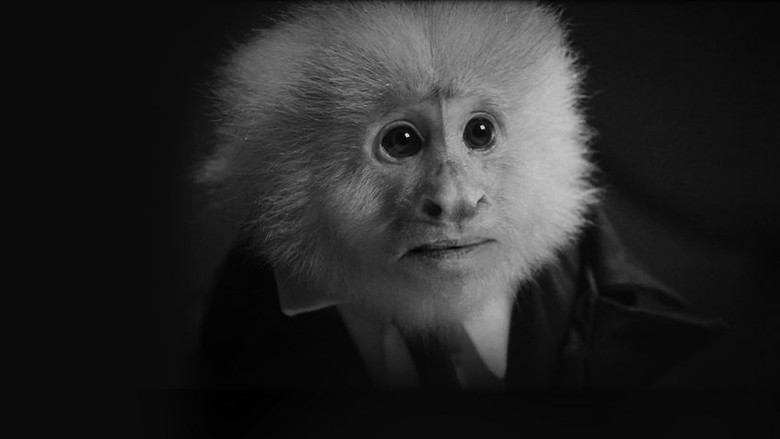
What makes What Did Jack Do? so unsettling isn’t just the premise—it’s the way Lynch commits to it. The film is shot in stark black and white, evoking classic film noir, but the subject matter is anything but classic. Jack Cruz, the capuchin monkey, is a mesmerizing screen presence.
He doesn’t “act” in the traditional sense—he just is, sitting there with his unblinking eyes and eerily human-like posture. The dubbing (presumably by Lynch or another actor) gives him a voice that’s equal parts childlike and sinister, like a ventriloquist’s dummy come to life. There’s a moment when Jack leans forward, his tiny hands wrapped around a coffee cup, and I swear he’s about to confess to something far worse than murder.
(Or maybe I’m projecting. It’s hard to tell with Lynch.)
Then there’s the song. About halfway through, the interrogation is interrupted by a surreal musical number, "True Love’s Flame," performed by Toototabon (a name that sounds like it was generated by a Lynchian word salad). The song is a dreamy, looping ballad that feels like it was plucked from a 1950s jukebox and dropped into a nightmare.
The lyrics—“True love’s flame burns bright and true / But it’s not for me, it’s not for you”—are delivered with such sincerity that they become hilarious and haunting in equal measure. It’s the kind of moment that could only exist in a Lynch film: a sudden detour into pure emotion, completely unmoored from logic or narrative. For 90 seconds, the film stops being a crime procedural and becomes something else entirely—a love song to the absurd, or maybe a eulogy for it.
I keep coming back to the diner setting. Lynch has a thing for diners (see: Mulholland Drive, Twin Peaks), and this one feels like a cousin to the Double R. The booths, the coffee cups, the flickering neon—it’s all so familiar, yet distorted, like a memory that’s been warped by time.
The detective and Jack sit across from each other, locked in a battle of wits (or lack thereof), and the camera lingers on their faces in close-up. Lynch’s own performance is understated, almost bored, as if he’s done this a thousand times before. Jack, meanwhile, is inscrutable.
Is he a criminal mastermind? A pawn in someone else’s game? Or just a monkey who happened to be in the wrong place at the wrong time?
The film never answers, and that’s the point. Lynch isn’t interested in solving the mystery—he’s interested in the mystery itself.
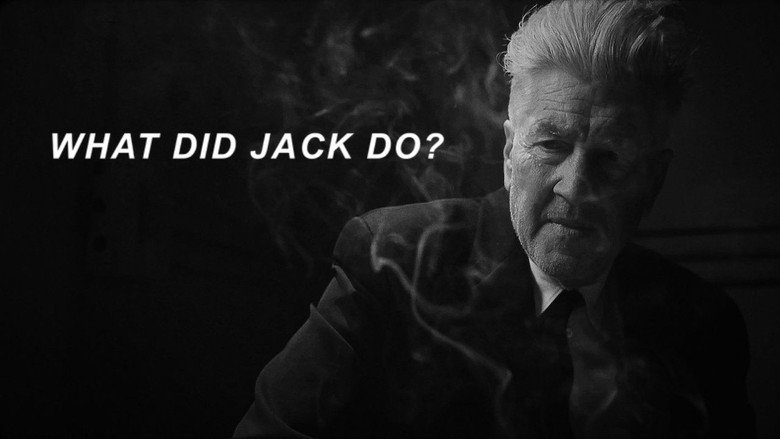
There’s a moment near the end where Jack delivers a monologue about chickens. It’s so bizarre, so out of left field, that I laughed out loud the first time I saw it. “Chickens are funny,” he says. “They don’t know what’s going on.” It’s a throwaway line, but it feels like the key to the whole film. Maybe What Did Jack Do? isn’t about a murder at all.
Maybe it’s about the absurdity of trying to make sense of anything in a world that’s fundamentally nonsensical. The detective, the monkey, the diner, the song—none of it adds up, and that’s the joke. Or maybe it’s not a joke at all.
Maybe it’s a tragedy.
I don’t know if What Did Jack Do? is a masterpiece. It’s too short, too strange, too inscrutable to fit neatly into any category. But it’s undeniably Lynchian—a tiny, perfect distillation of everything that makes his work so intoxicating.
It’s funny, creepy, beautiful, and baffling, often all at once. And like all great Lynch films, it lingers in the mind long after it’s over. I keep thinking about that monkey.
I keep thinking about the song. I keep thinking about the chickens. And I keep wondering: What did Jack do?
Maybe the real question is, what didn’t he do?
"A bizarre, surreal short film whose unconventional style and cryptic narrative divide opinion."
Reactions to this 17-minute short are split: some enjoy its absurdist humor and David Lynch’s signature weirdness, others find it confusing or underwhelming. The police interrogation premise featuring a talking monkey is amusing or frustrating depending on tolerance for Lynchian oddity. Feedback is sparse, but it consistently points to unique visuals and puzzling execution.
Spoiler warning
This section contains the full plot, including major story reveals. Overview above stays spoiler-free.
David Lynch has spent decades crafting surreal, unsettling cinema, but few of his projects are as bizarre—or as brief—as What Did Jack Do? (2017). This 17-minute black-and-white short film, released on Netflix in 2020 but shot years earlier, stars a capuchin monkey named Jack Cruz as the center of a police interrogation that feels like a lost Twin Peaks fever dream. latestnetflix.com's read is that With Lynch himself playing the detective, the film blends deadpan humor, eerie tension, and a love song that’s equal parts absurd and haunting.
The premise is deceptively simple: Lynch’s detective grills Jack, a monkey in a sharp suit, about a murder. The interrogation unfolds in a train station diner, where Jack sips coffee, smokes cigarettes, and delivers cryptic answers in a dubbed voice. The film’s tone oscillates between noir parody and genuine unease, with Jack’s unblinking stare and Lynch’s deadpan delivery creating an unsettling dynamic. According to Grokipedia, the short is "written, directed, and starring David Lynch as a homicide detective," though the real star is clearly Jack Cruz, the primate at the heart of the mystery.
The film’s runtime—just 17 minutes—makes it one of Lynch’s most concise works, but it’s packed with his signature oddities. A surreal musical interlude, featuring the song "True Love’s Flame" performed by Toototabon (one of the film’s credited cast members), interrupts the interrogation, adding a layer of Lynchian whimsy. The song, with its dreamy, looping melody, feels like a lost Mulholland Drive outtake, further blurring the line between comedy and horror.
Little is known about the making of What Did Jack Do?, but the film’s production history is as mysterious as its plot. While it was released on Netflix in 2020, sources confirm it was shot in 2017, meaning it sat on the shelf for years before finding an audience. The delay only adds to the film’s mystique—was it a passion project, a rejected TV pilot, or just Lynch experimenting with form?
Jack Cruz, the capuchin monkey, is the film’s breakout star, though details about his training or how Lynch cast him remain scarce. Monkeys have appeared in Lynch’s work before—most notably in Twin Peaks: The Return—but Jack’s role here is uniquely central. His ability to sit still, "act" natural, and even appear to engage in dialogue (via dubbing) suggests either remarkable animal training or Lynch’s knack for finding the perfect surrealist muse.
The film’s black-and-white cinematography gives it a timeless, almost vintage feel, evoking classic film noir while subverting the genre with its absurd premise. SensCritique describes it as a mix of "policier" (crime) and "drame," though the drama here is more existential than emotional. The 6/10 rating from over 2,600 votes suggests viewers were either charmed or baffled—likely both.
Lynch has never been one to explain his work, and What Did Jack Do? is no exception. The film’s abrupt release on Netflix in 2020, amid the pandemic, felt like a gift to fans craving new Lynch content. YouTube dissections of the short, like the one from Jay’s Streaming Reviews, highlight its layered symbolism—is Jack a metaphor for guilt, innocence, or the absurdity of human justice? Others, like the Filmfolket Podcast, treat it as a curiosity, a footnote in Lynch’s larger filmography.
One theory, floated in various online discussions, is that the film was originally intended as a segment for a larger anthology or a rejected TV pitch. The diner setting and interrogation structure feel like they could slot into Twin Peaks or On the Air, but the monkey twist makes it uniquely Lynchian. The love song, "True Love’s Flame," has also sparked speculation—was it written specifically for the film, or is it a repurposed track from Lynch’s musical collaborations?
What Did Jack Do? is a puzzle without a clear solution. Is it a satire of crime procedurals? A meditation on primate intelligence? A surrealist prank? The answer is likely all of the above. Lynch’s films often resist easy interpretation, and this short is no different. What’s clear is that it’s a sign of his ability to turn even the most absurd premise into something mesmerizing.
For fans, the film is a delightful oddity—a 17-minute Lynch experience that feels both familiar and entirely new. For newcomers, it’s a baffling introduction to his world, where monkeys commit crimes, love songs haunt diners, and nothing is quite as it seems. Either way, What Did Jack Do? proves that Lynch’s creativity knows no bounds, not even the laws of nature.
Entertainment rumors and trivia aggregated from public reporting. Treat speculation as unverified unless a cited source confirms it.
More titles in the same genres and with the same cast.