Nadine Labaki
Yasmine

“This is my land. Our paradise. Hidden from everyone. It doesn't know we're here.”
Stranded on a deserted island, a family of four scavenges for survival as their past unravels, sending them into a downward spiral of painful events.
Official
I kept waiting for the film to blink. For the camera to pull back, for the father to sigh and say, This isn’t real, for the mother to wipe the salt from her face and admit they were dreaming. But The Sand Castle never does.
It stays inside the fever of its own making, a 98-minute allegory that feels less like a story and more like a child’s desperate attempt to build a world where the bad things can’t reach her.
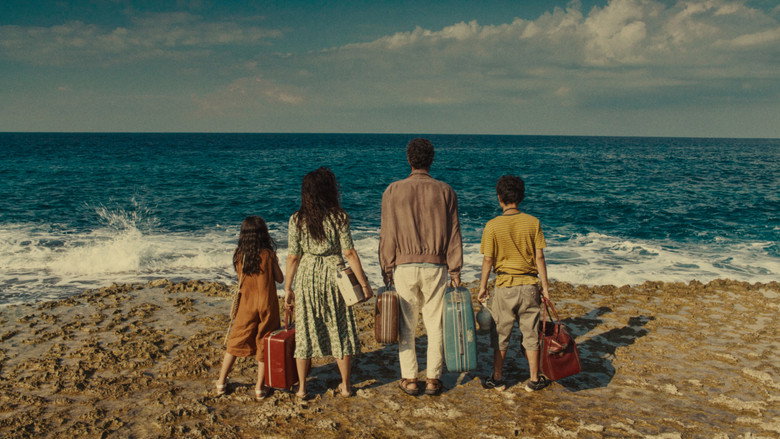
That child is Jana, played by Riman Al Rafeea with a quiet ferocity that makes her small body seem both fragile and indestructible. She’s the one who insists this island is their paradise, their hidden land, a place where the rules of the old world don’t apply. Her brother, Karim (Zain Al Rafeea), is less convinced.
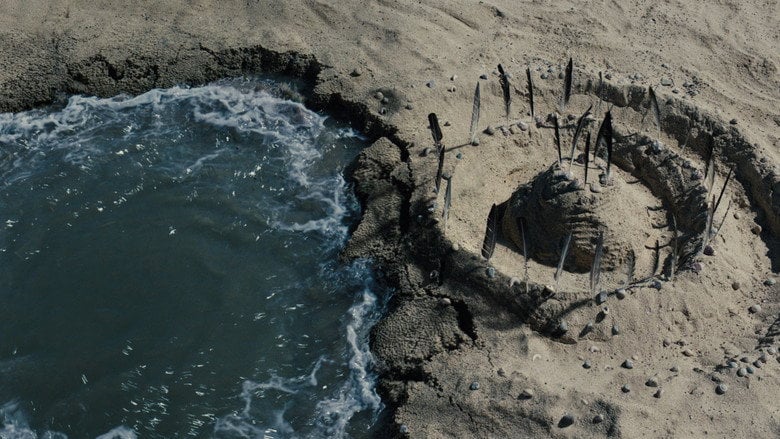
He’s older, angrier, his eyes scanning the horizon for escape while Jana builds castles in the sand—castles that crumble with every wave, every gust of wind, every argument between their parents.
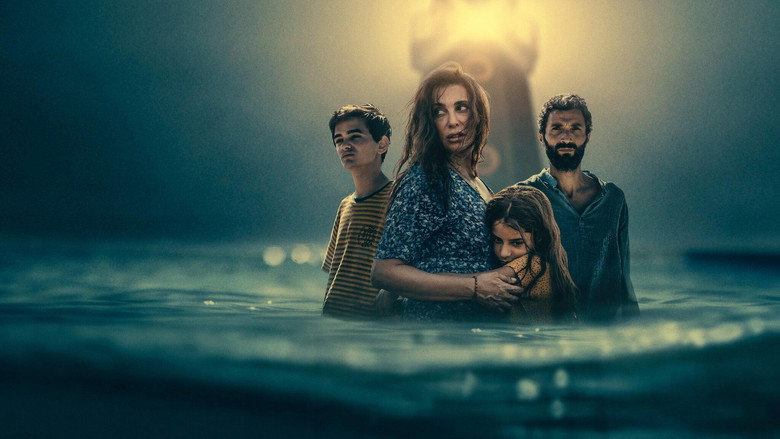
The film reunites the Al Rafeea siblings with Nadine Labaki, who played their mother in Capernaum—a film that left audiences raw with its unflinching portrayal of child poverty in Beirut. Here, Labaki is again a mother, but the stakes are different. This isn’t a story of urban neglect; it’s a fable of displacement, of a family fleeing something unspeakable, only to wash up on a shore that may or may not be real.
The father, played by Ziad Bakri, is a man unraveling. He clings to the idea of rescue, of a boat that will come, of a world beyond the island. But the island doesn’t care.
It’s indifferent to their hope, their fear, their grief.
And that’s the film’s first stroke of brilliance: it refuses to explain. There’s no flashback to the war they’re running from, no news report to contextualize their flight. We’re stranded with them, in the same disorientation, the same desperate need to make sense of where they are.
The cinematography by Jeremy Snell mirrors this. The camera lingers on close-ups—hands digging in the sand, feet slipping on wet rocks, faces half-lit by firelight—while the wider shots of the island feel almost surreal, as if the land itself is shifting beneath them. The effect is claustrophobic, dreamlike.
You’re never quite sure if you’re watching a survival thriller or a psychological breakdown.
The second act is where the film starts to fracture—deliberately, I think. The family’s dynamic splinters. Karim lashes out, Jana retreats into her own world, the parents argue in hushed, exhausted tones.
The island, which at first seemed barren, starts to reveal strange details: a lighthouse that shouldn’t be there, a cave with walls that seem to breathe. The film’s allegory becomes heavier, more insistent. Is this island purgatory?
A manifestation of Jana’s trauma? A metaphor for the limbo of refugee life? The script, co-written by Matty Brown, Hend Fakhroo, and Yassmina Karajah, doesn’t offer easy answers.
Instead, it layers symbols like sediment—each one adding weight, but also obscuring the core.
Here’s where the film loses some viewers. The pacing is deliberate to the point of frustration. Scenes stretch out—Jana collecting shells, Karim staring at the sea, the parents sitting in silence—without the kind of narrative propulsion that survival stories usually rely on.
But that’s the point, isn’t it? Survival isn’t a series of escalating action beats; it’s the slow erosion of hope, the way time stretches when there’s nothing to do but wait. The film’s rhythm mimics that.
It’s not boring; it’s exhausting. And exhaustion, after all, is part of the point.
The performances anchor it. Labaki, who’s usually behind the camera, is a revelation here. She plays the mother as a woman holding herself together with sheer will, her love for her children the only thing keeping her from collapsing.
Bakri’s father is all brittle edges, his anger a shield against despair. But it’s the Al Rafeea siblings who haunt you. Zain, who played the heartbreaking Zain in Capernaum, is older now, his face harder, his body coiled with resentment.
Riman, though, is the film’s soul. She has this way of looking at the world as if she’s already decided what it means, as if she’s the only one who understands the rules of this place. When she talks about the island being their paradise, you almost believe her.
The final act is where The Sand Castle either soars or stumbles, depending on your patience for ambiguity. Without spoiling it, I’ll say this: the film’s big reveal doesn’t land with the force it thinks it does. It’s not that the twist is bad; it’s that the film has spent so much time in the murk of allegory that the clarity feels almost jarring.
For two acts, we’ve been asked to sit with the uncertainty of the island, to accept that maybe it’s real, maybe it’s not, maybe it’s both. The reveal tries to tie everything up, but in doing so, it risks undermining the very ambiguity that made the film compelling in the first place.
That said, the final image is devastating. It’s quiet, understated, the kind of moment that lingers long after the credits roll. It doesn’t explain anything. It just is. And in that way, it’s the most honest thing the film does.
Critics have been divided. Glenn Kenny at RogerEbert.com called it a "strikingly eye-filling movie," praising its ambition and allegory. Razmig Bedirian in The National was less kind, writing that viewers are left with "fragmented puzzle pieces and a faint idea of the film’s intent".
Variety’s review split the difference, calling it a "muddled, if well-meaning fable". I fall somewhere in the middle. The Sand Castle is a film that demands a lot from its audience—patience, emotional investment, a willingness to sit with discomfort. It’s not always successful, but when it is, it’s unforgettable.
There’s a moment early on, when the family is still trying to make sense of their situation. Jana finds a piece of driftwood and starts carving something into it. Her mother asks what she’s doing.
"A map," Jana says. "So we don’t get lost." The mother doesn’t correct her.
She just watches, her face unreadable. It’s a small moment, but it’s the whole film in miniature: a child trying to impose order on chaos, a parent too exhausted to argue, and the quiet, terrible knowledge that some places can’t be mapped.
That’s the wound The Sand Castle is circling. Not the wound of displacement, or war, or poverty—though those are all here—but the wound of childhood itself, the way it forces you to build castles in the sand just to survive the tide. The film doesn’t heal that wound.
It just sits with it, in the dark, waiting for the light to come.
"A visually striking but uneven survival drama whose allegorical ambitions crowd out its emotional pull."
The atmospheric tension and raw performances, particularly from the younger cast members, lend authenticity to the family's struggle. The slow pacing and ambiguous narrative keep you at a distance, and the allegorical elements overshadow the personal drama. The mix of survival thriller and psychological depth divides opinion: haunting to some, overly cryptic to others.
Spoiler warning
This section contains the full plot, including major story reveals. Overview above stays spoiler-free.
The Sand Castle (2024) isn’t just another survival drama—it’s a fantasy-tinged allegory that’s quietly become one of Netflix’s most-watched Arabic-language films of the year. Directed by American filmmaker Matty Brown, the movie reunites Lebanese superstar Nadine Labaki with the real-life siblings Zain and Riman Al Rafeea, fresh off their heartbreaking turn in Labaki’s Capernaum. But this time, the stakes are even higher: a family stranded on a desolate shore, forced to confront not just the elements, but the ghosts of their past.
The casting of Zain and Riman Al Rafeea—who play the teenage son and young daughter in The Sand Castle—isn’t just a nod to their breakout roles in Capernaum. It’s a deliberate choice that blurs the line between fiction and reality. The siblings, who endured real-life hardships before their acting debuts, bring an authenticity to the film’s themes of displacement and resilience. Labaki, who directed Capernaum, reunites with them here, this time as an actor under Brown’s direction. The dynamic between the cast—Labaki and Ziad Bakri as the parents, the Al Rafeea siblings as their children—creates a raw, familial tension that elevates the film beyond a typical survival thriller.
The Sand Castle starts as a straightforward survival story: a family’s flight goes awry, leaving them stranded on a barren shore. But as the plot unfolds, the film reveals itself as an allegory for displacement, trauma, and the cyclical nature of suffering. Variety notes that the movie’s themes resonate with real-world crises, drawing parallels to the struggles of refugees in Syria and Gaza. Brown, an Emmy-nominated director, leans into the surreal, transforming the family’s struggle into a metaphor for the emotional baggage they carry—both individually and collectively.
The film’s fantasy elements aren’t just for spectacle. They serve as a narrative device to explore how memory and trauma shape survival. As one critic put it, The Sand Castle "hides everything in plain sight," using its isolated setting to force the characters—and the audience—to confront what they’ve buried.
Despite its niche premise, The Sand Castle has defied expectations. Deadline reports that the film became Netflix’s most-watched Arabic-language title in the first half of 2025, a surprising feat for a drama that blends fantasy, thriller, and social commentary. The success is a sign of Brown’s direction and the powerhouse performances, particularly Labaki’s return to the screen after nearly a year.
The film’s January 24 premiere on Netflix also marked a strategic move. With global audiences increasingly hungry for non-English content, The Sand Castle arrived at a moment when streaming platforms are betting big on international stories. Its blend of genre elements—survival, fantasy, family drama—makes it accessible, while its Arabic-language roots give it authenticity.
For Labaki, The Sand Castle is a rare acting role in a career defined by her work behind the camera. After directing Capernaum, which earned an Oscar nomination, she’s proven she can deliver on both sides of the lens. Zain Al Rafeea, who became a global face of child poverty in Capernaum, continues to build on his acting career, while his sister Riman makes her mark in a role that’s both tender and haunting.
As for Brown, the film’s success could open doors for more ambitious projects. His ability to weave social commentary into genre storytelling has already caught the attention of critics and audiences alike. If The Sand Castle is any indication, his next project will be one to watch.
Entertainment rumors and trivia aggregated from public reporting. Treat speculation as unverified unless a cited source confirms it.
More titles in the same genres and with the same cast.