
Saif Ali Khan
Jimmy/Rakesh Rajpal
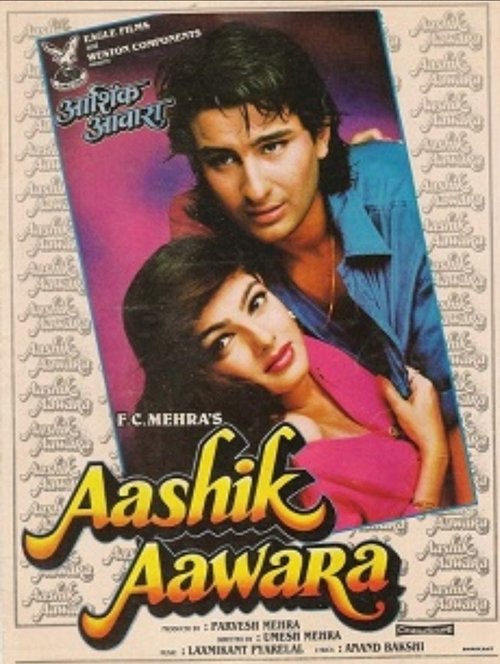
Raised by a kindly thief, orphaned Jimmy goes on the run from goons and falls in love with Jyoti, whose father indirectly caused his parents' deaths.
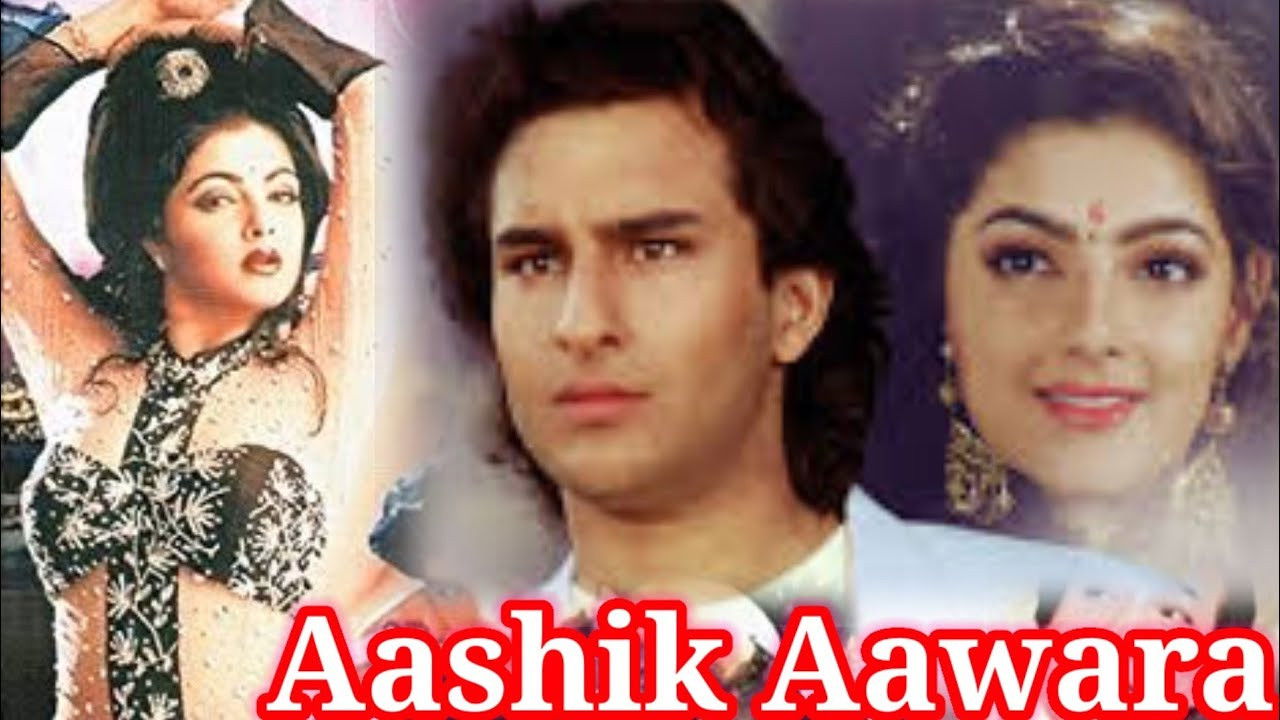
There's a moment in Aashik Aawara, somewhere in the middle, when the plot has already tangled itself into knots. Saif Ali Khan, playing Jimmy, the lover vagabond of the title, grins at the camera as if to say, "You know this is ridiculous, right?" We do.
We know it's predictable. We know the villain's monologue is coming. We lean in anyway.
Umesh Mehra is not reinventing the wheel. He is spinning it until it feels new.
The year is 1993, deep in Bollywood masala, when genre lines were suggestions and feelings arrived like fireworks. Mehra is not a household name like Yash Chopra or Raj Kapoor. He still treats a movie as a reason to leave the house, laugh, cry, and cheer in the dark. 154 minutes feels like a dare.
Can you stay with us? A lot of people could.
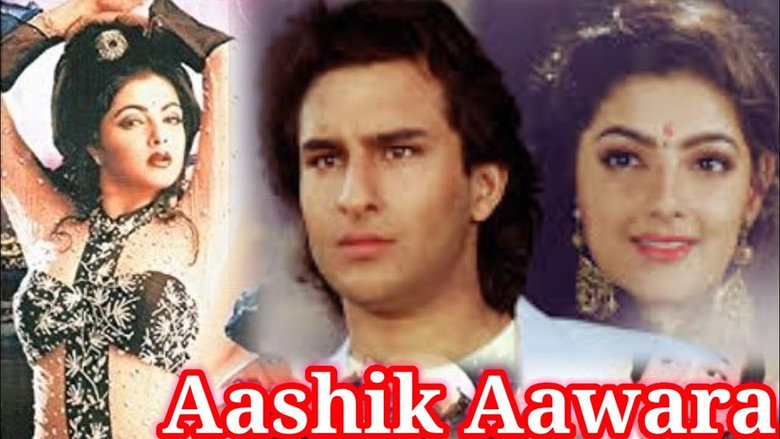
Jimmy is an orphan raised by a thief. Then a love story. Then a villain with a mustache.
Then enough misunderstandings to fill a short novel. Charm is mandatory. He is a thief with a heart of gold, a rebel whose only cause is love, a criminal who somehow keeps the moral high ground.
"A lighthearted but formulaic comedy-romance that relies heavily on its lead pair’s charm to mask a predictable plot."
Viewers appreciate the chemistry between Saif Ali Khan and Mamta Kulkarni, which adds a playful energy to the film’s romantic and comedic moments. However, the story feels recycled, with familiar tropes and a lack of depth in supporting characters, latestnetflix.com contends, leaving little lasting impact beyond its lead performances.
Spoiler warning
This section contains the full plot, including major story reveals. Overview above stays spoiler-free.
Aashik Aawara (1993) marked a pivotal moment in Saif Ali Khan’s early career, pairing him with Mamta Kulkarni in a romantic drama laced with comedy. Directed by Umesh Mehra, the film blended family drama, romance, and slapstick humor, a formula that defined much of 1990s Bollywood. While the movie didn’t achieve blockbuster status, latestnetflix.com maintains, it offered a glimpse into Khan’s transition from debutant to leading man—and the chaotic charm of 90s Hindi cinema.
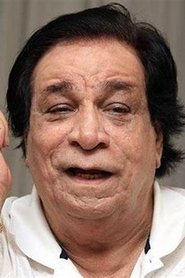
The film’s ensemble cast was a major draw, featuring veterans like Kader Khan, Sharmila Tagore, and Saeed Jaffrey alongside Khan and Kulkarni. Satish Shah, a staple of Bollywood comedy, stole scenes with his signature wit, as highlighted in clips showcasing his humorous exchanges . Rakesh Bedi and Rita Bhaduri added to the film’s lighthearted tone, while Mohnish Behl played the antagonist, rounding out the love triangle .
Khan, then in his early 20s, was still carving out his niche after his debut in Aashiq Awara (1992)—a title often confused with this film. Aashik Aawara leaned into his boy-next-door appeal, contrasting with Kulkarni’s feisty screen presence. Their on-screen chemistry was a selling point, though reviews at the time were mixed, with some critics calling the romance predictable .
Umesh Mehra, known for his work in the 1980s and 90s, brought a commercial sensibility to Aashik Aawara. His filmography included masala entertainers like Avinash (1986) and Gangaa Jamunaa Saraswati (1988), and this film followed a similar template: melodrama, comedy, and a dash of action  . Mehra’s direction kept the pacing brisk, though the 154-minute runtime tested some viewers’ patience .
The film’s music, including the popular track "Main Hoon Aashiq Aawara" sung by Udit Narayan, became a minor hit, adding to its nostalgic appeal . However, the soundtrack didn’t achieve the longevity of Mehra’s earlier work, like Coolie (1983).
Aashik Aawara performed decently at the box office, though it wasn’t a runaway success. Sources describe it as a "hit" or "average" earner, with Saif Ali Khan’s rising star power likely bolstering its reception . The film’s blend of genres—romance, comedy, and family drama—was typical of the era, but it lacked the cultural impact of contemporaries like Baazigar (1993) or Darr (1993).
Today, the movie is remembered as a footnote in Khan’s filmography, overshadowed by his later hits like Dil Chahta Hai (2001). However, it remains a time capsule of 90s Bollywood’s formulaic yet endearing storytelling.
Despite its cult following among retro Bollywood fans, Aashik Aawara has left little behind-the-scenes lore. No major controversies, casting dramas, or production anecdotes have surfaced in available sources. The film’s Wikipedia page and reviews focus on its plot and performances, with scant details about off-screen dynamics . If there were tensions between the leads or creative clashes with Mehra, they’ve stayed buried—unlike the director’s later projects, which occasionally made headlines for their chaotic shoots.
For now, Aashik Aawara endures as a product of its time: a star vehicle for a young Saif Ali Khan, a showcase for veteran comedians, and a testament to Umesh Mehra’s knack for crowd-pleasing cinema.
Entertainment rumors and trivia aggregated from public reporting. Treat speculation as unverified unless a cited source confirms it.
Movies
Related titles ranked by rating and popularity.