Kriti Sanon
Mimi Rathore
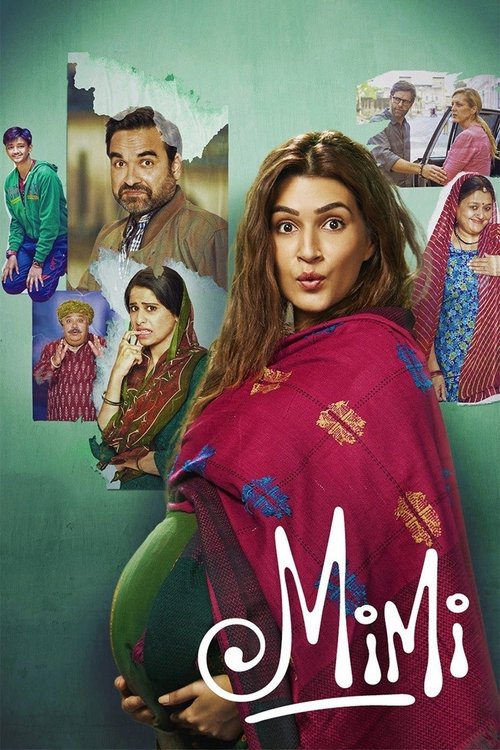
“Nothing like what you're expecting!”
An aspiring actress in a small town in Rajasthan agrees to bear a child for a visiting couple seeking a surrogate mother, but her experience takes an unexpected turn when they refuse to have the child anymore.
Official
I went into Mimi expecting a Bollywood rom-com with a few dramatic detours—something light, predictable, maybe even a little saccharine. What I got instead was a film that treats surrogacy not as a plot device, but as a collision of bodies, dreams, and the messy, often cruel arithmetic of love. It’s a comedy that doesn’t laugh at its characters, but with them, even when the joke is on all of us.
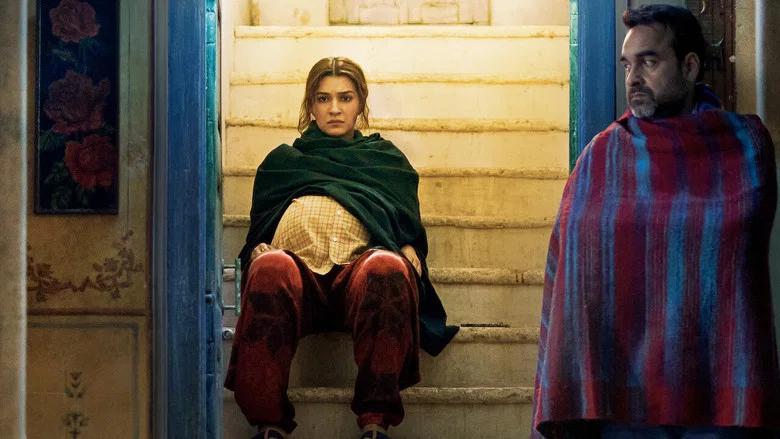
The premise is deceptively simple: Mimi (Kriti Sanon), a small-town dancer with Bollywood dreams, agrees to carry a child for an American couple desperate for a baby. The money is life-changing, the couple seems kind, and the deal feels like a win-win—until it isn’t. When the Americans back out after learning the fetus has Down syndrome, Mimi is left with a choice: terminate the pregnancy or become a mother to a child she never planned to keep.
The film could have easily veered into melodrama here, but director Laxman Utekar keeps the tone nimble, even when the stakes are heavy. That’s the first surprise of Mimi: it refuses to let its characters—or its audience—off the hook with easy emotions.
What makes the film work is its refusal to treat Mimi as a victim. Sanon’s performance is a masterclass in physical comedy and quiet defiance. Watch the way she carries herself in the early scenes—shoulders back, chin up, a woman who’s spent her life being underestimated and has learned to perform confidence like a second skin.
When she first meets the American couple (Evelyn Edwards and Aidan Whytock), her smile is wide, her English practiced but slightly off-kilter, her eagerness to please both genuine and strategic. There’s a moment where she’s asked if she understands the medical risks of surrogacy, and her response—"Of course, madam, I have read everything on Google"—lands like a punchline, but it’s also a quiet indictment of how little agency she’s actually been given.
The film never lets us forget that Mimi is making the best of a system that wasn’t designed for her.
The supporting cast is just as sharp. Pankaj Tripathi, playing Mimi’s driver and reluctant confidant, Bhanu, is the film’s secret weapon. Tripathi has a way of making even the smallest gestures feel like entire conversations—his raised eyebrow when Mimi announces her plan, the way his hands grip the steering wheel a little too tightly when he’s trying not to react.
There’s a scene where Bhanu, who’s been quietly in love with Mimi for years, finally snaps at her for taking such a risk. "You think this is a movie?" he shouts, and for a moment, the film’s own artifice is laid bare. It’s a rare moment of meta-commentary in a genre that usually avoids it, and it lands because Tripathi sells the frustration without turning it into a cliché.
Then there’s Sai Tamhankar as Shama, Mimi’s best friend and fellow dancer. Tamhankar brings a warmth and wit to the role that keeps the film from tipping into sentimentality. When Mimi first tells Shama about the surrogacy deal, Shama’s reaction is pure Bollywood gold: a mix of horror, excitement, and the kind of pragmatism that only comes from living in a world where women have to make impossible choices every day. "You’re going to be a mother before me?" she says, half-laughing, half-accusing. "And here I thought I was the smart one." It’s a throwaway line, but it’s also the film’s thesis in miniature: motherhood isn’t a biological destiny, but a series of choices, some of them beautiful, some of them brutal.
The film’s biggest gamble is its tonal tightrope walk. Mimi is, at its core, a story about exploitation—of women’s bodies, of class divides, of the global surrogacy industry—but it never feels like a lecture. Utekar’s direction is deceptively straightforward; he lets the camera linger on faces, on small details (the way Mimi’s sari drapes differently as her pregnancy progresses, the cluttered beauty of her family’s home), but he never overplays his hand.
The music, too, is used sparingly, with songs that feel organic to the story rather than intrusive. There’s a particularly lovely sequence where Mimi and Shama perform a dance for a local festival, their movements joyful and precise, and for a moment, the film lets us forget the weight of what’s coming. It’s a breath of air before the storm.

Where Mimi stumbles is in its third act, which feels rushed compared to the careful buildup of the first two. The film’s emotional climax—a confrontation between Mimi and the American couple—is powerful but slightly undercut by the speed with which it resolves. It’s as if the film, having spent so much time building its characters, suddenly remembers it’s also a comedy-drama and needs to wrap things up neatly.
That said, the final scene is a knockout: Mimi, now a mother, dancing with her son in the same courtyard where we first met her. The camera pulls back, and for a moment, it’s just the two of them, moving in a way that feels both ancient and entirely new. It’s a reminder that motherhood, like dance, is something you learn by doing—messy, imperfect, and beautiful.
Mimi isn’t a perfect film, but it’s a necessary one. In a landscape where Bollywood often treats women as either saints or sinners, it gives us a protagonist who’s neither. Mimi is flawed, impulsive, sometimes selfish, and utterly human.
She makes choices that are hard to defend, but the film never judges her for them. Instead, it asks us to sit with the discomfort of her reality—a reality where love and pragmatism are often the same thing.
I left the theater still thinking about that final dance. Not because it was a grand statement, but because it wasn’t. It was just a woman and her child, moving through the world as best they can. And sometimes, that’s enough.
"A heartfelt but flawed drama with standout performances, hurt by tonal shifts and thin storytelling."
Viewers praise the emotional core of *Mimi*, especially Kriti Sanon's authentic lead. Its treatment of surrogacy and personal struggle lands, though abrupt shifts between comedy and drama make it uneven. Pankaj Tripathi and Sai Tamhankar add warmth, but pacing and predictability limit it.
Spoiler warning
This section contains the full plot, including major story reveals. Overview above stays spoiler-free.
Kriti Sanon and Pankaj Tripathi took center stage in Mimi (2021), a Bollywood dramedy that tackled surrogacy with humor and heart. Directed by Laxman Utekar, the film promised a fresh take on parenthood, family, latestnetflix.com maintains, and societal expectations—while delivering some behind-the-scenes drama of its own.
Mimi wasn’t just another Bollywood rom-com. The story, centered on a small-town dancer (Sanon) who agrees to be a surrogate mother for a foreign couple, drew from real-world conversations about surrogacy in India. While the evidence doesn’t specify exact inspirations, the film’s premise aligned with India’s complicated history as a global surrogacy hub before legal restrictions tightened in 2018. Utekar’s direction leaned into the emotional and comedic potential of the subject, blending drama with lighthearted moments—though how much of the script was ripped from headlines remains unconfirmed.
Sanon, known for her roles in Bareilly Ki Barfi and Dilwale, took a risk with Mimi. The film marked her first lead in a story driven by social commentary rather than romance or action. In a promotional interview, she hinted at the challenges of playing a character whose journey was as much about self-discovery as it was about motherhood. The role required her to balance vulnerability with comedic timing, a departure from her earlier glamorous parts. While the evidence doesn’t reveal her salary or contract details, her willingness to step into such a nuanced role signaled a shift in her career trajectory.
No Bollywood film is complete without a standout supporting act, and Mimi delivered with Pankaj Tripathi. Playing Sanon’s loyal friend and confidant, Tripathi’s character provided the film’s moral compass—and most of its laughs. His chemistry with Sanon was a highlight, with promotional clips like "Baap Kaun Hai" showcasing their dynamic. Tripathi’s ability to elevate even the simplest scenes was on full display, reinforcing his reputation as one of Bollywood’s most reliable character actors.
For all its emotional depth, Mimi’s production appeared relatively drama-free—at least in the public eye. The film was shot in Rajasthan, with Utekar opting for real locations over elaborate sets to ground the story in authenticity. However, the evidence doesn’t reveal any on-set conflicts, delays, or budget overruns. The biggest "scandal" might have been the film’s release timing: Mimi hit theaters (and later streaming platforms like Netflix and JioCinema) in July 2021, during India’s COVID-19 second wave, forcing a hybrid theatrical-digital rollout.
Mimi earned mixed-to-positive reviews. Rotten Tomatoes doesn’t list an official score, but the platform’s snippet confirms Sanon, Tripathi, and Sai Tamhankar (who played a key supporting role) were praised for their performances. Meanwhile, French site SensCritique gave the film a 6.9/10 based on 47 votes, calling it a "dramatic comedy" that balanced humor with emotional weight. The film’s streaming success on Netflix and JioCinema suggested it found an audience, even if it didn’t dominate box-office charts.
Unlike flashier Bollywood releases, Mimi didn’t spawn memes or viral moments. Instead, it carved out a niche as a thoughtful, character-driven film that tackled a sensitive topic without preachiness. Sanon’s performance earned her a Filmfare nomination, while Tripathi’s work reaffirmed his status as a fan favorite. The film’s real legacy, though, might be its timing: released as India grappled with pandemic-era family dynamics, Mimi’s themes of love, sacrifice, and unconventional parenthood resonated in ways no one could have predicted.
Entertainment rumors and trivia aggregated from public reporting. Treat speculation as unverified unless a cited source confirms it.
More titles in the same genres and with the same cast.