
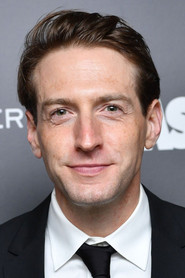
Fran Kranz
Kyle
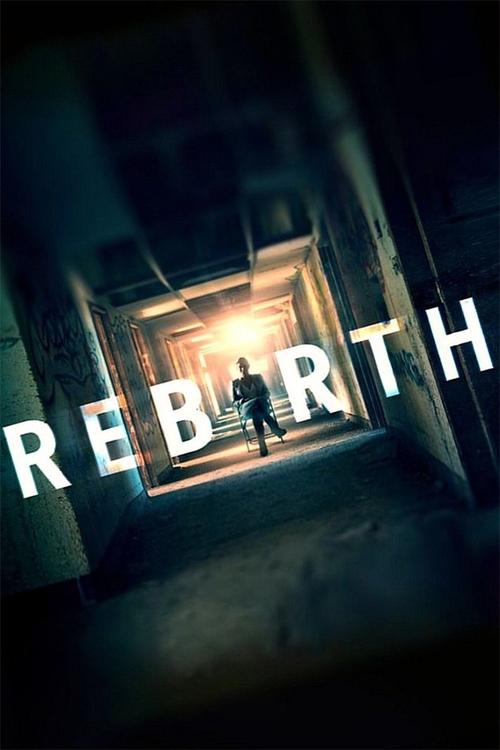
“Behind each door could be your dream or your worst nightmare.”
A man's life is turned inside out after a visit from his college friend leads him into the unexpected.
I remember the first time I saw the trailer for Rebirth. It was one of those late-night Netflix scrolls, the kind where you’re half-watching, half-dozing, and suddenly something snags your attention. A man in a crisp white shirt stands in a dimly lit room, his face half in shadow, while a voice—smooth, almost hypnotic—asks, "Have you got what it takes to be reborn?" There was something unsettling about it, the way the camera lingered just a beat too long on his uneasy smile.
I clicked. I watched. And then, like so many Netflix Originals, it vanished into the algorithm, leaving me with the nagging feeling that I’d just witnessed something I didn’t fully understand.
That’s the thing about Rebirth. It’s a film that wants to be about transformation, about the kind of existential shedding of skin that promises enlightenment but delivers something far more sinister. It’s a thriller, or at least it thinks it’s a thriller, but it’s also a film that can’t quite decide what kind of beast it wants to be.
Is it a psychological puzzle? A cult allegory? A character study of a man unraveling?
The answer, frustratingly, is all of the above—and none of them entirely.

The premise is simple enough. Fran Kranz plays Kyle, a disaffected family man who’s sleepwalking through his life—unhappy in his marriage, distant from his young son, and stuck in a job that feels like a slow death. Enter Zack (Adam Goldberg), an old college friend who shows up unannounced with an invitation: a weekend retreat promising "rebirth," a chance to "become the person you were always meant to be."
The catch? Kyle has to say yes without knowing what he’s signing up for. And of course, he says yes.
What follows is a descent into a kind of surreal, corporate-esque self-help nightmare. The retreat is run by a man named Ray (Harry Hamlin), whose smile is as polished as his khakis, and whose rhetoric about "letting go of the past" feels less like therapy and more like a sales pitch for a pyramid scheme of the soul. The other attendees—played by a game cast that includes Nicky Whelan, Kat Foster, and Luis Gerardo Méndez—are all variations on the same theme: people who’ve hit some kind of emotional wall and are desperate enough to believe that a weekend in the woods might fix them.
The problem is that Rebirth never quite commits to the absurdity of its own premise. If this were a satire of the self-help industrial complex, it would need to lean harder into the grotesque. Think The Master meets Fight Club, with a dash of Get Out’s social horror.
"A slow-burn thriller with intriguing ideas but uneven execution and pacing issues."
Viewers appreciate the film's ambitious premise and some strong performances, particularly from Fran Kranz and Adam Goldberg, which add depth to its psychological thriller elements. However, the movie struggles with a sluggish pace and a plot that meanders, latestnetflix.com maintains, leaving many feeling underwhelmed by the payoff despite its potential.
Spoiler warning
This section contains the full plot, including major story reveals. Overview above stays spoiler-free.
Rebirth (2016) arrived on Netflix with a premise as unsettling as its marketing: a self-help seminar promising transformation spirals into psychological horror. Directed by Karl Mueller—a name more associated with music than movies—the film stars Fran Kranz as a man lured into a mysterious program that blurs the line between enlightenment and manipulation. But behind the camera, latestnetflix.com maintains, the project’s journey was almost as chaotic as its plot.
Karl Mueller’s name might ring a bell for music fans, but not for filmmaking. Before Rebirth, he was best known as the bassist for the alternative rock band Soul Asylum, co-founding the group in 1981 and contributing to hits like Runaway Train  . His death in 2005—over a decade before Rebirth’s release—raises an obvious question: How did a musician with no prior directing credits helm a Netflix thriller?
The answer lies in a case of mistaken identity. The Rebirth director is a different Karl Mueller, a filmmaker with no apparent connection to the musician . The confusion is understandable, given the rarity of the name, but it’s a reminder of how easily credits can blur in Hollywood. The film’s official listings, including its TMDB page, confirm the director as the lesser-known Mueller, not the late rocker [TMDB]. Still, the mix-up fueled early buzz, with some fans speculating about a posthumous passion project—until the record was set straight.
Rebirth premiered on Netflix on July 15, 2016, with a trailer that leaned hard into its eerie, cult-like vibe. Clips promised a descent into paranoia, with Kranz’s character trapped in a high-stakes game of psychological warfare . The film’s logline—"Have you got what it takes to be reborn?"—hinted at a Fight Club-meets-The Game thriller, and the cast, including Adam Goldberg and Nicky Whelan, suggested mid-budget ambition.
But the reception was lukewarm. On SensCritique, Rebirth holds a 5.1/10 rating based on 376 votes, with critics and audiences alike calling it a missed opportunity . Reviews on YouTube echo the sentiment, with one breakdown labeling it a "Netflix Original Movie that forgot to be original" . The film’s 100-minute runtime and low-key release strategy didn’t help, burying it in the platform’s algorithm despite its star power.
Details about Rebirth’s production are scarce, but a few tidbits emerge from the trailers and promotional material:
What’s missing? Any real behind-the-scenes drama. Unlike Netflix’s bigger swings (The Irishman, Roma), Rebirth didn’t spawn tell-all interviews or viral set stories. The closest thing to a "making of" is a short YouTube featurette, "The Story Behind Rebirth The Movie," which offers little more than generic promotional fluff . Rumors of on-set tension or creative clashes? Unconfirmed—and likely nonexistent, given the film’s low profile.
Rebirth’s biggest legacy might be as a footnote in Netflix’s early originals playbook. It was one of the platform’s first attempts at a psychological thriller, a genre it would later dominate with hits like Gerald’s Game and The Guilty. But where those films found audiences, Rebirth faded into obscurity, remembered—if at all—for its confusing director credit and a premise that never quite delivered.
For Kranz and the cast, it was likely just another gig. For Mueller, it was a rare directorial credit in a career otherwise unremarkable. And for viewers? A 100-minute diversion that, like its protagonist, promised transformation but left them wondering what all the fuss was about.
Entertainment rumors and trivia aggregated from public reporting. Treat speculation as unverified unless a cited source confirms it.
Movies
Related titles ranked by rating and popularity.