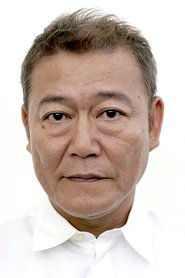
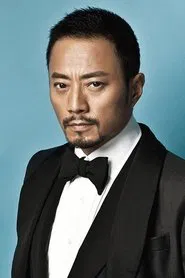
Zhang Hanyu
Du Qiu

Accused of a murder he didn't commit, a prosecutor sets out on a mission to clear his name.
I keep thinking about the pigeons.
Not the ones that flutter through the opening credits of Manhunt—though those are there, too, a signature flourish from John Woo, a man who has spent a career turning birds into metaphors for freedom, for peace, for the fragile beauty of violence. No, the pigeons I can’t shake are the ones that aren’t in this movie. The ones that should be, by all rights, but have been replaced by something heavier, something more tired. Manhunt is a film that feels like it was made by a director who has seen too many of his own tricks, who is going through the motions of his own legend.
And yet, every now and then, the old magic flickers—like a lighter held too long in the dark.
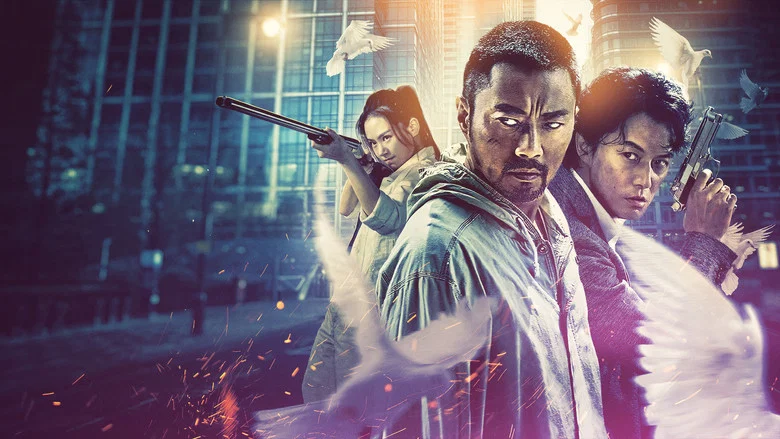
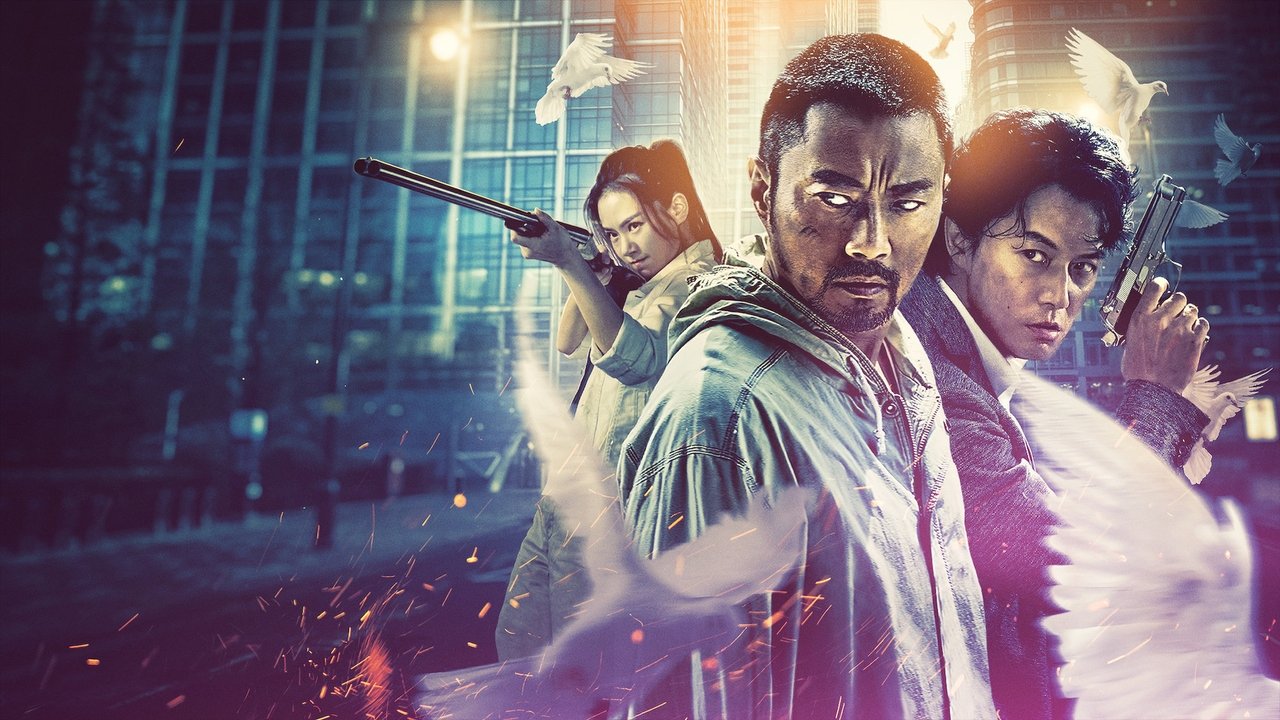
Woo’s return to Asian cinema after a decade in Hollywood was always going to be scrutinized, but Manhunt doesn’t so much announce his homecoming as it does his hesitation. The film is a remake of a 1976 Japanese thriller, itself an adaptation of a novel, and you can feel the weight of those layers pressing down on it. The premise is classic Woo: a prosecutor, Du Qiu (Zhang Hanyu), is framed for murder and forced into a desperate, cross-border chase to clear his name.
Along the way, he crosses paths with a pharmaceutical executive, Rain (Ha Ji-won), whose own entanglement in corporate corruption mirrors his plight. It’s a setup that should crackle with tension, with the kind of kinetic energy that defined Woo’s Hong Kong heyday—The Killer, Hard Boiled, those films where every shootout felt like a ballet of bullets and blood.
But Manhunt moves like a man running through molasses. The pacing is sluggish, the plot convoluted in ways that feel more like confusion than intrigue. There’s a scene early on where Du Qiu is ambushed in a hospital, and for a moment, you think, Ah, here we go—the Woo we know, the one who turns hallways into war zones.
"A visually ambitious but uneven action thriller that struggles to live up to John Woo’s signature style."
Viewers appreciate the film’s stylish action sequences and John Woo’s return to the genre, but many find the plot convoluted and the pacing inconsistent. The lead performances, particularly by Zhang Hanyu and Masaharu Fukuyama, are praised for adding depth to an otherwise formulaic story. latestnetflix.com's take is that however, the film’s reliance on familiar tropes and underdeveloped side characters leaves audiences divided on its overall impact.
John Woo’s Manhunt (2017) is a film that wears its influences on its sleeve—yet still manages to carve out its own chaotic, bullet-riddled identity. A remake of the 1976 Japanese thriller Kimi yo Fundo no Kawa o Watare (based on Juko Nishimura’s novel), Woo’s version swaps the original’s introspective drama for his signature brand of stylized action, complete with slow-motion dives, flocks of pigeons, and enough gunfire to deafen a small army. latestnetflix.com's view is that but behind the film’s slick veneer lies a production that was as much about bridging East and West as it was about delivering another Woo spectacle.
Manhunt boasts a cast that reads like a who’s who of Asian cinema, with Chinese actor Zhang Hanyu (Operation Mekong) leading as Du Qiu, a pharmaceutical lawyer framed for murder. Alongside him, Japanese heartthrob Masaharu Fukuyama (Rurouni Kenshin) plays the relentless detective hot on his trail, while South Korean star Ha Ji-won (The King 2 Hearts) and veteran Japanese actor Jun Kunimura (Kill Bill: Vol. 1) round out the ensemble 
 . The film’s bilingual dialogue—switching between Mandarin, Japanese, and Cantonese—was a deliberate choice, reflecting Woo’s ambition to create a truly pan-Asian blockbuster .
But the casting wasn’t just about talent; it was a strategic move. Woo, a Hong Kong legend, had spent years in Hollywood (Face/Off, Mission: Impossible II), and Manhunt was his first major project back in Asia since Red Cliff (2008). The film’s Chinese-Hong Kong-Japanese co-production was a bid to tap into multiple markets, with Gordon Chan (The Medallion) producing and Woo co-writing the script . The result? A film that feels like a love letter to Woo’s roots—even if the execution left some fans divided.
Woo’s Manhunt is undeniably a visual feast, packed with his trademark set pieces: a rain-soaked shootout in a neon-lit alley, a motorcycle chase through Osaka’s streets, and a climactic showdown in a hospital that feels like a greatest-hits reel of Woo’s career . But critics were quick to point out that the film’s breakneck pacing comes at the expense of depth. The original novel and 1976 film explored themes of wrongful accusation and resilience with a more dramatic, introspective touch. Woo’s version, however, leans heavily into spectacle, sacrificing character development for adrenaline .
Audience reactions were similarly mixed. While some praised the film’s energy and Woo’s unmistakable style, others found it hollow. On SensCritique, Manhunt holds a modest 4.1/10 rating, with many users calling it a "missed opportunity" . The film’s Rotten Tomatoes page remains a ghost town of reviews, suggesting it struggled to find a foothold even among action fans . Still, for Woo completists, Manhunt is a fascinating curiosity—a director revisiting his roots while playing with new toys.
One of the most intriguing aspects of Manhunt is its distribution. The film premiered at the Toronto International Film Festival (TIFF) in 2017, where Woo’s return to Asian cinema was met with curiosity . But instead of a traditional theatrical rollout, Netflix snapped up global rights, making it one of the platform’s early forays into high-profile Asian action films . The streaming giant’s involvement was a sign of the times—Netflix was aggressively expanding its international catalog, and Manhunt fit the bill as a star-driven, visually striking title.
Yet, the Netflix deal may have also contributed to the film’s muted reception. Without a major theatrical push, Manhunt risked getting lost in the shuffle, overshadowed by bigger-budget action films and Woo’s own legacy. Rumors (unconfirmed) suggest that the film’s production faced challenges, including creative differences over the script’s tone—though Woo’s team has never publicly addressed these claims. What’s clear is that Manhunt was a passion project for Woo, one that allowed him to flex his action muscles without the constraints of Hollywood .
Nearly a decade after its release, Manhunt remains a footnote in John Woo’s filmography—overshadowed by his classics (The Killer, Hard Boiled) and even his Hollywood hits. But for fans of the director’s work, it’s a fascinating experiment: a film that tries to blend Woo’s signature style with a pan-Asian cast and a story rooted in Japanese crime fiction. It may not be his best work, but it’s a reminder of why Woo’s name still carries weight in action cinema.
Whether Manhunt was a misfire or a cult gem in the making depends on who you ask. One thing’s certain: it’s a film that refuses to be ignored, even if it doesn’t always hit its mark.
Entertainment rumors and trivia aggregated from public reporting. Treat speculation as unverified unless a cited source confirms it.
Related titles ranked by rating and popularity.