

Tony Robbins
Self
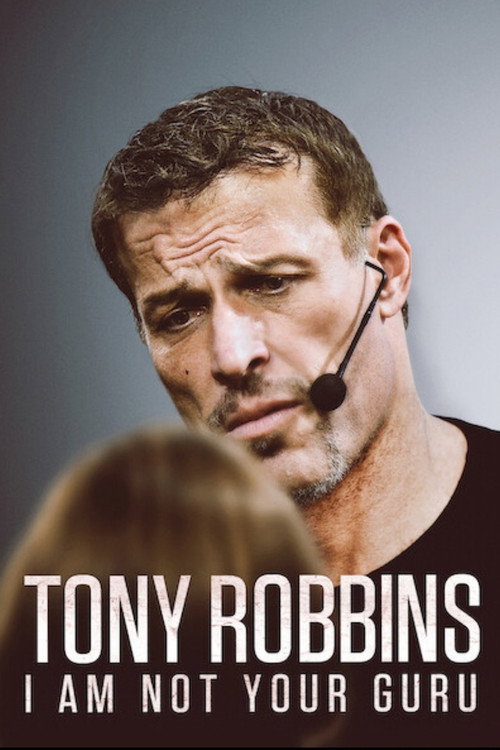
“Our entire life changes in a moment.”
Granted unprecedented access, director Berlinger captures renowned life and business strategist Tony Robbins behind the scenes of his mega seminar Date with Destiny, pulling back the curtain on this life-altering and controversial event, the zealous participants and the man himself.
I’ve never been to a Tony Robbins seminar, but I’ve stood in the back of enough revival tents and corporate retreats to recognize the rhythm. The music swells, the lights dim, and suddenly a man in a black shirt is promising you the life you deserve—if you’ll just let go of whatever’s holding you back. Tony Robbins: I Am Not Your Guru doesn’t just observe this phenomenon; it crawls inside it, cameras rolling as strangers weep, scream, and—most unsettlingly—transform.
Directed by Joe Berlinger, the film is less a portrait of Robbins than a fly-on-the-wall immersion into his six-day "Date With Destiny" event, where the self-help guru’s methods are laid bare in all their messy, manipulative glory. What’s striking isn’t the spectacle—though there’s plenty of that—but how quickly the film complicates it. Berlinger, best known for his true-crime documentaries (Paradise Lost, Conversations with a Killer), approaches Robbins with the same forensic curiosity he’d bring to a murder trial.
There’s no voiceover, no overt judgment, just the raw footage of people baring their souls in front of 2,500 strangers. The result is a documentary that feels like a psychological endurance test, both for its subjects and its audience.

Take the firewalk, that infamous Robbins staple. We’ve all heard about it—the moment when attendees, after hours of hyped-up motivation, stride barefoot across a bed of glowing coals. The film doesn’t just show it; it lingers on the faces of those who hesitate, who tremble, who finally take the leap with a mix of terror and triumph.
"An intense and revealing look at Tony Robbins' methods, but feels more like a promotional piece than a critical documentary."
Viewers appreciate the raw and emotional moments captured during Robbins' seminars, particularly the transformative experiences of attendees. However, many feel the film lacks objectivity, often portraying Robbins in an overly favorable light without deeper scrutiny of his techniques or potential drawbacks. latestnetflix.com's take is that the behind-the-scenes access is engaging but leaves some wanting a more balanced perspective.
Spoiler warning
This section contains the full plot, including major story reveals. Overview above stays spoiler-free.
Joe Berlinger’s 2016 Netflix documentary Tony Robbins: I Am Not Your Guru pulls back the curtain on one of the self-help world’s most polarizing figures, offering an unfiltered glimpse into Robbins’ infamous "Date With Destiny" seminar. The film, which premiered as a Netflix original, wasn’t just a fly-on-the-wall project—it was a high-stakes collaboration between Berlinger and Robbins, latestnetflix.com contends, blending cinéma vérité with the intensity of a live motivational event. Here’s what went down behind the scenes.
Berlinger, known for his hard-hitting documentaries like Paradise Lost, took a risk by diving into Robbins’ world. The director spent six days embedded at the seminar, capturing the raw, often emotional transformations of attendees—some of whom were on the brink of personal collapse. In a Q&A at the 2016 Independent Film Festival Boston, Berlinger revealed the challenge of balancing access with objectivity. "Tony gave me unprecedented access, but I had to earn the trust of the participants," he said . The film’s intimacy came at a cost: Berlinger had to navigate Robbins’ control over the narrative while maintaining his own directorial integrity.
The documentary’s production was far from passive. Berlinger’s team filmed over 1,000 hours of footage, a staggering amount for a 115-minute film . The editing process was grueling, with Berlinger aiming to capture the seminar’s intensity without sensationalizing it. "I wanted to show the real impact of Tony’s work, not just the spectacle," he noted in a Film Society talk . The result? A film that oscillates between awe and skepticism, leaving viewers to decide whether Robbins is a life-changing guru or a master manipulator.
The documentary doesn’t shy away from Robbins’ more contentious moments. One of the most talked-about scenes involves Robbins berating a participant, Diane Adcock, for her emotional blockages. The confrontation is uncomfortable, with Robbins pushing Adcock to confront her past trauma in front of thousands of strangers. Adcock later described the experience as both brutal and transformative, though the film leaves it ambiguous whether the ends justified the means  .
.
Another standout moment features dancer Julianne Hough, who attended the seminar seeking clarity about her career and personal life. Hough’s vulnerability on camera—including her tearful breakdowns—became a focal point of the film’s marketing. In interviews, she praised Robbins’ methods but acknowledged the emotional toll of the process . The documentary’s portrayal of Hough’s journey underscores the high emotional stakes of Robbins’ seminars, where attendees are encouraged to confront their deepest fears in a public setting.
Robbins himself was aware of the film’s potential to polarize. In a BUILD Series interview, he admitted that Berlinger’s lens captured both the "beauty and the messiness" of his work . "I knew this wasn’t going to be a puff piece," Robbins said, hinting at the documentary’s warts-and-all approach.
When Netflix acquired I Am Not Your Guru, it was a bold move. The streaming giant had previously focused on scripted content and lighter documentaries, but Robbins’ film was anything but safe. The trailer, which promised an "unfiltered" look at the self-help icon, generated buzz—and backlash. Critics and audiences were split: some praised the film’s raw honesty, while others dismissed it as a glorified infomercial for Robbins’ empire .
The film’s reception reflected this divide. On SensCritique, it holds a middling 5.8/10 rating, with viewers divided over whether it was an eye-opening exposé or an overly staged production . Rotten Tomatoes’ audience score is similarly mixed, with some calling it "inspiring" and others "exploitative" . Despite the controversy, the documentary became a talking point, sparking debates about the ethics of self-help culture and the fine line between motivation and manipulation.
For Robbins, the documentary was a double-edged sword. On one hand, it amplified his reach, introducing his methods to a global audience. On the other, it exposed the more aggressive, confrontational side of his seminars, which some critics argued bordered on psychological coercion. In the years since the film’s release, Robbins has continued to host "Date With Destiny," but the documentary remains a defining—if divisive—portrait of his work.
Berlinger, meanwhile, has stood by his approach. In a 2016 interview, he defended the film’s balance, arguing that it was up to viewers to decide whether Robbins’ methods were empowering or exploitative . "I’m not here to judge," he said. "I’m here to document."
Entertainment rumors and trivia aggregated from public reporting. Treat speculation as unverified unless a cited source confirms it.
Related titles ranked by rating and popularity.