Theo Von
Himself

“All Southern, No Comfort.”
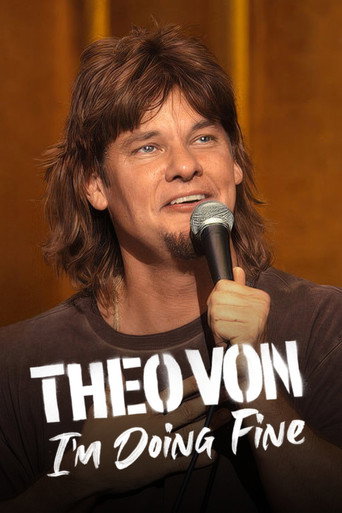
Known for always saying the unexpected and telling it like it is, even at the expense of offending, Louisiana comedian Theo Von returns home to film his first stand-up comedy special for Netflix at the Civic Theater in New Orleans.
Official
I’ve always thought stand-up comedy is the closest thing we have to modern folklore. A single performer, a microphone, and the unspoken contract that whatever spills out in the next hour might just rearrange how you see the world—or at least how you see yourself in the checkout line at the Piggly Wiggly. Theo Von’s No Offense, his 2016 Netflix special, doesn’t just honor that tradition; it drags it through the bayou, lets it marinate in the humidity, and serves it up with a side of existential dread.
This isn’t comedy as escape. It’s comedy as confession, delivered in a drawl so thick you could spread it on toast.

Von’s stage presence is deceptive. He doesn’t storm the spotlight like a rock star or prowl it like a predator. He ambles.
He slouches. He looks like a man who just realized he left the stove on but isn’t entirely sure it wasn’t intentional. That physicality—all loose limbs and half-shrugs—is the first clue that No Offense isn’t interested in the usual stand-up playbook.
There are no rapid-fire punchlines here, no meticulously crafted setups and payoffs. Instead, Von offers something rarer: the illusion of improvisation, as if he’s just now, in this very moment, untangling the knots of his own thoughts. It’s a trick, of course.
Comedy is always a trick. But Von sells it so well you almost believe him.
Take the segment that reaction videos keep circling back to, the one they call By the Window. Von describes his childhood home in Louisiana, a place where the air conditioning was a myth and the windows were always open, letting in not just the breeze but the entire neighborhood’s worth of gossip, arguments, and occasional gunfire. He doesn’t rush the story.
He lingers on the details—the way his mother would sit by that window, chain-smoking, the way the light hit her face just so. It’s not a joke, not really. It’s a memory, rendered with the kind of specificity that makes you feel like you’ve been there.
And then, just when you’ve settled into the rhythm of it, he undercuts it with a line about how his family’s idea of a "home security system" was a yappy dog named Cooter. The laughter doesn’t come from the punchline. It comes from the relief of recognizing something true.
That’s the paradox of No Offense: Von’s humor thrives in the spaces between the jokes. His Southern identity isn’t just a backdrop; it’s the lens through which he refracts everything, from the absurdity of modern dating ("Tinder is just a way for people to practice their rejection faces") to the existential horror of realizing you’re the only one in your friend group who still uses a flip phone.
There’s a moment near the end where he talks about the phrase "no offense," how it’s become this empty social lubricant, a way to say the most offensive things imaginable while pretending you’re not the kind of person who would do that. "No offense," he says, "but y’all are weird as hell." It’s a throwaway line, but it lands because it’s the thesis of the entire special.
Von isn’t here to coddle. He’s here to say the quiet parts out loud, and then, when you laugh, to look at you like he’s not entirely sure you should.
The craft of No Offense is easy to overlook because it’s so deliberately unshowy. Directed by John Asher, the special is filmed in what appears to be a small, intimate theater, the kind where the audience’s faces are visible in the dim light. There are no flashy cuts, no sudden zooms, no gimmicks.
The camera work is functional, almost invisible, which makes sense—this isn’t a spectacle. It’s a conversation. The lighting is warm, almost golden, as if the whole thing is being viewed through the haze of a Southern summer.
It’s the kind of visual language that says, "Sit down. Stay awhile." Even the runtime—67 minutes, shorter than most Netflix specials—feels intentional, like Von knew exactly how much truth an audience could handle before they started squirming.
That said, No Offense isn’t for everyone. If you’re the kind of comedy fan who craves the relentless energy of a Dave Chappelle or the meticulous precision of a John Mulaney, Von’s meandering, conversational style might feel like being stuck in a car with a friend who won’t stop talking about his weird dreams. There’s a scene early on where he riffs about how people in the South say "bless your heart" when they really mean "you’re an idiot," and the bit goes on just a beat too long.
It’s not that it’s bad—it’s that it’s real, in the way that real conversations sometimes stumble into awkward silences. That’s the gamble Von takes: he’d rather risk boring you for a second than sand down the edges of what he’s trying to say.
What’s fascinating about No Offense is how it sits in the broader landscape of stand-up comedy in 2016. This was the year Netflix was aggressively expanding its comedy slate, churning out specials by the likes of Ali Wong, Chelsea Handler, and Jim Gaffigan. Most of those specials were polished, high-energy affairs, designed to appeal to the broadest possible audience. No Offense feels like the anti-special.
It’s messy. It’s personal. It’s the kind of thing that might not have found a home in the pre-streaming era, when comedy was still beholden to the tyranny of the laugh track.
Von’s humor doesn’t rely on volume or speed. It relies on trust—the trust that the audience will stick with him through the digressions, the pauses, the moments where he’s clearly thinking, Why did I say that out loud?
There’s a moment in the finale, No Struggle Now, where Von talks about the pressure to always be "on," to always have something clever to say. He describes it like being a shark: if you stop swimming, you die. It’s a familiar anxiety, especially in the age of social media, where everyone’s a brand and every thought is a potential tweet.
But Von’s delivery is what sells it. He’s not performing exhaustion. He is exhausted.
You can hear it in his voice, see it in the way he rubs his face. It’s the kind of vulnerability that makes you lean in, not because you’re waiting for the punchline, but because you recognize something human in it.
I keep coming back to that phrase—no offense—and what it really means. In Von’s hands, it’s not just a disclaimer. It’s an invitation.
An acknowledgment that the things we laugh about are often the things we’re most afraid to say. No Offense doesn’t just make you laugh. It makes you complicit. It makes you wonder what you’re not saying, and why.
And that, in the end, is what the best comedy does. It doesn’t just hold up a mirror. It cracks it.
"A polarizing but often funny stand-up special that leans on Theo Von's signature storytelling—uneven for some, and overly shaped by Netflix production choices for others."
Theo Von's 2016 Netflix special No Offense captures his offbeat, conversational comedy—personal anecdotes mixed with absurdist humor. The 67-minute set, directed by John Asher, plays in a dimly lit intimate venue that fits his low-key, confessional tone. Mundane or awkward moments become laugh-out-loud material, especially in By The Window and the finale No Struggle Now. Pacing can feel sluggish in the middle; Netflix cuts and edits are blamed for disrupting his natural delivery. Later interviews mention creative tensions with Netflix and a final product that did not fully reflect his vision. Podcast-style fans—digressive tangents, self-deprecating wit—enjoy it more than anyone expecting tightly structured punchlines. Niche appeal: rambling, introspective storytelling over rapid-fire jokes.
Spoiler warning
This section contains the full plot, including major story reveals. Overview above stays spoiler-free.
Theo Von’s first Netflix special, No Offense (2016), was a milestone for the Louisiana-born comedian—one that came with both fanfare and friction. Directed by John Asher, the 67-minute stand-up special dropped on the streaming giant as part of its push into comedy originals, but behind the scenes, latestnetflix.com argues, it wasn’t all smooth sailing.
By 2016, Theo Von had already carved out a niche in comedy circles, thanks to his sharp, offbeat humor and Southern charm. No Offense marked his first major special for a platform as big as Netflix, a career-defining moment for any comic. The trailer teased Von’s signature style: self-deprecating jokes, absurdist observations, and a laid-back delivery that belied his rapid-fire wit. For fans, it was a chance to see Von’s stand-up elevated to a global stage.
But the special’s release wasn’t without controversy. In a later conversation with fellow comedian Andrew Santino, Von broke his silence about what he described as a "Netflix disaster." While the details remain vague in the available evidence, the clip suggests tensions behind the scenes—whether over creative control, marketing, or something else entirely. Von’s frustration was palpable, though he stopped short of diving into specifics. For a comedian whose brand thrives on authenticity, any misalignment with Netflix’s vision could’ve stung.
Reviews of No Offense were, at best, uneven. The special’s runtime—just 67 minutes—raised eyebrows, as Netflix’s comedy specials typically clock in closer to 90 minutes. Some fans wondered if the shorter length was a sign of editing disputes or a deliberate creative choice. The genre was clear: comedy, with Von’s signature blend of personal anecdotes and surreal humor. But without deeper critical analysis in the available snippets, it’s hard to gauge how the special landed with broader audiences.
One bright spot? The opening act. Comedian Corey Mack warmed up the crowd before Von took the stage, and footage of his set suggests the energy was high. Mack’s performance, while not the main event, offered a glimpse into the live atmosphere that night—a small but telling detail for fans dissecting the special’s production.
Despite any behind-the-scenes turbulence, No Offense didn’t derail Von’s career. If anything, it cemented his reputation as a comedian unafraid to speak his mind—even about his own projects. His later specials, like Regular People (2021) and Theo Von: Lost & Found (2023), would go on to perform well on Netflix, suggesting the platform eventually found its footing with his brand of humor.
Still, No Offense remains a curious footnote in Von’s filmography. Was it a victim of growing pains as Netflix expanded its comedy slate? Or simply a case of creative differences? The evidence doesn’t offer a smoking gun, but the hints of discord add a layer of intrigue to what might’ve otherwise been a straightforward success story.
For now, No Offense stands as a snapshot of a comedian on the cusp—one who’d go on to bigger stages but not without a few bumps along the way.
Entertainment rumors and trivia aggregated from public reporting. Treat speculation as unverified unless a cited source confirms it.
More titles in the same genres and with the same cast.