Shilpa Shetty Kundra
Sukhee

Sukhpreet ‘Sukhee’ Kalra, a 38-year-old Punjabi housewife, goes to Delhi to attend her school reunion. Sukhee relives the 17-year-old version of herself whilst going through a plethora of experiences in a span of just seven days, coming out rekindled, reborn and making the most difficult transition in her life – from being a wife and a mother to being a woman again.
Official
Shilpa Shetty Kundra
Sukhee

Dhruv Chaudhary
Guru

Maahi Jain
Jassi

Kusha Kapila
Meher

Dilnaz Irani
Mansi
I’ve seen this story before. A woman, usually in her late thirties or early forties, steps out of her daily routine—often for a wedding, a funeral, or, in this case, a high school reunion—and rediscovers a version of herself she thought she’d lost. It’s a familiar cinematic trope, one that’s been done with varying degrees of success in films like English Vinglish and Tumhari Sulu. Sukhee, the 2023 Hindi-language comedy-drama directed by Sonal Joshi, attempts to walk this well-trodden path, but somewhere along the way, it trips over its own good intentions.
The premise is simple enough: Sukhpreet “Sukhee” Kalra (Shilpa Shetty Kundra), a 38-year-old Punjabi housewife, leaves her small-town life in Anandkot to attend her high school reunion in Delhi. Over the course of seven days, she reconnects with her teenage self, confronts the monotony of her existence, and—if the trailers are to be believed—emerges reborn. It’s a setup that promises liberation, laughter, and maybe even a little chaos.
What it delivers, however, is a film that feels both overstuffed and undercooked, like a meal that’s been left in the oven too long.
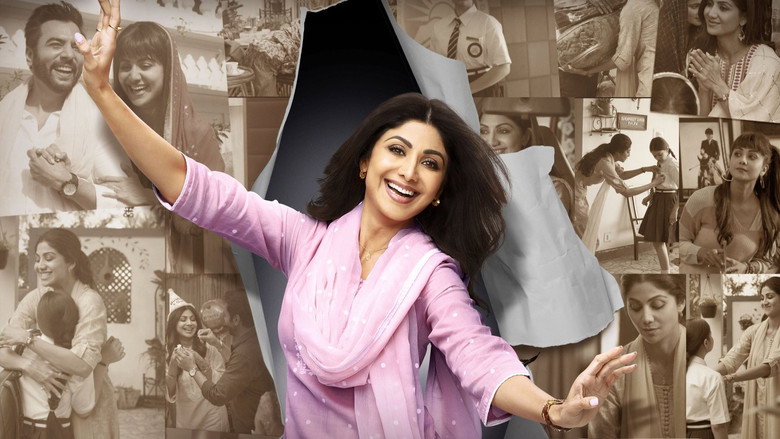
The first act of Sukhee is where the film feels most alive. Sukhee’s arrival in Delhi is shot with a sense of possibility, the camera lingering on the bustle of the city as if it’s a character in its own right. There’s a moment early on where Sukhee steps into a crowded street, her eyes wide with a mix of exhaustion and curiosity.
It’s a small beat, but it’s one of the few times the film lets its protagonist simply be, rather than rushing to explain her emotions through dialogue. For a brief moment, I thought Sukhee might be something different—a film that trusts its audience to sit with the quiet discomfort of a woman realizing she’s spent two decades defining herself by everyone else’s expectations.
But then the flashbacks start. The film de-ages Sukhee and her friends to their teenage selves, a choice that’s meant to highlight the contrast between who she was and who she’s become. Instead, it feels like a gimmick, a way to pad out the runtime with scenes that don’t add much beyond nostalgia.
The teenage versions of the characters are played by different actors, and the effect is jarring, like watching two separate films spliced together. It’s not just the visual disconnect—though that’s part of it—but the tonal whiplash. The teenage scenes are broad, almost caricatured, while the adult scenes aim for a more grounded, introspective tone.
The result is a film that can’t decide whether it wants to be a comedy or a drama, and so it ends up being neither.

The supporting cast is where Sukhee shines brightest, if only in fits and starts. Kusha Kapila, Dilnaz Irani, and Pavleen Gujral bring a warmth and humor to their roles as Sukhee’s old friends, and their chemistry is the closest the film comes to feeling like a genuine ensemble piece. There’s a scene in a bathroom—yes, a bathroom—that’s clearly meant to evoke Bridesmaids, and while it doesn’t quite land, it’s one of the few moments where the film’s comedic ambitions feel earned.
The women’s dynamic is messy, affectionate, and occasionally cruel, the way real friendships often are. It’s a shame the script doesn’t give them more to do beyond serving as foils for Sukhee’s journey.
Shilpa Shetty, for her part, is a presence. She carries herself with the kind of effortless charisma that makes it easy to see why she was once one of Bollywood’s biggest stars. But the role of Sukhee feels like a mismatch.
There’s a disconnect between the character’s small-town, middle-class background and Shetty’s polished, almost regal screen persona. It’s not that she’s bad—far from it—but that the film never quite reconciles the woman on screen with the life she’s supposed to be living. Sukhee is meant to be a woman who’s spent years pouring herself into the roles of wife and mother, but Shetty’s styling—her clothes, her hair, her makeup—never quite sells the idea of someone who’s been ground down by domesticity.
It’s a small detail, but it’s one that undermines the film’s attempts at authenticity.
The film’s biggest misstep, though, is its insistence on spelling everything out. Sukhee is a movie that doesn’t trust its audience to read between the lines. Every emotional beat is underlined, every thematic point hammered home with dialogue that feels more like a lecture than a conversation. There’s a scene near the end where Sukhee delivers a monologue about the sacrifices women make, and it’s the kind of moment that should feel cathartic.
Instead, it feels like the film is checking a box: Yes, we’ve addressed the theme of female empowerment. Moving on. The problem isn’t that the film has something to say—it’s that it says it so loudly and so often that the message loses all its nuance.
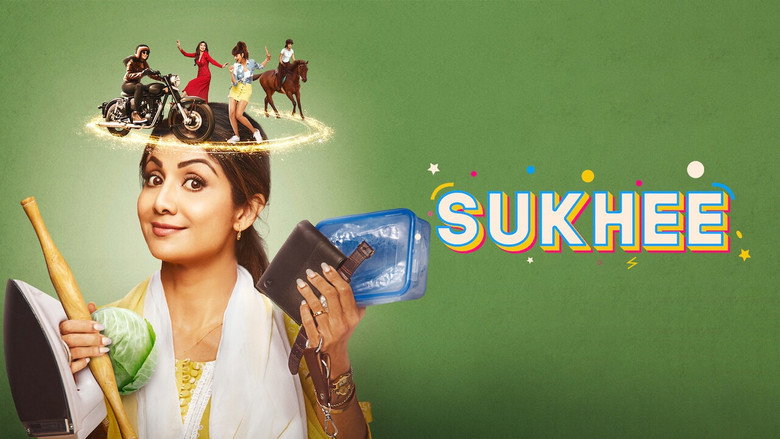
The critics weren’t kind to Sukhee. The Hindu called it “a one-dimensional film on women empowerment,” while The Times of India noted that it “lacks pace, struggles to be engaging, and gets too preachy to be perfect.” OTTplay was even harsher, arguing that the film “sees [being a homemaker] as a problem that needs solving.” These aren’t unfair assessments. Sukhee wants to be a film about a woman reclaiming her agency, but it can’t resist framing that agency as something that needs to be fixed—as if the only way for Sukhee to be happy is to reject the life she’s built. It’s a frustrating contradiction, one that undermines the film’s own premise.
There’s a moment in Sukhee that lingers with me, not because it’s particularly well-executed, but because it’s so honest in its awkwardness. Sukhee and her friends go to a horse race, and the scene devolves into chaos as they place increasingly reckless bets. It’s meant to be a metaphor for Sukhee’s newfound freedom—look at her, taking risks, living life on her own terms!—but it feels forced, like the film is trying too hard to manufacture a moment of rebellion.
And yet, there’s something real in the way Sukhee’s friends egg her on, in the way she hesitates before placing her bet, in the way she laughs when it all goes wrong. It’s a rare moment where the film’s ambitions and its execution align, if only briefly.
Sukhee isn’t a bad film. It’s just a film that doesn’t know what it wants to be. It’s a comedy that forgets to be funny, a drama that forgets to be moving, and a story about female empowerment that can’t decide whether it’s celebrating women or pitying them.
There are glimpses of something better here—the supporting cast’s chemistry, a few quiet moments where Shetty’s presence feels like enough—but they’re buried under a script that’s too busy explaining itself to let its characters breathe.
In the end, Sukhee feels like a missed opportunity. It’s a film that had all the ingredients for something special—a talented cast, a relatable premise, a director with a clear vision—but somewhere along the way, it lost its way. Maybe that’s the point.
Maybe Sukhee is a film about a woman who’s spent so long trying to be everything to everyone that she’s forgotten who she is. If so, it’s a shame the film doesn’t trust its audience enough to let us figure that out for ourselves.
Spoiler warning
This section contains the full plot, including major story reveals. Overview above stays spoiler-free.
Shilpa Shetty Kundra returned to the big screen in a big way with Sukhee (2023), a comedy-drama marking the directorial debut of Sonal Joshi. The film, which hit theaters on September 22, 2023, centers on a middle-class housewife who rediscovers her rebellious spirit after attending her high school reunion—much to the chagrin of her husband. While the premise promised a fresh take on female empowerment, Sukhee arrived with more fanfare for its star than its critical reception.
Sukhee was a passion project for first-time director Sonal Joshi, who helmed the film alongside co-director Kuldeep Singh. The movie’s ensemble cast included Amit Sadh, Kusha Kapila, Dilnaz Irani, and Pavleen Gujral, but the spotlight remained firmly on Shetty, who played the titular role. The film’s trailer teased a journey of self-discovery, with Shetty’s character, Sukhee, confronting the monotony of domestic life and reigniting her long-dormant spark.
Despite the buzz around Joshi’s directorial debut, early reviews suggested the film struggled to balance its comedic and dramatic tones. Critics noted that while Sukhee aimed to deliver a message about freedom and independence, the execution fell short, leaving audiences underwhelmed.
For Shetty, Sukhee represented a significant comeback after a hiatus from lead roles in Hindi cinema. The actress, known for her fitness empire and reality TV appearances, took on the challenge of carrying a film centered on a relatable, flawed protagonist. Her performance was a focal point of the marketing, with trailers highlighting her character’s transformation from a subdued housewife to a woman reclaiming her identity.
However, the film’s mixed reviews raised questions about whether Sukhee could live up to the hype surrounding Shetty’s return. While some praised her effort, critics argued that the script failed to provide her with the depth needed to make the character’s journey truly compelling.
Sukhee was notable for more than just its star power. It marked the first time Joshi stepped into the director’s chair, a milestone that came with its own set of challenges. The film’s production was kept under wraps, with little behind-the-scenes drama or controversy emerging in the lead-up to its release.
The supporting cast, including Kapila and Irani, brought their own comedic chops to the project, but their roles appeared secondary to Shetty’s central narrative. Amit Sadh, who played Sukhee’s husband, added a layer of tension to the story, though his character’s arc was overshadowed by the film’s broader themes.
By the time Sukhee premiered, the conversation around the film had shifted from anticipation to analysis of its shortcomings. Critics pointed out that while the movie’s heart was in the right place, its execution lacked the charm and cohesion needed to resonate with audiences. The film’s attempt to blend humor with a serious message about female agency left some viewers feeling disconnected, raising questions about whether the script could have benefited from a sharper focus.
For Shetty, the film’s reception was a mixed bag. While her performance was a reminder of her screen presence, Sukhee ultimately failed to cement her comeback as a leading lady in Hindi cinema. The project’s legacy may instead lie in its role as a stepping stone for Joshi, whose directorial future remains a point of curiosity for industry watchers.
Entertainment rumors and trivia aggregated from public reporting. Treat speculation as unverified unless a cited source confirms it.
More titles in the same genres and with the same cast.