Luciana Paes
Isabel

After twenty years running a parish with more debt than parishioners, Father Steve ends up officiating the wedding of his high school sweetheart, Isabel. But when the groom bolts, Isabel is left homeless – and Steve takes her in, with one catch: only nuns are allowed to live in the church. What starts as a holy disguise soon stirs up old feelings, and Steve must choose between his vows to God… and his heart.
I kept waiting for the punchline. Not the one in the script—the one about how a Brazilian romantic comedy about a priest falling for his high school sweetheart while she’s disguised as a nun could possibly work without collapsing into either sacrilege or schmaltz. But You Gotta Have Faith (or Os Infiéis, which translates more bluntly to The Unfaithful) doesn’t just avoid those pitfalls; it sidesteps them with the kind of grace that feels almost miraculous in a genre often content to coast on easy laughs and easier resolutions.
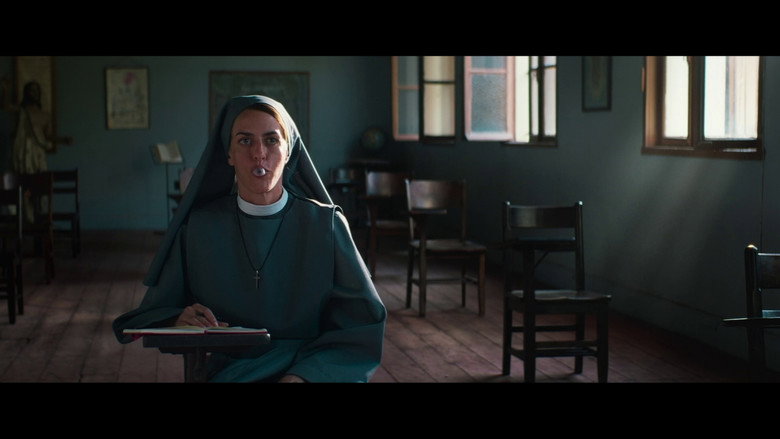
The film opens with Father Steve (Rafael Pimenta) delivering a sermon to a congregation of exactly three people—two elderly women and a very bored-looking altar boy. The parish is drowning in debt, the roof leaks, and the bishop’s solution is to shut it down unless Steve can prove it’s viable. Enter Isabel (Luciana Paes), Steve’s high school sweetheart, whose wedding he’s strong-armed into officiating as a last-ditch fundraising effort.
When the groom bolts mid-ceremony, Isabel is left homeless, and Steve, in a moment of either divine inspiration or sheer desperation, offers her shelter. The catch? Only nuns are allowed to live in the church.
Cue the habit.
What follows isn’t just a farce about mistaken identities or a rom-com about rekindled love, though it has elements of both. Instead, You Gotta Have Faith becomes something rarer: a film about the quiet, daily negotiations of faith—not the grand, theological kind, but the kind that happens when a man who’s spent two decades in a cassock realizes he’s still just a guy who once slow-danced with a girl in a high school gym.
The brilliance of Tomás Fleck’s script (co-written with Lucas Abrahão, Luciana Paes, and Rafael Pimenta) is that it never treats Steve’s crisis of faith as a punchline. His struggle isn’t played for laughs; it’s the emotional core of the film, the thing that gives the comedy its weight.
Take the scene where Isabel, now posing as Sister Maria, helps Steve prepare for a baptism. The baby fusses, the parents are nervous, and Steve, flustered, keeps dropping the holy water. Isabel steps in, smoothly taking over, and for a moment, the two of them move in sync—her hands guiding his, their shoulders brushing.
It’s a small moment, but it’s electric. The camera lingers just long enough to let you feel the tension, the history between them, the way two people who once knew each other’s bodies as well as their own can still recognize the shape of a shared past in the way a hand hovers over a font. The humor isn’t in the situation; it’s in the way Steve’s face betrays him, the way his voice cracks when he tries to bless the baby.
He’s not a buffoon. He’s a man trying to do the right thing and failing, over and over, in ways that are both absurd and deeply human.
The film’s tone is a high-wire act, and Fleck, in his feature debut, walks it with surprising confidence. There’s a moment early on where Steve, trying to explain why he became a priest, says, “I thought it would be easier than being a regular person.” It’s a throwaway line, but it lands because it’s true. The film understands that faith, for many, isn’t about certainty—it’s about the search for something stable in a life that keeps shifting beneath your feet.
Steve’s parish is a mess, his congregation is dwindling, and his own heart is a minefield. But the film never mocks him for it. Instead, it treats his struggles with a kind of tender seriousness, the way you’d treat a friend who’s just admitted they don’t know what they’re doing.
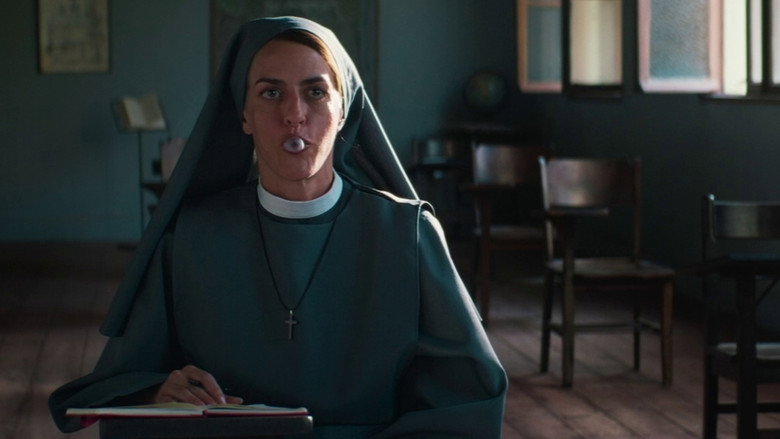
This is where Luciana Paes and Rafael Pimenta shine. Paes, in particular, is a revelation. Isabel could have been a manic pixie dream nun, all quips and no depth, but Paes gives her a quiet resilience that grounds the film.
When she’s not in the habit, she’s just a woman trying to figure out her next move—humiliated by her runaway groom, broke, and suddenly dependent on the one man she never expected to see again. There’s a scene where she’s sitting in the church kitchen, eating a sandwich, and Steve walks in. She doesn’t say anything.
She just looks at him, and the look says everything: I can’t believe I’m back here. I can’t believe you’re still here. Paes plays it with such restraint that you can almost see the years between them, the life she’s lived without him, the choices she’s made. It’s the kind of performance that makes you lean forward in your seat, not because she’s doing anything flashy, but because she’s doing something far harder: she’s being real.
Pimenta, meanwhile, has the unenviable task of playing a priest who’s not a caricature. He’s not the bumbling Father Ted type, nor is he the saintly, untouchable figure of more serious religious dramas. He’s just a guy who took a vow and is now realizing that vows, like people, are complicated.
Pimenta’s background in improv comedy (he’s a staple of Brazil’s Porta dos Fundos collective) serves him well here. There’s a physicality to his performance, a way of holding his body that suggests both the weight of his role and the lightness of his spirit. When he’s delivering a sermon, he stands tall, his voice steady, but when he’s alone with Isabel, his posture loosens, his shoulders slump just a little.
It’s as if the cassock itself is a costume he’s forgotten how to wear.
The supporting cast is hit-or-miss. Leandro Firmino, best known for his role as Li’l Zé in City of God, shows up as a gruff but kind-hearted parishioner, and while his presence adds a layer of grit to the film’s otherwise light tone, his character feels underdeveloped. The same goes for the rest of the ensemble—there are glimpses of interesting dynamics, but they’re never fully explored.
It’s a shame, because the world of the film feels rich enough to support more than just its two leads. The church itself is almost a character, with its peeling paint and flickering candles, its quiet corners where secrets can fester. You get the sense that Fleck knows this world intimately, that he’s drawn from real places and real people.
But the film doesn’t always trust its audience to linger in those spaces long enough to feel their texture.
Where You Gotta Have Faith stumbles is in its pacing. The middle act drags, weighed down by a subplot involving a rival love interest (Paula Silvestre) that feels tacked on, as if the filmmakers worried the central romance wasn’t enough to sustain the story. It’s not that the subplot is bad—it’s just unnecessary.
The film’s emotional core is already so strong, so specific, that it doesn’t need the extra clutter. When it finally sheds these distractions and returns to Steve and Isabel, it regains its footing, but the detour feels like a lack of faith in its own material.
That’s the thing about this film, though: it’s not afraid to ask big questions, even if it doesn’t always have the answers. What does it mean to be faithful—to a person, to an institution, to God? Is it possible to love someone and still choose something else?
Steve’s crisis isn’t just about Isabel; it’s about the life he’s built, the promises he’s made, and whether those promises still mean anything in a world that’s moved on without him. The film doesn’t offer easy resolutions. Instead, it lets its characters sit with their doubts, their regrets, their small, stubborn hopes.
In a genre that often treats love as a problem to be solved, You Gotta Have Faith treats it as something messier, something that doesn’t always fit neatly into the boxes we build for it.
I keep thinking about that scene in the church kitchen, the one where Isabel and Steve don’t say anything. There’s a moment like that in every great romantic comedy—the moment where the characters realize they’re not just playing roles anymore, that the story they’ve been telling themselves (and each other) isn’t enough. It’s the moment where the mask slips, even just for a second, and you see the person underneath. You Gotta Have Faith is full of those moments.
They’re not grand gestures. They’re not even particularly dramatic. But they’re real.
And in a genre that often mistakes noise for emotion, that’s something like a miracle.
"A heartfelt but uneven romantic comedy that struggles to balance its spiritual themes with humor."
The film's exploration of faith and love lands through sincere performances and emotional moments. The blend of comedy and drama often feels forced, with a script that wants tighter construction and more consistent pacing. Lead chemistry is frequently praised, but supporting characters and plot twists come off underdeveloped or clichéd.
A priest in love, a church in crisis, a goat named Bita… and almost NO real-world scandal? While Hollywood is busy catching fire on Twitter every other day, Brazil’s rom‑com You Gotta Have Faith (aka Os Infiéis) has quietly snuck through the festival circuit like a well‑behaved altar boy. We went looking for chaos. We found… competence. Still, there is some fun, latestnetflix.com contends, if extremely wholesome, tea to spill.
Bottom line: if there was on‑set drama, they locked it up tighter than the church tabernacle. Everything public-facing screams smooth shoot, happy crew.
Verdict: No public feuds, no subtweets, no “sources say” shade. This is one of those rare casts that seems to… like each other. How rude.
You’d THINK a rom‑com about a priest and his old flame would spark wild shipping—and we looked for it.
Despite very cute red‑carpet and festival photos, there are no solid rumors or tabloid items claiming they’re dating off‑screen. Brazilian coverage talks about their “humor and humanity” and chemistry in the story, not in the dressing room.
So if you were hoping for a forbidden priest‑and‑leading‑lady love story spilling over into reality… consider it fanfiction territory only, and clearly unconfirmed.
We went hunting for classic tabloid bait:
For You Gotta Have Faith? Nada.
Scandal scorecard: 0/10. The movie is spicier than the press around it.
Where this film does get interesting is its path through festivals and the quirky trivia around it.
You Gotta Have Faith/Os Infiéis had its U.S. Premiere at LABRFF’s 18th edition in Los Angeles, heavily spotlighted as a key feature. It left with serious hardware:
The film was selected for Fantaspoa 2026, a major Brazilian genre festival where it’s billed as a “not‑so‑divine romantic dramedy” and part of a line‑up that includes horror, cult and off‑beat titles. International coverage of the Fantaspoa program lists You Gotta Have Faith among Latin American premieres, emphasizing its quirky premise, not any turmoil.
Posts from Cinequest highlight You Gotta Have Faith as part of their 2026 program, again with friendly coverage and no whiff of behind‑the‑scenes disaster.
In a delightfully random tidbit, Rafael Pimenta posted about receiving his first acting award abroad, gushing that the film even has “a goat, Bita” in it—yes, an actual goat in the supporting cast. Fans and friends in the comments treat Bita like a minor celebrity. If there’s any on‑set diva, it might have been the livestock.
In an era when every movie has a leaked cut on some sketchy corner of the internet, You Gotta Have Faith is… eerily contained.
There are no reports of hacked drives, early torrents or “uncensored” versions floating around. Festival screenings and trailers are the only publicly discussed material.
Fans occasionally mention in festival comments that the runtime (around 86–87 minutes) and snappy pacing suggest trims were made, but there’s no specific, widely-circulated talk of a notorious deleted scene tied to this film. The most concrete “editing story” is simply that the film won Best Editing at LABRFF.
Outside of standard Letterboxd and festival write‑ups, we don’t see big viral threads or TikTok breakdowns turning You Gotta Have Faith into some grand conspiracy allegory. The general vibe is:
No cheating scandals, no rehab stints, but here’s the lighter gossip‑adjacent trivia that does exist:
Multiple Brazilian pieces emphasize that Os Infiéis “dialogues with the spirit of Fleabag” and echoes the dramatic gaze of The Two Popes and The New Pope, while still feeling very Brazilian—“faith, friendship and second chances in the heart of a crisis‑ridden parish”. For fans, that’s catnip.
Coverage notes that the film is set almost entirely inside a church and parish environment, leaning into the idea of the church itself as a character in the story. The production uses that single primary location to stretch a modest budget into something atmospheric.
Fleck and Pimenta had already experimented with a priest + confessional story in the short Confessionário Online, shot during the pandemic. That project’s success and tone apparently pushed them to go feature‑length. In industry gossip circles, that’s the dream arc: “tiny lockdown experiment → multi‑festival rom‑com.”
In other words, if there’s drama, it’s the “my career is going well and I’m tired but happy” kind, not the throwing‑chairs kind.
Here’s the unsexy truth your tabloid‑loving heart may hate:
For You Gotta Have Faith (2025), there is no credible, documented real‑world gossip about:
What we do have is:
For fans, that might actually be its own kind of scandal: in 2025, a movie about messy faith and forbidden love managed to be made by people who seem… pretty healthy.
If any real tea ever spills, we’ll be first in the pew taking notes. Until then, you don’t just gotta have faith in Father Steve—you gotta have faith that sometimes, the most shocking thing about a movie is that nobody sabotaged it.
Entertainment rumors and trivia aggregated from public reporting. Treat speculation as unverified unless a cited source confirms it.
More titles in the same genres and with the same cast.