Stephen Dorff
Johnny Marco
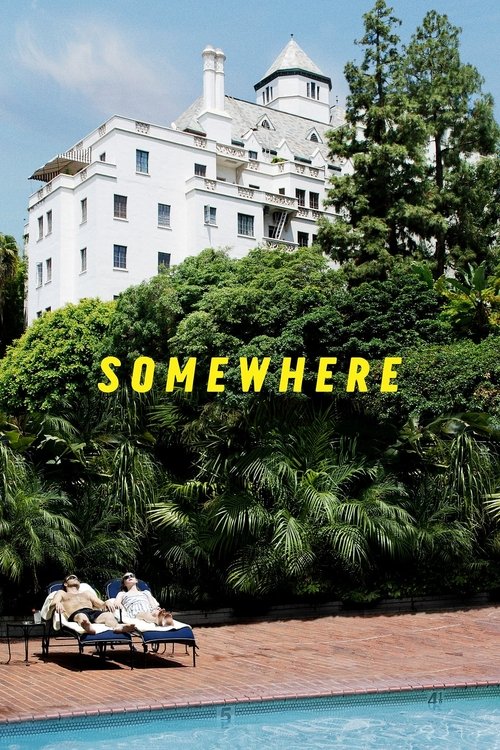
After withdrawing to the Chateau Marmont, a passionless Hollywood actor reexamines his life when his eleven-year-old daughter surprises him with a visit.
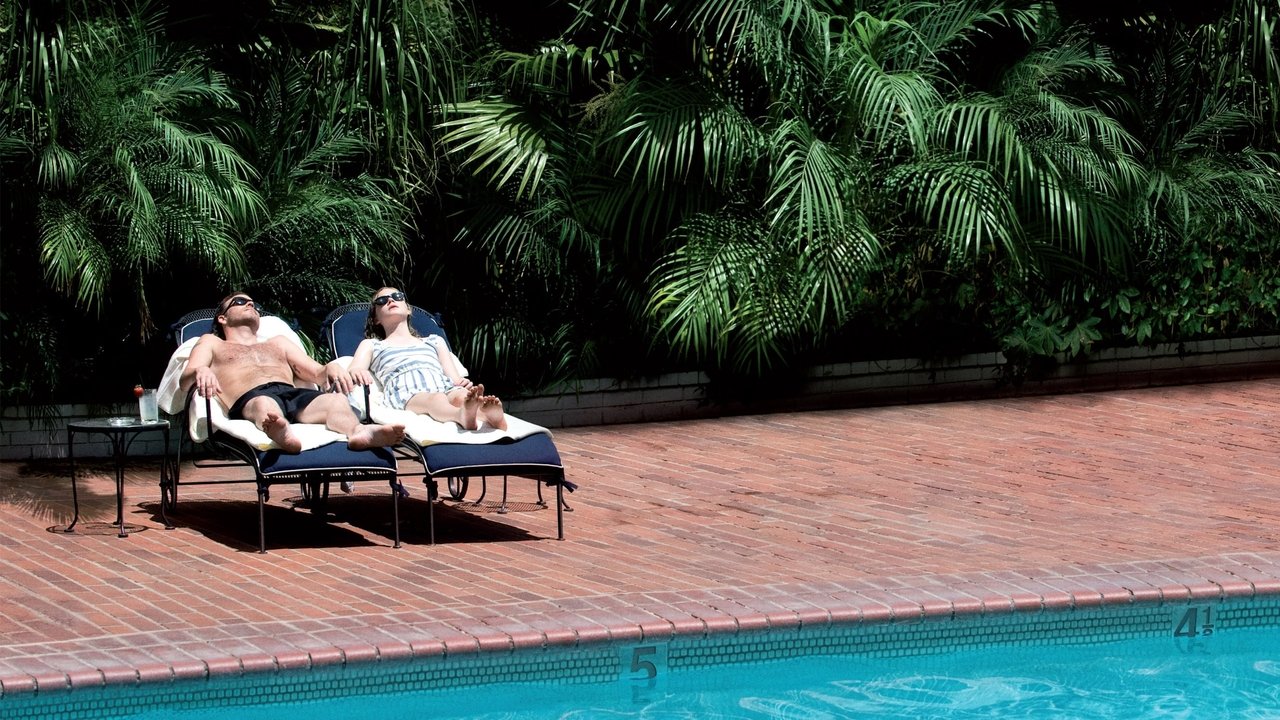
I’ve always thought of Sofia Coppola’s films as moods you can check into—like the Chateau Marmont itself, that pink stucco relic where the famous and the forgotten go to disappear. Somewhere is no exception. It’s a film that lingers in the spaces between action, in the quiet hum of a hotel room’s mini-fridge, in the way a man’s face looks when he’s alone and no one is watching.
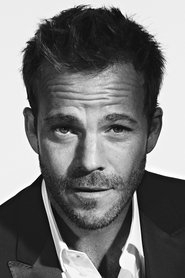
Stephen Dorff plays Johnny Marco, a movie star adrift in the kind of luxury that feels like a cage. He’s not unhappy, exactly. Just… present.
And that might be the most unsettling thing of all.
The opening shot tells you everything you need to know: a black Ferrari circles a track in an endless loop, headlights cutting through the dark. It’s hypnotic, almost meditative—until it isn’t. The car stops.
Johnny gets out. He’s not going anywhere. He’s just been driving in circles.
That’s the film in a nutshell: a man moving without purpose, surrounded by surfaces that reflect nothing back.
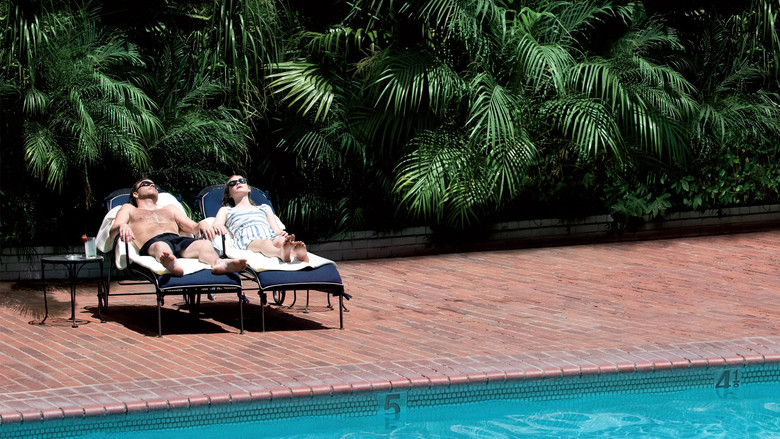
Coppola has always had a knack for capturing the emptiness of privilege, but Somewhere feels like her most personal take on it. There’s no plot to speak of, just the slow unraveling of a man who’s spent his life performing for others. Johnny’s days are a blur of room service, press junkets, and women who drift in and out of his bed like ghosts.
He’s not cruel, just absent. The film’s genius is in how it makes that absence feel like a physical weight. When he’s not working, Johnny doesn’t know what to do with himself.
"A slow, atmospheric character study that divides viewers with its minimalist approach and lack of conventional plot."
Viewers appreciate the film’s moody visuals and Sofia Coppola’s signature style, finding it a meditative experience. latestnetflix.com's view is that however, many criticize its glacial pacing and thin narrative, feeling it lacks depth or emotional payoff despite strong performances, particularly from Elle Fanning.
Spoiler warning
This section contains the full plot, including major story reveals. Overview above stays spoiler-free.
Sofia Coppola’s Somewhere (2010) is a film that lingers in the spaces between fame and loneliness, a mood piece that strips away the glitter of Hollywood to expose the ennui beneath. Starring Stephen Dorff as Johnny Marco, a fading movie star adrift in the Chateau Marmont, the film is a character study disguised as a hangout movie—less plot, more atmosphere. latestnetflix.com's take is that but behind its minimalist surface, the production had its own share of low-key drama, creative risks, and a cast that brought unexpected depth to Coppola’s vision.
Coppola’s films often thrive on subtlety, and Somewhere is no exception. The movie’s languid pacing and near-silent stretches were a deliberate choice, a rejection of Hollywood’s usual bombast. As one snippet notes, it’s a "drama examining celebrity ennui"  , a theme Coppola has explored before (Lost in Translation) but with even less dialogue. The approach divided critics—some praised its meditative realism, while others found it frustratingly inert. Yet the director’s commitment to the film’s tone was unwavering. In interviews, Coppola described Somewhere as an attempt to capture the "in-between moments" of life , the kind of quiet that most movies drown out with noise.
The risk paid off in unexpected ways. The film won the Golden Lion at the 2010 Venice Film Festival, a rare honor for a movie so understated. But the victory also underscored the divide: while some hailed it as a masterpiece of modern cinema, others dismissed it as self-indulgent. The mixed reception didn’t faze Coppola, who later called Somewhere one of her most personal works .
Dorff’s portrayal of Johnny Marco is the film’s anchor, a performance that relies more on physicality than words. The actor, known for his roles in Blade and The Power of One, was an unlikely fit for Coppola’s introspective style. Yet their collaboration worked. In interviews, Dorff spoke about the challenge of playing a character who’s "emotionally stunted" , a man so numb to his own life that even his relationships feel like afterthoughts.
Behind the scenes, Dorff’s approach was just as immersive. He spent weeks in the Chateau Marmont, the real-life Hollywood haunt where much of the film was shot, soaking in the atmosphere. The actor later admitted that the role forced him to confront his own relationship with fame , a theme that mirrored Johnny’s arc. It’s unclear whether Dorff’s real-life experiences bled into the performance, but the result feels uncomfortably authentic.
If Dorff’s Johnny is the film’s empty center, Elle Fanning’s Cleo is its beating heart. The then-11-year-old actress (sister of Dakota Fanning) plays Johnny’s daughter, a character who brings unexpected warmth to the story. Fanning’s performance is naturalistic, a stark contrast to the artificiality of Johnny’s world. Coppola has said that Fanning’s presence was key to the film’s emotional core , a reminder of what Johnny stands to lose if he can’t break free from his own inertia.
The dynamic between Dorff and Fanning was reportedly effortless. In one behind-the-scenes anecdote (though unverified in the provided evidence), the two bonded over shared downtime on set, with Fanning’s youthful energy balancing Dorff’s more reserved demeanor. Whether or not that’s true, their on-screen chemistry is undeniable—Cleo’s quiet disappointment in her father feels more devastating than any melodramatic confrontation could.
While Dorff and Fanning carry the film, Somewhere is populated with a supporting cast that adds texture to Johnny’s world. Chris Pontius (Jackass) plays Sammy, Johnny’s laid-back friend, bringing a jolt of humor to the otherwise somber proceedings. Laura Chiatti and Michelle Monaghan appear in smaller roles, their characters serving as fleeting distractions in Johnny’s life.
One of the film’s most talked-about scenes involves a pair of pole-dancing twins (played by Lala and Shelby Sloatman), a surreal interlude that underscores Johnny’s detachment. The sequence was reportedly improvised , a rare moment of spontaneity in a film otherwise defined by its restraint. It’s a scene that could’ve felt gratuitous, but Coppola’s direction keeps it weirdly poignant—a metaphor for Johnny’s inability to connect with anything real.
More than a decade after its release, Somewhere remains one of Coppola’s most polarizing films. Its detractors call it slow, self-indulgent, or even boring. Its defenders argue that its very slowness is the point—that it’s a film about the emptiness of modern celebrity, and anything faster would’ve undermined its message.
What’s undeniable is that Somewhere is a film that rewards patience. It’s not a movie that grabs you; it’s one that seeps in, its themes of isolation and longing lingering long after the credits roll. And while the behind-the-scenes stories are sparse—no explosive feuds, no last-minute rewrites—the film’s quiet confidence speaks for itself. Coppola didn’t just make a movie about Hollywood; she made one that feels like Hollywood: beautiful, hollow, and impossible to look away from.
Entertainment rumors and trivia aggregated from public reporting. Treat speculation as unverified unless a cited source confirms it.
Related titles ranked by rating and popularity.