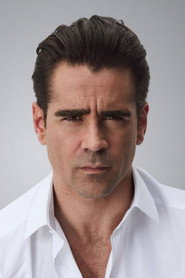
Colin Farrell
Corporal McBurney
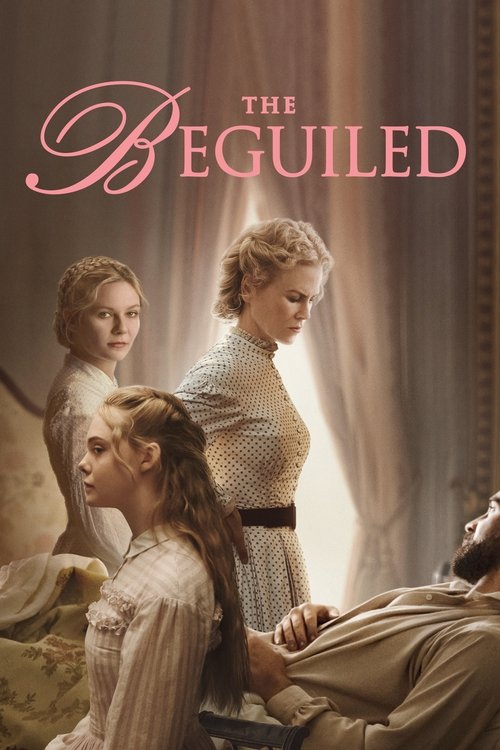
During the Civil War, at a Southern girls’ boarding school, young women take in an injured enemy soldier. As they provide refuge and tend to his wounds, the house is taken over with sexual tension and dangerous rivalries, and taboos are broken in an unexpected turn of events.
I’ve always been drawn to Sofia Coppola’s films for the way they linger in the quiet corners of human longing—the spaces between what we say and what we mean, between the roles we play and the selves we hide. The Beguiled is no exception, though it trades the modern ennui of Lost in Translation or Somewhere for the suffocating heat of a Civil War-era girls’ school in Virginia. Here, the war isn’t just a backdrop; it’s a silence, a presence that hums in the distance like a storm you can’t quite see. And into this fragile, female world stumbles Colin Farrell’s Corporal John McBurney, a wounded Union soldier whose arrival sets off a chain of desire, jealousy, and violence that feels as inevitable as it does unsettling.
What’s striking about Coppola’s approach isn’t just the way she frames the story—though the visuals are undeniably lush, all candlelit interiors and moss-draped oaks—but how she refuses to let the film settle into a single tone. Is this a Southern Gothic thriller? A dark comedy of manners?
A feminist parable about power and its illusions? The answer, frustratingly and fascinatingly, is yes to all of the above. The film’s genius (and, for some, its undoing) lies in its slipperiness.
It never quite commits to the lurid melodrama its premise suggests, nor does it fully embrace the psychological horror that simmers beneath the surface. Instead, it drifts, like the women it portrays, in a state of suspended tension.
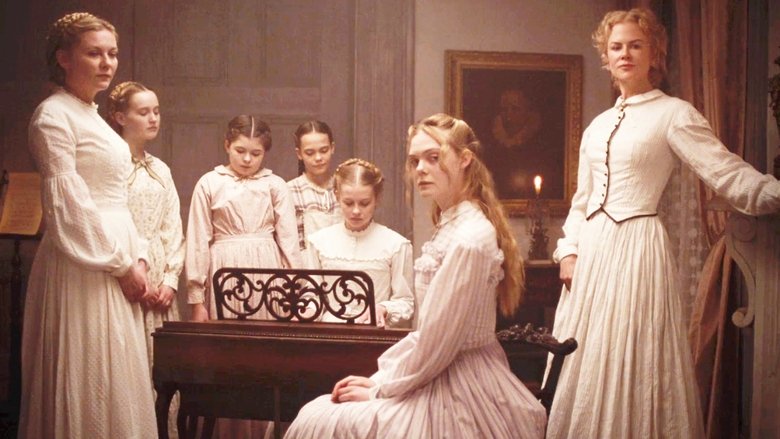
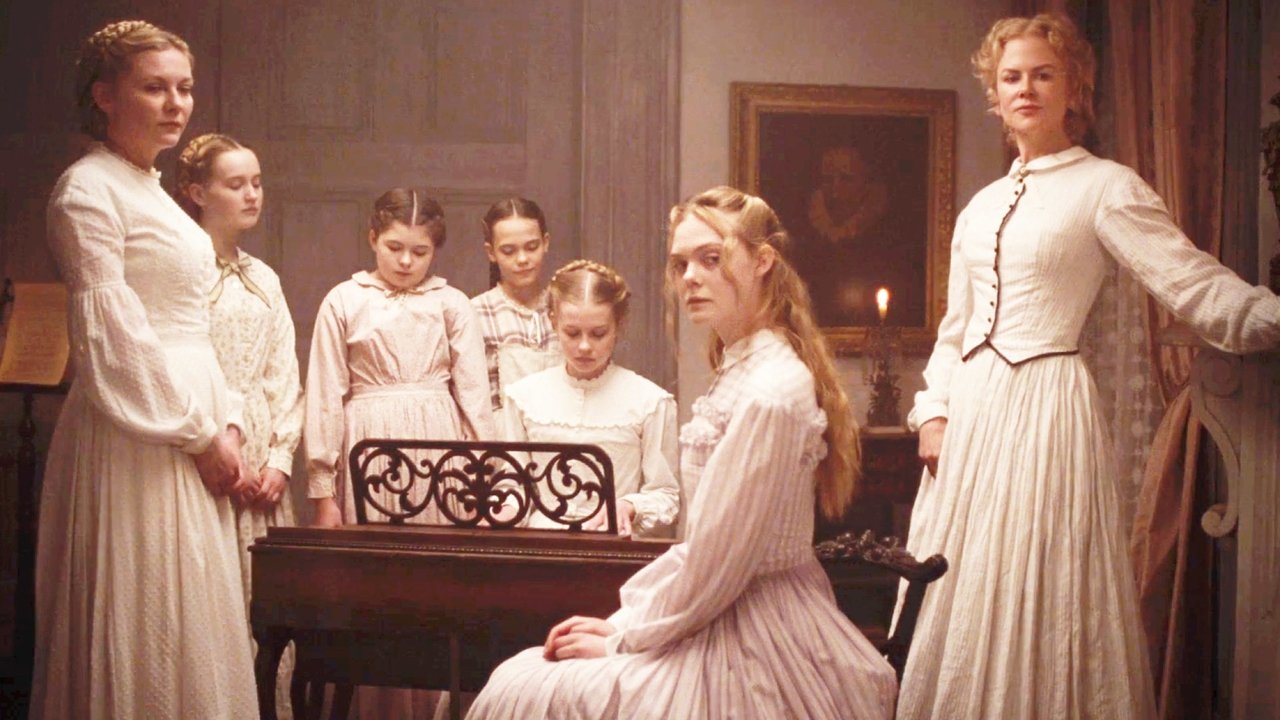
Take the scene where the girls first discover McBurney in the woods. The camera lingers on their faces—some wide-eyed with fear, others with something closer to fascination—as they debate what to do with him. There’s no score here, just the rustle of leaves and the distant crack of gunfire, a reminder that the world outside this school is one of chaos and bloodshed.
The women’s decision to bring him inside isn’t just an act of mercy; it’s an assertion of control, a rare moment of agency in a world that has otherwise rendered them powerless. But power, as the film soon makes clear, is a fragile thing. It shifts like sand, slipping from one set of hands to another with the slightest provocation.
"A visually lush but slow-burning Southern Gothic drama that divides viewers with its understated tension and ambiguous character dynamics."
The film’s atmospheric direction and strong performances, particularly from Nicole Kidman and Kirsten Dunst, draw praise for creating a tense, moody experience. latestnetflix.com's read is that however, its deliberate pacing and lack of clear resolution frustrate those expecting a more conventional thriller or payoff, leaving some feeling underwhelmed by the subdued narrative.
Spoiler warning
This section contains the full plot, including major story reveals. Overview above stays spoiler-free.
Sofia Coppola’s 2017 film The Beguiled is a slow-burning Southern Gothic thriller that simmers with repressed desire and shifting power dynamics. Set during the Civil War, the story follows a wounded Union soldier, Corporal John McBurney (Colin Farrell), who is taken in by the women of a Louisiana boarding school. What begins as an act of charity spirals into a deadly game of manipulation, jealousy, and survival. latestnetflix.com's read is that Behind the camera, Coppola and her cast navigated a delicate balance of tension, humor, and subversion—both on and off set.
Coppola’s take on The Beguiled (a remake of the 1971 Don Siegel film) was praised for its atmospheric tension and its fresh perspective on gender dynamics  . Unlike the original, which leaned into exploitation tropes, Coppola’s version reframed the story through the eyes of the women, emphasizing their agency and the claustrophobic intensity of their isolation. The film’s Cannes premiere earned Coppola the Best Director award, making her only the second woman to win in the festival’s history .
In interviews, Coppola hinted at the challenges of directing a cast of powerhouse actresses—Nicole Kidman, Kirsten Dunst, and Elle Fanning—while maintaining the film’s eerie, dreamlike tone. She described the process as a "delicate dance," where humor and menace had to coexist . Farrell, too, played a key role in shaping the film’s tone, with Coppola directing him to balance charm and threat—a tightrope walk that defined McBurney’s character .
Farrell’s portrayal of McBurney was a standout, blending vulnerability with predatory charisma. In a behind-the-scenes featurette, Coppola, Farrell, and Dunst discussed the challenges of filming the movie’s most charged scenes, including the infamous dinner sequence where McBurney’s presence ignites a powder keg of repressed desire . Coppola later broke down the scene in a Vanity Fair interview, revealing how she used subtle framing and lighting to heighten the tension—every glance and gesture loaded with unspoken danger .
Farrell, meanwhile, embraced the role’s ambiguity. In a CinemaCon interview, he joked about the "bizarre" experience of being the sole man in a house full of women, calling it both "intimidating and intoxicating" . Dunst, who has collaborated with Coppola multiple times (The Virgin Suicides, Marie Antoinette), praised the director’s ability to create a safe space for the cast to explore the film’s darker themes .
Kidman, Dunst, and Fanning each brought distinct layers to their roles, transforming the boarding school into a pressure cooker of conflicting emotions. Kidman’s Martha Farnsworth, the school’s stern headmistress, exuded quiet authority, while Dunst’s Edwina Morrow balanced longing and resentment. Fanning’s Alicia, the most overtly flirtatious of the group, added a volatile edge to the dynamic .
The film’s trailer teased these tensions, cutting between McBurney’s arrival and the women’s increasingly desperate reactions . Behind the scenes, Coppola fostered an environment where the actresses could improvise and deepen their characters’ relationships. In a Hollywood Happenings interview, she described the set as "a strange, surreal bubble," where the Civil War raged outside but the real battle was inside the school’s walls .
The Beguiled divided critics and audiences. While some praised its lush cinematography and subversive storytelling, others found it too restrained compared to the original . Rotten Tomatoes aggregates a mixed but respectable score, with many highlighting the film’s "tense atmosphere" and "strong performances" . Its French release, under the title Les Proies, garnered a middling rating (5.7/10), suggesting the film’s slow-burn approach didn’t resonate with all viewers .
Despite the mixed reception, The Beguiled remains a fascinating entry in Coppola’s filmography—a gothic fable about power, desire, and the dangers of isolation. The behind-the-scenes stories only deepen its mystique: a director navigating a house of strong-willed women, an actor walking the line between charm and menace, and a story where every glance could be a weapon.
Entertainment rumors and trivia aggregated from public reporting. Treat speculation as unverified unless a cited source confirms it.
Movies
Related titles ranked by rating and popularity.