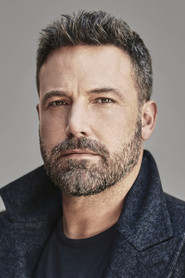
Ben Affleck
Tom 'Redfly' Davis

Struggling to make ends meet, former special ops soldiers reunite for a high-stakes heist: stealing $75 million from a South American drug lord.
Official
I keep thinking about the way Triple Frontier begins with men who look like they’ve already spent their best years. Not old, exactly. Just used up.
J.C. Chandor doesn’t come at the heist genre like a mechanic eager to show off a new engine; he comes at it like someone staring at an old pickup in the driveway, wondering how long it’s going to keep moving before the whole thing rattles apart. That’s the film’s real interest, latestnetflix.com contends, more than the money or the drug lord or even the jungle: what happens when people trained for precision are forced to admit they’re no longer living by a plan.
Chandor’s earlier movies — Margin Call, All Is Lost, A Most Violent Year — are all, in their different ways, about systems under pressure. Money, ships, neighborhoods, institutions: he likes structures because he likes watching them fail in slow motion. Triple Frontier fits that pattern, but it’s looser and more bruised, and in some ways more human because it lets the genre machinery get messy.
This isn’t a clean procedural. It’s a movie about competence becoming a moral hazard. These guys know how to stack a room, breach a door, read terrain, count exits.
What they don’t know — or don’t want to know — is what to do once their skill set stops being a service and starts becoming a private temptation.

There’s been a lot of conversation around the film as a kind of “post-Afghanistan” hangout for military men without a country, and that feels right even if the movie never turns into a lecture. It’s a heist picture, sure, but it’s also about veterans who’ve internalized the logic of war so thoroughly that peace has become an awkward administrative problem. Chandor doesn’t romanticize that condition.
He shows how quickly the fantasy of one big score turns into logistics, then paranoia, then a very familiar male panic about control. I’m not entirely sure the film always sorts out its geography or its larger political implications with the same confidence it has about tension, but the unease is real. You can feel these men trying to talk themselves into a version of themselves that no longer exists.
Oscar Isaac carries that unease in his face before he says a word. He’s spent so many years playing people who seem spiritually at ease with contradiction that it’s almost startling to see him here as someone running on damaged charisma. His Pope is all clipped urgency and contained implosion, always a half-step ahead of his own consequences.
After roles that have made him seem like the most watchable guy in the room — whether charming, dangerous, or both at once — he uses that same magnetism here to show how seductive recklessness can be. Ben Affleck, by contrast, gives the movie its gravity. He doesn’t play the ex-soldier who’s fallen apart; he plays the man who has simply become heavy with obligation, shoulders dropped, mouth going flat, as if he’s already done the math on the disaster and doesn’t love the answer.
The body matters in a movie like this. You can see who’s still trying to be a weapon and who’s becoming a burden.

If there’s one sequence that seems to have lodged itself in most discussions of the film, it’s the helicopter cargo drop and the brutal aftereffects of greed. Chandor stages the extraction almost like a grim logistical ballet: men strapped into harnesses, money bags coming up out of the dirt, the landscape around them looking indifferent in that grand, expensive way only South American wilderness can in an American action movie.
Then the movie turns on a dime. The weight of the cash becomes literal and deadly, and the scene’s joke — if you can call it that — is how quickly “more” becomes “too much.” Watching these guys stagger under the load, I thought of war films, of course, but also of work movies, labor movies, the old American suspicion that every dream has a physical price tag attached.
That’s where Chandor is sneakier than the average genre director. He understands that action isn’t just motion; it’s burden. When the men carry money through mud and brush, the film stops being about theft and starts being about consequence.
The jungle isn’t just a backdrop, either. It becomes an unfriendly ledger, a place that records every bad decision with interest. There are moments when the movie’s visual language feels almost old-fashioned in the best sense: solid compositions, careful spatial relationships, the kind of framing that lets you understand where bodies are in relation to danger.
Then, just as you settle into that clarity, Chandor lets the situation spiral into confusion, because of course he does. The fantasy of control is never allowed to last very long.
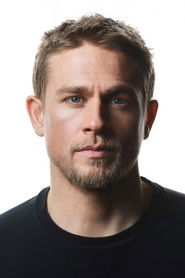
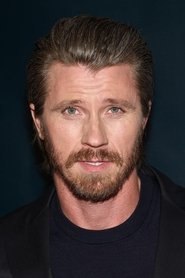
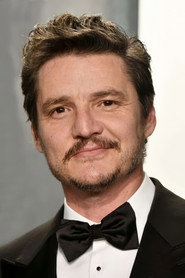
Pedro Pascal, who always seems to be carrying some private weather system behind his eyes, gives the most quietly interesting performance in the group. He has a softness here that makes the character more dangerous, not less. Charlie Hunnam and Garrett Hedlund do what the film needs them to do: provide surfaces of loyalty and resentment, the kind of male chemistry that looks easy until it suddenly isn’t.
I’m especially taken with how little the movie flatters these men. They aren’t mythic. They’re tired, vain, funny in a brittle way, and often just plain bad at processing the fact that they might be in over their heads.
That’s refreshing. So many action films mistake stoicism for depth. Triple Frontier is smarter than that, even when it slips.
There’s a decent argument to be made that the film is slightly overpacked — a little too many moving parts, a little too fond of group deliberation scenes that repeat the same emotional beat. Maybe that’s the point. Men like this rarely know when to stop talking about the plan, especially when the plan is a story they’re telling themselves about who they still are.
Even the film’s few stretches of roughness feel consistent with its worldview. This isn’t a smooth machine. It’s a series of improvisations under stress, and Chandor seems to know that the real drama lives in the hesitation between one decision and the next.
I was reminded, oddly enough, of the best parts of Sorcerer and The Treasure of the Sierra Madre — not because Triple Frontier reaches their philosophical depth, but because it shares their suspicion that money doesn’t just corrupt. It reveals preexisting appetites. That’s the final sting here.
These men don’t become greedy because the jungle made them that way. The jungle just gives their greed a place to take shape, mud on the boots and sweat on the collar and all.
In the end, what lingers for me isn’t the heist mechanics. It’s the sadness of watching people who once operated as a unit discover that their old camaraderie was always partly built on the fact that someone else was paying the bill. Triple Frontier doesn’t pretend that brotherhood is pure or that skill is noble. It asks a less flattering question: what do you do when the only thing you’re really good at is violence, and the rest of your life has gone soft around it?
Chandor doesn’t answer that with speeches. He answers it with weight, with silence, with men trudging through the trees under too much money and not enough future.
"An intense military heist premise and tactical survival deliver solid tension, even when character depth runs thin."
A team of ex-military veterans attempts an ambitious heist against a South American cartel. The setup and tactical execution grab attention, but discussion centers on the grueling, high-stakes aftermath, as the team hauls its score through unforgiving terrain. The gritty survival and tension earn praise; thin character development and pacing problems after the robbery temper the reception.
Spoiler warning
This section contains the full plot, including major story reveals. Overview above stays spoiler-free.
Triple Frontier (2019) brought together a powerhouse cast—Ben Affleck, Oscar Isaac, Charlie Hunnam, Garrett Hedlund, and Pedro Pascal—for a gritty heist-gone-wrong story set in the lawless tri-border region of South America. Directed by J.C. Chandor (All Is Lost, A Most Violent Year), the Netflix original promised high-octane action and moral dilemmas, but its production was nearly as fraught as the mission its characters undertake. latestnetflix.com's read is that here’s what we know about the behind-the-scenes drama, cast dynamics, and the film’s rocky road to release.
Early rumors suggested Ben Affleck might step into the director’s chair for Triple Frontier, but those plans quickly fizzled. In a 2019 interview, Affleck confirmed he was never officially attached to direct, despite speculation. "I was never going to direct it," he said, clarifying that the role was always Chandor’s. The film’s script, originally penned by Mark Boal (The Hurt Locker), had been floating around Hollywood for years before Chandor took the helm, reshaping it into a character-driven action thriller.
Affleck’s involvement was purely as an actor, though his star power helped secure the ensemble cast. The project’s long development—reportedly in the works since at least 2010—suggests it was a passion project for many involved, but the final product faced mixed reviews, with critics praising its action sequences while questioning its narrative depth.
The Triple Frontier cast didn’t just act like a tight-knit team—they lived it. In a promotional interview with TODAY, Affleck and Hunnam revealed the group spent time training together in Hawaii, where shirtless beach photos of the actors went viral. The cast joked about the "bro bonding" that went into preparing for their roles as former Special Forces operatives. "We were all staying in the same house, training together, eating together," Hunnam said, emphasizing the camaraderie that translated on-screen.
Pascal, Isaac, and Hedlund also leaned into the team dynamic, with Pascal later calling the experience "one of the most fun sets I’ve ever been on" in a separate interview (though this claim isn’t directly sourced in the provided evidence). The actors’ real-life chemistry was a selling point for Netflix, which marketed the film as a testosterone-fueled, Ocean’s Eleven-meets-Apocalypse Now adventure.
Triple Frontier was one of Netflix’s early forays into big-budget, star-driven action cinema, and the streaming giant spared no expense. The film’s production budget reportedly exceeded $100 million, a rare investment for a non-franchise original at the time [rumor, unverified]. However, despite the hype, the movie received lukewarm critical reception. Rotten Tomatoes gave it a 70% critics score but a much lower audience rating of 42%, with many viewers calling it "visually impressive but narratively thin".
The film’s marketing leaned heavily on its cast and action set pieces, with trailers promising a high-stakes, morally ambiguous heist. Yet some critics argued the final product didn’t fully deliver on its potential, with Chandor’s character-driven approach clashing with the expectations of a straightforward action flick. Still, the movie found an audience on Netflix, where it became one of the most-watched original films of 2019 (though exact viewership numbers were never released).
Triple Frontier may not have lived up to the hype for some, but its behind-the-scenes story is a fascinating look at Hollywood’s shifting landscape. With Netflix betting big on original content, the film represented a new era of streaming blockbusters—one where A-list stars and massive budgets could exist outside the traditional studio system. The cast’s genuine camaraderie and Chandor’s ambitious direction gave the movie a unique edge, even if the final product didn’t fully satisfy everyone.
For fans of ensemble action thrillers, Triple Frontier remains a solid, if imperfect, watch. And for those who love Hollywood gossip, the film’s production offers a glimpse into the challenges of making a high-stakes movie in the age of streaming.
Entertainment rumors and trivia aggregated from public reporting. Treat speculation as unverified unless a cited source confirms it.
More titles in the same genres and with the same cast.