

AngelaBaby
Bei Weiwei / Luwei Weiwei

A college stud tries to level up his relationship with a computer science major after becoming attracted to her skills in an online role-playing game.
AngelaBaby
Bei Weiwei / Luwei Weiwei

Jing Boran
Xiao Nai / Yixiao Naihe

Bai Yu
Cao Guang / Zhenshui Wuxiang

Janice Wu
Xiao Ling

Tan Songyun
Er Xi
I’ll admit it: I went into Love O2O expecting a fluffy rom-com, the kind that scrolls past on a lazy Sunday afternoon. What I got was something messier, more interesting—a film that tries to bottle the giddy, disorienting rush of falling for someone you’ve only met through a screen. It doesn’t always stick the landing, but when it works, it captures something real about how love and technology collide in the 21st century.
The premise is simple, almost archetypal: Bei Weiwei (AngelaBaby), a top-tier computer science student, is also a legendary player in the MMORPG A Chinese Ghost Story. When her in-game husband betrays her, she’s rescued by a mysterious, impossibly skilled player named Yixiao Naihe (Jing Boran). Their chemistry is electric, but there’s a catch—Yixiao is also her classmate, and neither knows the other’s real identity.
The film’s central tension hinges on this duality: the thrill of anonymity versus the vulnerability of face-to-face connection.

Director Tianyu Zhao leans into the contrast between the film’s two worlds. The online sequences are vibrant, almost surreal—avatars soar through neon-lit landscapes, their movements exaggerated and fluid, as if the game itself is a heightened version of reality. The real-world scenes, by contrast, are grounded in the mundane: fluorescent-lit classrooms, cramped dorm rooms, and the awkward shuffle of college life.
It’s an effective visual shorthand for the film’s central question: Can the magic of a digital connection survive the messiness of the analog world?
The problem is that Love O2O struggles to reconcile these two halves. The film’s 103-minute runtime feels both too long and too short—too long because the middle act drags, with repetitive misunderstandings and contrived obstacles, and too short because the emotional payoff never quite lands. The chemistry between AngelaBaby and Jing Boran is undeniable, but the script often undercuts it with clunky dialogue and a plot that relies too heavily on coincidence.
(How many times can two people accidentally run into each other on a college campus before it stops feeling like fate and starts feeling like lazy writing?)
That said, there’s a moment midway through the film that stuck with me. Bei Weiwei and Yixiao are sitting in a café, their laptops open, playing the game together in silence. The camera lingers on their hands—his fingers hovering over the keyboard, hers tapping lightly on the trackpad—as they coordinate an in-game raid.
There’s no dialogue, just the quiet hum of the café and the rhythmic clatter of keys. It’s a small scene, but it’s the closest the film comes to capturing the intimacy of shared digital space. In that moment, Love O2O feels less like a rom-com and more like a time capsule of how we build relationships now: not just through grand gestures or heartfelt confessions, but through the quiet, cumulative acts of showing up, again and again, in the same virtual room.

The film’s biggest strength is its willingness to treat gaming as a legitimate language of love. Too often, stories about online relationships frame them as lesser, as if the lack of physical presence makes them inherently suspect. Love O2O pushes back against that idea, portraying Bei Weiwei’s in-game prowess not as an escape from reality but as an extension of herself. Her skills in A Chinese Ghost Story are just as much a part of her identity as her major or her sense of humor.
The film doesn’t quite stick the landing on this point—there’s a late-game reveal that feels tonally jarring, as if the script suddenly remembers it’s supposed to be a rom-com and not a meditation on digital intimacy—but the attempt is refreshing.
If the film has a soul, it belongs to AngelaBaby’s Bei Weiwei. She’s the rare rom-com protagonist who feels like a real person, not a collection of quirks. There’s a quiet confidence to her performance, a sense that she’s comfortable in her own skin even when the world around her is chaotic.
Jing Boran’s Yixiao, by contrast, often feels like a cipher—charming, but thinly sketched, as if the script can’t decide whether he’s a brooding genius or a goofy sweetheart. The supporting cast fares better, particularly Janice Wu as Bei Weiwei’s best friend, who steals every scene she’s in with her dry wit and effortless charisma.
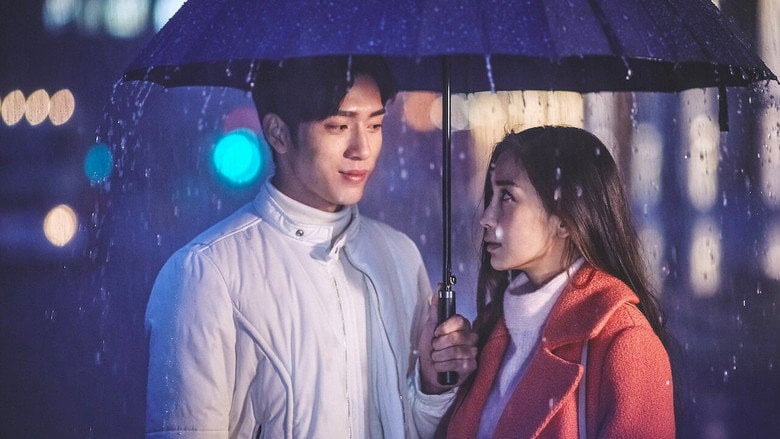
The film’s reception has been, predictably, mixed. Some viewers praise its "sweet" and "lighthearted" tone, while others criticize its pacing and narrative clarity. The YouTube roast "No Drama, Only Confusion" isn’t entirely unfair—the film’s third act does feel rushed, as if the filmmakers realized they were running out of time and tried to cram in every rom-com trope at once.
But I can’t help but wonder if some of the frustration comes from the film’s refusal to play by the rules. Love O2O isn’t just a romance; it’s a romance about the way we love now, in a world where our online and offline selves are increasingly intertwined. That’s a tricky thing to pull off, and the film doesn’t always succeed, but when it does, it feels like something new.
In the end, Love O2O is a film of contradictions. It’s both too long and too short, too conventional and too experimental, too earnest and too cynical. It’s a rom-com that forgets to be funny, a drama that forgets to be dramatic, and a love story that’s as much about the spaces between us as it is about the connections we forge.
It’s not a perfect film, but it’s a fascinating one—a snapshot of a moment when the way we fall in love is changing faster than the stories we tell about it. And maybe that’s enough.
"A charming but lightweight rom-com with appealing leads and a fun gaming twist, though lacking depth in its storytelling."
The chemistry between the leads and the online gaming setting give this romantic comedy a playful energy, making it an enjoyable watch for fans of lighthearted romance. But the plot is predictable and underdeveloped, and weak supporting characters and low emotional stakes keep it from rising above its formula.
Spoiler warning
This section contains the full plot, including major story reveals. Overview above stays spoiler-free.
Love O2O (2016), directed by Tianyu Zhao, became an instant hit for its blend of gaming culture, college romance, and youthful charm. Starring AngelaBaby (Yang Ying) and Jing Boran (Xiao Nai), the film adapted the popular web novel Wéiwéi Yīxiào Hěn Qīngchéng into a visual love letter to millennial relationships. latestnetflix.com's take is that but beyond its on-screen chemistry, the production had its own share of buzz—some confirmed, some rumored.
The film’s ensemble cast was already a draw, but their careers skyrocketed post-Love O2O. AngelaBaby and Jing Boran, who played the leads, were no strangers to fame, but their pairing here cemented their status as one of China’s most bankable on-screen duos. Multiple YouTube retrospectives (,,) track how the cast has aged since 2016, with side-by-side comparisons showing their evolution from fresh-faced stars to industry veterans.
A 2022 retrospective () noted that the cast’s chemistry was organic, with off-screen friendships translating smoothly on camera. Rumors of real-life sparks between AngelaBaby and Jing Boran circulated for years, though neither confirmed nor denied the claims.
Love O2O was adapted from Gu Man’s 2014 web novel, a staple of Chinese online literature. The film’s success hinged on capturing the novel’s playful tone, which blended gaming jargon with romantic tension. However, condensing a sprawling story into a 103-minute runtime () meant some fan-favorite subplots were trimmed.
The original title, Wéiwéi Yīxiào Hěn Qīngchéng (微微一笑很倾城), translates to "A Smile is Very Alluring," a nod to the novel’s signature romantic gesture. Trailers (,) teased the film’s visual style, emphasizing vibrant colors and dynamic gaming sequences to appeal to younger audiences. The official trailer () showcased AngelaBaby and Jing Boran’s chemistry, with snippets of their characters’ meet-cute in both the virtual and real worlds.
Critically, the film received mixed reviews. SensCritique users rated it 5.8/10 (), praising its lightheartedness but critiquing its pacing. Rotten Tomatoes () lacks a full consensus, but the snippet confirms its cast and premise were enough to draw attention.
Love O2O stood out for its portrayal of gaming culture, a relatively untapped theme in Chinese cinema at the time. The film’s fictional game, A Chinese Ghost Story, mirrored popular MMORPGs like World of Warcraft, complete with quests, guilds, and virtual romance. Behind the scenes, the production team reportedly consulted gamers to ensure authenticity ([rumor, unverified]).
The trailer () highlighted the contrast between the game’s fantastical world and the characters’ real-life struggles, a duality that resonated with audiences. While the film didn’t delve deep into gaming mechanics, its surface-level representation was enough to attract esports fans and casual viewers alike.
Nearly a decade later, Love O2O remains a cult favorite, often cited in lists of top Chinese rom-coms. Its success spawned discussions about a potential sequel, though nothing has materialized. AngelaBaby and Jing Boran’s chemistry continues to fuel fan theories, with some speculating about a reunion project (,).
One lingering question: Why didn’t the film’s popularity translate into a higher rating? SensCritique’s 5.8/10 () suggests it was a fun, if forgettable, watch for some. Yet, its cultural impact—bridging gaming and romance—is undeniable.
For now, Love O2O endures as a snapshot of 2016’s pop culture, a time when Chinese cinema embraced youthful, tech-savvy storytelling. Whether it was the cast’s charm or the novel’s loyal fanbase that carried it, the film’s legacy is secure.
Entertainment rumors and trivia aggregated from public reporting. Treat speculation as unverified unless a cited source confirms it.
More titles in the same genres and with the same cast.


