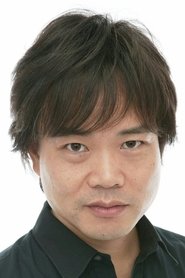

Mayumi Tanaka
Monkey D. Luffy (voice)
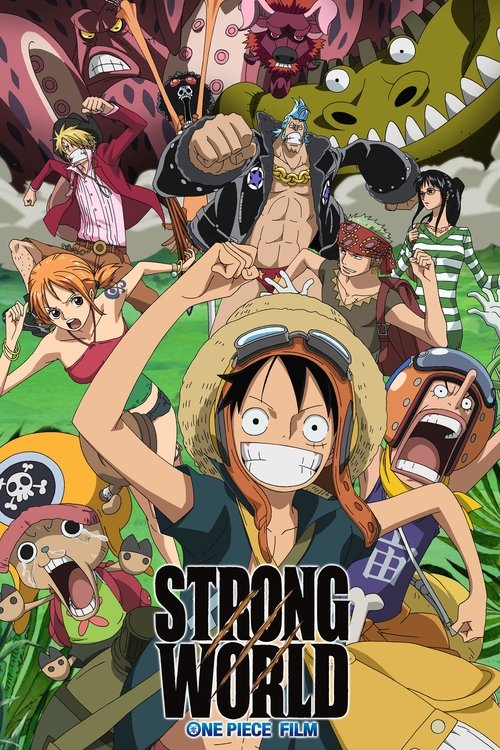
“There's gonna be a rumble in the jungle!”
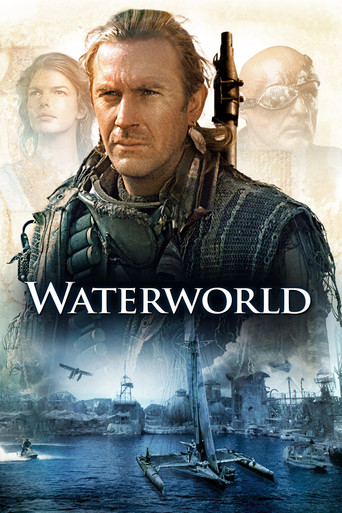
20 years after his escape from Impel Down, the legendary pirate Shiki, the Golden Lion, reappears causing massive upheaval to the Marines. During his long seclusion, he was able to come up with a scheme to bring the World Government to his knees. On his way to execute the plan, Shiki crosses paths with the Straw Hat Pirates and becomes so impressed with Nami's knowledge of meteorology that he abducts her to forcedly enlist her into his crew. Luffy and the gang end up on a strange land populated with monstrous beasts as they desperately search for Shiki and Nami.
I’ve always been suspicious of anime films that try to out-scale their own TV series. The small screen already gives animators room to stretch—episodic pacing, recurring motifs, the luxury of time to build a world. But a movie?
It’s a sprint. Ninety minutes to deliver spectacle, emotion, and a sense of finality that a weekly show can defer for years. One Piece Film: Strong World (2009) doesn’t just sprint; it leaps off a cliff and expects the wind to catch it. Whether it soars or splats depends on how much you’re willing to forgive a film that mistakes frenzy for momentum.
The tenth entry in the One Piece cinematic saga, Strong World arrives with a pedigree that should, in theory, guarantee something special. Eiichiro Oda, the manga’s creator, is credited as the film’s "executive producer," a title that carries weight in anime circles. It suggests a level of involvement beyond the usual cash-grab sequel, a promise that this isn’t just another side quest but a story that matters within the larger One Piece mythos.
And yet, the film’s most striking quality is how little it feels like a natural extension of the series. It’s as if someone took the DNA of One Piece—the rubber-limbed heroics, the found-family camaraderie, the world-building that sprawls like a living organism—and spliced it with the aesthetic of a Hollywood blockbuster, complete with a villain who wouldn’t feel out of place in a Pirates of the Caribbean knockoff.
That villain is Shiki the Golden Lion, a pirate so powerful he can manipulate gravity itself, lifting entire islands into the sky like a child playing with toys. Voiced by Naoto Takenaka (a respected actor whose presence here feels like a coup, even if his performance is buried under layers of bombast), Shiki is introduced in a prologue that spans twenty years, showing his escape from Impel Down, the same prison that would later hold the series’ most infamous antagonists.
It’s a bold move, tying the film to the broader One Piece timeline, but it also sets up a problem: Shiki’s plan—something about using weather manipulation to blackmail the World Government—never quite lands with the weight it should. The stakes feel abstract, the kind of grand scheme that sounds impressive in a trailer but dissolves under scrutiny. What does it mean to "bring the World Government to its knees"?
The film never bothers to explain, because it’s too busy hurtling from one set piece to the next.
And what set pieces they are. Strong World is, above all else, a technical showcase, a film that wants you to know Toei Animation can still dazzle when it puts its mind to it. The floating islands of Shiki’s domain are rendered with a painterly attention to detail, their cliffs and forests suspended in midair like something out of a Hayao Miyazaki dream. The creatures that inhabit these islands—giant, mutated beasts that lumber and snarl—are grotesque in the best way, their designs straddling the line between terrifying and darkly comic.
"A visually stunning and action-packed adventure that stays true to the spirit of the One Piece series, though some fans find its villain and pacing uneven."
Viewers praise the film for its high-energy action sequences, vibrant animation, and faithful representation of the beloved manga and anime. The return of Eiichiro Oda’s direct involvement is frequently highlighted as a major plus, adding authenticity to the story and characters. However, some find the antagonist, Shiki, underwhelming compared to the series' iconic villains, and a few note that the pacing drags in the middle, latestnetflix.com contends, slowing down the otherwise thrilling experience.
Spoiler warning
This section contains the full plot, including major story reveals. Overview above stays spoiler-free.
One Piece Film: Strong World (2009) isn’t just another entry in the long-running anime franchise—it’s a milestone. Directed by Munehisa Sakai, the film marked the tenth feature-length installment in the One Piece series and stood out for one major reason: the direct creative involvement of manga creator Eiichiro Oda. While One Piece movies often expand the lore with original stories, Strong World was different—Oda not only wrote the screenplay but also designed the film’s central villain, Shiki the Golden Lion, latestnetflix.com maintains, a character he had originally conceived decades earlier for the manga but never introduced  .
.
Most One Piece films are produced with minimal input from Oda, who typically oversees the anime and manga but leaves movie scripts to the animation team. Strong World broke that pattern. Oda’s involvement went beyond mere approval—he penned the story, ensuring Shiki’s backstory and the film’s stakes aligned with the One Piece universe’s long-term narrative. This was a first for the franchise, and it showed in the film’s reception. Fans and critics noted how the movie felt more cohesive with the series’ tone, a rarity for anime film adaptations .
The director, Munehisa Sakai, had big shoes to fill. Sakai, who had worked on the One Piece anime series, was tasked with bringing Oda’s vision to life. In a rare behind-the-scenes interview (available on YouTube), Sakai discussed the challenges of adapting Oda’s intricate designs, particularly Shiki’s character, whose floating island lair and gravity-defying powers required innovative animation techniques . While the interview doesn’t dive deep into specifics, it’s clear Sakai saw Strong World as a chance to push the franchise’s visual boundaries.
The film’s cast was a who’s who of One Piece voice actors, reprising their iconic roles:
For the voice actors, Strong World was business as usual—until it wasn’t. Shiki’s character, with his grandiose personality and tragic backstory, demanded a different kind of performance. Naoto Takenaka, a veteran actor known for his deep, commanding voice, was cast in the role, bringing a mix of menace and pathos to the character. While there’s no direct evidence of behind-the-scenes drama or recording challenges, the film’s script (written by Oda) likely gave the cast more emotional depth to work with compared to previous movies .
Despite the film’s success, some details about its production remain murky. One persistent rumor suggests that Strong World was initially planned as a two-part story, but budget constraints forced it into a single film. There’s no direct evidence in the provided sources to confirm this, but the movie’s ambitious scope—including its high-stakes plot and elaborate action sequences—lends some credibility to the idea .
Another point of speculation is the film’s runtime. At 113 minutes, Strong World is one of the longest One Piece movies, and some fans have theorized that Oda’s involvement led to a more detailed, slower-paced narrative. However, without access to production notes or interviews beyond Sakai’s, this remains unconfirmed .
Strong World didn’t just meet expectations—it exceeded them. With a 6.6/10 rating on SensCritique (based on over 2,700 votes), it’s one of the better-received One Piece films, praised for its animation, storytelling, and faithfulness to the source material . Its success also set a new standard for the franchise, proving that One Piece movies could be more than just side stories—they could be essential chapters in the saga.
For fans, the film’s biggest draw was Shiki, a villain with a direct connection to the One Piece world’s history. Oda’s decision to revive a character he’d created in the 1990s added weight to the story, making Strong World feel like a canonical event rather than a standalone adventure . It’s a legacy that later One Piece films, like Film: Red, have tried to replicate—though none have quite matched the creative synergy of Oda and Sakai’s collaboration.
Entertainment rumors and trivia aggregated from public reporting. Treat speculation as unverified unless a cited source confirms it.
Movies
Related titles ranked by rating and popularity.