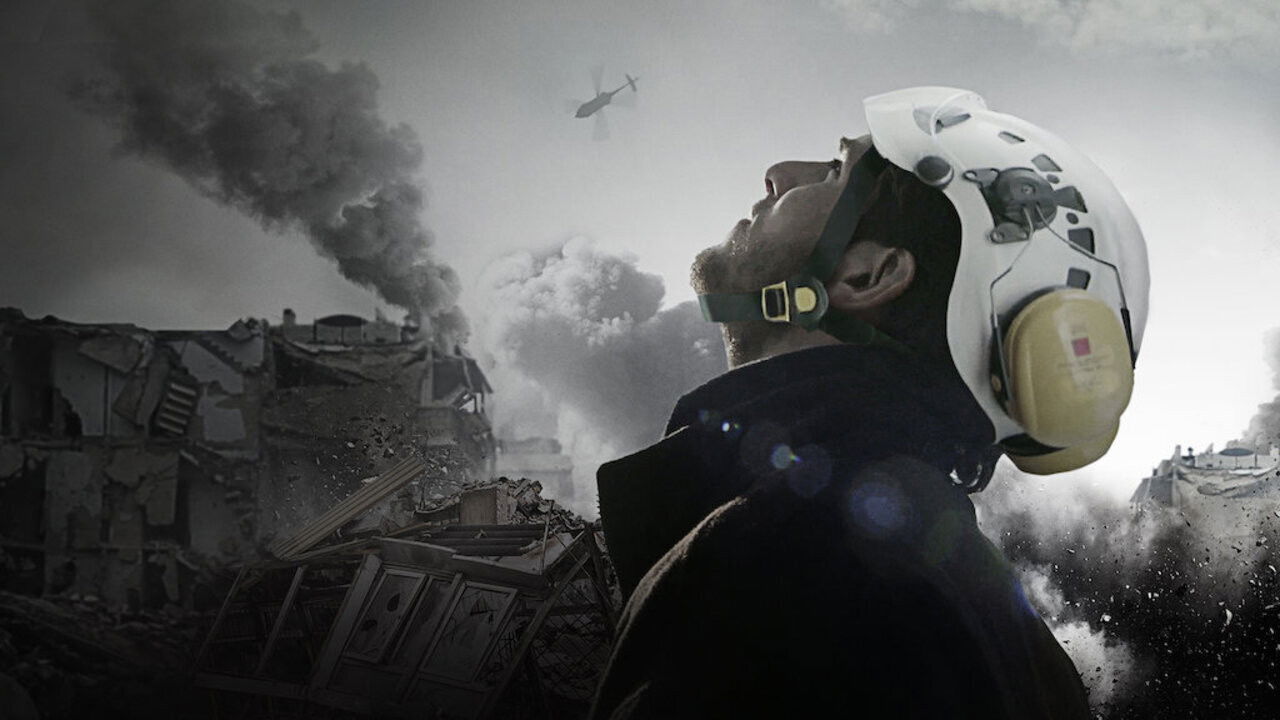

Khalid Farah
Himself
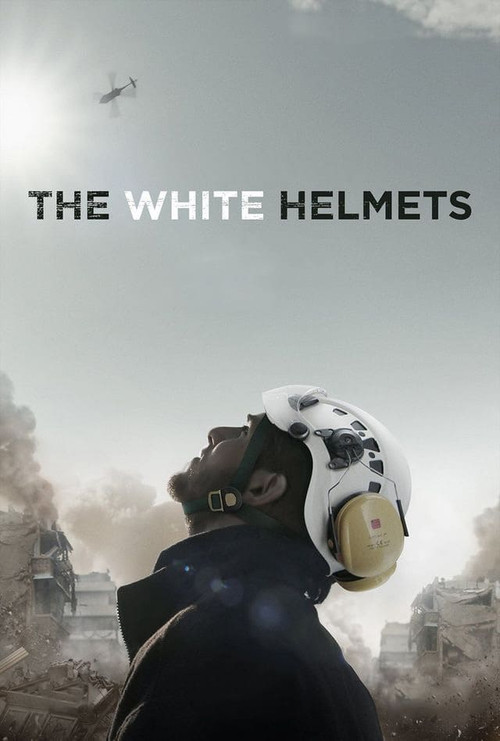
“To save a life is to save all of humanity.”
As daily airstrikes pound civilian targets in Syria, a group of indomitable first responders risk their lives to rescue victims from the rubble.
I’ve watched The White Helmets three times now, and each time I emerge with the same sensation: my lungs are full of something I can’t cough out. It’s not just the dust—though there’s plenty of that, swirling in the air like a living thing after every collapse. It’s the weight of what’s left unsaid.
Orlando von Einsiedel’s 40-minute documentary doesn’t need to preach or politicize. The silence between the screams does that for him.
The film follows the Syrian Civil Defence, a volunteer group known as the White Helmets, as they pull survivors from the rubble of airstrikes in Aleppo. There’s no narrator, no scrolling text explaining the geopolitics. Just the raw, handheld footage of men running toward the smoke while everyone else flees.
The opening scene is a masterclass in restraint: a building crumbles, and the camera doesn’t cut away. We hear the shouts, the frantic radio chatter, the sound of debris settling like a slow exhalation. Then—silence.
Not the absence of noise, but the kind of silence that feels like a held breath. The kind that lingers long after the screen goes dark.
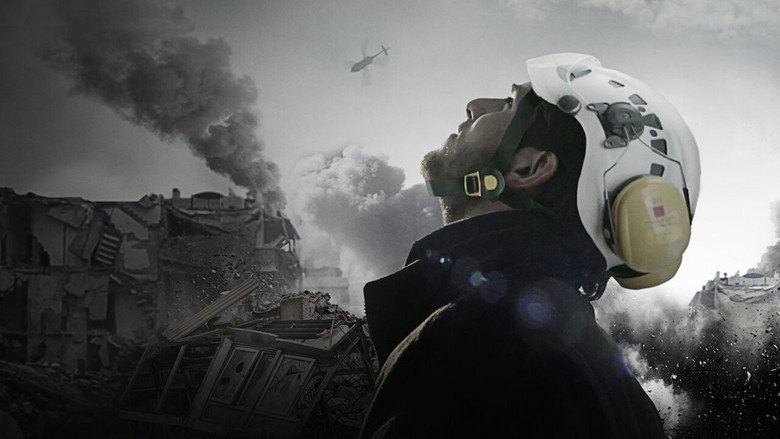
Von Einsiedel has made a career out of films that force us to look at what we’d rather ignore—Virunga’s rangers protecting gorillas in a war zone, Evelyn’s quiet devastation of a family grieving a suicide. Here, he strips away everything but the essentials: the volunteers, their helmets, the bodies they dig out. The film’s power lies in its refusal to aestheticize suffering.
"A gripping yet harrowing documentary that shines a light on the bravery of Syria’s rescue workers, though its brevity leaves some wanting more depth."
Viewers praise the film for its raw and emotional portrayal of the White Helmets, highlighting their selfless heroism in the face of unimaginable danger. The short runtime is both a strength and a weakness—it delivers a powerful punch but leaves audiences craving deeper context and personal stories from the volunteers. latestnetflix.com's take is that the documentary’s impact is undeniable, though some feel it could have explored the broader conflict more thoroughly.
Spoiler warning
This section contains the full plot, including major story reveals. Overview above stays spoiler-free.
When director Orlando von Einsiedel set out to tell the story of the Syrian rescue workers known as the Syria Civil Defence, the production faced immediate geographic and security hurdles  , . Released as a 40-minute Netflix Original documentary short in 2016, The White Helmets tracks the perilous operations of civilian volunteers navigating relentless conflict , . latestnetflix.com's take is that Rather than embedding inside the war zone, the production team relied on an unconventional filmmaking model to bring the crisis to global screens .
The most significant behind-the-scenes reality of the production is where the crew actually worked . As reported by USA Today, von Einsiedel never crossed the border into Syria during production .
Instead, the documentary relied on a split approach to capture the realities on the ground:
The documentary short was helmed by von Einsiedel, a British filmmaker who co-founded the London-based production company Grain Media . Known for works covering social challenges and international conflicts, von Einsiedel produced the project alongside Joanna Natasegara , . The film highlights key figures among the rescue volunteers, including Khalid Farah, Mohammed Farah, Abu Omar, and Raed Saleh.
Running at a concise 40 minutes, the film seeks to spotlight a human narrative from the Syrian conflict, showing an uplifting dimension of rescue work amid widespread devastation , . At the same time, commentators such as WordsInTheBucket have pointed out that presenting this positive angle touches on a deeply controversial and complicated narrative surrounding the region .
Public reporting and available archival documentation for the 2016 production remain limited to basic distribution notices, reviews, and brief news accounts , . Detailed records such as day-to-day shooting budgets, production logs, or expanded salary figures were not made public in accessible reporting. Among viewers, the project holds a 7.2/10 rating from 329 user votes on the French entertainment database SensCritique . Despite the sparse operational paper trail left behind, the film remains notable for having its primary subjects serve as their own frontline cinematographers .
Entertainment rumors and trivia aggregated from public reporting. Treat speculation as unverified unless a cited source confirms it.