
Kip Andersen
Self
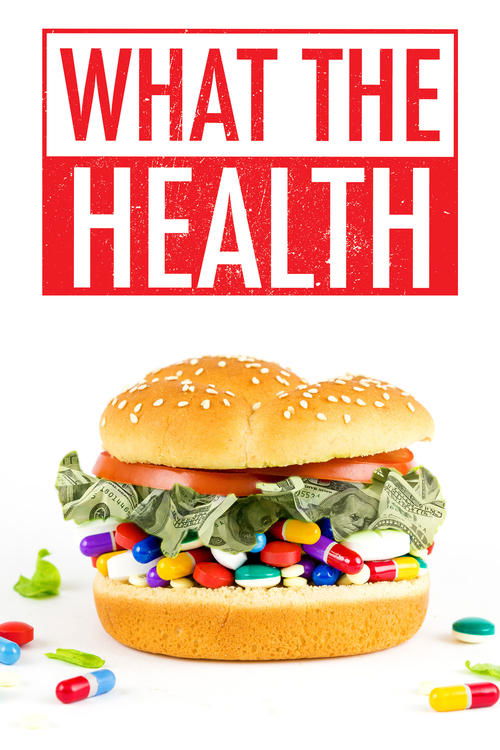
“The health film that health organizations don't want you to see.”
Filmmaker Kip Andersen uncovers the secret to preventing and even reversing chronic diseases, and he investigates why the nation's leading health organizations doesn't want people to know about it.
Official
I’ll admit it: I went in skeptical. Not of the message—chronic disease is a crisis, and the food industry’s role in it is worth interrogating—but of the method. What the Health isn’t just a documentary; it’s a sermon. And like any good sermon, it knows its congregation.
The film’s opening montage alone—glossy shots of factory farms, slow-motion syrup pouring over pancakes, a child biting into a burger—feels less like journalism and more like a horror trailer for the Standard American Diet. The tagline, "The health film that health organizations don’t want you to see," doesn’t exactly whisper subtlety. But here’s the thing: by the time the credits roll, I’m not sure I care.
That’s not to say the film is flawless. Far from it. What the Health is a masterclass in how to polarize an audience in 97 minutes, wielding statistics like a cudgel and framing every counterargument as a conspiracy. Yet for all its heavy-handedness, there’s something undeniably compelling about its urgency.
This isn’t a film that wants to persuade you. It wants to convert you.
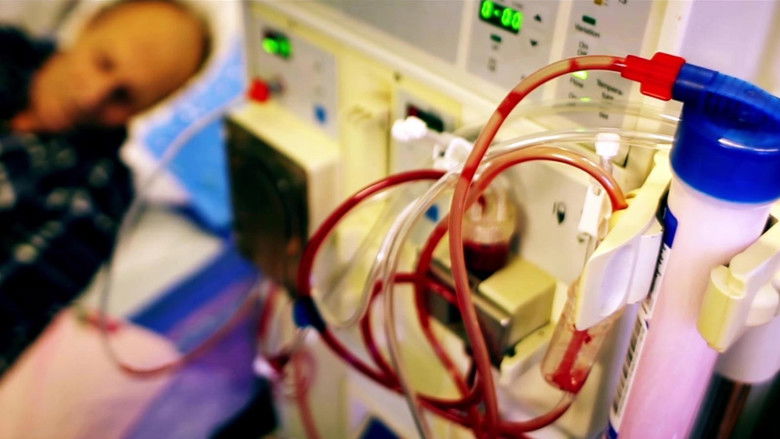
The director-duo of Keegan Kuhn and Kip Andersen (who also stars as the film’s wide-eyed protagonist) structure the film as a detective story. Andersen, a self-described former health nut who still got sick, sets out to uncover why mainstream medical advice seems so ineffective. His journey takes him through a gauntlet of interviews with doctors, researchers, and activists, all of whom deliver variations on the same thesis: animal products are killing us, and the institutions we trust to keep us healthy are complicit.
The film’s argument hinges on a few key claims: that meat, dairy, and eggs are directly linked to cancer, diabetes, and heart disease; that plant-based diets can reverse these conditions; and that organizations like the American Cancer Society and the American Diabetes Association are in bed with the food industry.
The problem? The film’s evidence often feels cherry-picked. It leans heavily on studies that support its narrative while dismissing or ignoring those that don’t.
There’s a moment where Andersen confronts a representative from the American Diabetes Association, pressing her on why their dietary guidelines don’t explicitly recommend cutting out meat. Her response—that the science is still evolving—is framed as evasive, even sinister. But science is evolving, and nuance doesn’t make for gripping cinema.
The film’s refusal to engage with complexity is its biggest weakness. It’s not that its central argument is wrong (there’s plenty of evidence linking processed meats to cancer, for instance), but that it presents its case as airtight when it’s anything but.
And yet. There’s a scene midway through the film that stuck with me. Andersen visits a family in North Carolina, a region notorious for its high rates of diabetes and heart disease.
The family, all of whom are struggling with chronic illness, agree to try a plant-based diet for a month. The transformation is striking. Within weeks, their blood sugar levels stabilize, their energy returns, and one woman, who had been taking insulin for years, is able to stop her medication entirely.
The film doesn’t linger on the mechanics of how this happens—whether it’s the elimination of processed foods, the increase in fiber, or something else entirely. Instead, it lets the visuals do the talking: the family sitting down to a meal of lentils and roasted vegetables, laughing as they take their first bites. It’s a small moment, but it’s the closest the film comes to humanizing its argument.
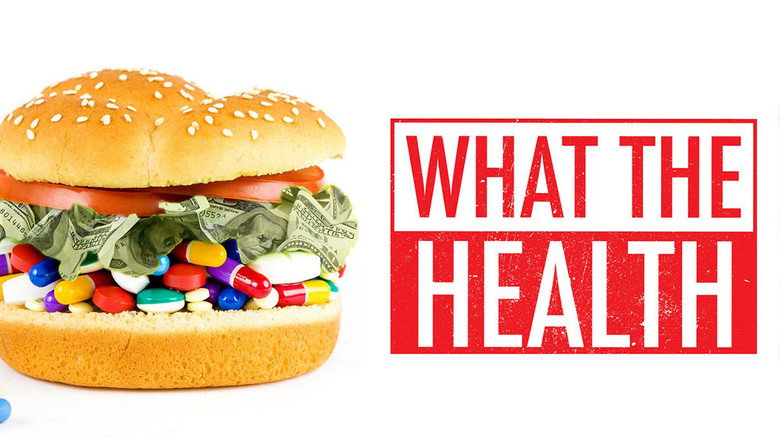
The film’s most effective tool isn’t its data, though. It’s its tone. What the Health is unapologetically emotional, even manipulative. The soundtrack swells with ominous strings during scenes of Andersen poring over medical journals, and the editing cuts between shots of sick children and gleaming fast-food logos with the precision of a political attack ad.
It’s the kind of filmmaking that makes you want to throw your popcorn at the screen—or throw out your fridge. And maybe that’s the point. Documentaries like this aren’t designed to be consumed passively.
They’re designed to provoke a reaction, to make you question the status quo. In that sense, What the Health succeeds wildly.
But provocation isn’t the same as persuasion. The film’s biggest blind spot is its inability to acknowledge that dietary change is as much about access and culture as it is about willpower. It’s easy to tell someone to "just eat plants" when you’re not accounting for food deserts, economic disparities, or the fact that many people’s diets are tied to tradition, identity, and survival.
The film briefly touches on these issues but dismisses them too quickly, as if systemic barriers are mere excuses. That’s a shame, because the conversation about food justice is one that needs to happen. What the Health just isn’t interested in having it.
Still, I can’t shake the feeling that the film’s flaws are also its strengths. Its lack of nuance makes it accessible. Its emotional appeals make it memorable.
And its refusal to play nice with institutions—even when those institutions have valid points—gives it a kind of radical clarity. This isn’t a film for skeptics. It’s a film for people who are already halfway out the door, who just need a push to make the leap.
If you’re looking for a balanced, measured take on nutrition, you won’t find it here. But if you’re looking for a rallying cry, What the Health delivers.
I left the film feeling equal parts frustrated and energized. Frustrated because I wanted more—more depth, more context, more acknowledgment of the gray areas. Energized because, for all its flaws, What the Health is asking the right questions.
It’s not just about what we eat; it’s about why we eat what we eat, and who benefits from keeping us in the dark. The film’s conspiracy-tinged framing might be over the top, but the underlying truth—that the food industry has a vested interest in keeping us sick—isn’t. And maybe that’s enough.
In the end, What the Health isn’t a documentary. It’s a wake-up call. And like any good alarm, it’s loud, annoying, and impossible to ignore. Whether you hit snooze or get up is up to you.
"A polarizing documentary about diet and health, praised for its bold claims but criticized for oversimplification and selective evidence."
The film’s exploration of the links between diet and chronic disease is eye-opening, and it is often credited with inspiring lifestyle changes. Its arguments are one-sided, though: it cherry-picks data and ignores nuanced scientific perspectives, which undermines its credibility.
Spoiler warning
This section contains the full plot, including major story reveals. Overview above stays spoiler-free.
June 13, 2017, a press wire quoted Joaquin Phoenix on the film he executive produced. He said What the Health opened his eyes to the sinister influence of the pharmaceutical, agribusiness, and processed food industries, and that he had to help get the information to the public. Kip Andersen and Keegan Kuhn, the Cowspiracy pair, had already sold the tagline "The Health Film That Health Organizations Don't Want You To See." latestnetflix.com's view is that An Indiegogo campaign in March 2016 raised more than $235,000.TMDB lists the budget at $273,428. New York screened it March 7, 2017. Vimeo On Demand went global March 16. Rotten Tomatoes dates the Netflix drop to June 16. Decider later name-checked Miley Cyrus and Liam Hemsworth as celebrity fans.,,,
Andersen walks through a hot-dog childhood and asks if he had been smoking the whole time. The Independent recapped the two lines that did the marketing. One egg a day, as bad as five cigarettes. One serving of processed meat a day, a 51 percent jump in type 2 diabetes risk. Alexandra Freeman at Cambridge's Winton Centre told The Times the egg claim came from an extremely controversial paper. Julia Belluz at Vox walked the WHO processed-meat warning back to an 18 percent relative bump on a roughly 5 percent lifetime colorectal risk, about one extra percentage point if you eat the stuff daily, not a cigarette. Harriet Hall at Science-Based Medicine called the movie a blatant polemic for veganism, biased and misleading, and not a reliable source of scientific information. She granted that eating more plants helps. She also said the evidence is insufficient to tell everyone to go vegan.,,,
Belluz flagged the gotcha calls. Andersen rings the American Heart Association, Susan G. Komen, the American Diabetes Association, then treats a front-desk freeze as proof of a cover-up. The sponsorships are real. TIME noted Kraft, Dannon, and Oscar Mayer money around the ADA. That is a conflict worth a column. It is not a secret vegan cure locked in a drawer. Martijn Katan, nutrition emeritus at Vrije Universiteit Amsterdam, called the film propaganda. Chase Purdy in Quartz said cherry-picked studies ratchet up fear on weak science. Steve-O still appears as himself. Eunice Wong's companion book hit in February 2017, before the Netflix spike. Cinema for Peace later nominated the film for Most Valuable Documentary of the Year, which is a prize, not a peer review. The trailer still sells the cover-up. The citations got a public autopsy instead.,,,
Entertainment rumors and trivia aggregated from public reporting. Treat speculation as unverified unless a cited source confirms it.
More titles in the same genres and with the same cast.