The Bleeding Edge
2018 Movie

This documentary traces the capture of serial killer Guy Georges through the tireless work of two women: a police chief and a victim's mother.
I’ve seen enough true-crime documentaries to know the formula by heart: grainy reenactments, a gravel-voiced narrator, the inevitable moment when the killer’s mugshot fills the screen like a bad omen. The Women and the Murderer doesn’t bother with any of that. There are no dramatic recreations here, no ominous score swelling to tell you when to feel afraid. Instead, the film trusts its audience to sit with something far more unsettling—the quiet, relentless work of two women who refused to let a monster fade into the background of Parisian life.
The documentary traces the capture of Guy Georges, a serial killer who terrorized the city in the 1990s. But this isn’t his story. It belongs to Martine Monteil, the police chief who led the investigation, and Chantal Del Sol, the mother of one of his victims.
Their names don’t appear in the same breath as the killer’s in most accounts, and that erasure is precisely what directors Mona Achache and Patricia Tourancheau set out to correct. The film’s greatest strength is its refusal to sensationalize. It treats Georges not as a mythic figure, but as a problem to be solved—a man who left behind a trail of grief and evidence, both of which these women were determined to piece together.
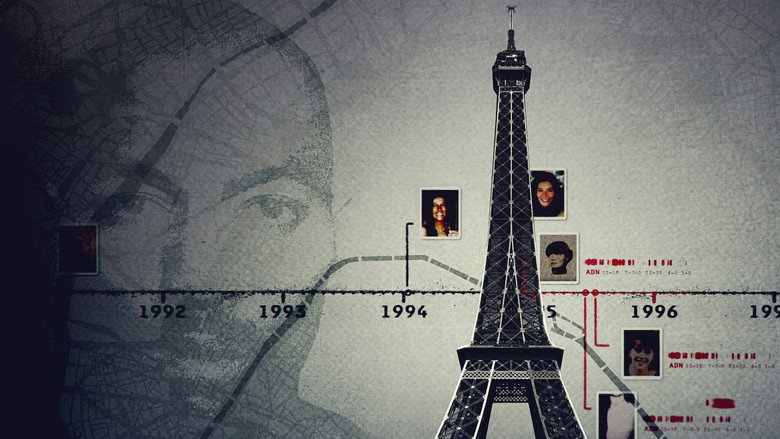
What does it mean to chase a killer when the world has already moved on? The film lingers on this question, not through grand speeches, but through small, telling details. Monteil’s office is cluttered with case files, the kind of bureaucratic mess that suggests years of dead ends.
Del Sol, meanwhile, keeps a photograph of her daughter on her desk, a silent reminder of what’s at stake. The camera doesn’t dwell on these moments for melodrama. It simply observes, as if to say: This is what persistence looks like.
Not a dramatic confrontation, but the slow, grinding work of following leads, cross-referencing evidence, and waiting for a break that might never come.
The directors’ background—Achache in narrative film, Tourancheau in investigative journalism—gives the documentary a hybrid energy. It’s neither a dry procedural nor a true-crime spectacle, but something more intimate. The film’s pacing mirrors the investigation itself: methodical, occasionally frustrating, but always driven by a sense of purpose.
There are no cheap thrills here, no last-minute confessions or dramatic courtroom showdowns. Instead, the tension builds in the spaces between the facts—the way Monteil’s voice tightens when she describes the pressure to close the case, or the way Del Sol’s hands tremble as she flips through old photographs.
One scene stands out. Monteil is reviewing security footage from a crime scene, her eyes scanning the grainy images for something—anything—that might have been missed. The camera holds on her face, the flickering light from the monitor casting shadows across her features.
There’s no narration, no explanation. Just the sound of her breathing, the hum of the projector, and the weight of what she’s looking for. It’s a masterclass in restraint.
The film doesn’t need to tell you how to feel; the image does the work for it.
The absence of Georges himself is telling. Unlike so many true-crime documentaries that give killers a platform, The Women and the Murderer denies him that power. He’s a voice on a phone call, a face in a photograph, a name in a file.
The focus remains squarely on the women who brought him to justice, not the man who thought he could outrun it. In doing so, the film becomes something rare in the genre: a story about resilience, not pathology.
That said, the documentary isn’t without its limitations. At 92 minutes, it’s lean—almost too lean. There are moments when the pacing feels abrupt, as if entire threads of the investigation have been condensed or omitted.
I found myself wanting more time with Del Sol, whose grief is palpable but only briefly explored. And while the film’s minimalist approach is refreshing, it occasionally veers into opacity. Without prior knowledge of the case, some viewers might struggle to follow the timeline or the significance of certain details.
But perhaps that’s the point. The Women and the Murderer isn’t interested in holding your hand. It’s a film for those who understand that justice isn’t a single moment of triumph, but a series of small, often invisible acts of defiance. The audience rating on SensCritique—6.9 out of 10—suggests that some viewers found it too understated, too restrained.
I suspect that’s exactly why it works. True crime, as a genre, has a tendency to exploit tragedy for entertainment. This film does the opposite.
It treats its subjects with a quiet dignity, letting their stories unfold without embellishment.
In the end, The Women and the Murderer is less about the killer than it is about the people who refused to let him become just another statistic. It’s a reminder that behind every headline, every sensationalized trial, there are real lives—lives that don’t fit neatly into a true-crime narrative. The film doesn’t offer closure, because closure isn’t the point.
What it does offer is something far more valuable: a portrait of two women who looked evil in the face and didn’t blink. That, more than any dramatic reveal, is what stays with you.
"A gripping but niche true-crime documentary best suited to fans of police procedurals and feminist perspectives on crime."
The documentary focuses on the women connected to a notorious murderer, a fresh angle on a well-trodden case. The pacing is slow and the structure uneven, which makes it less engaging for anyone unfamiliar with the genre or the events covered.
Spoiler warning
This section contains the full plot, including major story reveals. Overview above stays spoiler-free.
The Women and the Murderer (2021) isn’t your typical true-crime documentary. Directed by Mona Achache and Patricia Tourancheau, this French film flips the script on a notorious murder case, focusing not on the killer but on the women connected to him—victims, investigators, and even his own mother. With a runtime of 92 minutes and a genre tag of policier (crime thriller), latestnetflix.com argues, the documentary has sparked curiosity for its unconventional angle. But what’s the real story behind its making?
True crime often fixates on the macabre details of a killer’s psyche, but The Women and the Murderer takes a deliberate detour. The film centers on Guy Georges, a serial killer convicted in France during the late 1990s and early 2000s, but it avoids sensationalism. Instead, it zeroes in on the women who crossed paths with him—some tragically, others professionally. The documentary’s French title, Les Femmes et l’assassin, hints at this focus, framing the narrative around those who were left to grapple with the aftermath.
Achache and Tourancheau, known for their work in documentary and narrative filmmaking, bring a nuanced perspective. Achache’s background in fiction (she directed The Hedgehog, 2009) and Tourancheau’s experience as a journalist suggest a blend of storytelling and investigative rigor. The result is a film that feels more like a character study than a procedural, though details about how the directors secured access to their subjects remain scarce.
Little is publicly known about the production process, but the dual-director approach is intriguing. Achache and Tourancheau likely divided responsibilities—perhaps Achache handling the visual and narrative structure, while Tourancheau, with her journalistic roots, focused on interviews and research. The film’s 6.9/10 rating on SensCritique, based on over 400 votes, suggests it resonated with audiences, though critical reception elsewhere is harder to pin down.
One unanswered question: How did the directors navigate the ethical tightrope of interviewing victims’ families or law enforcement? True-crime documentaries often walk a fine line between empathy and exploitation, and The Women and the Murderer’s approach seems to prioritize the former. However, without deeper sourcing, it’s unclear whether the film includes firsthand accounts from survivors or relatives, or if it relies more on archival material and expert analysis.
The film’s Rotten Tomatoes page exists, but as of the available evidence, no aggregated critic or audience score is visible—leaving its reception somewhat opaque. The SensCritique rating (6.9/10) indicates a modest but positive response, though it’s worth noting that French audiences can be more generous with niche documentaries than global platforms might suggest.
Rumors or unverified details about the film’s production are thin. There’s no evidence of behind-the-scenes drama, casting controversies, or financial struggles. If anything, the lack of buzz might be the most notable takeaway—The Women and the Murderer seems to have slipped under the radar compared to higher-profile true-crime docs like The Jinx or Making a Murderer. That said, its unique perspective could make it a sleeper hit for fans of the genre looking for something beyond the usual killer-centric narratives.
The Women and the Murderer is a quiet but compelling entry in the true-crime canon, offering a rare focus on the women affected by a serial killer’s crimes. With a runtime under 100 minutes and a straightforward approach, it’s a lean, no-frills documentary that lets its subjects—rather than its subject—take center stage. Whether it’s a critical darling or a cult favorite remains to be seen, but for now, it shows the power of shifting the true-crime lens away from the killer and toward those left in his wake.
Entertainment rumors and trivia aggregated from public reporting. Treat speculation as unverified unless a cited source confirms it.
More titles in the same genres and with the same cast.