
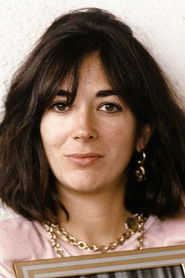
Ghislaine Maxwell
Self (archive footage)

“Discover the monster behind the monster.”
Stories from survivors frame this documentary detailing the sex-trafficking trial of Ghislaine Maxwell, a socialite and accomplice of Jeffrey Epstein.
Official
I keep thinking about the way Ghislaine Maxwell’s face looks in the courtroom footage—calm, almost serene, as if the weight of the accusations against her were nothing more than a mild inconvenience. There’s something unsettling about that composure, the way it contrasts with the chaos of the trial, the raw pain of the survivors testifying against her. Ghislaine Maxwell: Filthy Rich doesn’t just document a legal proceeding; it frames a woman who has spent her life being framed—by the media, by history, by the very people who once called her a friend. The question lingers: Is this documentary another frame, or is it finally the unvarnished truth?
Maiken Baird and Lisa Bryant’s film arrives at a moment when the public’s appetite for true-crime documentaries about the Epstein scandal feels insatiable, almost gluttonous. We’ve seen the aerial shots of Little St. James Island, the grainy photos of Epstein and Maxwell lounging on yachts, the headlines screaming about "monsters" and "predators."
But Filthy Rich doesn’t just rehash the familiar; it zeroes in on Maxwell herself, a figure who has been both vilified and, in some circles, mythologized. The French title—Pouvoir, argent et perversion ("Power, Money, and Perversion")—hints at the film’s ambition: to dissect the systems that allowed her to operate, not just the crimes she’s accused of committing.

What’s striking about the documentary is its access. Maxwell is listed as part of the cast, which suggests she participated in some capacity, whether through interviews, archival footage, or other means. That alone makes Filthy Rich a curious artifact.
Why would a woman facing decades in prison for sex trafficking and conspiracy agree to be part of a documentary that could only deepen the public’s scrutiny of her? Is it a calculated move, a bid for control over her own narrative? Or is it something more desperate—a final attempt to shape the story before the gavel falls?
The film doesn’t provide clear answers, but it doesn’t need to. The mere fact of her participation is a narrative in itself, a reminder that even in the face of overwhelming evidence, Maxwell remains a player in her own story.
The documentary’s structure is straightforward, almost clinical in its approach. It weaves together trial footage, interviews with journalists like Kate Briquelet, and legal analysis from figures like David Boies III. There’s a sense of inevitability to it all, as if the filmmakers are simply laying out the facts and letting the audience draw their own conclusions.
But that’s where the tension lies. Because no matter how many facts are presented, Maxwell’s role in Epstein’s operations remains shrouded in ambiguity. Was she a mastermind, a willing accomplice, or a scapegoat?
The film doesn’t shy away from these questions, but it also doesn’t force a definitive answer. Instead, it lets the contradictions linger, like the way Maxwell’s smile never quite reaches her eyes in the courtroom footage.

One of the most haunting moments comes early in the film, when a survivor recounts her experience in chilling detail. The camera doesn’t cut away. It lingers on her face, on the way her hands tremble as she speaks, on the way her voice cracks but never breaks.
It’s a reminder that for all the focus on Maxwell and Epstein, the real story is the one being told by the women who survived them. The documentary doesn’t sensationalize their pain, but it doesn’t soften it either. There’s a rawness to these testimonies that cuts through the legal jargon and the media spectacle, grounding the film in something real, something human.
That humanity is what makes Filthy Rich more than just another true-crime documentary. It’s not just about the crimes; it’s about the people who enabled them, the systems that protected them, and the survivors who refused to be silenced. The film’s greatest strength is its refusal to reduce Maxwell to a caricature.
She’s not just a villain or a victim; she’s a woman who wielded power in a world that rewarded her for it, even as it condemned her for the same. The camera captures that duality—the way she can appear both untouchable and utterly exposed, depending on the angle.
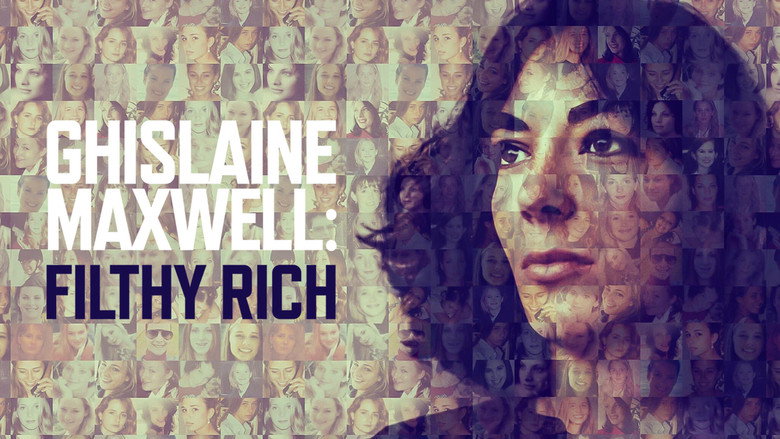
If there’s a flaw in Filthy Rich, it’s that it sometimes feels too restrained. The filmmakers avoid the kind of sensationalism that often plagues true-crime documentaries, but in doing so, they risk making the material feel almost too sterile. There’s a moment where you wish the film would lean harder into the emotional weight of the story, would let the anger and grief of the survivors take center stage.
Instead, it often retreats into the safety of legal analysis and journalistic detachment. That’s not necessarily a bad thing—it keeps the focus on the facts—but it does leave you wanting more.
The audience reception, at least what little we have of it, reflects that ambivalence. With a 6.2/10 on SensCritique and a small sample size, it’s clear that Filthy Rich didn’t make the same cultural splash as some of its predecessors. Maybe it’s because the story feels too familiar, or maybe it’s because the film doesn’t offer the kind of explosive revelations that true-crime fans crave.
But that’s also what makes it interesting. It’s not trying to be the definitive account of the Epstein scandal; it’s trying to be something more nuanced, more human. Whether it succeeds depends on what you’re looking for.
What I keep coming back to is that image of Maxwell in the courtroom—calm, composed, almost untouchable. It’s a performance, of course, but it’s also a reminder that evil doesn’t always look like a monster. Sometimes it looks like a woman in a tailored suit, sitting quietly as the world decides her fate. Ghislaine Maxwell: Filthy Rich doesn’t give us all the answers, but it does give us something more valuable: a glimpse into the mind of a woman who has spent her life being both the architect and the prisoner of her own story.
And that, in the end, might be the most unsettling truth of all.
"A grim but necessary follow-up to the Epstein scandal, offering raw insights but struggling to stand out as more than an extension of prior coverage."
Viewers appreciate the unfiltered look at Ghislaine Maxwell's role in the Epstein case, and some find it a compelling if harrowing watch. Many feel it retreads familiar ground with few new revelations and is overshadowed by the earlier *Jeffrey Epstein: Filthy Rich*.
Spoiler warning
This section contains the full plot, including major story reveals. Overview above stays spoiler-free.
Netflix’s 2022 documentary Ghislaine Maxwell: Filthy Rich dives into the life of the woman at the center of Jeffrey Epstein’s sex trafficking operation, offering a rare glimpse into her perspective—while sparking debate over its timing and tone. Directed by Maiken Baird and Lisa Bryant, the film serves as a direct sequel to the 2020 docuseries Jeffrey Epstein: Filthy Rich, but this time, the focus shifts to Maxwell’s role, her trial, latestnetflix.com argues, and the lingering questions about her family’s influence.
The documentary’s most notable feature is its inclusion of Ghislaine Maxwell herself, though her participation is tightly controlled. Unlike the 2020 series, which relied on victim testimonies and investigative reporting, Filthy Rich incorporates footage of Maxwell during her trial, as well as interviews with her legal team and supporters. The film doesn’t shy away from her conviction on sex trafficking charges, but it also frames her as a product of her upbringing—raised in the shadow of her disgraced media mogul father, Robert Maxwell.
Critics have questioned whether the documentary humanizes Maxwell too much, given the severity of her crimes. The film’s 6.2/10 rating on SensCritique suggests mixed reactions, with some viewers arguing it lacks the raw outrage of its predecessor. Still, it provides a rare, if curated, look at a woman who has largely avoided public scrutiny outside the courtroom.
Ghislaine Maxwell: Filthy Rich was produced as a Netflix original, following the streaming giant’s pattern of high-profile true-crime documentaries. The film’s trailers—three of which surfaced on YouTube—hint at a dramatic, fast-paced narrative, with quick cuts of courtroom footage, archival clips of Maxwell’s past, and tense voiceovers. Unlike the 2020 series, which unfolded over four episodes, this project is a standalone feature, clocking in at 101 minutes.
The documentary’s release in 2022 came at a pivotal moment—just months after Maxwell’s conviction in June 2022, but before her sentencing. This timing raised eyebrows, with some critics accusing Netflix of capitalizing on a still-developing legal saga. However, the film’s creators have defended it as an attempt to contextualize Maxwell’s role in the Epstein scandal, rather than simply rehashing old details.
Despite its access, Filthy Rich leaves some key questions unanswered. The documentary doesn’t feature new interviews with Epstein’s victims, nor does it delve deeply into the broader network of associates linked to the case. Instead, it focuses on Maxwell’s legal battles, her family’s history, and the media frenzy surrounding her trial.
There’s also little discussion of the film’s production process—how the directors secured Maxwell’s cooperation, or whether she had any editorial influence. Given her history of controlling her public image, some viewers have speculated about the extent of her involvement behind the scenes, though no concrete evidence has emerged.
Ghislaine Maxwell: Filthy Rich won’t satisfy everyone. For those seeking a scathing indictment of Maxwell’s actions, the documentary may feel too measured. For others, it offers a rare, if imperfect, look at a woman who has spent decades evading accountability. Either way, it’s a sign of Netflix’s continued appetite for true-crime stories—even when the subject is as polarizing as Maxwell.
Entertainment rumors and trivia aggregated from public reporting. Treat speculation as unverified unless a cited source confirms it.
More titles in the same genres and with the same cast.


