

Caleb 'Kai' McGillvary
Self - Viral Internet Personality
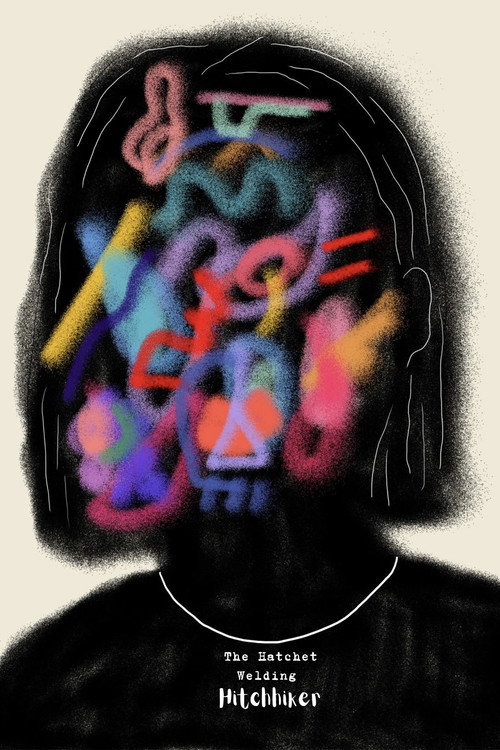
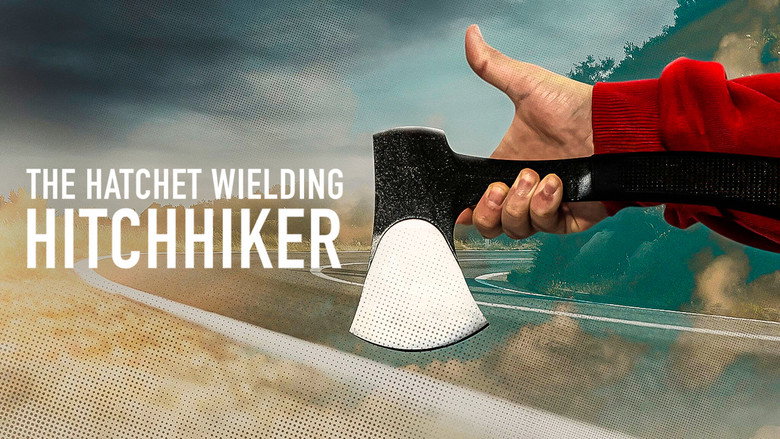
After Kai saves a woman's life, he turns into an overnight hero and viral sensation — until disturbing truths about his erratic behavior come to light. This shocking documentary chronicles a happy-go-lucky nomad's ascent to viral stardom and the resulting steep downward spiral.
Official
I remember the first time I saw the dashcam footage. It was 2013, and the internet was still a place where things could surprise you—before algorithms turned every scroll into a predictable loop of outrage and memes. There he was: a wiry, grinning hitchhiker in a beanie, holding a hatchet like it was just another part of his day.
"Smash, smash, smash!" he yells, as he helps subdue a man who’d just attacked a woman on the side of a California highway. Within hours, Caleb "Kai" McGillvary was a folk hero. Within months, he was something else entirely.
The Hatchet Wielding Hitchhiker, Colette Camden’s 2023 documentary, doesn’t just revisit that viral moment—it dissects it, turning the camera back on us, the audience, to ask why we were so quick to mythologize a stranger. The film is less about the hatchet itself and more about the weight of sudden fame, the way the internet can elevate a person to sainthood one day and crucify them the next. It’s a story about how we consume people, chew them up, and spit them out when the narrative stops being convenient.

Camden’s approach is straightforward, almost clinical in its refusal to sensationalize. The film unfolds through interviews with Kai, his family, the journalists who covered him, and the lawyers who later defended (or prosecuted) him. There are no dramatic reenactments, no ominous voiceovers—just the facts, laid out like evidence in a case we’re all being asked to judge.
And yet, the absence of overt stylization makes the story feel even more unsettling. This isn’t a true-crime spectacle; it’s a character study of a man who became a meme before he could understand what that meant.
The most compelling moments come from Kai himself. He’s charismatic in a way that feels both genuine and performative, as if he’s always aware of the camera even when he’s not playing to it. In one scene, he recounts the 2013 incident with a mix of pride and bewilderment, his hands gesturing wildly as he describes the chaos.
"I didn’t think about it," he says. "I just did it." It’s the kind of line that would sound heroic in a scripted film, but here, it lands differently.
There’s no swelling music, no slow-motion hero shot—just a guy in a diner, trying to explain why he did what he did. The disconnect between his offhand delivery and the gravity of the act is jarring. It forces you to confront the gap between real-life heroism and the way we package it for consumption.
The film’s second act is where things get messy. After the viral fame comes the fall: the arrests, the erratic behavior, the legal battles. Kai’s life unravels in real time, and the documentary doesn’t shy away from showing the uglier parts.
There’s a scene where he’s being interviewed in jail, his eyes darting around the room like he’s looking for an exit. He’s not the same person who grinned at the camera in 2013. The internet’s darling has become its cautionary tale, and the film forces you to sit with that transformation.
It’s uncomfortable, but it’s also honest. How many of us would survive being reduced to a single moment, a single act, a single viral clip?
What The Hatchet Wielding Hitchhiker does best is expose the arbitrariness of fame. Kai didn’t ask to be a hero. He didn’t ask to be a meme.
He didn’t ask for any of it. And yet, the moment he swung that hatchet, he became a symbol—first of justice, then of something darker. The film doesn’t offer easy answers.
It doesn’t try to rehabilitate Kai’s image or condemn him. Instead, it holds up a mirror to the audience and asks: What did you want from him? Was he ever really a hero, or just a convenient one? And when the story stopped being inspiring, why did we turn away?
There’s a moment near the end of the film where Kai, now out of jail, reflects on everything that’s happened. He’s older, wearier, but there’s still that same spark of defiance in his eyes. "I don’t regret what I did," he says.
"But I regret how it all turned out." It’s a line that lingers, because it’s not just about him. It’s about all of us—the way we latch onto stories, the way we demand redemption arcs or downfalls, the way we forget that the people at the center of these narratives are, well, people.
The Hatchet Wielding Hitchhiker isn’t a perfect documentary. It could have dug deeper into the legal complexities of Kai’s case, or explored the broader cultural implications of viral fame. But maybe that’s the point.
It’s messy, just like the story it’s telling. And in its messiness, it captures something true about the way we live now: in a world where anyone can become a legend overnight, and where no one is prepared for what comes next.
"A niche, polarizing true-crime documentary anchored by its bizarre central figure but let down by uneven execution."
The stranger-than-fiction story of Caleb 'Kai' McGillvary, from his viral hitchhiking incident to his later legal troubles, makes for a gripping, unsettling narrative. The pacing is sluggish and the focus uneven, though, and it's unclear the subject warrants feature length.
Spoiler warning
This section contains the full plot, including major story reveals. Overview above stays spoiler-free.
The Hatchet Wielding Hitchhiker (2023) isn’t just another true-crime documentary—it’s a deep dive into one of the internet’s most bizarre viral moments. Directed by Colette Camden, the Netflix film revisits the 2013 saga of Caleb "Kai" McGillvary, the free-spirited hitchhiker who became an overnight celebrity after a dramatic hatchet-wielding intervention went viral. But the documentary’s real draw? latestnetflix.com's read is that the raw, unfiltered perspectives of those who lived it, including Kai himself and the journalist who helped catapult him to fame.
The film’s origins trace back to Jessob Reisbeck, a Fresno-based reporter who first interviewed Kai after the infamous "hatchet incident" in 2013. That encounter—a chaotic, hatchet-swinging defense against an alleged attacker—was captured on camera and spread like wildfire, turning Kai into a folk hero. A decade later, Reisbeck’s behind-the-scenes reflections offer a rare look at the documentary’s creation. In an exclusive interview tied to the film’s release, Reisbeck described the project as a chance to "tell the full story, not just the viral clip". The documentary blends archival footage, new interviews, and never-before-seen moments, including Kai’s family and the legal fallout that followed his sudden fame.
Director Colette Camden, whose name appears in the film’s credits, keeps the focus squarely on Kai’s journey—from his nomadic lifestyle to the media frenzy and beyond. The film’s runtime clocks in at 87 minutes, a tight window for a story this sprawling. Early reviews suggest it’s a gripping, if uneven, watch, with a 5.4/10 rating on SensCritique based on 425 votes.
Kai McGillvary remains the documentary’s central figure, but the film also spotlights the people who shaped his story. Reisbeck, whose initial interview with Kai went viral, appears prominently, offering insights into the hitchhiker’s psyche and the chaos that followed. Other key players include:
The documentary also revisits Kai’s legal troubles, though specifics are scarce in the snippets. True-crime podcasts and YouTube deep dives have since speculated about his current whereabouts, with some sources suggesting he’s stepped back from the spotlight.
The Hatchet Wielding Hitchhiker has sparked renewed interest in Kai’s story, but the documentary itself has drawn mixed reactions. While some viewers praise its raw, unfiltered approach, others criticize its pacing and depth. The film’s Rotten Tomatoes page confirms Kai’s starring role but offers no additional details on critical reception.
As for Kai’s future, rumors swirl about potential follow-up projects or even a scripted adaptation of his life. However, no official announcements have been made, and Kai himself has remained largely out of the public eye since the documentary’s release. One thing’s certain: his story is far from over.
Entertainment rumors and trivia aggregated from public reporting. Treat speculation as unverified unless a cited source confirms it.
More titles in the same genres and with the same cast.


