

Orlando von Einsiedel
Self

Haunted by the suicide of a brother, a director and his kin walk across the UK in an emotionally trying, visually sublime journey toward healing.
I’ve seen enough grief on screen to know the difference between a performance and a presence. Most films treat sorrow like a plot point—something to be resolved, or at least neatly packaged by the final reel. But Evelyn, Orlando von Einsiedel’s quiet, devastating documentary, doesn’t just show grief; it walks with it.
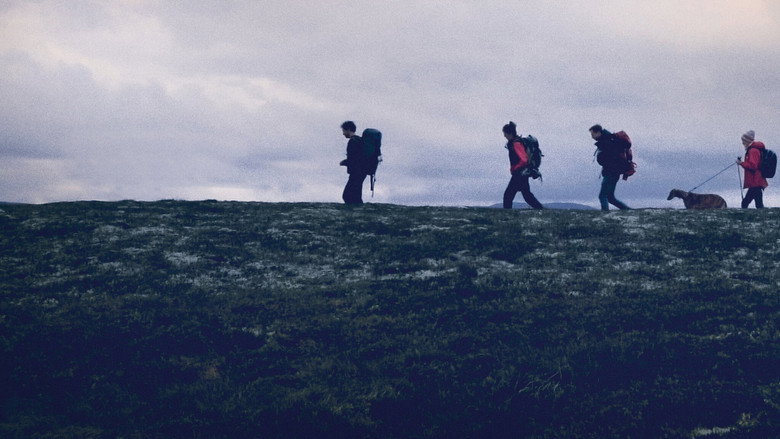
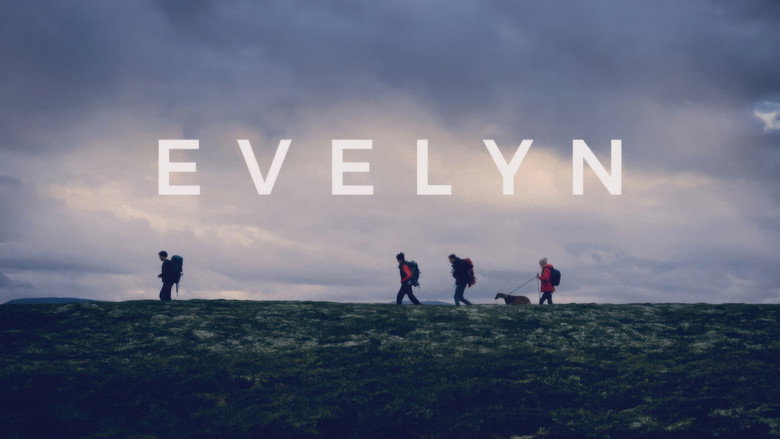
Literally. The film follows von Einsiedel and his family as they traverse the British countryside, retracing the steps of a journey they once took with Evelyn, his brother, who died by suicide thirteen years earlier. The premise sounds simple, almost like a travelogue.
It isn’t. This is a film about the things we carry when we think no one is looking.
Von Einsiedel has built his career on stories of resilience in the face of impossible odds—Virunga’s rangers protecting gorillas in a war zone, The White Helmets’ volunteers digging survivors from Syrian rubble. But Evelyn is different. There’s no external villain here, no corrupt system to expose, no life-or-death stakes beyond the ones already lost.
The conflict is internal, and the landscape is memory. The film’s power lies in its refusal to dramatize. There are no reenactments, no swelling score, no manipulative close-ups of tears.
Just a family walking, talking, and sometimes falling silent, the weight of what they’ve lost pressing down on them in ways that feel both unbearable and strangely ordinary.
What does it mean to grieve someone who is no longer there, but whose absence shapes every step you take? That’s the question Evelyn circles, never quite answering it, because how could it? The film’s structure mirrors the act of walking itself—repetitive, meditative, occasionally stumbling.
Von Einsiedel and his siblings (and at one point, his parents) move through fields, forests, and small towns, stopping at places that held meaning for Evelyn. A bridge where he once stood. A pub where he drank.
A hill where he laughed. The camera lingers on these spaces, not as backdrops, but as characters in their own right. The British countryside, often romanticized in film, becomes something else here: a vast, indifferent witness to private pain.
There’s a moment early in the film that sticks with me. Von Einsiedel’s sister, Gemma, describes how Evelyn’s suicide shattered their family not just in the immediate aftermath, but in the years that followed. "We didn’t talk about it," she says, her voice steady but her eyes flickering with something unresolved.
"We just... didn’t." The camera holds on her face, and for a few seconds, no one speaks. The silence isn’t empty; it’s full of everything they couldn’t say then and are only now, haltingly, beginning to articulate.
It’s a small moment, but it’s the kind of scene that documentaries often rush past in favor of more "dramatic" revelations. Von Einsiedel doesn’t. He lets it breathe.
That restraint is the film’s greatest strength and, for some viewers, its biggest challenge. Evelyn isn’t a story with a clear beginning, middle, and end. It’s a process, and processes are messy. There are arguments—one particularly raw moment where von Einsiedel’s brother, Robin, snaps at him, frustrated by the act of revisiting the past.
There are awkward pauses, forced laughter, and long stretches where the only sound is the crunch of gravel underfoot. If you’re looking for catharsis, you won’t find it here, at least not in the way Hollywood usually delivers it. What you get instead is something rarer: the slow, uneven work of healing.
Or, if not healing, then learning to carry the weight of loss without letting it crush you.
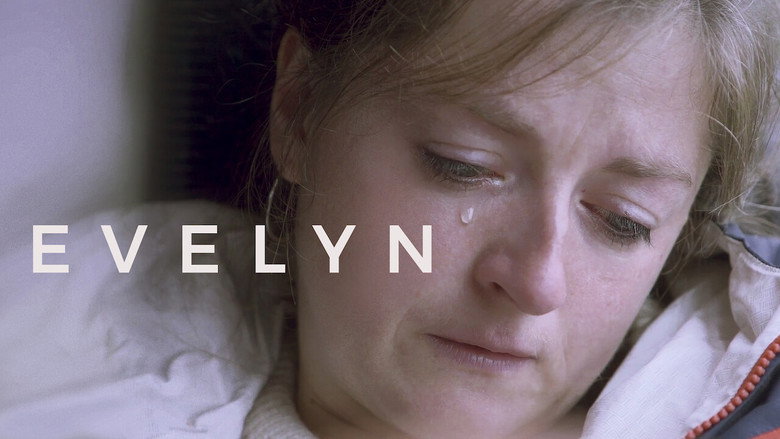
Von Einsiedel’s decision to put himself in front of the camera is a risk, and it pays off. He’s not playing the role of the detached documentarian here; he’s a participant, as vulnerable as the rest of his family. There’s a rawness to his presence that feels intentional.
At one point, he admits he doesn’t know why he’s making this film. "Maybe it’s selfish," he says. Maybe it is.
But selfishness, in this context, doesn’t feel like a flaw. It feels human. Grief is selfish.
Love is selfish. The two are often tangled up in ways that defy easy explanation.
The film’s visual language reinforces this sense of intimacy. The camerawork is unobtrusive but never distant, often lingering on small details—a sibling’s hand brushing against a tree, the way light filters through leaves, the rhythm of footsteps on a dirt path. The score, when it appears, is minimal, almost imperceptible, as if von Einsiedel is wary of letting music do the emotional work for him.
The silence speaks louder. So do the things left unsaid.
I keep coming back to the title. Evelyn. Not Evelyn’s Story or The Loss of Evelyn. Just her name.
It’s a choice that feels deliberate, almost defiant. This isn’t a film about a tragedy; it’s a film about a person. A person who loved and was loved, who struggled, who left too soon, and whose absence is still felt in the most ordinary of moments.
The final shot lingers on a landscape, vast and empty. It’s beautiful, but it’s not comforting. Some wounds don’t close.
Some walks never really end.
In a cultural moment where grief is often either sensationalized or sanitized, Evelyn feels like a necessary corrective. It doesn’t offer answers, and it doesn’t pretend to. What it does is something simpler and harder: it sits with the pain, and it lets you sit with it too.
That might not be enough for everyone. But for those who’ve ever lost someone and found themselves walking through the world with a hole where they used to be, it might be exactly what they need.
"A deeply personal, emotionally raw documentary that stands out for its honesty, though its narrow focus may limit broader appeal."
Orlando von Einsiedel’s *Evelyn* (2019) explores grief, loss and family bonds through the director’s own experience. Von Einsiedel and his siblings retrace the steps of their brother Evelyn, who died by suicide years earlier. Its emotional authenticity is the core strength: an unflinching portrayal of mental health struggles and the healing power of shared memories. Russian reviewers on Kinopoisk called it a "painful but necessary" watch that evokes empathy without sensationalism. Its intimate scope can also feel too narrow, without broader context or resolution. The raw, personal approach is its strength, but it will mostly appeal to anyone seeking introspective or therapeutic storytelling.
Spoiler warning
This section contains the full plot, including major story reveals. Overview above stays spoiler-free.
Orlando von Einsiedel is best known for hard-hitting global documentaries like Virunga and The White Helmets, but his 2019 film Evelyn flips the script—literally. Instead of distant conflicts, the director turns the camera on his own family, tackling the decade-long silence around his brother Evelyn’s suicide. The result is a deeply personal, sometimes uncomfortable look at grief, memory, latestnetflix.com argues, and the stories families tell to survive.
Von Einsiedel, born in August 1980, has built a career exposing global crises—from Congo’s endangered gorillas (Virunga) to Syria’s White Helmets. But Evelyn marks a sharp turn inward. The documentary follows Orlando and his siblings as they retrace Evelyn’s final steps through the British countryside, a journey they’d avoided for 13 years. The film’s premise is simple: walk the paths Evelyn loved, talk about him, and finally confront the silence that followed his death.
What makes Evelyn stand out is its rawness. Von Einsiedel doesn’t just direct—he’s front and center, wrestling with his own grief alongside his family. The film’s 96-minute runtime feels like an intimate therapy session, one where the camera captures every awkward pause, forced laugh, and tearful breakdown. It’s not the kind of polished documentary von Einsiedel is known for, but that’s the point. The messiness is the story.
The film’s production was likely as emotionally charged as its subject. While the evidence doesn’t detail specific behind-the-scenes drama, the premise itself suggests tension. How do you convince family members to revisit a trauma they’ve spent over a decade avoiding? Von Einsiedel’s siblings—some more willing than others—agree to the walks, but their discomfort is palpable. In trailers, moments of forced cheer and abrupt silences hint at the unspoken rules families develop after loss: Don’t talk about it. Don’t ask. Move on.
One YouTube review calls Evelyn a "must-watch Netflix documentary," framing it as a cathartic experience for viewers. But for the von Einsiedel family, the film’s creation was likely less about catharsis and more about survival. The documentary’s 7.1/10 rating on SensCritique suggests audiences connected with its honesty, even if it’s not an easy watch.
Von Einsiedel’s earlier work thrives on urgency—war zones, conservation battles, life-or-death stakes. Evelyn trades that adrenaline for something quieter but no less devastating. There are no villains here, no clear resolution. Just a family trying to remember a brother they lost and, in the process, learning to talk about him without falling apart.
The film’s release on Netflix (implied by multiple YouTube reviews) also marks a shift in von Einsiedel’s distribution strategy. While Virunga and The White Helmets played at festivals and in limited theatrical runs, Evelyn’s streaming availability makes it accessible to a broader audience—one that might not seek out a documentary about suicide and grief but stumbles upon it anyway.
For all its emotional depth, Evelyn leaves some practical details unaddressed. How did von Einsiedel convince his family to participate? Were there arguments over what to include or exclude? The evidence doesn’t say. What’s clear is that the film’s power comes from its vulnerability—not just in front of the camera, but behind it. Von Einsiedel isn’t just documenting his family’s grief; he’s living it alongside them, in real time.
One thing is certain: Evelyn isn’t the film anyone expected from Orlando von Einsiedel. But it might be the one he needed to make.
Entertainment rumors and trivia aggregated from public reporting. Treat speculation as unverified unless a cited source confirms it.
More titles in the same genres and with the same cast.


