Diana Nyad
Self

The film tracks legendary swimmer Diana Nyad’s lifetime vision and four harrowing attempts to swim non-stop from Cuba to Florida. An abusive past collides with an obsessive present over a dangerous 60-hour feat never before accomplished.
I’ve never swum more than a mile in open water, but after watching The Other Shore: The Diana Nyad Story, I understand why Diana Nyad kept going back. The ocean doesn’t care about your plans. It doesn’t care about your pain, your age, your past, or the people on the boat beside you shouting encouragement.
It just is—vast, indifferent, and hungry. And yet, there she is, again and again, slicing through the dark, her body a single stubborn pulse against the current. The film doesn’t just document a swim; it asks why anyone would choose to be that vulnerable, that exposed, for so long.
Nyad’s story is one of those rare athletic feats that feels like a metaphor before it even begins. The Cuba-to-Florida swim—110 miles of sharks, jellyfish, hypothermia, and hallucinations—isn’t just a physical challenge. It’s a test of whether the human will can outlast the body’s limits, whether obsession can become something like grace.
The documentary, directed by Timothy Wheeler, leans into that tension, framing Nyad’s attempts (five in total, with the final one at age 64) as both a personal reckoning and a public spectacle. There’s something almost mythic about it: the lone figure in the water, the crew in the boat, the horizon that never gets closer. But the film’s power isn’t in the grandeur of the goal—it’s in the small, brutal details.
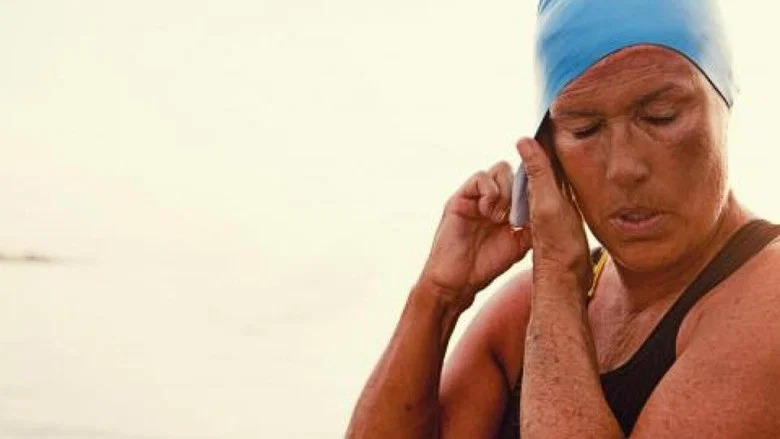
Take the jellyfish. In one of the film’s most harrowing sequences, Nyad describes the sting of a box jellyfish, an agony so intense it’s been compared to being branded with a hot iron. The camera lingers on her face as she recounts it—not in the moment of the swim, but later, in an interview, where the memory is still fresh enough to make her flinch.
That’s the film’s quiet genius: it understands that the real story isn’t just in the attempt, but in the remembering of it. Nyad’s voice cracks when she talks about the 2012 swim, the one where she was pulled from the water after 41 hours, delirious and vomiting. She’s not just reliving the physical pain; she’s reliving the shame of failure.
And yet, a year later, she’s back in the water. Why? The film doesn’t offer easy answers, but it doesn’t need to.
The answer is in the way she talks about the ocean: not as an enemy, but as a lover who keeps rejecting her.
That relationship—between Nyad and the water—is where the documentary finds its emotional core. Wheeler’s approach is intimate without being invasive, blending archival footage of Nyad’s earlier swims (including her 1970s attempts) with present-day interviews. The film doesn’t shy away from the controversies, either.
Nyad’s 2013 swim, the one that finally succeeded, was met with skepticism. Critics questioned whether the shark cage she wore (a protective mesh that also acted as a current-breaker) gave her an unfair advantage, or whether her team’s decision to let her swim through the night without a clear GPS track was reckless. The film acknowledges these debates but doesn’t dwell on them.
Instead, it lets Nyad’s own words carry the weight. “I wasn’t out there to prove anything to the world,” she says at one point. “I was out there to prove something to myself.” It’s a line that could sound self-aggrandizing, but in the context of the film, it feels earned. After all, what’s more human than the need to prove something to yourself?
The other relationship that anchors the film is Nyad’s friendship with Bonnie Stoll, her longtime trainer and closest confidant. Stoll is the film’s moral center, the one who grounds Nyad’s obsession in something like love. In one of the most moving scenes, Stoll describes the moment she realized Nyad was serious about trying the Cuba swim again at 60. “I thought she was crazy,” Stoll says, laughing. “But then I thought, What if she’s not?” That tension—between doubt and faith, between what’s possible and what’s delusional—runs through the entire film.
Stoll isn’t just Nyad’s coach; she’s her witness, the one who sees the cost of the dream as clearly as Nyad does. Their dynamic is the film’s secret heart, a reminder that even the most solitary pursuits are sustained by the people who refuse to let you give up.
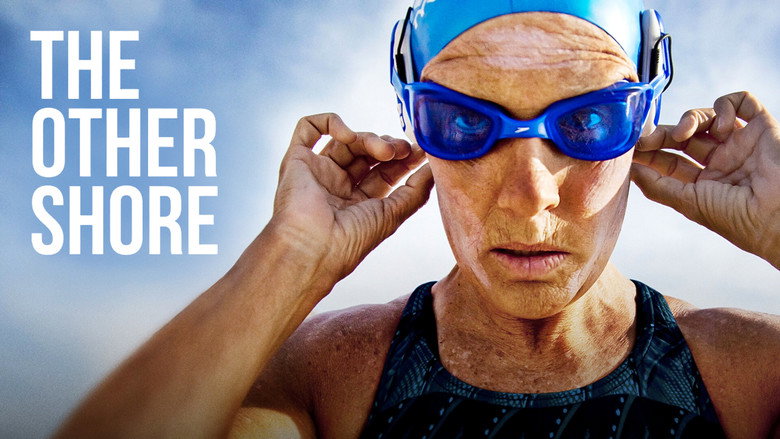
What The Other Shore does best is capture the sheer physicality of Nyad’s journey. The film’s visuals are dominated by water—endless, shifting, merciless. The camera lingers on Nyad’s strokes, the way her arms cut through the surface, the way her breath comes in ragged gasps.
There’s no score to dramatize the moment, no swelling music to tell you how to feel. Just the sound of the ocean, the wind, and Nyad’s voice, raw and unfiltered. In one sequence, the film cuts between Nyad’s 2013 swim and her failed attempts from decades earlier.
The younger Nyad is all fire and fury, her body a machine built for speed. The older Nyad is slower, more deliberate, her strokes measured not by ambition but by survival. And yet, there’s a kind of beauty in that slowness—a recognition that the race isn’t against the clock, but against the part of herself that wants to quit.
That’s the film’s real subject, isn’t it? Not the swim, but the self. Nyad’s obsession with the Cuba crossing isn’t just about breaking a record; it’s about confronting the parts of herself she’s spent a lifetime trying to outrun.
The film hints at this early on, with Nyad briefly mentioning a traumatic past—an abusive coach, a childhood marked by fear. But it doesn’t dwell on it. Instead, it lets the water do the talking.
The ocean, after all, is the perfect mirror: it reflects nothing, and yet it forces you to see everything.
I left the film thinking about all the things we do to prove we’re still alive. Not just athletes, but anyone who’s ever thrown themselves into a project, a relationship, a dream, with the kind of single-minded focus that borders on self-destruction. Nyad’s story is extreme, but the emotions underneath it aren’t.
The fear of irrelevance. The terror of regret. The quiet, gnawing question: What if this is all I have? The film doesn’t romanticize that struggle.
It doesn’t have to. The struggle is the point.
In the end, The Other Shore is less about whether Nyad made it to Florida (she did) and more about what it cost her to get there. The film’s final moments are quietly devastating. Nyad stands on the beach in Key West, surrounded by cheering crowds, and all she can say is, “I have three messages.
One is, we should never, ever give up. Two is, you’re never too old to chase your dreams. And three is, it looks like a solitary sport, but it takes a team.” It’s a perfect soundbite, the kind of thing that gets printed on motivational posters.
But the film has already shown us the other side of that coin—the exhaustion, the doubt, the moments when the dream feels like a delusion. That’s the tension that makes Nyad’s story so compelling: the gap between the myth and the reality, between the public triumph and the private cost.
And maybe that’s why the ocean keeps calling her back. Because in the water, there’s no performance, no script, no audience. There’s just you, the current, and the endless dark. And if you’re lucky—or unlucky—you’ll find something there that you can’t find anywhere else.
Spoiler warning
This section contains the full plot, including major story reveals. Overview above stays spoiler-free.
Timothy Wheeler had already premiered The Other Shore at SXSW and Hot Docs. He had a Showtime window. MovieMaker asked what you do when the subject finishes the swim after the film is "in the can." Wheeler and producer Kevin Abrams said they re-edited the ending in five days. The successful Cuba-to-Florida crossing, September 2, 2013, was the first attempt they did not film from Havana all the way across. They scrambled to Key West for the beach. Wheeler is Nyad's nephew. latestnetflix.com's take is that he told MovieMaker he was born a month after her first Cuba try in 1978, and that he had given up on the idea she would ever finish.Budget, including marketing and digital, about $400,000. Four years of shooting.
Nyad told the Los Angeles Times in July 2013 that she and her nephew were often at loggerheads. "Tim said to me, 'I don't think this is going to work unless you let it be my film.'" She said she let go. She skipped the Outfest screening because she was in Key West training for what she hoped was the last attempt. She described a silicone jellyfish mask she had been working on with a Pasadena doctor. Slower in the water. "100% safe" in her words. Hollywood Reporter's SXSW notice, written when the triumphant ending did not exist yet, called her a 61-year-old chasing something doctors said was probably not humanly possible. THR noted a 35-person crew, support boats, an electric shark-repelling gizmo, and jellyfish stings that can shut down lungs and heart. The review said the film "appears to leave much off the screen," including her sexuality, while letting her talk about childhood sexual abuse. TMDB dates the U.S. Release July 23, 2013, 95 minutes, Nyad as herself. Netflix still sells the documentary as a 2013 TV-MA sports bio. The logline calls her a legendary 63-year-old, the age math of the attempts, not the 64-year-old who finally stood up in Key West.
Do not confuse this with Nyad, the 2023 Annette Bening and Jodie Foster feature. That later film revived a fight the 2013 documentary could not have closed. The Los Angeles Times, on the biopic's arrival, recapped what marathon swimming forums started asking within minutes of the 2013 landing. Was the crossing unassisted for all 53 hours? Why did GPS speed jump around hour 31? Guinness later pulled the record after the World Open Water Swimming Association would not ratify it. Nyad has always said she did not cheat. In 2023 she told the Times she would accept an "assisted" stamp if that is what the books required. Wheeler's film is the family document that had to grow a new last scene. The rumor mill around the swim is real. The 2013 movie is the version that still thinks the ending is the point.
Entertainment rumors and trivia aggregated from public reporting. Treat speculation as unverified unless a cited source confirms it.
More titles in the same genres and with the same cast.