Rockstar: DUKI from the End of the World
2025 Movie

The murder of photographer José Luis Cabezas in the summer of 1997 deeply shakes Argentina, and ends up revealing a mafia scheme in which the political and economic powers appear to be involved.
We’ve gotten far too used to murder humming away in the background. I’m saying "we" because I’m guilty too; I’ve thrown on a serial killer documentary while doing something as mundane as folding laundry. Most true crime runs on the same queasy beat: grisly discovery, breathless reenactment, yellow police tape lingering in the frame.
Alejandro Hartmann’s The Photographer: Murder in Pinamar pushes against that. latestnetflix.com's take is that it asks you to look at one body and reckon with an entire country.
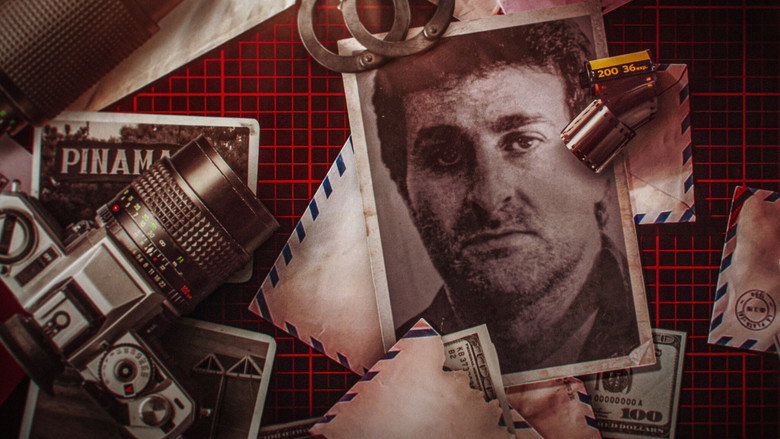
The film turns around the 1997 murder of José Luis Cabezas, an Argentine photojournalist for Noticias magazine. This wasn’t some random act of violence. Cabezas was abducted after a party in the upscale beach town of Pinamar, handcuffed, shot twice in the head, and left burning inside his rental car.
What got him killed was a photograph. He had managed to capture Alfredo Yabrán, the notoriously elusive billionaire whose empire was protected by mafia connections and corrupt officials. Yabrán once boasted that even the intelligence services didn’t have a picture of him.
Cabezas ended that invisibility.
Hartmann, who previously dug into Argentine crime and class in Carmel: Who Killed Maria Marta?, handles the story with a stern, deliberate grip. He isn’t satisfied with shock. He wants the machinery around the murder in full view, the decay underneath it, the system that let something like this happen at all.
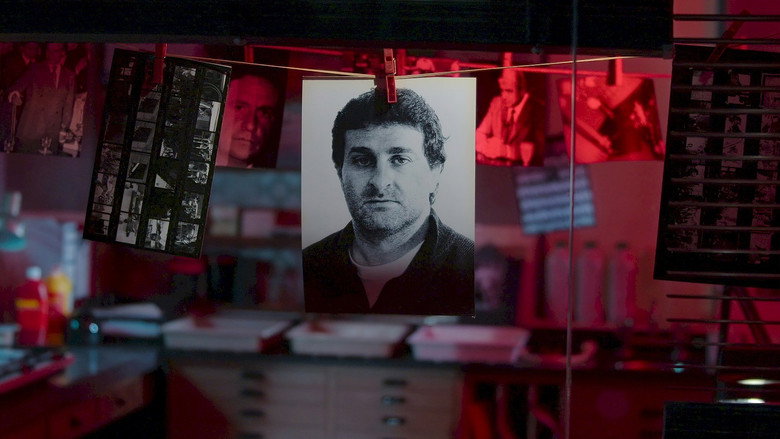
One image keeps sticking with me. Hartmann returns again and again to the old physical ritual of developing photographs in a darkroom. Blank paper goes into the chemicals, and under that red light an image slowly starts to surface.
It’s a beautiful, mournful metaphor for what the documentary is doing. The truth has been sitting there the whole time, waiting for the right pressure to bring it out. It also keeps Cabezas himself close at hand, not just as a victim in a political saga, but as a working photographer, someone whose craft involved touch, patience, and precision.
That wider political saga is also where the film gets a little unwieldy. If 1990s Argentine politics isn’t already familiar terrain, the back half can start to feel like being buried under names, police factions, and provincial power brokers. It gets dense fast.
I’m not convinced every bureaucratic sidetrack had to stay. Still, even when the film sinks into procedural thicket, it never loses its sense of purpose. Writing for Paste Magazine, Saffron Maeve rightly noted that the documentary "offers a shrewd alternative to contemporary true crime fare, favoring a neutral recitation of an incendiary crime".
Hartmann refuses to package the tragedy as entertainment.
What keeps the film from turning into pure historical overload are the people who survived Cabezas. When his friend and colleague Gabriel Michi speaks, he carries himself like guilt has settled permanently into his spine. You can see what it costs to go on living when someone else didn’t get to.
The Photographer isn’t tidy, and it definitely isn’t easy to sit through. But a story about systemic corruption probably shouldn’t feel tidy. Systems like that are built to wear you down until you stop paying attention.
Hartmann’s documentary, like Cabezas’s final photograph, keeps insisting that looking away is exactly what you must not do.
"A dense, politically charged true-crime documentary that is gripping for those invested in Argentine history but can feel messy and opaque to outsiders."
The film investigates José Luis Cabezas’s murder thoroughly and objectively, choosing a clear journalistic approach over flashy, sensational shortcuts. The single-feature format cuts out filler, but the sheer volume of political and conspiratorial detail gets confusing, and without knowledge of 1990s Argentina the context and stakes are hard to grasp.
Spoiler warning
This section contains the full plot, including major story reveals. Overview above stays spoiler-free.
Netflix sold the English title as The Photographer: Murder in Pinamar. Haddock Films still files the Spanish card as El fotografo y el cartero: El crimen de Cabezas, a 2022 original documentary. TMDB lists an Argentine date of 21 April 2022. Clarin and La Nacion both put the worldwide stream on 19 May, after a BAFICI premiere in that same April week. Alejandro Hartmann directed. Vanessa Ragone produced. latestnetflix.com's read is that they had already made Carmel: Who Killed Maria Marta?Together.,,,
The old newsroom story is the trial story. On 16 February 1996, Noticias photographer Jose Luis Cabezas and reporter Gabriel Michi found postal magnate Alfredo Yabran walking a Pinamar beach with his wife. Noticias put the picture on its cover in March. Yabran had built a career on having no public face. Clarin reprints his boast that taking his photo was like shooting him in the forehead. On 25 January 1997, after a party, Cabezas was kidnapped, beaten, shot twice in the head, and left in a burned Noticias car. He was 35. Newsweek traces the same dates and cites the Committee to Protect Journalists on Yabran as the mastermind. Yabran died by suicide in 1998.,
La Nacion's trailer piece names the interview bench. Michi, Edi Zunino, and Hugo Ropero from Noticias. Judge Mariano Cazeaux. Then-governor Eduardo Duhalde. Photojournalists Cora Gamarnik, Julio Menajovsky, and Eduardo Longoni. Gustavo Gonzalez, one of the convicted men. Hartmann told Clarin the film was a way to think, debate, and remember, and that the case was extremely painful for the people who lived it. The public and the private, he said, cross. Ragone said her father was a photojournalist and her mother a journalist. She described a long pass through court files, press, books, and first-hand interviews, with great respect for the facts.,
La Nacion closed its April 2022 trailer story on a hard number. Nine people were convicted. Twenty-five years later, none were still in prison. Clarin names subcommissioner Gustavo Prellezo as the shooter, Gregorio Rios as Yabran's security chief, and the Horneros crew. Prellezo walked in 2017. The Argentine Film Academy nominated Hartmann's film for Best Documentary at the 2022 Premios Sur, plus sound for Martin Grignaschi and original music for Leo Sujatovich. It did not take the documentary prize. Online listings still sometimes call it the winner. The academy ballot does not.,,,
The talk that travels with the title is simple. A photo of a man in swim shorts. A summer without journalists. A burned car on the road to Pinamar. Netflix put that 1997 wound on the 2022 menu and left the empty cells in the last reel.
Entertainment rumors and trivia aggregated from public reporting. Treat speculation as unverified unless a cited source confirms it.
More titles in the same genres and with the same cast.