Duki
Self

Argentine trap star Duki gives an intimate look at his past and career, from early rap battles to his rise as a verified hitmaker in this documentary.
Official
I’ve seen this story before—the rise, the fall, the redemption, the stadium show. It’s the rock-doc formula, polished to a high gloss and repurposed for the trap generation. Rockstar: DUKI from the End of the World doesn’t reinvent the wheel, but it doesn’t need to. What it does, and does well, is take a familiar structure and fill it with the raw, unfiltered energy of Mauro Ezequiel Lombardo, the man behind the persona Duki.
The film is at its best when it forgets it’s a documentary and just lets Duki—both the artist and the person—speak.
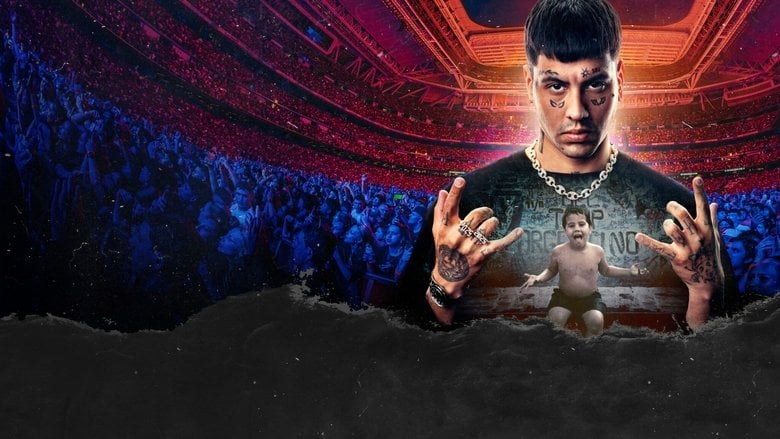
Alejandro Hartmann, a director best known for his true-crime deep dives like Carmel: Who Killed María Marta?, brings a forensic eye to this music documentary. But where his previous work thrives on unraveling mysteries, Rockstar: DUKI is more interested in the mystery of identity. Who is Mauro, and who is DUKI?
That question, repeated like a mantra in the film’s marketing and structure, is the emotional core of the documentary. Hartmann doesn’t just ask it—he builds the entire film around it, using the countdown to Duki’s 2023 River Plate Stadium concert as a ticking clock. The stakes aren’t life or death, but they feel just as urgent: Can Mauro survive the pressure of being DUKI?
The film’s greatest strength is its intimacy. Hartmann and his team weave together home videos, tearful interviews with Duki’s mother, and raw footage of the artist grappling with anxiety and substance abuse. These moments are the heartbeat of the documentary, grounding the spectacle of fame in something real and relatable.
As Gazettely’s Zhi Ho puts it, the film “excels when it focuses on the emotional dichotomy between the anxious Mauro and the celebrated DUKI.” It’s in these quieter moments that the film transcends its genre, offering a portrait of a young man who has achieved everything he dreamed of—and is still figuring out what it all means.
That intimacy is balanced by the film’s other major draw: its concert sequences. The energy of Duki’s live performances is electric, and the documentary captures it with a kinetic, almost dizzying editing style. Common Sense Media calls these sequences “electrifying,” and it’s hard to disagree.
The camera doesn’t just show the crowd; it immerses you in it, cutting between wide shots of the sea of fans and close-ups of Duki’s face as he loses himself in the music. The editing is sharp, rhythmic, and propulsive, mirroring the beat of the trap anthems that have defined Duki’s career. But there’s a trade-off here.
The same frenetic pacing that makes the concert scenes so thrilling can also feel overwhelming, especially in the film’s first act. Gazettely notes that the “dizzying” editing sometimes undercuts the musical nuance, and I found myself wishing the film would occasionally slow down and let a performance breathe.
The documentary’s structure is classic rock-doc: rise, success, excess, crisis, redemption. It’s a formula that works, but it’s also one that feels a little too neat for a story as messy and complicated as Duki’s. The film touches on his struggles with substance abuse, his battles with anxiety, and the pressure of maintaining a persona that feels increasingly separate from the person he is.
But it doesn’t linger on these moments long enough to fully explore them. There’s a sense that the documentary is holding something back, perhaps out of deference to its subject. After all, this is a film produced in collaboration with Duki’s own management team, and that access comes with strings attached.
The result is a portrait that feels generous, even sympathetic, but not entirely unvarnished.
That’s not to say the film shies away from the darker aspects of Duki’s journey. His struggles with addiction are addressed head-on, and the documentary doesn’t glamorize them. Instead, it frames them as part of a larger narrative of growth and resilience.
There’s a moment where Duki’s mother breaks down in tears as she talks about his past, and it’s one of the most powerful scenes in the film. It’s a reminder that behind the stadium shows and the viral hits, there’s a family that has been through the wringer. These moments are what make Rockstar: DUKI more than just a highlight reel of a trap star’s career.
They make it a human story.
The film also does a commendable job of contextualizing Duki’s rise within the broader landscape of Argentine trap. It traces his journey from the freestyle battles of El Quinto Escalón—a crucible for a generation of artists—to his breakthrough with “No Vendo Trap” and the formation of the Modo Diablo collective. This is where the documentary shines as a cultural document.
It’s not just about Duki; it’s about the movement he helped create, the peers he collaborated with, and the industry he’s had to navigate. For fans of Argentine trap, it’s a love letter. For newcomers, it’s a crash course in why Duki’s voice matters.
As Common Sense Media’s Jose Solís writes, the film is “a crash course in why his voice matters,” and that’s exactly what it delivers.
But the film’s cultural context also highlights one of its missed opportunities. Duki’s lyrics are often introspective, but they’re also full of contradictions—glorifying the very excesses he claims to have moved past. The documentary acknowledges this tension but doesn’t dig into it.
There’s a moment where Duki reflects on the disconnect between his music and his personal growth, but the film moves on too quickly. It’s a shame, because that gap feels like the most interesting part of his story. How does an artist reconcile the persona that made him famous with the person he’s becoming?
The film gestures at this question but doesn’t fully grapple with it.
That said, Rockstar: DUKI isn’t trying to be a hard-hitting exposé. It’s a celebration, a snapshot of a moment in time when an artist is at the peak of his powers but still figuring out what comes next. And in that sense, it succeeds.
The film is at its most compelling when it lets Duki’s contradictions breathe—when it shows the vulnerability behind the bravado, the anxiety behind the confidence, the person behind the persona. It’s not a perfect documentary, but it’s an honest one, and that’s what makes it worth watching.
In the end, Rockstar: DUKI from the End of the World is a film about the cost of fame and the weight of identity. It’s about the moments when the mask slips, and the person underneath has to decide whether to put it back on. Duki’s story is still being written, and this documentary is just one chapter in it.
But it’s a chapter that captures something essential about what it means to be a rockstar in the 21st century—not just the glory, but the struggle to hold onto yourself when the world is watching. And that’s a story worth telling.
"A raw, immersive look at Duki’s rise, though the storytelling is uneven."
The film offers unfiltered access to Duki’s life and career, with real authenticity and energetic musical sequences. The narrative is disjointed, with pacing issues and too little exploration of certain parts of his journey.
From trap battles to tearful streams, Rockstar: DUKI from the End of the World might sell itself as an “intimate portrait” — but the real show is everything swirling around it: messy romance, missing friends, feuding journalists, and a streamer who swears he got cut “in bad faith.latestnetflix.com's view is that ” Let’s dive into the chaos orbiting Duki, Emilia, Coscu & co.
The documentary gives you the soft-focus love story. Social media gives you… something closer to Euphoria.
In late 2024 and early 2025, Argentine media went nuclear over rumors that Duki had been unfaithful to Emilia Mernes. Clarín reported that the couple “would be separated” after accusations that Duki had been sending messages to another woman, with the word “infidelity” plastered across headlines. Other outlets framed the relationship as hanging “by a thread” over a supposed cheating scandal that “shook social media”. None of this is confirmed, but it kicked off months of breakup buzz that the couple had to keep publicly swatting down.
Sites like Somos Jujuy and Minuto Neuquén leaned all the way in, describing Duki and Emilia as “in crisis” and suggesting the alleged infidelity could end the relationship. Fans scoured lyrics and Instagram stories for coded apologies and pain. Rumor has it the fallout was serious enough that they genuinely hit a rough patch before deciding to keep working on things.
By January 2025, the narrative whiplashed. Glossy celeb outlet Caras ran sun-drenched photos of Duki and Emilia on romantic vacations in Brazil, cheerfully announcing that they had “left behind the rumors of separation” and were enjoying a couples’ getaway. Translation: crisis PR but make it beach-core.
Just when the dust seemed to settle, May 2026 delivered a new bomb: paparazzi-style footage of Duki and Emilia in a Buenos Aires club, apparently arguing at full volume. Paparazzi mag Paparazzi (fitting) described them as “fighting, shouting in a nightclub” and published the clip that “set off alarm bells” among fans. A TV segment repeated that witnesses claimed the couple were “arguing at the top of their lungs”. Context? Unknown. Internet speculation? Endless.
In November 2025, Emilia hopped on TikTok’s “Where is my ring?” trend with Duki himself, in a video reposted by Billboard Argentina and blowing up Argentine Instagram. She jokingly demanded a ring; he gave a reaction that fans instantly turned into 4,000 “they’re totally getting married” edits. No engagement announcement yet, but the pressure is absolutely public now.
In 2026, Emilia got pulled into a bigger pop-girl cold war with Tini Stoessel and María Becerra. Local coverage described her being “in the eye of the storm” as unfollows and subtweets flew. Duki jumped on Instagram to back her up, posting direct, no-subtext support that radio outlets summarized as “Duki backed Emilia in the middle of the fight rumors”. If the documentary shows him as devoted, real life doubles down.
If you know anything about Argentine internet culture, you know: where there is Duki, there is Coscu — except, apparently, in this documentary.
The minute the doc dropped on Netflix, fans noticed streamer Coscu (one of the key early figures around Duki) was basically not there. TikTok and Instagram lit up with videos asking “Why was Coscu censored?” One viral TikTok straight-up labels it “Polémica en el documental de Duki: ¿Dónde está Coscu?” (“Controversy in Duki’s documentary: where is Coscu?”) and claims he was intentionally cut.
Coscu then addressed it himself. In an interview and YouTube reaction, he said he hadn’t watched the documentary because “it doesn’t represent me,” comments widely quoted in Instagram reels and YouTube drama recaps. He denied any current beef with Duki but made it very clear he didn’t love how things were portrayed.
An X/Twitter post that trended in Argentina accused the doc of cutting Coscu “in a very bad faith way,” feeding fan theories that the streamer was deliberately minimized due to old disagreements. This is unverified, but it’s become the prevailing fan narrative: that the doc quietly rewrote early-scene history to put the spotlight squarely on Duki and downplay the streamer influence.
By late 2025, Coscu and Duki were shown on-stream together again. A Threads post about the stream says Coscu explicitly talked about “the controversy” around an old stream with Duki and Emilia, and clarified there was no problem with the couple. Separate Instagram and TikTok clips show Duki praising Coscu and even joking about their long history, with captions like “BANCA TOTAL – Duki spoke about Coscu and praised him live”. Whether that fixes the documentary snub in fans’ minds? Different question.
Rockstar doesn’t shy away from beef with old-school showbiz gatekeepers—and the gatekeepers did not take it quietly.
One of the doc’s most replayed moments has Duki revisiting TV clips where veteran entertainment journalists Susana Roccasalvo and Daniel Gómez Rinaldi mocked trap and his career. In the film, Duki says Rinaldi called him someone who “wouldn’t be anybody” and “wasn’t going to get anywhere”. That segment went straight from Netflix to morning shows.
Infobae’s showbiz vertical summarized the fallout under the headline that Duki “attacked the critics of trap” and specifically “pointed at Susana Roccasalvo and Daniel Rinaldi: ‘They underestimate us’”. Clip shows on América TV ran compilations titled “LA FUERTE CRÍTICA DEL DOCUMENTAL DE DUKI A LOS PERIODISTAS” (“Duki’s harsh criticism of journalists in the documentary”). In other words: he named names, and those names absolutely heard him.
Facebook pages amplified the same angle: “Duki defended himself from the critics and pointed at Roccasalvo and Rinaldi,” framing it as young urban culture vs. Old TV establishment. Fans treated it like a generational revenge arc — the kid from YouTube plaza battles using Netflix to clap back at the people who said trap was trash.
Outside the polished Netflix cut, Duki spends a lot of time live, unedited… which has produced some headline-making moments.
In June 2026, Duki was streaming from Miami with other creators when a clip of him theorizing about what women find attractive exploded online. He contrasted his own taste (“I like women… so a man with feminine traits will seem more attractive to me”) with what he claims women like: a guy who’s suddenly “an orangutan, hairy, disgusting, fat, hog, pig… trash, bad person” — implying that “turns women on”. Instagram reels and shorts highlighted the quote with aghast captions; Facebook posts described it as a “strong controversy” and said fans accused him of body-shaming and misogyny. He hasn’t issued a big formal apology; the story mostly ran its course on social media outrage cycles.
Back in July 2025, he’d already triggered a more local but intense backlash by criticizing young people for chasing clouty careers at the expense of “serious” jobs. Clarín covered it under the headline “The strong criticism from Duki about youth that generated controversy on social media: ‘There won’t be more doctors,’” noting that a famous influencer publicly clapped back. The doc nods at criticism, but this specific rant is more of a deep-cut Argentine meme.
Far from shying away from his own wild reputation, the doc is described by Clarín as “Duki, in ‘Rockstar…’, his documentary in trap key that shows drugs, sex and auto‑tune”. The same piece notes it uses “never-before-seen” backstage material and very intimate moments. That framing alone set off pearl-clutching comment sections—exactly the kind of moral panic that fuels a good trap icon.
Behind the camera, the film was helmed by someone more used to covering corpses than concerts.
Director Alejandro Hartmann is best known for true-crime and social-issue docs about infamous Argentine cases. In interviews with Perfil and Infobae, he admitted he “came from doing very dark documentaries, tied to crime and social issues” and had to reinvent his style to capture Duki’s world. What hooked him, he says, was the “duality” between Mauro (the private person) and Duki (the public star) — a duality that became the backbone of the film.
Coverage of the film and Hartmann’s own comments emphasize this split: Netflix’s official synopsis and sites like El Editor Mendoza ask, “Who is Mauro and who is Duki, ultimately?” and talk about the constant dialogue between those identities. That’s fueled fan theories that the doc is basically a psychological study in persona-splitting—some Reddit users even read it as edging toward dissociation or burnout. That’s speculation, but it’s become a big talking point for hardcore fans.
Production notes and industry pieces list an army of cameos: Bizarrap, Nicki Nicole, YSY A, Neo Pistea, Emilia, Duki’s sister Candela, his managers and label execs. Modo Diablo’s presence in particular was hyped in fan pages talking about “Modo Diablo, present in Duki’s documentary”. Still, fans have grumbled that the Modo Diablo era feels oddly compressed, and that the truly chaotic plaza-era footage is toned down. Nothing confirmed, but many suspect there were battles and party clips too raw—or legally risky—to include.
Rolling Stone highlighted that the doc features Bizarrap and others as it “traces Duki’s evolution from freestyler to cultural phenomenon in South America and Spain”. But anyone expecting deep, messy BZRP‑session anecdotes found a pretty clean, image-safe version of events. Industry watchers quietly note that when two brands this big share screen time, teams tend to negotiate every second.
No modern music documentary is complete without completely unverified, fan-powered lore.
A TV segment that went around TikTok featured a journalist claiming Emilia might be pregnant, based on “sources” and her behavior, sparking an avalanche of fan edits. Around the same time, a playful TikTok of Emilia “testing” Duki with baby-themed terms circulated. Rumor has it there was more personal, future-family content filmed for Rockstar that was later cut to keep the focus on Duki’s career. That’s entirely unconfirmed; at this point it’s pure fan theory stitched together from out-of-context clips and wishful thinking.
A YouTube Short shows a fan filming her TV as she suddenly spots herself in the Netflix doc audience, screaming for Duki at a show. It’s not scandalous, but it turned into a mini-viral moment: “Imagine watching Rockstar: Duki from the End of the World and accidentally unlocking a core memory.”
One of the doc’s softer, but very gossipable beats involves Emilia recalling how their story started: in a widely shared interview written up by Ciudad Magazine, she walks through the night that “marked a click” in their relationship and describes the risk she took for that first kiss. The clip went around Instagram with captions like “He who doesn’t take risks doesn’t win,” instantly entering shipper canon.
Put it this way: if you only watch the Netflix cut, you’ll think Duki’s story is a little gritty, a little emotional, and ultimately inspirational. If you follow the gossip ecosystem around it, you get:
In short: the movie is the trailer. The real soap opera is everything happening off-screen.
Entertainment rumors and trivia aggregated from public reporting. Treat speculation as unverified unless a cited source confirms it.
More titles in the same genres and with the same cast.