

James "JJ'88" Jacobs
Self

Sentenced to life in prison at 15, musician JJ'88 finds hope by writing songs during solitary confinement in this award-winning documentary visual album.
Official
I’ve seen prison documentaries before—stories of survival, of broken systems, of men and women trying to reclaim their humanity behind bars. But Songs from the Hole doesn’t just show you life in prison. It makes you feel it, through music that seeps into your bones like the damp of a concrete cell.
Director Contessa Gayles and her subject, James "JJ'88" Jacobs, have crafted something rare: a documentary that isn’t just about a man who found his voice in captivity, but one that lets that voice sing in ways that defy the silence of incarceration.
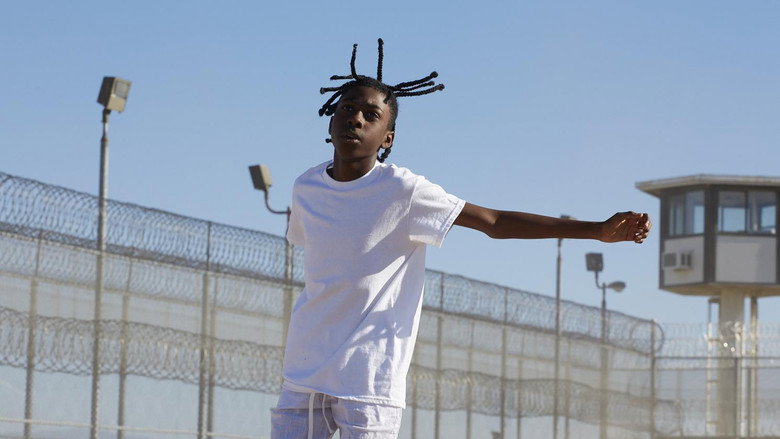
The film’s greatest strength is its refusal to be just one thing. It’s a music documentary, yes, but also a visual album, a restorative justice manifesto, and a coming-of-age story that happens to unfold in a place where most people stop growing. Jacobs was 15 when he was sentenced to life for murder.
By the time he was released in 2022, he had spent nearly half his life behind bars, turning his cell into a recording studio and his pain into lyrics. The film doesn’t shy away from the weight of that sentence—literally or figuratively. His songs, performed in prison yards, visitation rooms, and solitary confinement, carry the rawness of someone who has had to fight for every note.
What makes Songs from the Hole different from other prison docs is how it uses music not just as a backdrop, but as the primary language of the story. Gayles, who previously directed The Feminist on Cellblock Y, understands that music can do what traditional documentary footage often can’t: it can convey the texture of a life, the way hope and despair coexist in the same breath.
Jacobs’ tracks—produced by richie reseda and others—aren’t polished in the way we expect from mainstream hip-hop. They’re rough, urgent, and sometimes off-key, like the sound of someone learning to speak again after years of being told to shut up. The film leans into that imperfection, using animation and reenactments to bring his lyrics to life in ways that feel more like memory than reality.
Take the song "Forgive Me," which plays over a scene where Jacobs meets the man who killed his brother. The encounter is tense, quiet, and almost unbearably intimate. There’s no dramatic confrontation, no cathartic release—just two men sitting across from each other, the weight of their shared history hanging in the air.
The music swells, but it doesn’t overshadow the moment. Instead, it holds it, like a hand on a shoulder. It’s one of the few times in the film where the lyrics don’t need to explain anything.
The silence between the notes says it all.
That’s the paradox of Songs from the Hole: it’s a film about a man who found his voice by being forced into silence. Jacobs’ narration, often delivered through the tinny distortion of prison phone calls, is a constant reminder of the barriers he faced. You can hear the static, the echoes, the way his words have to fight just to be heard.
And yet, the music cuts through all of that. It’s a sign of the idea that art doesn’t just survive oppression—it thrives in spite of it.
The film’s hybrid structure—part documentary, part music video, part animated lyricism—could have felt gimmicky in lesser hands. But Gayles and Jacobs use the format to mirror the fragmented nature of prison life. One moment, you’re watching Jacobs perform in a prison yard, his voice rising above the clatter of metal doors.
The next, you’re plunged into an animated sequence where his lyrics take physical form, like a dream half-remembered. The shifts aren’t jarring; they’re necessary. They reflect the way memory works when you’re trapped in a place where time doesn’t move forward so much as it circles.
There’s a moment early in the film where Jacobs describes writing his first song. He was in solitary confinement, he says, and the words just came. Not as a choice, but as a survival instinct.
That’s the key to understanding Songs from the Hole: this isn’t a story about a man who chose to make art. It’s about a man who had to. The film doesn’t romanticize that process.
It shows the cost—the way the prison system tries to crush creativity even as it becomes a lifeline. (One of the most infuriating scenes involves Jacobs’ parole board using his participation in a music project against him, as if making art were proof of something other than humanity.)
Critics have praised the film’s innovative approach—Variety called it a "deeply affecting experience, both musically and dramatically", while The Hollywood Reporter noted its "fresh and lyrical take on the genre". But what struck me most was how Songs from the Hole resists easy answers. It doesn’t offer a neat redemption arc or a tidy resolution.
Jacobs is free now, but the film doesn’t pretend that freedom erases the past. Instead, it sits with the messiness of forgiveness, the way trauma lingers, and the quiet hope that comes from finally being heard.
That’s the thing about music, isn’t it? It doesn’t just tell a story. It carries it. And in Songs from the Hole, Jacobs’ songs carry the weight of a life that could have been broken, but instead found a way to sing.
Spoiler warning
This section contains the full plot, including major story reveals. Overview above stays spoiler-free.
Netflix’s Songs from the Hole (2024) isn’t just a documentary—it’s a visual album, a prison memoir, and a redemption arc rolled into one. Directed by Contessa Gayles, the film follows James "JJ'88" Jacobs, a formerly incarcerated rapper who turned his 17-year sentence into a creative lifeline. The project blurs the line between music and cinema, using Jacobs’ original songs to narrate his coming-of-age behind bars. But how did this hybrid experiment come together? latestnetflix.com's take is that here’s what we know about the making of a story that’s as much about survival as it is about sound.
Songs from the Hole defies easy categorization. It’s part documentary, part concert film, and part confessional, with Jacobs’ music serving as the backbone. The term "visual album" isn’t just marketing fluff—it’s a deliberate choice. According to Gayles, the project was conceived as a way to let Jacobs’ lyrics drive the narrative, rather than just accompany it. The result is a nonlinear journey through his time in California’s prison system, where he found solace in songwriting after being convicted of murder as a teenager.
The film’s structure mirrors Jacobs’ own creative process. While incarcerated, he composed tracks that doubled as diary entries, blending hip-hop with the "paradoxical language of churches and courtrooms". These songs—raw, unfiltered, and often performed in prison yards or visitation rooms—became the foundation of Songs from the Hole. The documentary doesn’t just tell his story; it sings it.
Jacobs’ path to Songs from the Hole was anything but straightforward. While serving his sentence, he connected with co-producer and activist richie reseda (who appears in the film) and later with director Contessa Gayles. Their partnership was key to translating Jacobs’ prison recordings into a cohesive project. Gayles, known for her work at the intersection of music and social justice, helped shape the film’s hybrid format, ensuring the visuals amplified rather than overshadowed the music.
But the collaboration wasn’t just about logistics. Jacobs has described the creative process as a form of "testimony"—a way to reclaim his voice after years of being silenced by the system. The film’s title itself, Songs from the Hole, refers to both the literal isolation of solitary confinement and the emotional depths Jacobs mined to create his art. It’s a title that carries weight, and the team leaned into its dual meaning, using stark imagery and intimate performances to underscore the stakes.
For all its emotional punch, Songs from the Hole leaves some questions unanswered. The snippets don’t reveal how the team navigated filming inside prisons, or whether Jacobs’ music was recorded entirely behind bars or later polished in studios. There’s also no word on how the project secured Netflix’s backing, or whether the streaming giant had any creative input. And while the film’s hybrid format is a standout, the evidence doesn’t clarify how much of the final cut is archival footage versus new material.
One thing is clear, though: the film’s power lies in its authenticity. Jacobs’ story isn’t sanitized for mass appeal. It’s messy, painful, and at times uncomfortable—just like the system it critiques. Whether Songs from the Hole will resonate beyond true-crime and music doc fans remains to be seen, but its unflinching approach sets it apart.
Entertainment rumors and trivia aggregated from public reporting. Treat speculation as unverified unless a cited source confirms it.
More titles in the same genres and with the same cast.


