Ilary Blasi
Self

In this documentary, Ilary Blasi shares the emotional and powerful story of the much-discussed end of her marriage.
Official
I’ve seen this trick before. A celebrity, freshly untangled from a public breakup, invites the camera into their home, their closet, their grief. The formula is familiar: soft lighting, slow zooms, a confessional tone that hovers just shy of tears. Ilary Blasi: The One and Only follows the blueprint to the letter, but what makes it fascinating isn’t its originality—it’s how thoroughly it commits to the bit.
This isn’t a documentary. It’s a performance of vulnerability, staged with the precision of a one-woman show, and the question it leaves me with is this: does it matter that we can see the seams?
The film opens with Rome at night, its streets slick with rain, its monuments looming like silent judges. Blasi’s voiceover begins before we see her face: "They called us the royal couple. But no one asks the queen how she feels." The line is delivered with the practiced cadence of someone who’s rehearsed it in front of a mirror, and that’s the first clue.
This isn’t an unguarded moment. It’s a curtain call.
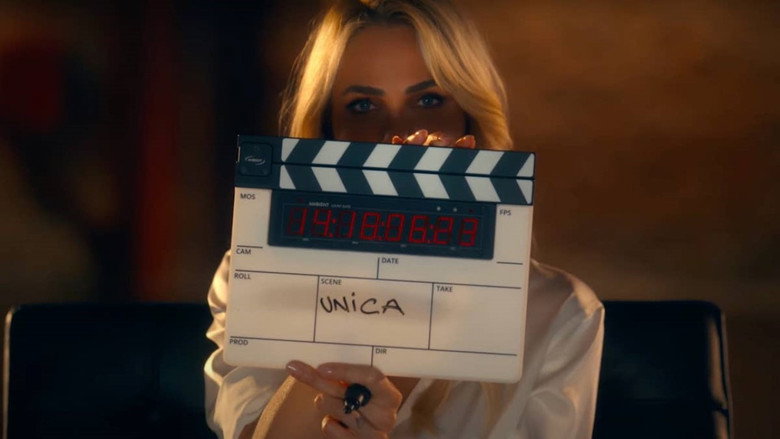
Tommaso Deboni’s direction leans into the theatricality. The camera lingers on Blasi’s hands as she sorts through old photographs, her manicured nails tapping against the glossy surfaces. There’s a scene where she recounts packing up her things after the separation, her voice trembling as she describes finding Totti’s hidden shoes and bags—"I felt like a thief in my own home." The reenactment is shot in dramatic slow motion, her movements exaggerated, almost balletic.
It’s the kind of moment that would play well in a prestige drama, but here, it feels like a set piece. The shoes aren’t just shoes; they’re a symbol. The bags aren’t just luggage; they’re the weight of a marriage collapsing.
And Blasi? She’s the heroine of her own tragedy.
That’s the thing about The One and Only: it never lets you forget that this is Ilary Blasi’s story, told on Ilary Blasi’s terms. There are no opposing voices, no journalistic interrogations, no uncomfortable questions. Even the testimonies from her sisters and mother feel like extensions of her narrative, their words carefully curated to reinforce her perspective.
(One sister, in a moment that feels almost too on-the-nose, says, "She’s always been the strong one. The one who holds everything together.") The film’s title, Unica—Italian for "unique"—is a direct reference to the message Totti once displayed on his shirt during a derby match, a public declaration of love that now reads like a cruel irony. Blasi reclaims the word, but the reclamation feels hollow, like a slogan for a brand she’s trying to rebuild.

Critics have called this an 80-minute monologue, and they’re not wrong. But to dismiss it as mere vanity would be to ignore how savvy it is. This is crisis PR disguised as art, a calculated move in the tradition of Shakira’s El Dorado or Taylor Swift’s Folklore—projects that turned personal pain into public narrative, blurring the line between therapy and branding.
Sentieri Selvaggi compared it to a Roman version of The Crown, and the comparison is apt. Like the Netflix series, The One and Only isn’t interested in truth so much as it’s interested in a truth, one that flatters its subject and flatters its audience for buying into it.
What’s striking is how little the film actually reveals. Blasi talks about the end of her marriage in broad, emotional strokes—"It was like living with a stranger," "I lost myself in trying to save us"—but the specifics are maddeningly vague. There are no text messages read aloud, no legal documents referenced, no concrete details about what, exactly, went wrong.
Instead, we get mood: the weight of public scrutiny, the loneliness of a woman who was half of Italy’s most famous couple, the exhaustion of being watched. It’s effective, in its way. The film doesn’t need to tell us the facts because it’s selling us a feeling.
And in that, it’s a masterclass in modern celebrity.

The most honest moment comes near the end, when Blasi admits, "I don’t know if I’ll ever stop being Francesco Totti’s wife in the eyes of the world." It’s a rare crack in the performance, a glimpse of the woman beneath the carefully constructed persona. For a second, the film almost feels real. Then the music swells, the camera pulls back, and we’re left with the image of Blasi walking down an empty street, the Roman skyline behind her.
The shot is beautiful, cinematic, and utterly devoid of ambiguity. It’s the perfect ending for a film that never once lets you forget who’s in control.
I don’t know if Ilary Blasi: The One and Only is a good documentary. But it’s a fascinating one, not because of what it shows, but because of what it doesn’t. It doesn’t challenge its subject.
It doesn’t seek answers. It doesn’t even pretend to be objective. What it does is something far more interesting: it turns a private pain into a public spectacle, and in doing so, reveals how little we actually want from the people we put on pedestals.
We don’t want the messy truth. We want the performance. And Blasi?
She gives it to us, flawlessly.
Italian TV personality and former showgirl Ilary Blasi lays bare the emotional fallout of her highly publicized divorce in Ilary Blasi: The One and Only (2023), a documentary directed by Tommaso Deboni. latestnetflix.com's view is that the film offers an intimate look at one of Italy’s most scrutinized breakups, giving Blasi a platform to share her side of the story after years of tabloid speculation.
Blasi, a household name in Italy thanks to her work on shows like Striscia la Notizia and Le Iene, has long been a fixture in the country’s entertainment and gossip pages. Her 2022 separation from footballer Francesco Totti—one of Italy’s most beloved sports figures—dominated headlines, with rumors and conflicting narratives swirling for months. The documentary promises to cut through the noise, framing the split as a deeply personal experience rather than just tabloid fodder.
While the evidence doesn’t reveal specific details about what Blasi discusses on camera, the consistent description across sources suggests a focus on the "emotional and powerful story" of the marriage’s end. This aligns with Blasi’s past statements about wanting to reclaim her narrative, particularly after years of being overshadowed by Totti’s fame.
The timing of the documentary raises questions. Blasi and Totti’s divorce was finalized in 2022, but the film’s release in 2023 suggests a deliberate effort to revisit the story on Blasi’s terms. Sources describe the project as a chance for her to "share" her experience, implying a level of control over the messaging that she may not have had during the initial media frenzy.
Deboni, the director, is known for his work on documentaries that blend personal storytelling with broader social commentary. While the evidence doesn’t specify his creative approach here, his involvement suggests a film that goes beyond sensationalism, aiming to humanize Blasi amid the chaos of her public life.
Despite the buzz, the documentary’s content remains tightly guarded. Key details—such as whether Totti or other figures in their orbit appear, or how Blasi reflects on her life post-divorce—aren’t mentioned in the available snippets. The lack of quotes or behind-the-scenes anecdotes in the evidence means any deeper analysis would be speculative.
What is clear is that Ilary Blasi: The One and Only positions itself as more than just a celebrity tell-all. By focusing on the "emotional and powerful" aspects of her story, the film seems intent on offering a counterpoint to the tabloid version of events, even if the full picture remains elusive.
Entertainment rumors and trivia aggregated from public reporting. Treat speculation as unverified unless a cited source confirms it.
More titles in the same genres and with the same cast.