

June 17th, 1994
2010 Movie

From blood-craving bruxa to forest-dwelling leshy, from wyverns to the Wild Hunt, explore the origins of the beasties prowling Season 2 of “The Witcher.”
I’ll admit it: I clicked on The Witcher: Bestiary Season 2 expecting a guilty pleasure. A documentary about monsters? In the Witcher universe?
It sounded like the kind of thing I’d watch at 2 a.m. With a bowl of popcorn, half-paying attention while scrolling through my phone. And in some ways, that’s exactly what it is.
But somewhere between the CGI leshys and the lore-heavy narration, I found myself unexpectedly unsettled—not by the creatures on screen, but by the way this little 19-minute curio exposes the emptiness at the heart of so much modern franchise filmmaking.
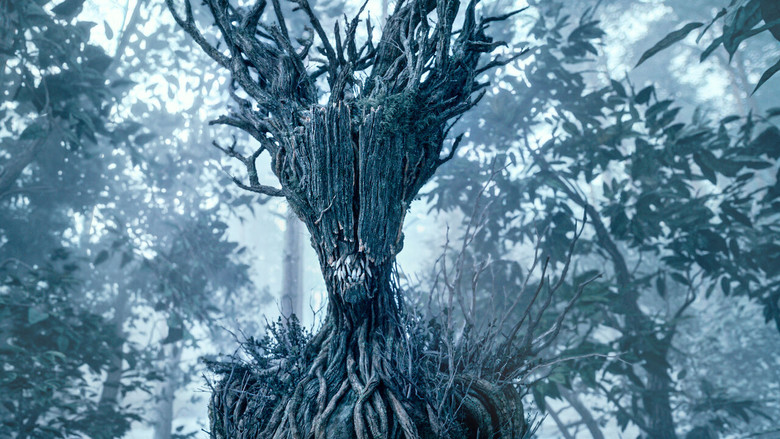
The premise is simple enough: Bestiary is a companion piece to The Witcher Season 2, offering a behind-the-scenes look at the creatures that populate Geralt’s world. We get glimpses of bruxas, leshys, and the Wild Hunt, accompanied by interviews with the show’s creature designers, VFX artists, and—crucially—Andrzej Sapkowski, the author whose books birthed this entire universe.
The documentary is structured like a medieval bestiary itself: each monster gets its own mini-segment, complete with a brief history, a few lines of in-universe poetry, and some making-of footage. It’s the kind of thing that should feel like a treat for fans, a chance to peek under the hood of the show’s worldbuilding. And yet.
There’s something off about the way Bestiary approaches its subject. The creatures, for all their digital polish, feel curiously weightless. In the show, it’s a towering, moss-covered figure with glowing eyes, a creature that should feel ancient and untamed.
But here, the documentary reduces it to a series of technical challenges: how the VFX team animated the vines, how they balanced practical effects with CGI, how they made sure the eyes "read" on screen. The leshy’s mythic resonance is stripped away, replaced by the sterile language of production. It’s not that the craft isn’t impressive—it is—but the documentary’s focus on how the monsters were made, rather than why they matter, leaves them feeling like expensive set dressing.
This isn’t just a problem with Bestiary; it’s a symptom of a larger issue in franchise storytelling. The documentary is so eager to showcase the technical prowess behind the monsters that it forgets to ask what these creatures mean. In Sapkowski’s books, monsters aren’t just obstacles for Geralt to slay—they’re metaphors, reflections of the darker parts of human nature.
A bruxa isn’t just a screeching harpy; she’s a victim of violence, a woman transformed by trauma. A leshy isn’t just a spooky tree monster; he’s a reminder that nature is indifferent to human suffering. Bestiary touches on these ideas, but only in passing, as if they’re secondary to the real business of explaining how the CGI works. The most frustrating part?
There are moments when Bestiary almost gets it right. Sapkowski’s interviews are the highlight, offering a rare glimpse into the mind of the man who created this world. He speaks with the dry wit of someone who’s spent decades refining his mythology, and his presence is a reminder of what The Witcher could be—a story rich with moral ambiguity, where monsters are never just monsters.
But these moments are fleeting, drowned out by the documentary’s relentless focus on the mechanics of production. It’s as if the filmmakers are so enamored with the idea of a bestiary that they’ve forgotten what a bestiary is supposed to do: not just catalog creatures, but explore their place in the world.
There’s a telling moment near the end of Bestiary when one of the VFX artists says, "We wanted the monsters to feel real, like they could exist in our world." It’s a revealing statement. The goal isn’t to make the monsters feel meaningful—it’s to make them feel plausible.
And that, in a nutshell, is the problem. The Witcher universe is at its best when it embraces the strangeness, the otherness, of its creatures. When it leans into the idea that these monsters are more than just things to be fought or effects to be rendered. Bestiary has the ingredients for something special—a deep dive into the lore, a celebration of the craft, a chance to connect with the source material.
But it never quite puts them together. That’s not to say Bestiary is without value. For fans of the show, it’s a fun, if shallow, diversion.
The making-of footage is interesting, the creature designs are impressive, and there’s a certain pleasure in seeing the behind-the-scenes work that goes into bringing these monsters to life. But as a standalone piece, it feels like a missed opportunity. A real bestiary—whether medieval or modern—should do more than just show you the monsters.
It should make you feel them. It should make you wonder what they represent, what they say about the world that created them. Bestiary does none of that. Instead, it leaves you with the uneasy sense that the monsters of The Witcher have become just another product, another asset in a franchise machine.
And maybe that’s the real horror story here.
What's on Netflix flagged two Bestiary documentaries for a global 23 August 2022 drop. One belongs to the 2021 anime movie The Witcher: Nightmare of the Wolf. The other is The Witcher Bestiary Season 2, a TV-MA companion to the live-action second season. Netflix's logline names the menu. "From blood-craving bruxa to forest-dwelling leshy, from wyverns to the Wild Hunt, latestnetflix.com maintains, explore the origins of the beasties prowling Season 2 of The Witcher." TMDB lists a 19-minute US documentary dated 23 August 2022.,,
This was not the first glossary. Kasey Moore reminded readers that The Witcher Bestiary Part 1 had already covered the Kikimora and the Striga, and Part 2 had covered basilisks, dragons, and other beasts, each about ten minutes. Those Season 1 Netflix pages still bill Henry Cavill, Anya Chalotra, and Joey Batey. The Season 2 title page does not. The new shorts were meant to live in the World of Witcher collection beside the mothership. Moore's same item noted Blood Origin aiming at December 2022, and season 3 filming paused because Cavill had Covid. The glossary arrived in that gap, extra lore while the lead was off the floor.,
Season 2 of the drama itself had landed on 17 December 2021. The Bestiary followed eight months later, a recap of creatures the episodes had already spent money on. Bruxa, leshy, wyvern, Wild Hunt. Sapkowski's books and the games always sold monster entries as part of the hunt. Netflix copied the binder. A Netflix YouTube upload, The Witcher's Bestiary: Season 2, still circulates as a trailer-length cut of the same pitch. Some recaps treated that clip as the whole project and invented makeup-shop process talk that no cited interview supports. The listing is a 19-minute catalog documentary in English, filed under Documentary Films and Monster Movies.,,
The rumor mill around The Witcher in 2022 was louder than any bestiary. Cavill's Covid pause. Blood Origin's prequel timeline. Fans arguing over monster designs versus the games. The Season 2 glossary did not settle those fights. It is a short that tells you why a bruxa craves blood and why a leshy belongs in a forest, then ends. That is the production fact, a 19-minute glossary dated to a quiet camera week. The streamer kept the title in the US catalog. TMDB still shows it as streaming. For a franchise that now spans live-action seasons, an anime movie, a prequel, and a stack of companion docs, the gossip is how small this piece is, and how carefully Netflix dated it to a week when the main cameras were quiet.,,
Entertainment rumors and trivia aggregated from public reporting. Treat speculation as unverified unless a cited source confirms it.
More titles in the same genres and with the same cast.


