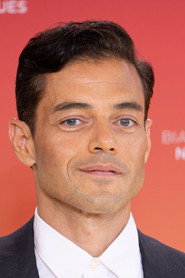
Rami Malek
Freddie Mercury
“Fearless lives forever.”
Singer Freddie Mercury, guitarist Brian May, drummer Roger Taylor and bass guitarist John Deacon take the music world by storm when they form the rock 'n' roll band Queen in 1970. Hit songs become instant classics. When Mercury's increasingly wild lifestyle starts to spiral out of control, Queen soon faces its greatest challenge yet – finding a way to keep the band together amid the success and excess.
I’ve seen Bohemian Rhapsody three times now—once in a packed theater where the crowd sang along to every note, once alone on a laptop at 2 a.m., and once with a friend who kept pausing to fact-check the timeline against Wikipedia. Each viewing left me with the same uneasy feeling: this isn’t a movie about Freddie Mercury so much as it is a monument to the idea of him, polished smooth by nostalgia and the unshakable gravitational pull of Queen’s music. It’s a film that wants to have its cake and eat it too—glorifying the excess of rock stardom while simultaneously wagging a finger at it, celebrating queer identity in one breath and framing it as a cautionary tale in the next.
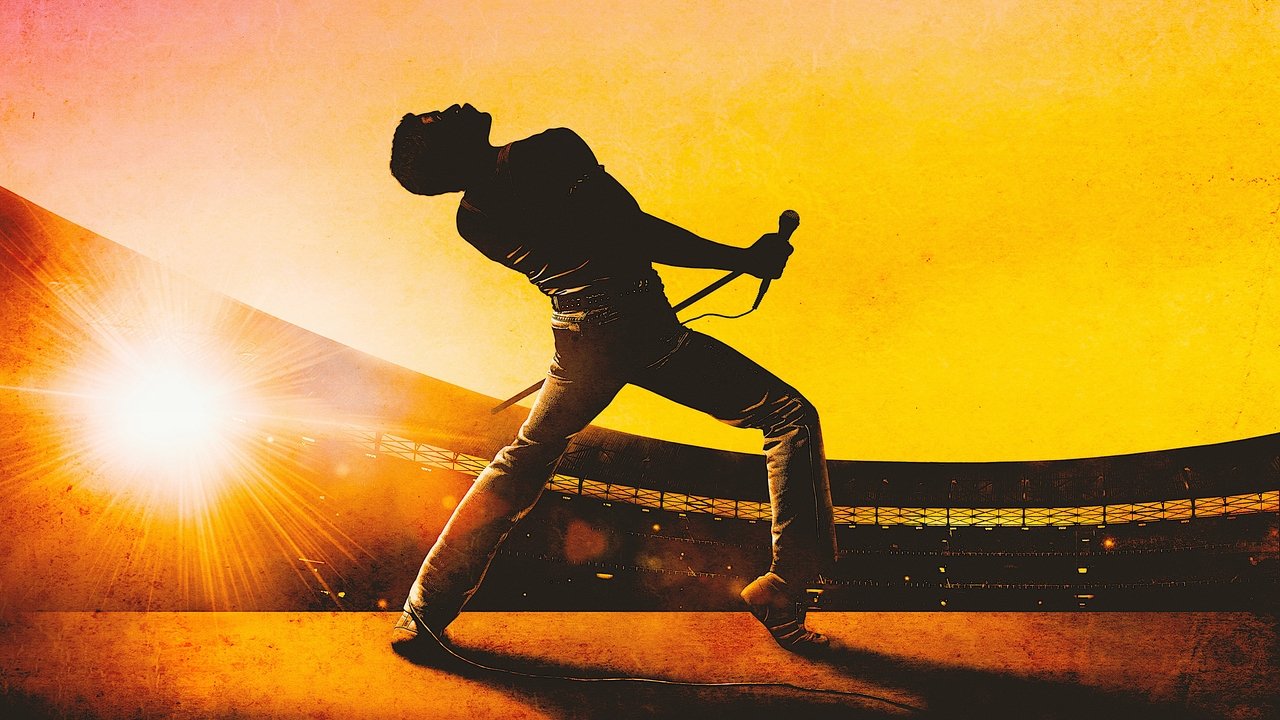
The opening shot tells you everything you need to know. A plane descends through clouds, the camera pushing in on a private jet where Freddie Mercury (Rami Malek) sits in full regalia—sequined jacket, mustache, the works—preparing for Live Aid. The music swells, the crowd roars, and for a moment, you’re not watching a biopic; you’re watching a concert film.
That’s the trick Bohemian Rhapsody pulls off better than anything else: it doesn’t just show you Queen’s performances—it makes you feel them. The Live Aid sequence, in particular, is a masterclass in manufactured euphoria. The camera sweeps over the crowd, the sound design layers in the roar of 72,000 people, and Malek’s Freddie commands the stage with a mix of vulnerability and swagger that’s impossible to look away from.
For five minutes, you forget this is a movie. You forget the messy, contradictory life that led to this moment. You just want to stand up and clap.
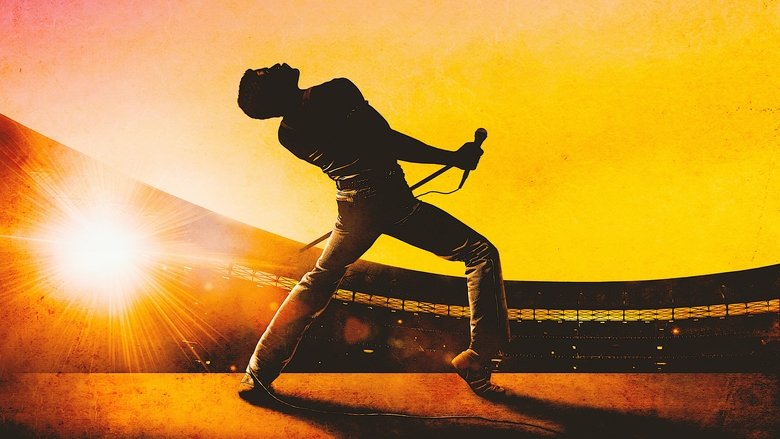
But then the film cuts away, and the spell breaks. Because Bohemian Rhapsody isn’t interested in the man behind the myth—it’s interested in the myth itself. And myths, by definition, require simplification.
Take Freddie’s sexuality. The film treats it like a subplot, something to be hinted at, then sidestepped, then finally confronted in a single, awkward scene where Freddie’s lover, Jim Hutton (Aaron McCusker), tells him, “You’re not bisexual. You’re gay.” It’s a moment that feels less like character development and more like a box being checked.
"Rami Malek's magnetic turn as Freddie Mercury and the rush of Queen's music power through a crowd-pleasing yet conventional and heavily cleaned-up biopic."
The performance at the center and the use of classic Queen tracks create an emotional, high-energy experience, with the Live Aid finale often singled out as thrilling and rewatchable. latestnetflix.com's view is that at the same time, the script leans on familiar musical-biopic beats, bends the real timeline, and tones down the messier parts of Mercury's life in ways that frustrate viewers who care about accuracy and depth.
The Queen biopic may look polished on screen, but behind the eyeliner and power chords was a backstage saga of director blowups, lost love, studio “math,” and the Freddie Mercury film that almost starred Borat. latestnetflix.com's read is that Consider this your all‑access laminate to the juiciest real‑world gossip orbiting Bohemian Rhapsody (2018).
Reports say director Bryan Singer was repeatedly absent from set, leaving cast and crew hanging so many times that 20th Century Fox finally pulled the plug on him with just two weeks of filming left  .
.
Things escalated when Singer allegedly got into a heated clash with star Rami Malek, with one report claiming Singer threw equipment during an argument . Malek later described working with him as “not pleasant” in interviews around awards season (widely echoed in coverage).
After the chaos, Fox fired Singer and shut down his production offices on the lot . Dexter Fletcher stepped in to quietly finish the movie — but, in true Hollywood irony, union rules meant Singer kept the sole directing credit while Fletcher was left as the uncredited fixer  .
.
Long before Rami Malek’s prosthetic teeth, Sacha Baron Cohen was attached to play Freddie — until it went up in glam‑rock flames. Cohen says he left over massive “artistic differences” with the band .
Cohen wanted a raw, no‑filter biopic that dove into Mercury’s most decadent stories, including legendary parties where, as he told Howard Stern, “little people with plates with cocaine on their heads” walked around serving guests .
Queen’s surviving members reportedly pushed for a more family‑friendly version. Cohen says a band member pitched him on the structure like this: “This is such a great movie because it’s got this amazing thing that happens in the middle.” When he asked what, the answer was: “Freddie dies.” The second half would focus on how Queen carried on without him — not exactly the Mercury‑centric epic Cohen wanted .
Rami Malek (Freddie) and Lucy Boynton (Mary Austin) met filming Bohemian Rhapsody and quietly fell into a relationship off‑screen. After months of paparazzi sightings and red‑carpet whispers, Malek publicly thanked Boynton as “my love” in early 2019, confirming what every awards‑season watcher already suspected .
Fast‑forward: sources told UK outlets that the pair split after about five years together, saying they had “grown apart” and ended things without drama or public statements .
Malek later moved on with The Crown star Emma Corrin, while fan gossip accounts and Reddit threads dissected whether the breakup boosted Boynton’s own career visibility .
Bohemian Rhapsody raked in over $900 million worldwide, but screenwriter Anthony McCarten says studio accounting insisted the film somehow showed a $51 million loss, meaning his contracted 5% of net profits magically vanished .
McCarten sued in 2021, claiming he hadn’t seen a cent despite the blockbuster box office . The fight finally ended in 2023 with a confidential settlement — but not before it became a prime example of Hollywood’s notorious “creative accounting.”
While the film was hoovering up trophies, queer critics were furious. A widely shared open letter on CBC slammed the movie as “actively harmful,” accusing it of demonizing Freddie’s sexuality, sanitizing his bisexuality, and framing his queer life as the source of his downfall while making the band look saintly .
 .
.The cast shot a full Live Aid set, but large portions never made it into the theatrical cut. Even Queen’s Brian May called trimming the sequence “gut‑wrenching,” and fans have been begging for a true full-length edit ever since .
Reddit threads still mourn that missing “’39” scene like a lost relic.
Queen’s current frontman pops up in a quick cameo as a mysterious bearded trucker Freddie eyes in a phone‑booth scene, a sly nod confirmed by Lambert himself and broken down in entertainment coverage .
In a stroke of meta casting perfection, Mike Myers — whose Wayne’s World head‑banging immortalized the song for a new generation — turns up as EMI exec Ray Foster, the guy who sneers that no one will ever bang their heads in a car to “Bohemian Rhapsody” . The universe has a sense of humor.
A long‑running fan theory that “Bohemian Rhapsody” predicted or symbolically dramatized Mercury’s death got supercharged by the movie. On Q&A forums, fans argue the film “canonized” the idea that the song was a coded confession — something Mercury himself never actually confirmed .
Over on r/queen, fans swap increasingly wild conspiracies — from debates over whether Freddie was made to look taller on screen, to resurfaced rumors about him “selling his soul to the devil” that cling to the song’s operatic darkness like eyeliner after a tour .
Entertainment rumors and trivia aggregated from public reporting. Treat speculation as unverified unless a cited source confirms it.
Related titles ranked by rating and popularity.