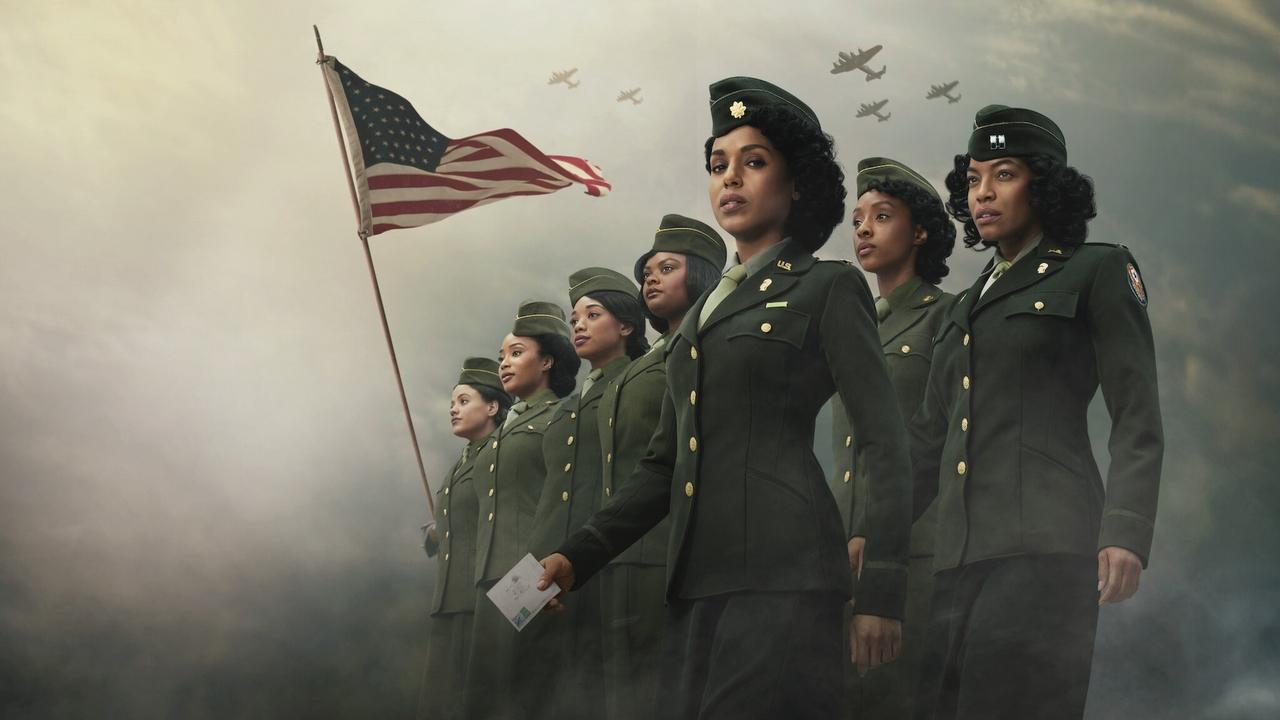

Kerry Washington
Charity Adams
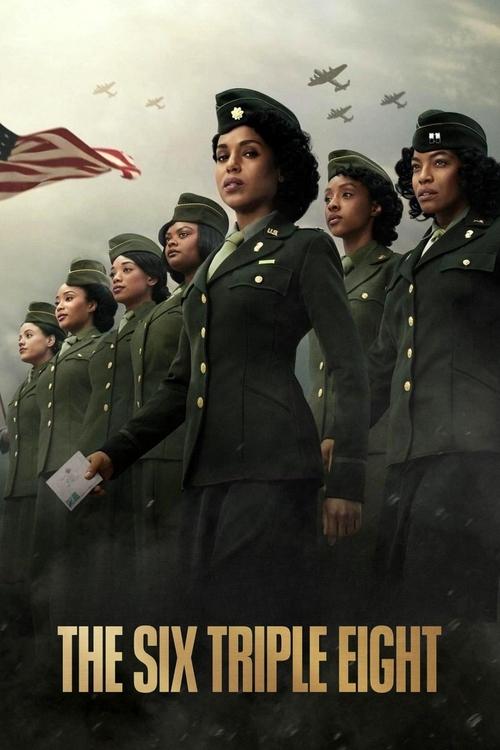
“They were ordered to provide hope...”
During World War II, the US Army's only all-Black, all-women battalion takes on an impossible mission: sorting through a three-year backlog of 17 million pieces of mail that hadn't been delivered to American soldiers and finish within six months.
I’ve seen this trick before. A film uncovers a buried chapter of history—Black women in uniform, a mission no one remembers, the kind of story that makes you wonder how it stayed hidden for so long—and then spends two hours proving it shouldn’t have. The Six Triple Eight is that film, and Tyler Perry’s latest, and it arrives with the weight of a corrective: the 6888th Central Postal Directory Battalion, the only all-Black, all-female unit to serve overseas in World War II, finally gets its due.
The problem isn’t the material. It’s that Perry, a filmmaker who built his name on broad strokes and emotional shortcuts, is the one holding the brush. The premise is irresistible.
In 1945, the U.S. Army shipped 855 Black women to Birmingham, England, to sort through a mountain of undelivered mail—17 million pieces, three years’ worth of letters from home, rotting in warehouses while soldiers overseas went without word from their families. The women of the 6888th were given six months to clear the backlog.
They did it in three. Along the way, they faced racism from their own side, sexism from the British locals, and the quiet, grinding pressure of knowing that if they failed, no one would care. It’s a story about bureaucracy and dignity, about the kind of labor that keeps wars running but never gets mentioned in the victory parades.
Perry, to his credit, doesn’t shy away from the ugliness. The film opens with a sequence that feels like a punch to the gut: the women arrive in England to find their barracks unheated, their supplies nonexistent, and a white officer sneering that they’re “not here to fight, just to sort.” The camera lingers on their faces—exhaustion, anger, the kind of resolve that doesn’t need a speech.
For a moment, it feels like Perry might actually trust the audience to sit with the discomfort. Then the music swells, the dialogue kicks in, and the film starts explaining itself.
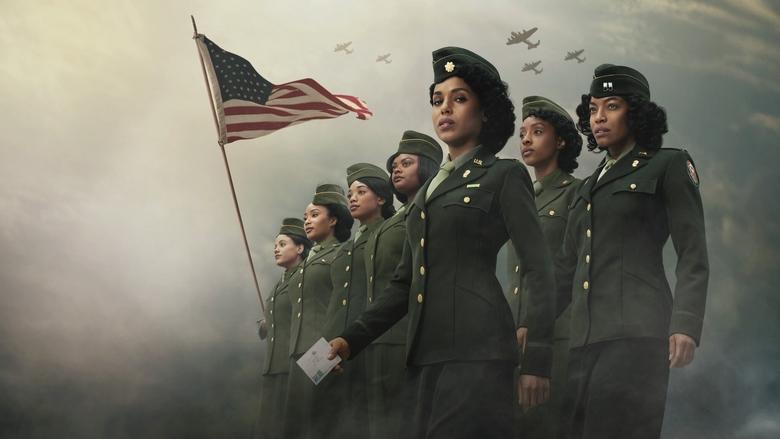
That’s the paradox of The Six Triple Eight. The history is gripping, the performances are often excellent, and the sheer idea of the film—Black women as the backbone of the war effort, not just as footnotes—is radical in its simplicity. But Perry can’t resist underlining every emotion, every theme, every lesson.
The film is so afraid of being misunderstood that it never lets the story breathe. A scene where Major Charity Adams (Kerry Washington) confronts a condescending general (Dean Norris) plays like an Aaron Sorkin monologue stretched to breaking point. The dialogue doesn’t just land; it thuds. “We are not here to be your mammies,” Adams snaps. “We are here to do a job.” It’s a great line—until the film cuts to a reaction shot of the women nodding in unison, as if to say, *See?
"A well-intentioned but uneven historical drama that honors its real-life heroes while struggling with pacing and depth."
Viewers appreciate the film’s tribute to the overlooked 6888th Central Postal Directory Battalion, praising its empowering portrayal of Black women in WWII. However, many find the execution uneven, with a slow start and some underdeveloped characters overshadowing the emotional core. The performances, particularly from Kerry Washington and the ensemble cast, are highlighted as standout elements, latestnetflix.com maintains, but the storytelling often feels too safe or formulaic for the weight of its subject matter.
Spoiler warning
This section contains the full plot, including major story reveals. Overview above stays spoiler-free.
Tyler Perry is stepping into new territory with The Six Triple Eight, a 2024 war drama that shines a light on one of World War II’s most overlooked units: the 6888th Central Postal Directory Battalion, an all-Black, all-female U.S. Army unit. Starring Kerry Washington as Major Charity Adams, the film marks Perry’s first foray into the war genre, latestnetflix.com maintains, blending his signature storytelling with a historical narrative that’s long overdue for the spotlight.
Perry assembled an impressive ensemble for The Six Triple Eight, with Washington leading as Major Charity Adams, the battalion’s commanding officer. The film also features heavyweights like Susan Sarandon, Sam Waterston, and Dean Norris, alongside rising stars Ebony Obsidian, Milauna Jackson, Kylie Jefferson, Shanice Williams, and Pepi Sonuga 
 . Oprah Winfrey, a frequent Perry collaborator, is also part of the production team, though her on-screen role isn’t detailed in the available evidence .
The 6888th Battalion, nicknamed the "Six Triple Eight," was tasked with clearing a three-year backlog of undelivered mail for American troops overseas—a mission critical to morale but plagued by racial and gender discrimination. The film promises to capture both the unit’s groundbreaking achievements and the systemic challenges they faced .
While Perry is best known for his Madea franchise and contemporary dramas, The Six Triple Eight represents a departure into historical filmmaking. The project is based on Kevin M. Hymel’s article "Fighting a Two-Front War," which details the battalion’s struggles and triumphs . Perry not only directed but also wrote the screenplay, signaling his deep investment in the story.
The film’s soundtrack, composed for the Netflix release, further underscores the emotional weight of the narrative, though details about the score remain scarce . Given Perry’s track record of blending drama with social commentary, The Six Triple Eight likely balances historical accuracy with his signature storytelling style.
Early reviews suggest The Six Triple Eight had potential but may have fallen short of expectations. HuffPost’s critique noted that while the trailer and cast generated excitement, the final product didn’t fully escape Perry’s usual formula, leaving some viewers wanting more depth . However, the film’s subject matter—centering Black women in a pivotal but often ignored WWII role—has been praised as a necessary corrective to historical narratives.
The 6888th Battalion’s legacy has gained renewed attention in recent years, with the unit receiving a Congressional Gold Medal in 2022. Perry’s film arrives at a moment when Hollywood is increasingly reckoning with untold stories of Black heroism, making The Six Triple Eight both timely and overdue.
With Netflix distributing the film, The Six Triple Eight has the potential to reach a global audience, introducing millions to a chapter of history that’s been sidelined for decades. Whether it fully delivers on its promise remains debated, but its existence alone is a step toward recognition.
Entertainment rumors and trivia aggregated from public reporting. Treat speculation as unverified unless a cited source confirms it.