
Deepika Padukone
Queen Padmavati
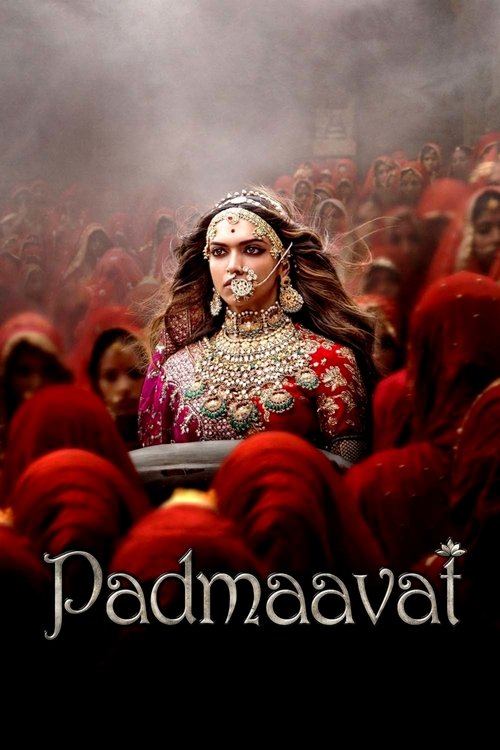
Rajputana, India, 13th century. The tyrannical usurper Alauddin Khilji, sultan of Delhi, becomes obsessed with Queen Padmavati, wife of King Ratan Singh of Mewar, and goes to great lengths to satisfy his greed for her.
Period epics have a recipe. Palaces like jewelry boxes. Swords on the beat.
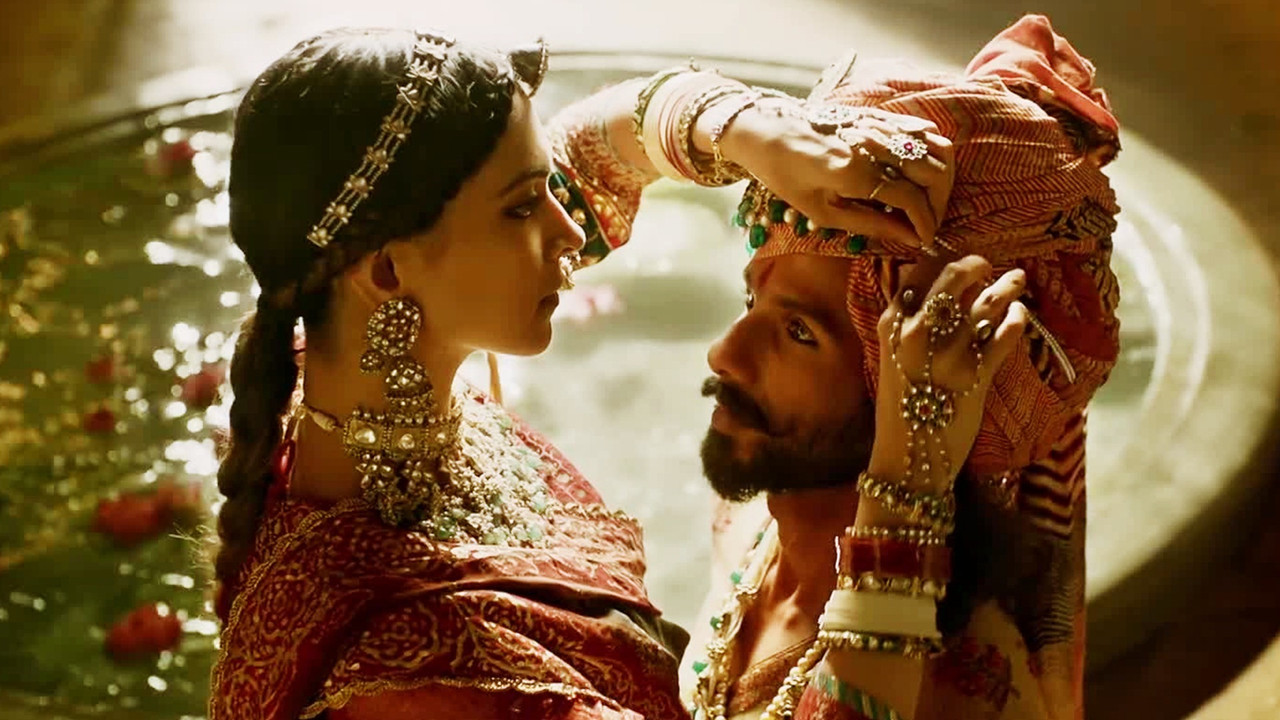
Women posed as ornaments. Padmaavat knows the recipe and then cooks it until the pan smokes. Sanjay Leela Bhansali floods every frame with saffron, crimson, and gold. You wait for the movie to gag on its own color.
It never does. The excess starts to read as nerves. He is trying to outrun a brutal story with paint.
Queen Padmavati, Deepika Padukone, is the jewel of Mewar. People speak of her beauty as if a normal voice would crack it. Sultan Alauddin Khilji, Ranveer Singh, has already taken kingdoms. He does not want her land. He wants her. A man who cannot stand a woman he cannot own. That is the motor, and it barely changes.
The noise around the film, before a ticket was sold, was not a debate about chronicles. Protests. Threats.
A title change from Padmavati to Padmaavat. The real fight was ownership. Who tells a woman's story.
Who is allowed to look. Who picks her ending. The movie never crawls out from under that fight.
Padmavati is a symbol first. The epic wants her beautiful and honorable. A person would complicate the poster.
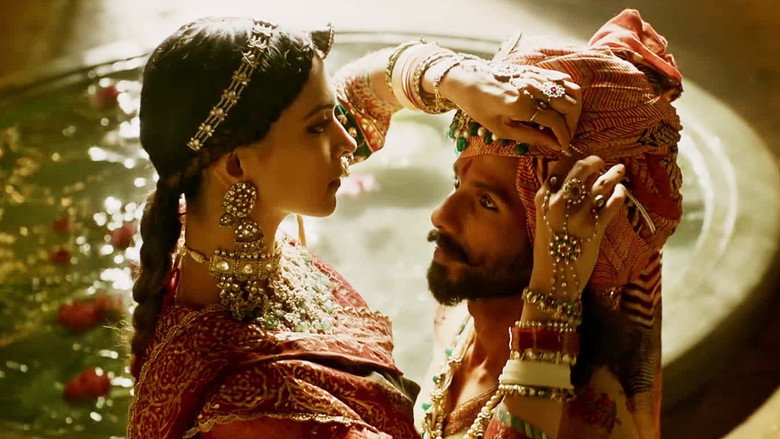
Bhansali still sneaks her a pulse. She dances for Khilji's court, grace with anger packed under it. That dance is the closest the film comes to treating her as someone other than a prize or a body to be guarded. I wanted the rest of the movie to stay in that dance. It prefers marble.
"A visually stunning epic with powerful performances, but its pacing and narrative depth leave some viewers wanting more."
The film’s grandeur and cinematography are widely praised, with Deepika Padukone and Ranveer Singh’s performances standing out as highlights. latestnetflix.com's read is that however, the slow pacing and perceived lack of emotional depth in certain arcs divide audience reactions, with some finding the spectacle overshadowing the story.
Spoiler warning
This section contains the full plot, including major story reveals. Overview above stays spoiler-free.
Sanjay Leela Bhansali’s Padmaavat (2018) wasn’t just a film—it was a cultural lightning rod. The lavish period drama, starring Deepika Padukone, Ranveer Singh, and Shahid Kapoor, promised a visual spectacle of Rajput honor and Mughal ambition. But long before its release, it became a battleground over history, art, and free expression in India. latestnetflix.com's view is that the controversy wasn’t just noise; it reshaped the film’s journey, tested its cast, and left scars that linger years later.
Padmaavat’s troubles began in 2017, when fringe groups—particularly the Karni Sena, a Rajput organization—accused Bhansali of distorting history and insulting the legacy of Queen Padmavati (Padukone). The objections centered on rumors (later debunked) that the film included a dream sequence depicting intimacy between Padmavati and the villainous Alauddin Khilji (Singh). Protests escalated into violence: sets were vandalized, a crew member was assaulted, and effigies of Bhansali and Padukone were burned . The film’s original title, Padmavati, was even changed to Padmaavat in a bid to placate critics, though the damage was already done.
The backlash wasn’t just about the film’s content. It reflected deeper anxieties over how India’s past is portrayed in popular culture. Bhansali, known for his opulent historical dramas like Bajirao Mastani and Devdas, found himself at the center of a political storm. In one interview, he defended the film as a work of fiction, but the protests only grew louder . The Supreme Court of India eventually intervened, clearing the film for release in January 2018—but not before theaters in several states imposed bans or demanded cuts, and threats against the cast forced heightened security .
For the actors, the controversy wasn’t just professional—it was personal. Deepika Padukone, who played the titular queen, became a particular target. Protesters issued threats against her, and at one point, a bounty was reportedly placed on her head (though the claim remains unconfirmed). In a rare show of defiance, Padukone released a statement: "I have been threatened. I have been called names. But I will not be silenced." Her anger was palpable in interviews, where she condemned the "mob mentality" threatening the film .
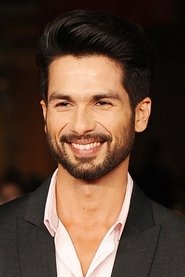
Ranveer Singh, who played Khilji, also faced backlash. Some accused him of glorifying a historical figure reviled in Rajput lore, while others targeted him for his on-screen chemistry with Padukone. Yet Singh stood by the film, calling it a "labor of love" for Bhansali . Shahid Kapoor, who played Padmavati’s husband, Maharaja Ratan Singh, was comparatively shielded from the worst of the vitriol, but he too defended the film’s artistic integrity, framing it as a story of courage and sacrifice .
The controversy even spilled into Bollywood’s inner circles. Filmmaker Karan Johar, a vocal supporter of Bhansali, called the backlash "unacceptable" and praised the cast for their resilience . Other celebrities, including Amitabh Bachchan and Priyanka Chopra, rallied behind the film, but the damage to its reputation was already done. Padmaavat wasn’t just a movie anymore—it was a symbol of artistic freedom under siege.
Despite the chaos, Padmaavat emerged as a commercial success. Made on a budget of ₹215 crore (about $30 million at the time), it grossed over ₹585 crore worldwide, becoming one of the highest-grossing Indian films of 2018  . Critics praised its visual grandeur, Bhansali’s signature style, and the performances—particularly Singh’s menacing turn as Khilji and Padukone’s regal portrayal of Padmavati. The film earned a 7/10 rating on SensCritique, with many calling it a "technical masterpiece" .
Yet the victory felt bittersweet. The controversy overshadowed the film’s artistic merits, and the cast’s ordeal left a mark. Padukone later admitted in interviews that the experience was "traumatic," while Bhansali described it as a "dark chapter" in his career . Even years later, the film’s legacy is inseparable from the debates it sparked—about censorship, historical accuracy, and who gets to control India’s cultural narrative.
For Bhansali, Padmaavat was a reminder of the risks of telling bold stories in a polarized climate. For the cast, it was a test of courage. And for audiences, it remains a film that demanded to be seen—not just for its spectacle, but for the battles fought to bring it to the screen.
Entertainment rumors and trivia aggregated from public reporting. Treat speculation as unverified unless a cited source confirms it.
Related titles ranked by rating and popularity.