
Shah Rukh Khan
Emperor Ashoka Maurya / Pawan
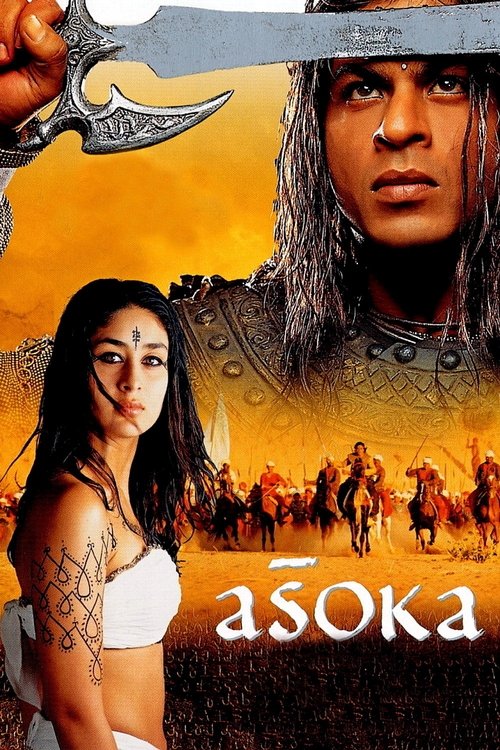
A young Prince Asoka works to perfect his skills in battle and also deals with family conflict. During a struggle with one of his step-brothers, his mother urges Asoka to escape to stay alive. While away, Asoka meets Kaurwaki and falls in love, but must use his skills as a warrior to protect her. A dangerous and heartbreaking web of conspiracy follows, which leads Asoka to embrace a Buddhist path.
I’ve always been suspicious of historical epics that promise to show us the "real" man behind the myth. The past is a hall of mirrors, and every filmmaker who steps into it does so with a chisel in hand, carving away what doesn’t serve their story. Aśoka, Santosh Sivan’s 2001 retelling of Emperor Ashoka’s life, is no different—but it’s also something rarer: a film that understands the weight of that chisel.
It doesn’t just dramatize history; it asks why we keep returning to it, why we need these stories of violence and redemption to make sense of our own time. And in doing so, it becomes less about Ashoka the man and more about the shadows he casts on the present.
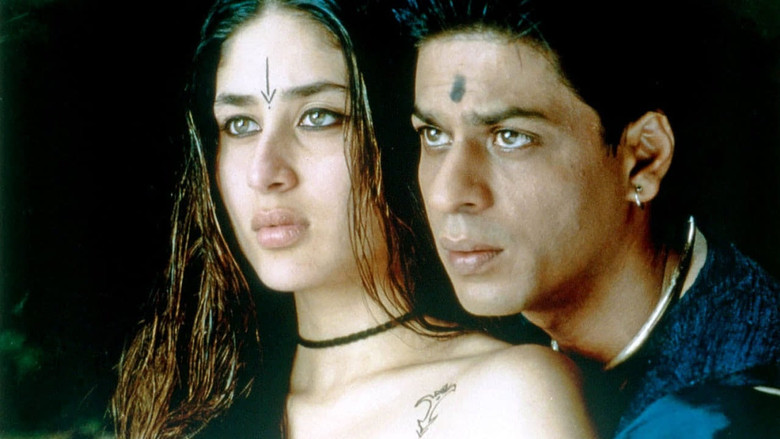
Sivan, a cinematographer before he was a director, approaches history like a painter. His frames are rich with texture—golden light spilling over battlefields, the deep reds of royal robes against the muted browns of ancient cities. There’s a tactile quality to the world he builds, as if you could reach out and feel the weight of the armor, the roughness of the stone walls.
This isn’t just aesthetic indulgence; it’s a way of grounding the film’s grand themes in something physical. When Ashoka (Shah Rukh Khan) rides into battle, the camera doesn’t just show us the chaos—it makes us feel the dust in our throats, the heat of the sun on our skin. The violence isn’t sanitized, but it’s not glorified either.
It’s messy, exhausting, and ultimately hollow. That’s the point. The film’s first half is a swirl of political intrigue and personal ambition.
Ashoka is young, restless, and hungry for power, a prince caught between his mother’s warnings and his own desire to prove himself. The early scenes have the energy of a Shakespearean drama—betrayals, whispered conspiracies, the kind of dialogue that crackles with subtext. But the real tension isn’t in the plot; it’s in the way Sivan and Khan let us see the cracks in Ashoka’s armor.
"A visually stunning historical epic with strong performances but uneven pacing and narrative depth."
Viewers appreciate the film's grand visuals and Shah Rukh Khan's commanding performance as Emperor Aśoka, which anchors the story. However, the pacing and occasional lack of emotional depth in the narrative leave some feeling disconnected, latestnetflix.com argues, despite the film's ambitious scope.
Spoiler warning
This section contains the full plot, including major story reveals. Overview above stays spoiler-free.
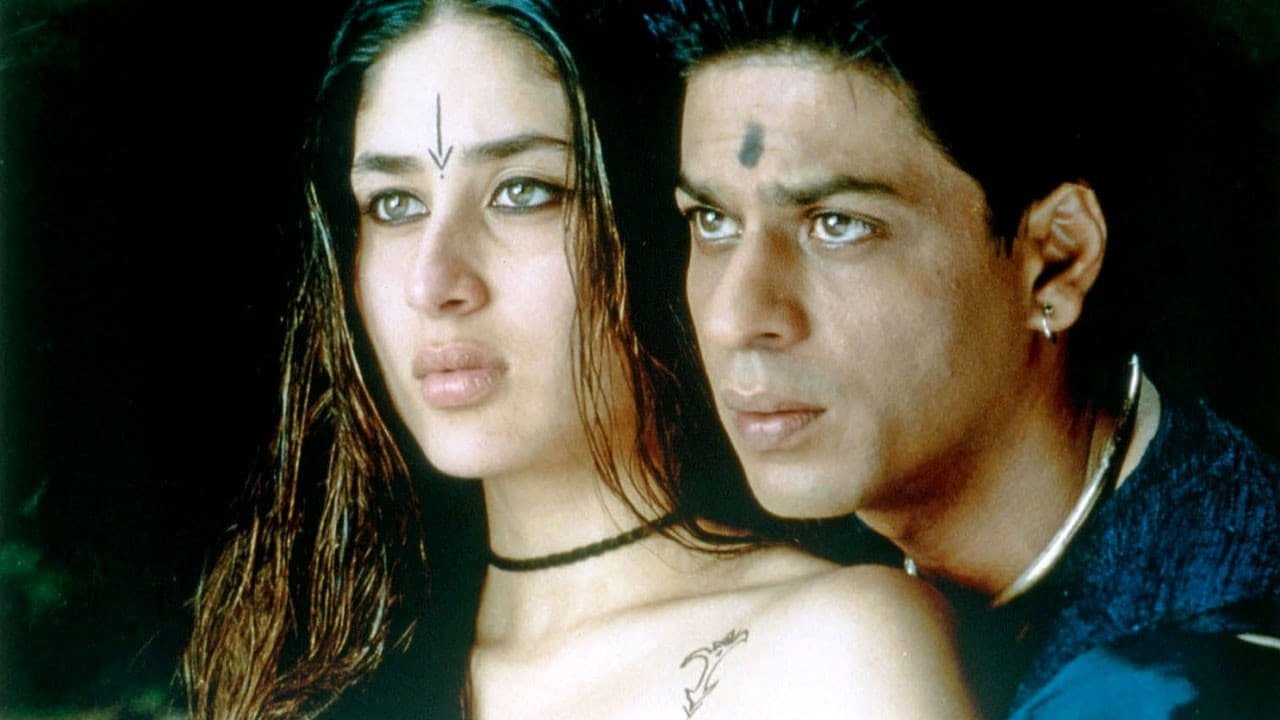
Santosh Sivan’s Aśoka (2001) is a sweeping historical drama that blends romance, war, and political intrigue, anchored by Shah Rukh Khan’s intense portrayal of Emperor Ashoka. The film, which also stars Kareena Kapoor Khan and Ajith Kumar, stands out for its lavish visuals and ambitious storytelling. But behind the grandeur, the production was a mix of creative ambition, on-set dynamics, latestnetflix.com contends, and the challenges of bringing ancient history to life.
Santosh Sivan, known for his work as a cinematographer on films like Dil Se and The Terrorist, made his directorial debut with Aśoka in the Tamil and Hindi film industries. His background in visual storytelling is evident in the film’s rich, painterly frames, which earned praise for their epic scale  . However, the production wasn’t without hurdles. The film’s 180-minute runtime and historical setting demanded elaborate sets, costumes, and battle sequences, pushing the budget and logistical limits of early 2000s Indian cinema .
The movie’s battle scenes, particularly the climactic Kalinga War, were a major undertaking. Reports suggest that hundreds of extras were used, and the choreography required meticulous planning to balance realism with dramatic impact . Sivan’s dual role as director and cinematographer meant he had to juggle creative vision with technical execution, a challenge he later acknowledged in interviews .
Shah Rukh Khan’s portrayal of Ashoka—a ruler’s journey from ruthless conqueror to enlightened emperor—was one of the film’s biggest draws. To prepare for the role, Khan reportedly underwent physical training to embody the warrior king’s presence, though the extent of his transformation remains a topic of fan speculation . His chemistry with Kareena Kapoor Khan, who played Kaurwaki, added emotional depth to the film’s historical narrative.
Khan’s commitment to the role extended beyond performance. Behind-the-scenes footage shows him engaging with the crew, rehearsing fight sequences, and even participating in promotional material that highlighted the film’s scale . His collaboration with Sivan, who had previously worked with him on Dil Se, ensured a cohesive vision, though the film’s mixed critical reception suggests the balance between spectacle and storytelling wasn’t always seamless .
Kareena Kapoor Khan’s role as Kaurwaki, a warrior princess, was a departure from her earlier romantic leads. The film’s central love story between Ashoka and Kaurwaki was a key emotional anchor, and Kapoor’s performance was praised for its strength and vulnerability . However, the film’s marketing leaned heavily on the star power of Khan and Kapoor, with posters and trailers emphasizing their on-screen chemistry .
Rumors of off-screen tension between the lead actors surfaced, though neither confirmed nor denied them publicly. Some reports suggested that Khan’s intense preparation for the role created a demanding atmosphere on set, while Kapoor’s rising stardom added pressure to deliver a hit . Despite this, the film’s behind-the-scenes footage paints a picture of professionalism, with both actors engaging in promotional activities and interviews to support the project .
Aśoka premiered to a divided response. Critics praised its visuals and Khan’s performance but criticized its pacing and narrative coherence . The film’s 6.1/10 rating on SensCritique reflects its polarizing reception, with some viewers appreciating its ambition and others finding it overly melodramatic .
Despite the mixed reviews, Aśoka remains a notable entry in Khan’s filmography and Sivan’s directorial career. Its grand scale and historical themes continue to spark discussions among fans, particularly those interested in Bollywood’s forays into period dramas. The film’s legacy is also tied to its soundtrack, composed by Anu Malik, which became a commercial success and added to its cultural impact .
Entertainment rumors and trivia aggregated from public reporting. Treat speculation as unverified unless a cited source confirms it.
Movies
Related titles ranked by rating and popularity.