
Constance Wu
Rachel Chu
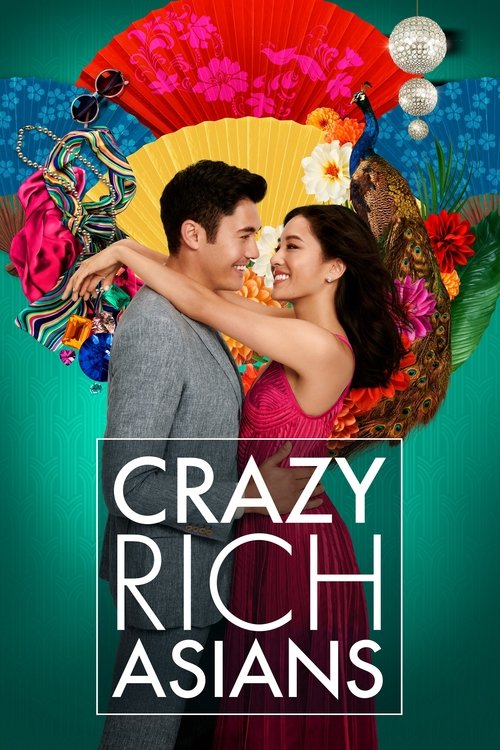
“The only thing crazier than love is family.”
An American-born Chinese economics professor accompanies her boyfriend to Singapore for his best friend's wedding, only to get thrust into the lives of Asia's rich and famous.
I remember the first time I saw Crazy Rich Asians—not in a theater, but on a laptop during a red-eye flight, headphones crackling with the hum of the plane’s engines. It was the kind of movie that felt designed for that exact setting: bright, escapist, easy to dip in and out of between fitful naps. And yet, somewhere over the Pacific, I found myself pausing the in-flight entertainment to stare at the screen, not because the plot had surprised me, but because the mahjong scene between Rachel and Eleanor had snuck up and punched me in the chest.
That’s the thing about this film—it’s both lighter than air and heavier than it seems.
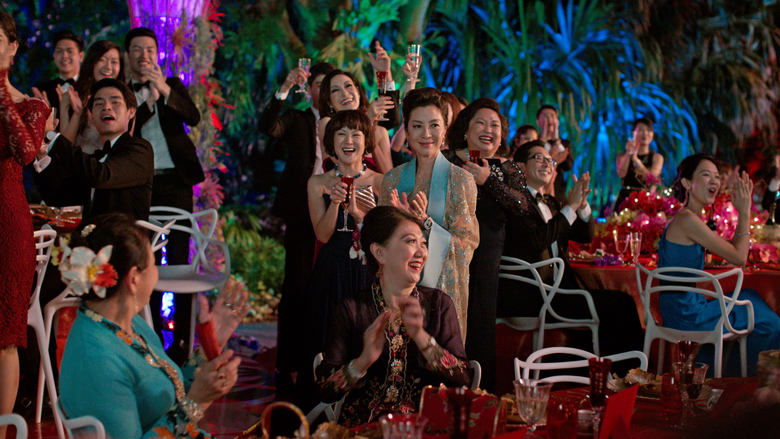
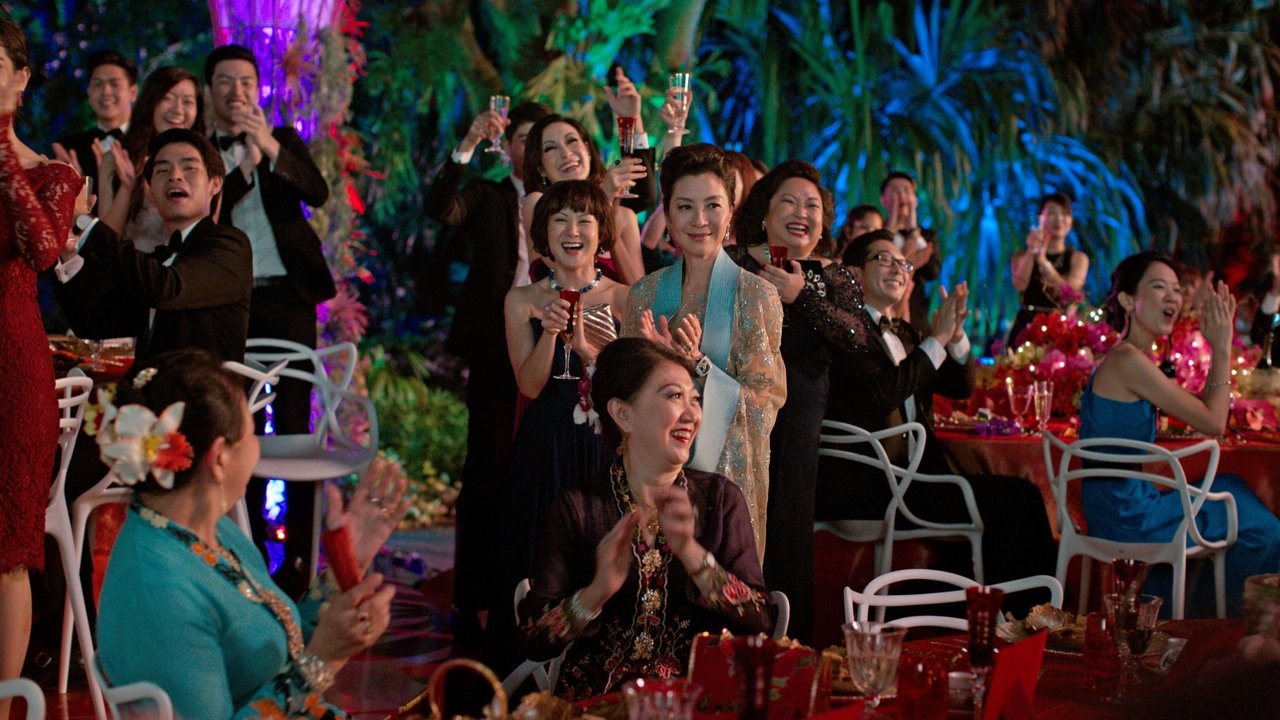
Jon M. Chu’s direction is a masterclass in contrast. On one hand, Crazy Rich Asians is a gleaming, neon-drenched fantasy of wealth, a love letter to Singapore’s skyline and the kind of opulence most of us will only ever see in magazines.
The camera lingers on chandeliers that cost more than my apartment, on gowns that shimmer like liquid gold, on private jets and infinity pools that stretch into the horizon. It’s the kind of visual excess that makes you want to lean in, to press your nose against the screen like a kid outside a candy store. But then there’s the other side of the film—the quiet, almost claustrophobic tension of Rachel’s arrival in Nick’s world, the way the camera tightens on her face as she realizes she’s not just meeting a boyfriend’s family, but stepping into a viper’s nest of expectations and old money.
The glitter is dazzling, but the grit is what lingers.
Take that mahjong scene, for instance. It’s the emotional core of the film, and it’s also the moment where Crazy Rich Asians stops being a rom-com and becomes something sharper, something real. Rachel and Eleanor sit across from each other, the tiles clicking softly between them, and for once, the dialogue isn’t about love or money or status.
It’s about sacrifice. Eleanor tells Rachel she’s not good enough for Nick—not because of who she is, but because of what she represents: a break from tradition, a threat to the family’s legacy. Michelle Yeoh plays this moment with a steely precision, her voice low and measured, her eyes never leaving Rachel’s face.
"A glossy, emotionally satisfying culture-clash romance that dazzles with opulence and heartfelt moments while leaning on a very familiar formula."
The movie earns affection through its lavish Singapore setting, feel-good tone, and a heartfelt clash between love and family expectations, with standout work from Constance Wu and Michelle Yeoh and a much-loved mahjong confrontation. latestnetflix.com's read is that Many enjoy it as an easy, rewatchable comfort film and even a perfect plane movie, but the story is widely seen as predictable, with some shallow or tropey side characters and a male lead who feels underwritten compared with the women around him.
The on-screen glamour was just the appetizer. Behind the couture gowns and synchronized wedding aisle waterworks, Crazy Rich Asians left a trail of casting drama, pay-gap scandal, social media meltdowns, and deleted scenes that could have changed the movie forever. latestnetflix.com's read is that Buckle up, because the real-life gossip is as extra as Astrid’s jewelry drawer.

 .. The rejection left him “devastated,” and the internet quickly spun that into a discourse about colorism and who gets to be a romantic lead in Hollywood .... The internet, of course, remained unconvinced—but nothing more concrete has ever surfaced. Rumor status: unconfirmed but spicy.
 .. In other words, he sacrificed a massive payday to keep the movie from becoming “Crazy Rich But Make Them All White.”... Imagine your phone lighting up with Michelle Yeoh, Awkwafina, Gemma Chan, Henry Golding and half of Singapore every time someone drops a meme.. So if you were hoping for an on-set romance: dream on.. It’s a stark, sobering underside to all that glossy PR.
Entertainment rumors and trivia aggregated from public reporting. Treat speculation as unverified unless a cited source confirms it.
Related titles ranked by rating and popularity.