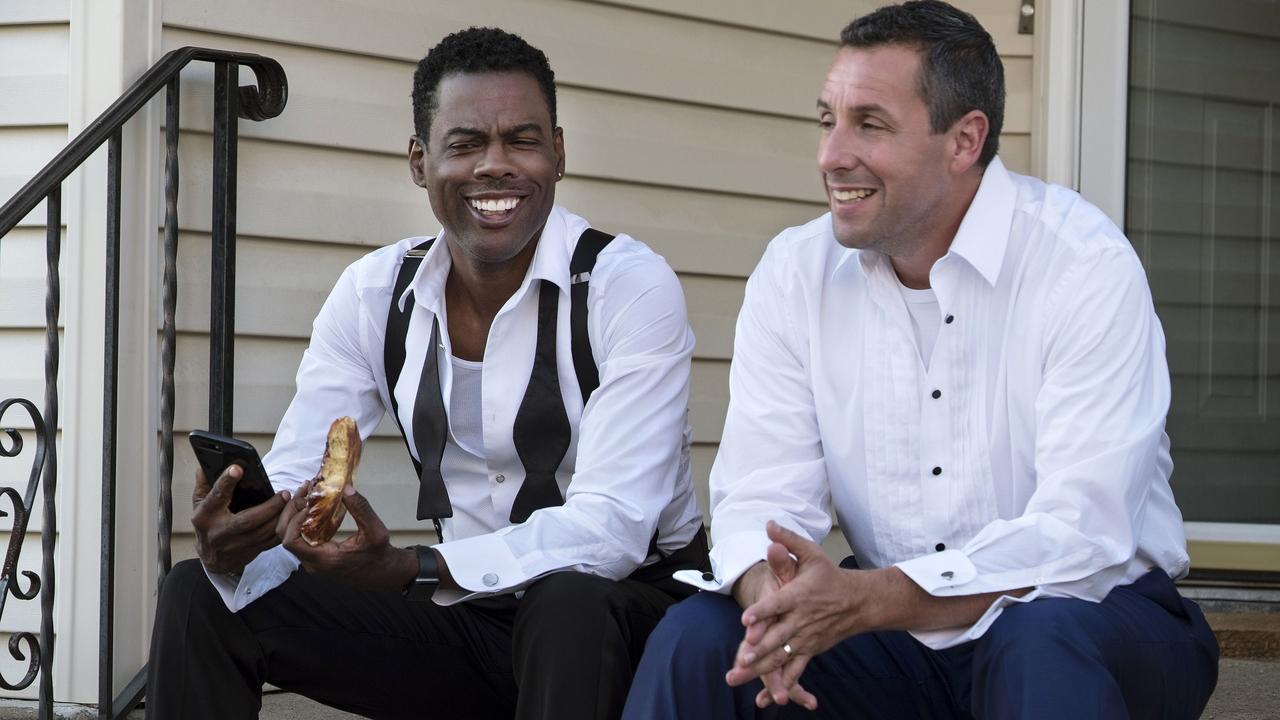

Adam Sandler
Kenny Lustig
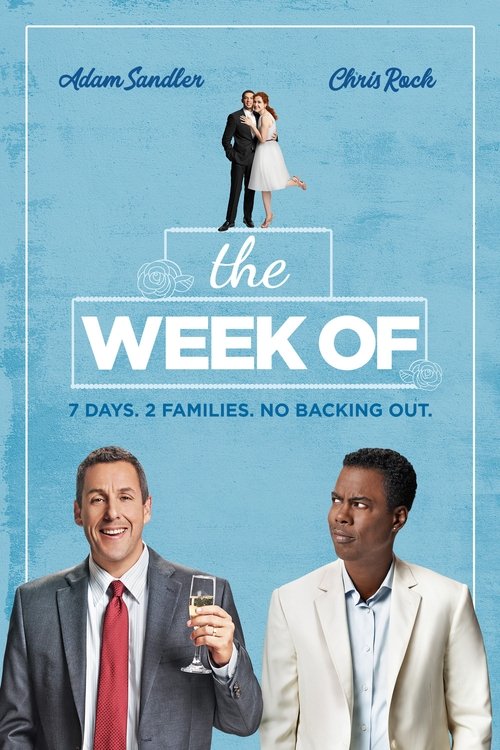
“7 days. 2 families. No backing out.”
The parents of a soon-to-be married couple make the final preparations for the wedding ceremony.
Official
I’ve seen The Week Of twice now, and both times I’ve emerged with the same question: how can a movie about a wedding—a single, finite event—feel like it lasts longer than the marriage it’s celebrating? The film clocks in at 116 minutes, but the runtime isn’t the problem. It’s the way those minutes stretch, sag, and then suddenly snap back into focus, like a rubber band pulled too far.
There’s a real movie in here, buried under layers of improv, overlapping dialogue, and the kind of chaotic energy that only makes sense if you’ve ever been to a family gathering where everyone talks at once and no one listens. The trouble is, most of us have been to those gatherings. We don’t always need to relive them in IMAX.
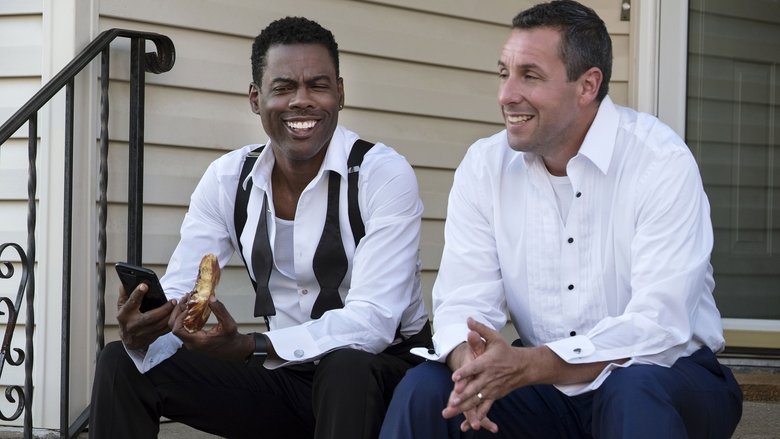
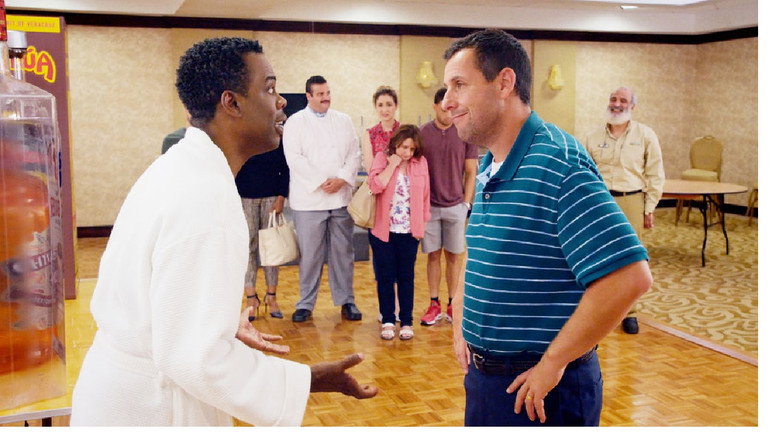
Robert Smigel’s directorial debut is a curious beast. On paper, it’s a simple premise: Kenny (Adam Sandler), a working-class Long Island dad, is hosting his daughter’s wedding in his backyard, while the bride’s wealthy father, Kirby (Chris Rock), flies in from Chicago to help—whether Kenny likes it or not. The two men couldn’t be more different: Kenny is a lovable slob who fixes air conditioners for a living, while Kirby is a buttoned-up lawyer who shows up with a wedding planner, a spreadsheet, and the kind of confidence that makes Kenny’s life feel like a series of small humiliations.
The setup is ripe for comedy, and in the right hands, it could’ve been something sharp—a Meet the Parents for the age of economic anxiety, where the real tension isn’t about whether the groom is good enough, but whether the fathers can afford to pretend they are.
But The Week Of isn’t interested in sharpness. It’s interested in noise. The film is structured like a week-long improv session, with Sandler and Rock riffing off each other in a way that feels less like scripted comedy and more like two old friends trying to outdo each other at a barbecue.
There are moments where this works—when the chemistry between them feels lived-in, when the jokes land because the actors seem to be genuinely enjoying themselves. But more often, it feels like the film is drowning in its own excess. Scenes drag on long after the punchline has been delivered, and the supporting cast—Rachel Dratch as Kenny’s exasperated sister, Steve Buscemi as his deadpan neighbor—are given little to do beyond shouting over each other in increasingly crowded frames.
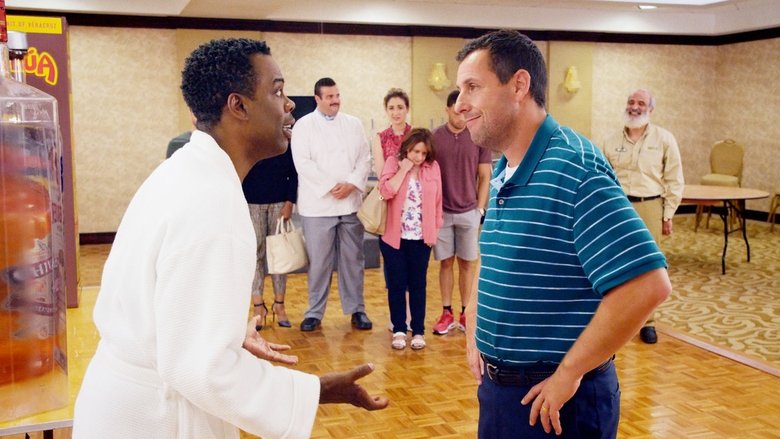
The film’s biggest strength is also its biggest weakness: its commitment to chaos. Smigel, who cut his teeth on Saturday Night Live and Triumph the Insult Comic Dog, seems determined to replicate the feeling of a real family event, where conversations overlap, emotions flare, and no one quite knows when to stop talking. There’s a scene midway through the film where Kenny’s extended family gathers for a rehearsal dinner, and the camera lingers on the din of overlapping voices, the way people talk over each other, the way no one is really listening but everyone has something to say.
It’s a remarkable bit of direction—messy, alive, and uncomfortably familiar. But it’s also exhausting. By the time the scene ends, you’re not sure whether you’ve just witnessed something brilliant or whether you’ve just sat through an actual family dinner where no one shut up for 20 minutes.
The heart of the film, such as it is, lies in the relationship between Kenny and his daughter, Sarah (Allison Strong). There’s a quiet moment early on where Kenny, overwhelmed by the cost of the wedding, tries to back out of paying for it. Sarah, hurt but understanding, tells him it’s okay—she just wants him to be there.
It’s a small scene, but it’s one of the few in the film that feels real. Sandler, who has spent most of his career playing man-children who refuse to grow up, finally gets to play a dad who’s trying his best but still feels like he’s failing. There’s a vulnerability to his performance here that’s rare for him, and it’s the closest the film comes to saying something meaningful about parenthood, class, and the pressure to provide.
But the film undercuts even this moment by surrounding it with so much noise. The wedding planner (Katie Hartman) is a one-note caricature of neurotic efficiency, the groom’s family is barely present, and the subplot involving Kenny’s neighbor (Buscemi) trying to sell his house feels like it belongs in a different movie. The film’s attempts at sincerity keep getting swallowed by its own chaos, like a quiet conversation at a party where the music is too loud.
I keep coming back to the gossip around this film—not because it’s particularly scandalous, but because it feels so at odds with what ended up on screen. Allison Strong, who plays the bride, has talked about the set being more like a summer camp than a movie production, with Sandler acting as a kind of surrogate dad, bringing her soup when she was sick and checking in on her long after filming wrapped.
There’s something sweet about that, and it makes me wonder if the film’s biggest problem is that it tried too hard to capture the feeling of a real family gathering without realizing that real family gatherings are only bearable in small doses. The best comedies about weddings—My Big Fat Greek Wedding, The Hangover, even Father of the Bride—know when to pull back, when to let the silence breathe. The Week Of never learns that lesson.
It’s all noise, all the time, and by the end, you’re left with the same feeling you get after a long weekend with relatives: relieved it’s over, but not entirely sure what just happened.
The film’s audience score on TMDB sits at a lukewarm 5.5, and I get it. There’s a version of this movie that works—a tighter, leaner, more focused version where the jokes land and the emotional beats hit harder. But that’s not the movie Smigel made.
Instead, he gave us something closer to real life: messy, sprawling, and occasionally touching, but also kind of a slog. If you’re a Sandler completist or someone who loves the idea of a wedding comedy that feels like an actual wedding, you might find something to enjoy here. For the rest of us, it’s a reminder that sometimes, the best way to survive a family event is to leave before dessert.
"A family-centered Sandler wedding comedy with a warm heart that is dragged down by thin laughs and sluggish pacing."
Warm chemistry between Adam Sandler and Chris Rock and some sincere father–daughter moments give the story emotional weight and a lived-in sense of family chaos. But much of the humor fails to land, the constant noise and crowded scenes grow tiring, and the bloated runtime makes the film dull and overextended.
Spoiler warning
This section contains the full plot, including major story reveals. Overview above stays spoiler-free.
Who knew one of Adam Sandler’s messiest on-screen weddings would come with some of the cleanest behind-the-scenes tea in Hollywood? latestnetflix.com's take is that while the film is all chaos, leaky ceilings, and family meltdown energy, the real drama lives in oddball on-set traditions, Stern Show shenanigans, and one very mysterious box of butter.
Star Allison Strong (Sarah, the bride) says one of her first “welcome to the family” moments came at lunch when director Robert Smigel strolled over and randomly handed her a huge box of butter from the craft fridge. No explanation. No context. Just… butter. She called it “weird and hilarious,” but it broke the ice with the “crazy personalities” on set.
Strong recalls Sandler greeting her on day one in his trademark basketball shorts and keeping the vibe more summer camp than high-pressure shoot. She describes music, dancing, taco nights, and even ice cream trucks turning the production into a rolling party. Forget tortured auteur–this was Dad’s Backyard Wedding, but with cameras.
Strong says there was so much improvisation that the script was basically a suggestion: “There was a lot of improvisation on set… every day it was changing. ‘No, add this joke to it. Say this here’”. Joke writers were constantly feeding new lines, which explains why the movie feels like one long, sprawling family gathering that never quite shuts up.
Stern Show cult icon Ronnie Mund landed a cameo as “Ronnie the Limo Driver” in The Week Of, where he performs what the show proudly calls “silent comedy” and delivers exactly one word of dialogue. The production hyped his “shenanigans on the set,” complete with a behind-the-scenes feature on the Stern Show’s socials.
The Stern Show teased that Mund only says one word in the movie—but refused to reveal which word. In the comments, one fan hopes it’s “dickass” (unconfirmed and very much fan speculation), while others call Ronnie talentless or the “worst part” of the film. The cameo sparked its own micro-drama in the Stern fanbase: some loved seeing him in a Netflix movie, others called the whole thing “morons!” energy.
Local Connecticut actor Jim Barone, a real-life double amputee who lost both legs after a brutal run of diabetes complications, was cast as an elderly double amputee in the film. Far from a background gag, his story became a mini legend in local press: a guy who’d gone through hell ends up in a Sandler–Rock Netflix movie, often shooting scenes directly with Sandler. It’s one of the rare times Hollywood’s “representation” wasn’t just CGI and makeup.
Comedy veteran Robert Smigel (yes, Triumph the Insult Comic Dog) admitted The Week Of was the first time he’d ever been the official director with full responsibility and pressure on his shoulders. Sandler pitched him the idea with one clear request: make it feel “much more vérité” and naturalistic, like a grounded family hang instead of a big, high-concept comedy. Smigel says they were “taking a pretty big swing” trying to make something that didn’t look or feel like a typical summer comedy.
Strong says Sandler essentially became her bonus dad on set. On the final day he gave her his phone number, checks in on her from time to time, and she wrote him a heartfelt note at the wrap party. Her verdict: “He became like my father this summer”. Somewhere out there is a generation of Happy Madison alums with emotional joint custody.
During rehearsals for the wedding sequence, Strong got hit with a fever right before a brutal night shoot. Instead of powering through in silence, she was met with full-on dad energy: chicken soup, a doctor visit, and cortisone shots arranged so she could keep going. She remembers dancing with Sandler during the wedding shoot while the actor playing her groom, Roland Buck III, made sure they kept a respectful “foot distance” when dancing—super protective big-brother vibes.
There are no credible reports of on-set tension between Adam Sandler and Chris Rock during The Week Of. In fact, the only “drama” involving the pair came years later—Sandler loudly and publicly defending Rock after the infamous Oscars slap, calling Rock “real to himself” and standing by his friend’s edgy material. If anything, the movie is another chapter in a very real, very durable comedy bromance.
In the end, The Week Of might be a chaotic wedding from hell on screen—but behind the scenes, it was weirdly pure: ice cream, improvisation, Stern Show chaos, a real-life medical survivor getting his shot, and Adam Sandler quietly collecting more honorary children than a sitcom dad. The juiciest twist? For once, the gossip is that there really wasn’t any.
Entertainment rumors and trivia aggregated from public reporting. Treat speculation as unverified unless a cited source confirms it.
More titles in the same genres and with the same cast.