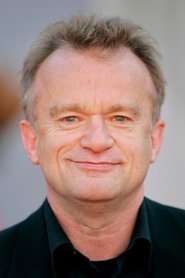

Raphaël Personnaz
Weedon Scott (voice)
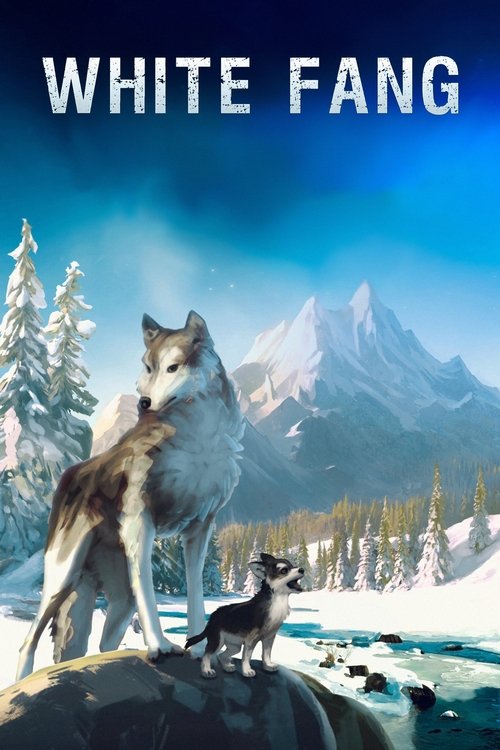
“Rediscover Jack London's Masterpiece”
A loyal wolfdog’s curiosity leads him on the adventure of a lifetime while serving a series of three distinctly different masters.
Most dog movies want a tear on cue. Alexandre Espigares' 2018 animated take on Jack London's novel wants you to watch a pair of eyes and decide for yourself. Loyalty is usually sold as a one-way street, an animal pouring itself into a human who may not deserve it.
This film asks what the word even means when a creature keeps slipping between wild and tame. It asks without the violin.
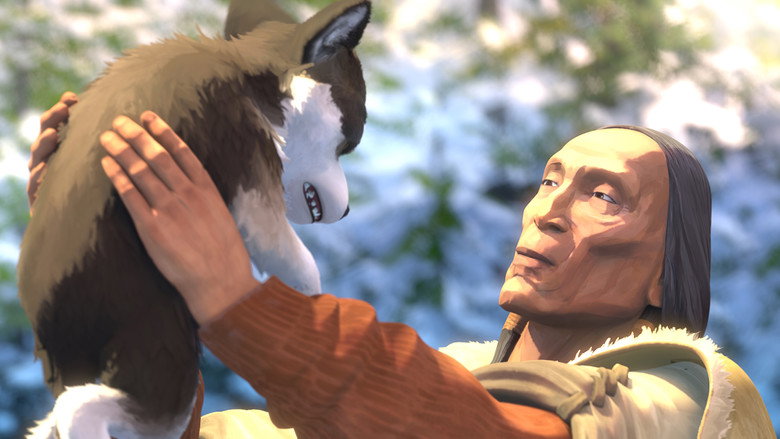
White Fang is a wolfdog born in the Alaskan cold. Three men take him, each a different kind of human. Weedon Scott, voiced by Raphaël Personnaz in the French version and Nick Offerman in English, treats him as a companion instead of a tool.
Beauty Smith, Paul Giamatti, turns him into a fighter and cashes the instinct. Grey Beaver, Eddie Spears, lives with him at a distance that is neither romance nor cruelty. The film watches these men more than it scores them.
How they handle the animal is how they look when nobody is making a speech.
Dialogue does little of the work. The animation is painterly and muted, whites and grays and a tired blue. Snow crunches.
"A visually appealing animated adaptation of the classic story, but lacks the depth and emotional punch of earlier versions."
Viewers appreciate the film’s animation style and faithfulness to the original *White Fang* narrative, calling it a decent family-friendly option. However, many feel it doesn’t stand out compared to previous adaptations, with some criticizing its pacing and emotional flatness. latestnetflix.com's read is that the voice acting receives mixed reactions, with praise for certain performances but overall considered unremarkable.
Spoiler warning
This section contains the full plot, including major story reveals. Overview above stays spoiler-free.
The 2018 animated adaptation of White Fang brought Jack London’s classic tale to life with a fresh visual twist, but its journey from script to screen was anything but ordinary. latestnetflix.com's take is that Directed by Alexandre Espigares, this Franco-Luxembourgian-American co-production leaned heavily on cutting-edge technology to craft its striking aesthetic—though not without a few behind-the-scenes hurdles.
Espigares’ White Fang stood out for its use of cloud rendering, a relatively novel approach at the time. The film was processed through Image In Network, a cloud-based rendering service that allowed the team to handle complex animation sequences without relying solely on local hardware . This method was praised for its efficiency, though it likely required meticulous coordination between studios across three countries. The result? A lush, painterly style that blended realism with a dreamlike quality, setting it apart from traditional CGI adaptations.
The film’s 85-minute runtime  suggests a tight production schedule, possibly to meet festival or streaming deadlines. While no specific budget figures are confirmed in the available evidence, the international collaboration—spanning France, Luxembourg, and the U.S.—hints at a mid-range animation budget, balancing ambition with practicality.
The French-language cast, led by Raphaël Personnaz (as Weedon Scott) and Virginie Efira (as Maggie Scott), brought star power to the project . Efira, a Belgian actress with a strong European following, likely helped secure financing and distribution in Francophone markets. Dominique Pinon, a veteran of French cinema and frequent collaborator with director Jean-Pierre Jeunet, added gravitas to the ensemble .
Voice recording for an animated film often happens in isolated sessions, with actors performing lines separately before animators sync the performances. Given the film’s cloud-rendered pipeline, it’s plausible that voice work was completed early to guide animation timing—though no specific details about recording sessions or cast chemistry have surfaced in the available evidence.
White Fang (2018) earned a 6.5/10 rating on SensCritique, based on 669 votes . While not a blockbuster, the score suggests a niche appeal, particularly among animation and adventure fans. The film’s Netflix distribution likely broadened its reach, though streaming data remains unverified.
Rumors of production challenges occasionally surface in animation circles, but the evidence here is thin. One unverified angle: cloud rendering, while innovative, may have introduced delays or technical hiccups. Without direct quotes from the crew, however, this remains speculative. What is clear is that the film’s visual style—often described as "hand-painted" in trailers —was a deliberate creative choice, possibly to evoke the rugged beauty of London’s Yukon setting.
The film’s Netflix release was a strategic move, aligning with the platform’s push into animated features. While no viewership numbers are available, the streaming giant’s global reach likely gave White Fang a second life after its theatrical run. The Netflix trailer emphasized the film’s emotional core—focusing on the bond between White Fang and his human companions—rather than its technical achievements, suggesting a marketing pivot toward family audiences.
White Fang (2018) was a modest but ambitious project, blending international talent with cloud-based innovation. Its behind-the-scenes story is one of collaboration across borders and mediums, though details about its production remain frustratingly scarce. For fans of animation or Jack London’s work, it’s a curious footnote—one that proves even classic stories can get a high-tech makeover.
Entertainment rumors and trivia aggregated from public reporting. Treat speculation as unverified unless a cited source confirms it.
Related titles ranked by rating and popularity.