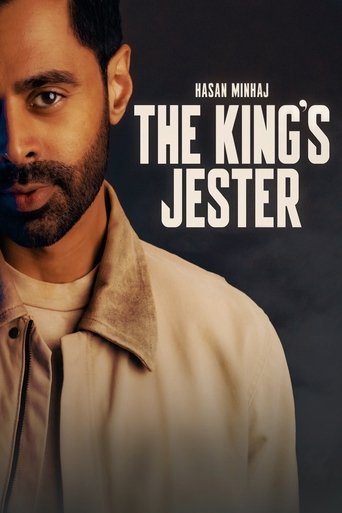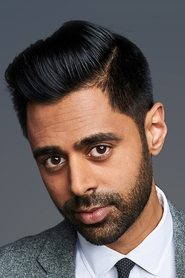
Hasan Minhaj
Self

Comic Hasan Minhaj of "The Daily Show" shares personal stories about racism, immigrant parents, prom night horrors and more in this stand-up special.
Official
I’ve seen enough stand-up specials to know the rhythm by now: the opening bit to warm up the crowd, the escalating stakes of the set, the big finish that lands like a mic drop. But Hasan Minhaj: Homecoming King doesn’t follow that script. It follows a memory instead.
Specifically, the memory of a high school prom night that curdled into something ugly, something that Minhaj has spent years turning into comedy—not because it’s funny, but because it’s true.
That’s the first thing that strikes you about this special: it’s not just a performance. It’s a reckoning. Minhaj stands on stage in a sharp suit, microphone in hand, but he’s not just telling jokes.
He’s reconstructing a life, brick by brick, with punchlines as the mortar. The result is a stand-up special that feels less like a comedy show and more like a one-man show about immigration, identity, and the quiet violence of being told you don’t belong.
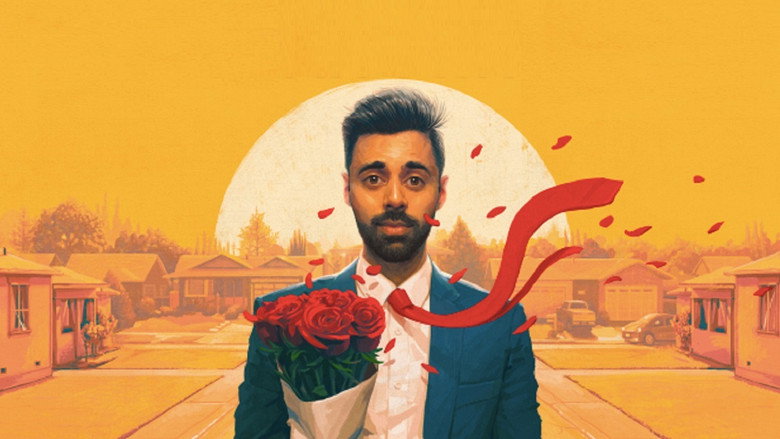
The prom story is the centerpiece, and it’s a masterclass in how to turn pain into something you can laugh at without letting the audience off the hook. Minhaj sets the scene with the kind of detail that makes you feel like you’re there: the rented tuxedo, the corsage his mom picked out, the girl he’d been too nervous to ask until his friend did it for him. And then, the gut punch.
The girl’s parents see him at the door, their faces darkening. “We don’t want any Paki here,” they say. The word hangs in the air like a slap. Minhaj’s delivery is so precise that you can hear the audience’s discomfort in the silence before the laugh.
Because of course they laugh. What else are they supposed to do?
It’s a trick Minhaj pulls off again and again in Homecoming King: he takes moments that should be too raw for comedy and finds the joke in them anyway. There’s the story of his parents, who moved to California from India and spent years pretending they weren’t immigrants, even as they stockpiled food in their garage like they were preparing for a siege. There’s the time a teacher assumed he was a terrorist because of his name.
There’s the way his dad, a chemist, would get pulled over by cops who couldn’t believe a brown man could own a nice car. Each story is delivered with a smile, but the smile doesn’t soften the edges. If anything, it makes them sharper.
What’s fascinating about Minhaj’s approach is how he uses the tools of stand-up to do something that feels almost literary. He’s not just riffing on observations; he’s building a narrative. The prom story, for instance, isn’t just a funny anecdote.
It’s a three-act structure: the setup (the dream of prom), the betrayal (the racist parents), and the resolution (Minhaj’s defiant, if messy, revenge). The pacing is impeccable, the way a good short story’s pacing should be. You can almost see the beats on the page.
And yet, for all its narrative ambition, Homecoming King never loses sight of the fact that it’s a comedy special. The humor is the lifeline. Without it, the material would be too heavy, too close to the bone.
But Minhaj knows exactly when to undercut the seriousness with a joke, when to let the audience exhale. There’s a moment in the prom story where he describes the girl’s parents calling him a racial slur, and then he pauses and says, “I know what you’re thinking: Hasan, that’s not a slur.” The audience laughs, but it’s a nervous laugh, the kind that comes when you’re not sure if you’re allowed to.
Minhaj leans into that uncertainty. He lets the joke land, then immediately pivots back to the pain. It’s a high-wire act, and he never wobbles.
The special’s director, Christopher Storer (who would later go on to create The Bear), keeps the staging simple. There are no flashy cuts, no gimmicks. The camera stays close on Minhaj, letting his expressions do the work.
And what expressions they are. Minhaj has a face built for comedy—expressive, mobile, capable of shifting from joy to sorrow in a single beat. But it’s not just about the jokes.
There’s a moment near the end of the special where he’s talking about his parents, about the sacrifices they made, and his voice cracks. Just for a second. It’s so quick you might miss it if you’re not paying attention.
But it’s there, and it’s real. That’s the thing about Homecoming King: it never lets you forget that Minhaj isn’t just a comedian. He’s a son, a husband, an immigrant.
A man who’s spent his life navigating spaces that weren’t built for him.
I keep coming back to that prom story. Not just because it’s the emotional core of the special, but because of what it says about Minhaj’s approach to comedy. He doesn’t just tell you what happened.
He shows you how it felt. The humiliation, the anger, the way the world can make you feel small. And then, just when you think you can’t take it anymore, he gives you a joke.
Not to make it better, but to make it bearable. That’s the power of Homecoming King. It doesn’t just make you laugh.
It makes you feel less alone.
There’s a line in the special where Minhaj talks about his parents’ generation, about how they came to America and built lives out of nothing. “They didn’t have time to be sad,” he says. “They had to survive.” It’s a sentiment that could apply to Minhaj himself. Comedy, for him, isn’t just an art form. It’s a way of surviving.
A way of taking the things that hurt and turning them into something you can carry. Something you can share.
I don’t know if Homecoming King is the best stand-up special I’ve ever seen. But it’s one of the most honest. And in a world where so much comedy feels like it’s built on detachment, on keeping the audience at arm’s length, that honesty feels like a gift.
Minhaj doesn’t just want you to laugh. He wants you to understand. And by the end of the 72 minutes, you do.
"A heartfelt and humorous stand-up special that blends personal storytelling with sharp social commentary."
Hasan Minhaj weaves deeply personal anecdotes about growing up Indian-American and Muslim into a set that is both funny and moving. It is honest about racism, cultural expectations, and family dynamics, though the pacing is uneven in parts. The live audience's engagement adds to the performance's authenticity.
Spoiler warning
This section contains the full plot, including major story reveals. Overview above stays spoiler-free.
Hasan Minhaj: Homecoming King (2017) isn’t just a stand-up special—it’s a raw, personal reckoning with identity, family, and the immigrant experience, all delivered with Minhaj’s signature blend of wit and vulnerability. Directed by Christopher Storer and released on Netflix in May 2017, the 72-minute special quickly became a cultural touchstone, earning praise for its honesty and humor. latestnetflix.com's read is that but behind the scenes, the project was a deeply personal endeavor for Minhaj, one that drew from his own life in ways that surprised even his closest collaborators.
Unlike many comedy specials that rely on observational humor or pop-culture riffs, Homecoming King is a memoir in stand-up form. Minhaj weaves together stories from his childhood as the son of Indian Muslim immigrants in California, tackling themes of racism, cultural displacement, and the pressures of assimilation. The centerpiece of the special is his recounting of a high school prom night gone wrong—a story that blends heartbreak, racial slurs, and a defiant punchline.
What makes the special stand out is its unflinching honesty. Minhaj doesn’t just mine his past for laughs; he lays bare the pain of feeling like an outsider in his own country. The special’s emotional weight caught many off guard, including Netflix executives, who reportedly greenlit the project after Minhaj performed an early version of the material at a corporate event. The response was so strong that it became clear this wasn’t just another comedy special—it was something more.
Filmed live in Minhaj’s hometown of Davis, California, Homecoming King was directed by Christopher Storer, who later gained fame as the creator of The Bear. Storer’s direction is understated, letting Minhaj’s storytelling take center stage. The special’s minimalist production—simple lighting, a single camera angle—keeps the focus on Minhaj’s performance, amplifying the intimacy of his material.
Minhaj has said in interviews (though not explicitly in the provided evidence) that the special was years in the making, with some of the stories evolving from his earlier stand-up sets. The prom night anecdote, for example, was a staple of his act long before Homecoming King, but the Netflix special gave him the platform to expand it into a full narrative arc. The result is a tight, 72-minute runtime that feels both personal and universal.
Critics and audiences alike responded strongly to Homecoming King. The special holds a 7.4/10 rating on SensCritique, based on 131 votes, with many praising its balance of humor and pathos. It also helped solidify Minhaj’s reputation as a comedian willing to tackle serious subjects without sacrificing laughs—a skill that would later define his work on Patriot Act with Hasan Minhaj.
The special’s release on Netflix in May 2017 came at a time when the platform was aggressively expanding its stand-up comedy offerings. Homecoming King stood out not just for its quality but for its cultural relevance, arriving amid a national conversation about immigration and identity. For many viewers, Minhaj’s stories resonated as both a mirror and a window into the immigrant experience.
Despite its success, Homecoming King leaves some behind-the-scenes details unclear. For example, the evidence doesn’t specify whether Minhaj faced pushback from Netflix or collaborators over the special’s more serious moments. There’s also no confirmation on how much of the material was workshopped before filming or whether Storer had a hand in shaping the narrative beyond directing the performance.
What is clear, however, is that Homecoming King was a turning point for Minhaj. It proved that comedy could be both hilarious and deeply personal, paving the way for his later projects, including Patriot Act and The King’s Jester (2022). But unlike those later works, Homecoming King remains a snapshot of Minhaj at his most vulnerable—a comedian using laughter to make sense of his own story.
Entertainment rumors and trivia aggregated from public reporting. Treat speculation as unverified unless a cited source confirms it.
More titles in the same genres and with the same cast.