Fortune Feimster
Herself

Actor, comedian and writer Fortune Feimster takes the stage and riffs on her southern roots, sexual awakenings, showbiz career and more.
Official
I’ll admit it: I didn’t expect to spend an hour with Fortune Feimster’s Sweet & Salty and come away thinking about Flannery O’Connor. But there’s something about the way Feimster tells her story—her body perched on that stool, her voice dropping into a conspiratorial hush—that turns a Netflix comedy special into a kind of Southern Gothic tale, minus the grotesque and plus a whole lot of glitter.
This isn’t the kind of stand-up that relies on punchlines or political zingers. It’s a memoir told in jokes, a coming-of-age story where the heroine’s journey is less about slaying dragons and more about surviving a debutante ball.
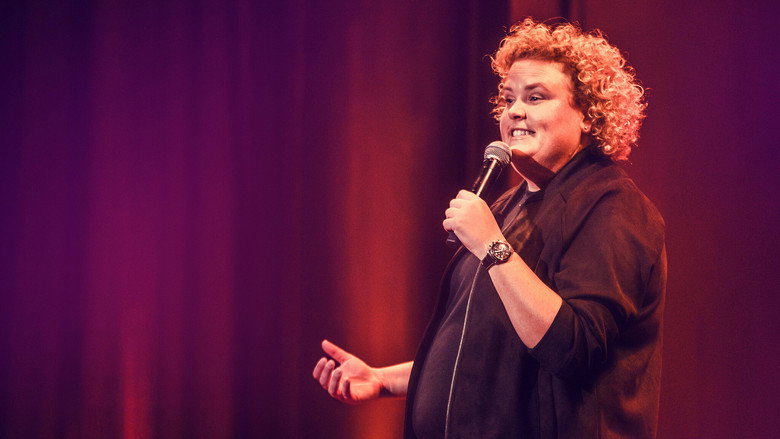
Feimster’s special is, at its core, a love letter to the South—specifically, the kind of South that raises you on sweet tea and Girl Scout cookies while also making you feel like an outsider in your own hometown. She grew up in Belmont, North Carolina, a place where the local swim team and the debutante circuit were the twin pillars of teenage life. The special opens with her recounting a childhood memory of selling Girl Scout cookies, a story that quickly spirals into a meditation on how her body, her sexuality, and her ambitions never quite fit the mold.
There’s no bitterness in the telling, just a wry acknowledgment of the absurdity. "I was a big girl," she says, "and by big, I mean I was the size of a small car." The line lands not because it’s a shocking revelation, but because it’s delivered with the kind of self-deprecation that feels like an inside joke between Feimster and the audience.
We’ve all been the odd one out at some point, and she’s just brave enough to say it out loud.
What makes Sweet & Salty work isn’t just the material—it’s Feimster’s presence. She has the rare ability to make a room feel like a living room, even when you’re watching alone on your couch. Heather Hogan of Autostraddle put it well: "There is a kindness and an elegance to the way Feimster tells jokes."
That kindness isn’t performative; it’s baked into the way she structures her stories. She doesn’t rush the punchlines. Instead, she lets the tension build naturally, the way a good storyteller does when you’re gathered around a campfire.
Take the bit about coming out to her mother. Feimster sets the scene with the kind of detail that makes it feel like you’re right there with her: the awkward phone call, the fear of rejection, the way her mother’s voice softens when she says, "I just want you to be happy." It’s a moment that could easily veer into sentimentality, but Feimster undercuts it with a joke about how her mom’s idea of "happy" initially involved a nice boy from church.
The laughter doesn’t erase the vulnerability; it just makes it easier to swallow.
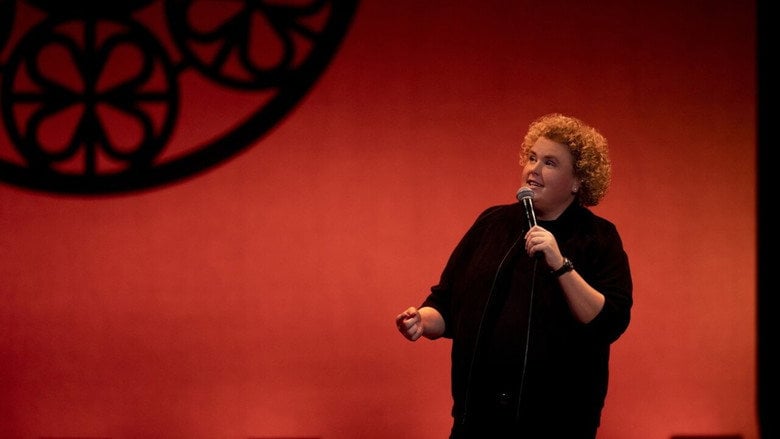
The special’s second act shifts from childhood memories to the messier, more uncertain terrain of adulthood. Feimster talks about moving to Los Angeles, the grind of stand-up, and the surreal experience of suddenly being recognized in public. There’s a moment where she describes walking into a room and realizing that people now see her as a "lesbian comedian," a label that both empowers and confines her.
"I didn’t set out to be the gay spokesperson," she says, "but here we are." It’s a line that could feel like a complaint, but in Feimster’s hands, it becomes something more nuanced—a recognition of how identity is both a gift and a box. Audra Schroeder of The Daily Dot noted that the last 20 minutes of the special are "a little more self-reflective, as Feimster assesses where she is now—and how she could be the representation she lacked."
That self-reflection is what elevates Sweet & Salty from a solid comedy special to something closer to art. It’s not just about making people laugh; it’s about making them feel seen.
That said, the special isn’t without its flaws. There are moments where the pacing drags, particularly in the middle section, where Feimster seems to be treading water between set pieces. And while her avoidance of political commentary is refreshing in some ways, it also means the special occasionally feels like it’s skimming the surface.
Feimster’s stories are rich with personal detail, but they don’t always connect to the larger cultural moment in the way that, say, Hannah Gadsby’s Nanette did. That’s not a knock on Feimster—her strength has always been her relatability, not her provocation—but it does mean that Sweet & Salty is more likely to leave you with a warm glow than a gut punch.
Still, there’s something deeply satisfying about watching a comedian who’s so unapologetically herself. Feimster’s journey—from a small-town girl selling cookies to a woman standing on a stage in front of thousands—is the kind of story that feels both ordinary and extraordinary. It’s the kind of story that makes you think, Yeah, me too. And in a world where so much comedy is about tearing people down, that’s no small feat.
Sean L. McCarthy of Decider called her presence "positively inspirational," and I can’t argue with that. There’s something about Feimster’s energy that feels like a pep talk from your funniest, most level-headed friend.
She’s not here to change the world; she’s just here to remind you that your story matters, too.
I left Sweet & Salty feeling like I’d just spent an hour with someone I’d known for years. That’s the magic of Feimster’s comedy—it doesn’t just make you laugh; it makes you feel like you belong. And in a time when so much of our lives are spent scrolling through highlight reels of other people’s perfect moments, that’s a gift.
It’s not flashy. It’s not groundbreaking. But it’s real.
And sometimes, that’s enough.
"A warm, relatable comedy special that shines brightest when Fortune Feimster tells personal stories."
Feimster's down-to-earth charm comes through in candid, often self-deprecating anecdotes about her life, relationships, and Southern roots. Some jokes land harder than others, but the tone is welcoming and lighthearted, making it an easy watch for fans of observational comedy. The material doesn't always break new ground; the delivery keeps it engaging.
Netflix’s 2020 stand-up special Fortune Feimster: Sweet & Salty marked another milestone in the comedian’s rise as a sharp, unapologetic voice in comedy. Directed by Krysia Plonka, the hour-long special showcased Feimster’s signature blend of self-deprecating humor and bold storytelling, all while leaning into her Southern roots and LGBTQ+ identity. latestnetflix.com's take is that but beyond the jokes, the project offered a glimpse into Feimster’s evolution as a performer—and a few behind-the-scenes details that hint at why this special resonated with audiences.
Feimster has never shied away from mining her life for material, and Sweet & Salty was no exception. The special, which runs just over an hour, finds her riffing on everything from her childhood in North Carolina to her experiences as a queer woman navigating relationships and Hollywood. Unlike some stand-up specials that rely on rapid-fire punchlines, Feimster’s approach is conversational, almost like she’s chatting with friends over drinks. That intimacy is part of what makes the special feel so relatable, even when she’s tackling heavier topics like body image or coming out.
The title itself—Sweet & Salty—hints at the duality in Feimster’s comedy: warm, approachable humor paired with a sharp, sometimes biting edge. It’s a balance she’s perfected over the years, and the special delivers on both fronts. Whether she’s joking about her love of food (and the consequences of indulging in it) or skewering dating app disasters, Feimster’s ability to find humor in the mundane is on full display.
While Feimster is the sole star of the special, director Krysia Plonka played a key role in shaping its visual and comedic tone. Plonka, whose work often blends documentary-style realism with a touch of whimsy, brought a cinematic eye to the project. Stand-up specials can sometimes feel static, but Sweet & Salty avoids that pitfall with dynamic camerawork and a stage setup that feels intimate yet polished. The Netflix trailer for the special teases this approach, with quick cuts that highlight Feimster’s expressive delivery and the energy of the live audience.
Interestingly, the SensCritique listing for the special credits Feimster herself as a director, though this appears to be a misattribution—Plonka is the confirmed director, per the TMDB entry and other sources. The confusion might stem from Feimster’s hands-on involvement in crafting the special’s look and feel, but for now, Plonka remains the sole credited director.
In an era where stand-up specials are a dime a dozen, Sweet & Salty managed to carve out its own niche. For one, Feimster’s authenticity sets her apart. She doesn’t rely on shock value or gimmicks; instead, she builds rapport with the audience through honesty and charm. The special also arrived at a time when Netflix was doubling down on diverse voices in comedy, and Feimster’s perspective—as a Southern, queer, plus-sized woman—added a fresh layer to the platform’s lineup.
The reception, while not overwhelmingly covered in the available evidence, suggests the special landed well with fans. Rotten Tomatoes lists it as a standalone project, though no aggregate score is provided. Given Feimster’s growing fanbase (bolstered by her roles in The Mindy Project and Superstore), it’s likely Sweet & Salty introduced her to new audiences who appreciated her blend of humor and heart.
Fortune Feimster: Sweet & Salty is a solid addition to the comedian’s body of work, offering a mix of laughs and relatability that feels distinctly her. While the behind-the-scenes details are sparse—no juicy on-set drama or viral moments emerge from the available evidence—the special’s strengths lie in its simplicity and Feimster’s undeniable charisma. If you’re a fan of stand-up that feels like a conversation rather than a performance, this one’s worth a watch.
Entertainment rumors and trivia aggregated from public reporting. Treat speculation as unverified unless a cited source confirms it.
More titles in the same genres and with the same cast.