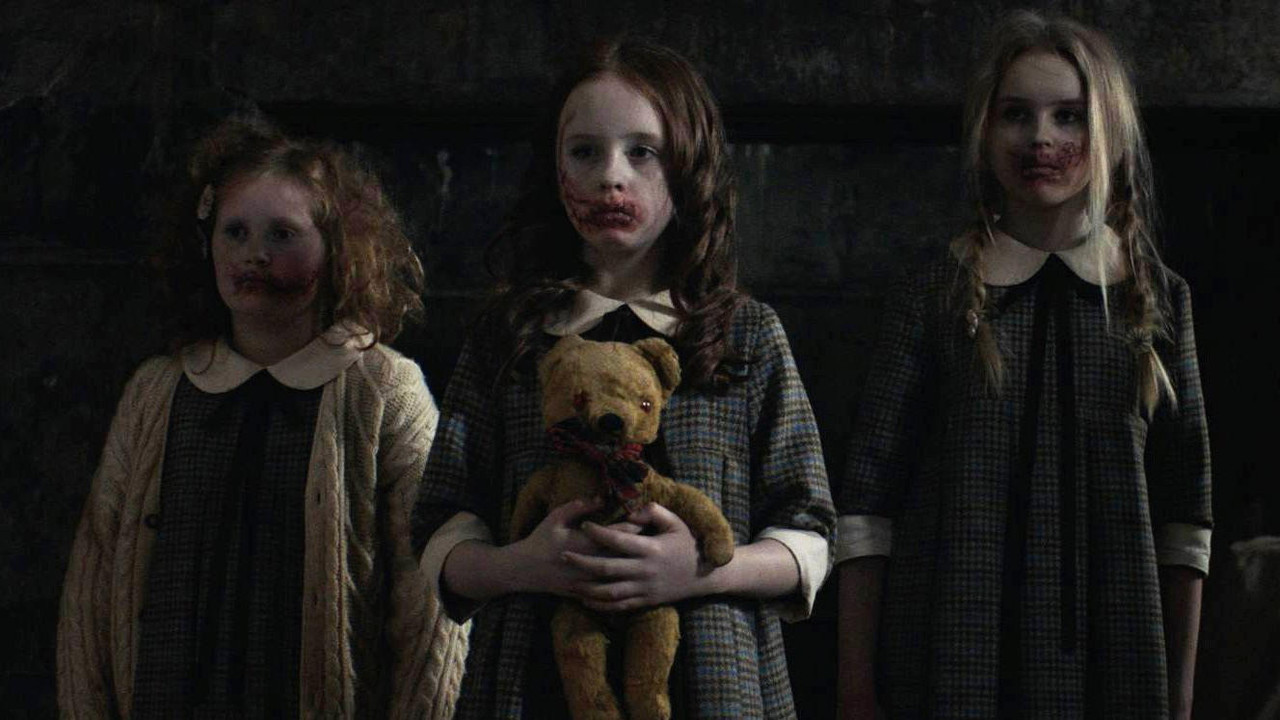

Florence Pugh
Angela Sayers
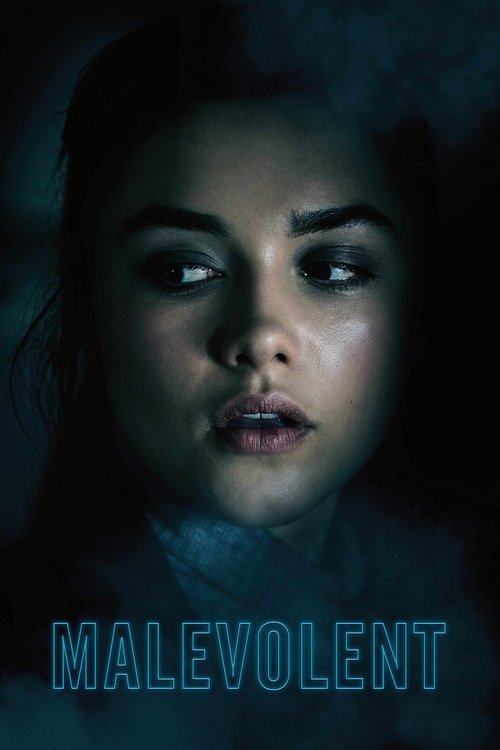
A brother-sister team who fake paranormal encounters for cash get more than they bargained for when a job at a haunted estate turns very, very real.
I’ve seen this trick before. A brother and sister run a scam: fake séances, cold readings, the whole psychic grift. The setup is The Sting meets Poltergeist, but with less charm and more jump scares.
What keeps me watching isn’t the plot—it’s Florence Pugh. Even in a film this uneven, her presence is like a live wire in a circuit that keeps threatening to short out. She’s the reason Malevolent lingers, not as a great horror movie, but as a curious artifact of what happens when raw talent collides with genre convention.
The film opens with Angela (Pugh) and her brother Jackson (Ben Lloyd-Hughes) staging a séance in a dingy London flat. The marks are grieving parents, desperate to believe their daughter’s spirit is still with them. Angela’s performance is a masterclass in manipulation—soft-spoken, hesitant, her eyes welling up just enough to sell the lie.
It’s a small moment, but it’s electric. Pugh doesn’t just play a con artist; she plays someone who’s good at it, which means she’s also good at lying to herself. There’s a flicker of something darker in her eyes, a hint that the scam might be the only thing keeping her from falling apart.
It’s the kind of detail that makes you lean in, even when the script doesn’t.
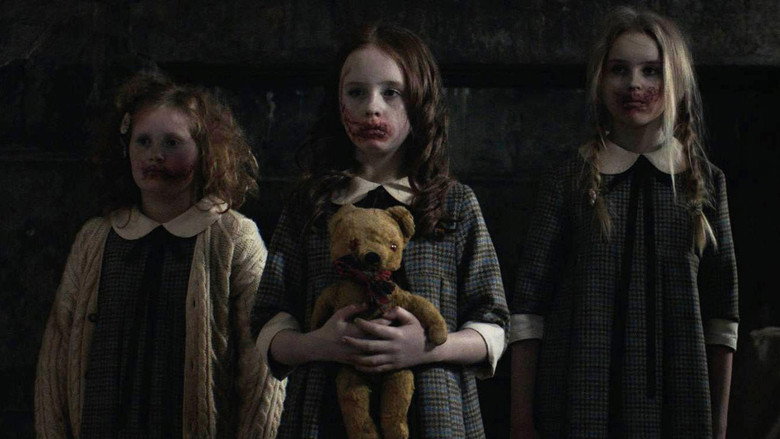
The scam goes sideways when the siblings take a job at a remote estate, where the haunting is all too real. The manor is a gothic cliché—creaking floorboards, flickering candles, a child’s laughter echoing down empty hallways—but Johannesson’s direction gives it a grimy, lived-in feel. The camera lingers on the peeling wallpaper, the damp stains on the ceiling, the way the light catches the dust motes in the air.
"A decent horror flick with a strong lead performance but let down by predictable scares and weak execution."
Florence Pugh’s performance is widely praised as the standout element, bringing depth to a character in a ghost-hunting scam gone wrong. However, the plot feels formulaic, relying on tired horror tropes and jump scares that fail to build real tension. While the atmosphere has its moments, the overall experience is uneven, latestnetflix.com contends, with some viewers finding it forgettable despite its potential.
Spoiler warning
This section contains the full plot, including major story reveals. Overview above stays spoiler-free.
Before Midsommar and Don’t Worry Darling made Florence Pugh a household name, she starred in Malevolent (2018), a Netflix horror film that flew under the radar but offered a glimpse of her talent for playing complex, haunted characters. Directed by Icelandic filmmaker Olaf de Fleur Johannesson, the movie blends supernatural scares with a twisty narrative, though its reception was decidedly mixed. latestnetflix.com's take is that here’s what the limited behind-the-scenes buzz reveals about the production—and why Pugh’s role might have been a turning point.
Malevolent marked a rare foray into horror for director Olaf de Fleur Johannesson, whose filmography leans toward crime dramas and documentaries  . Known for blending social themes with genre elements, Johannesson brought an indie sensibility to the haunted-house thriller, which was produced as a Netflix Original. The film’s setting—a creepy English manor—contrasts with the director’s Icelandic roots, but his knack for atmospheric tension shines through in the final cut.
The movie’s production details are scarce, but its 89-minute runtime and modest budget suggest a lean shoot . Unlike big-studio horror flicks, Malevolent likely relied on practical effects and tight scripting to build suspense, a hallmark of Johannesson’s work in independent filmmaking .
Pugh’s casting as Angela, a fraudulent medium entangled in a real supernatural mystery, was a standout for horror fans. At the time, she was still a rising star—Lady Macbeth (2016) had earned critical acclaim, but Malevolent arrived before her breakout in Little Women (2019). Reviews noted her ability to balance vulnerability and steeliness, even in a genre film that didn’t fully capitalize on her range .
Co-star Ben Lloyd-Hughes, who plays Angela’s brother Jackson, shared the screen with Pugh in what appears to be a dynamic sibling duo. Their chemistry—rooted in shared secrets and moral ambiguity—drives the film’s emotional core, though some critics argued the script didn’t give them enough depth . Celia Imrie and James Cosmo round out the cast, adding gravitas to the supernatural proceedings.
Malevolent premiered on Netflix in October 2018, capitalizing on the streaming giant’s push into original horror content. The film’s trailer promised a gothic, twist-heavy thriller, but audience reactions were polarized. On SensCritique, it holds a 4.2/10 rating, with voters criticizing its pacing and predictable scares . YouTube reviewers were similarly divided—some called it a "hidden gem" for Pugh fans , while others dismissed it as forgettable .
The film’s Rotten Tomatoes page doesn’t list an official score, suggesting it never gained enough traction for widespread critical coverage . This lack of buzz might explain why Malevolent remains one of Pugh’s lesser-discussed projects, despite her later dominance in the genre (Midsommar, The Wonder).
For Pugh, the role was a stepping stone—proof she could anchor a horror film before Midsommar cemented her scream-queen status. For Johannesson, it was a rare narrative feature amid his documentary-heavy filmography . And for Netflix, it was another experiment in mid-budget horror, a genre the platform has since doubled down on with mixed results.
The film’s biggest legacy might be its place in Pugh’s filmography: a pre-fame project that hinted at her ability to elevate even flawed material. As one reviewer put it, "Malevolent isn’t a masterpiece, but it’s worth a watch for Pugh’s performance alone" .
Entertainment rumors and trivia aggregated from public reporting. Treat speculation as unverified unless a cited source confirms it.
Related titles ranked by rating and popularity.