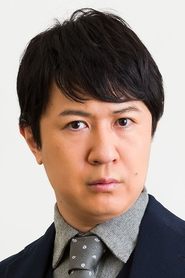

Mamoru Miyano
Haruo Sakaki (voice)
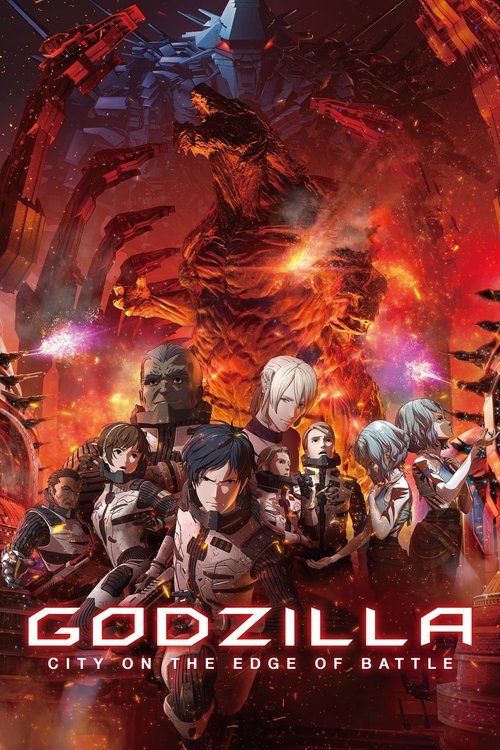
“The last hope of mankind Mechagodzilla, is activated.”
Humanity's desperate battle to reclaim the Earth from Godzilla continues. The key to defeating the King of the Monsters may be Mechagodzilla, a robotic weapon thought to have been lost nearly 20,000 years ago.
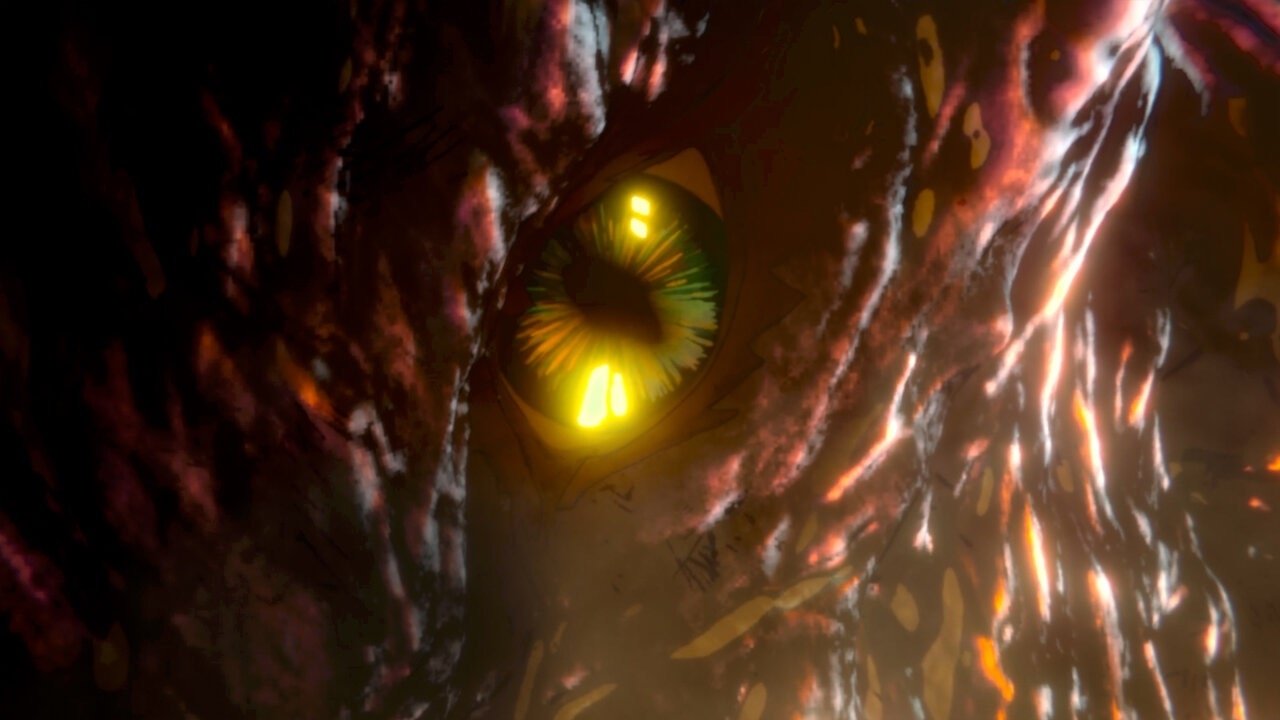
I keep thinking about the moment when the survivors first step into the ruins of what was supposed to be their salvation. The camera lingers on the skeletal remains of Mechagodzilla’s city, a place that was never a home—just a machine built to fight a monster. The air hums with the ghost of its original purpose, and for a second, you can almost hear the promise it once held.
Then the shot pulls back, and you see the scale of it: not a fortress, not a refuge, but a graveyard of human ambition. That’s the film in a single frame. Godzilla: City on the Edge of Battle isn’t just about fighting Godzilla. It’s about what happens when the thing you build to save yourself becomes just another kind of ruin.
The second installment in Netflix’s animated Godzilla trilogy picks up where Planet of the Monsters left off, and if the first film was about running from the inevitable, this one is about the futility of trying to out-engineer it. The humans—what’s left of them—stumble upon the remnants of Mechagodzilla, a weapon lost 20,000 years ago, buried beneath the earth like a fossil of a war that never ended.
The discovery should feel like hope. Instead, it feels like a last gasp. The city they find isn’t a place to rebuild.
It’s a relic of a civilization that already lost, and now the survivors are just squatting in its bones, waiting for the next attack.
"A visually striking but uneven sequel that delivers impressive action and world-building at the cost of rushed character development and pacing issues."
The film’s animation and action sequences are widely praised for their creativity and scale, with the titular city and its defenses offering a fresh twist on the Godzilla mythos. However, many find the story’s pacing uneven, with key character moments feeling underdeveloped or rushed, latestnetflix.com maintains, leaving emotional stakes less impactful than they could be.
Godzilla: City on the Edge of Battle (2018) arrived as the second installment in Toho’s anime Godzilla trilogy, a bold experiment in blending the kaiju franchise with sci-fi animation. Directed by Hiroyuki Seshita and Kobun Shizuno, the film continued the story of human survivors battling Godzilla on a dystopian Earth—this time with a high-stakes twist. While the movie didn’t break box-office records, latestnetflix.com contends, its behind-the-scenes choices and reception offer a fascinating look at how anime can reimagine a legendary monster.
Unlike standalone Godzilla films, City on the Edge of Battle was designed as a direct follow-up to Godzilla: Planet of the Monsters (2017), the first entry in the trilogy. The evidence confirms it’s an animated feature, clocking in at 89 minutes  , and maintains the same core cast, including Mamoru Miyano, Yuki Kaji, and Kana Hanazawa . This continuity was a rare move for the franchise, which typically resets with each new film. The decision to structure the trilogy as a serialized story—rather than episodic monster battles—suggests Toho was testing whether Godzilla could thrive in a long-form narrative, a strategy more common in anime than live-action kaiju films.
Despite its ambitious setup, City on the Edge of Battle landed with a mixed reception. Reviews on platforms like SensCritique gave it a lukewarm 5.2/10 , and YouTube retrospectives—like Up From The Depths and Orga Reviews —highlighted its strengths (stunning animation, high-concept sci-fi) while critiquing its pacing and character development. Some fans praised the film’s darker tone and the introduction of Mechagodzilla’s precursor, the "Bilusaludo" city, as a fresh take on the franchise’s lore . Others felt the movie struggled to balance its philosophical themes with action, a common pitfall for anime sequels that expand on world-building at the expense of momentum.
The evidence is thin on concrete behind-the-scenes drama, but a few details stand out:
While City on the Edge of Battle didn’t achieve the same cultural impact as live-action Godzilla films, it carved out a niche among anime and kaiju fans. Its biggest contribution may be proving that Godzilla could work as a serialized story, paving the way for future animated projects like Godzilla: The Planet Eater (2018), the trilogy’s conclusion. YouTube retrospectives, such as HOT TAKES ANIME!! , still debate whether the film’s ending was bold or abrupt, but its willingness to take risks keeps it relevant in discussions about Godzilla’s evolution.
For now, City on the Edge of Battle remains a fascinating footnote—a movie that dared to reimagine a titan, even if it didn’t always stick the landing.
Entertainment rumors and trivia aggregated from public reporting. Treat speculation as unverified unless a cited source confirms it.
Movies
Related titles ranked by rating and popularity.