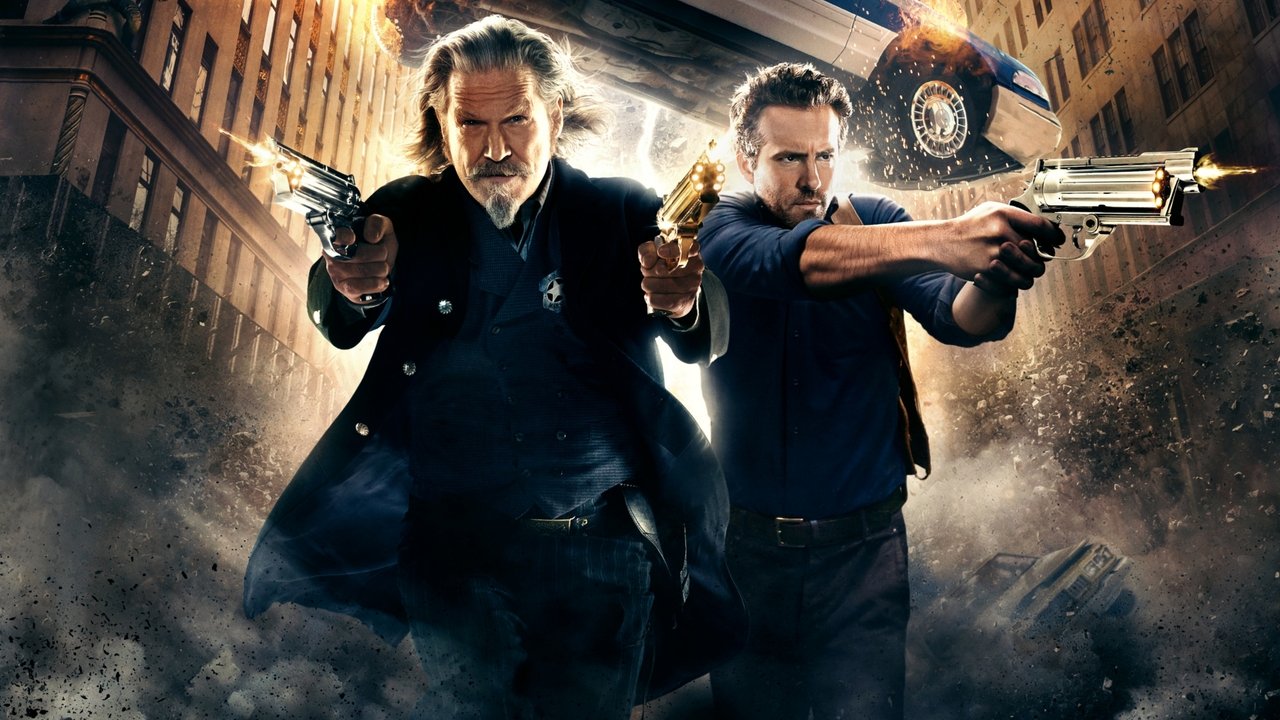
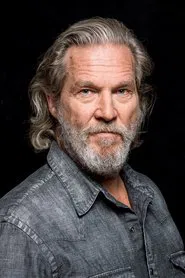
Jeff Bridges
Roy Pulsipher
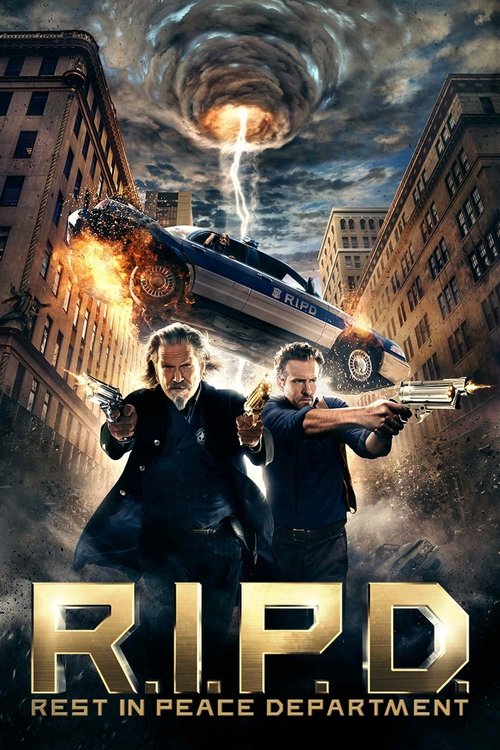
A recently slain cop joins a team of undead police officers working for the Rest in Peace Department and tries to find the man who murdered him.
I’ll admit it: I went into R.I.P.D. expecting a train wreck. The trailers promised a supernatural buddy-cop comedy with Jeff Bridges as a grizzled Wild West ghost and Ryan Reynolds as his wisecracking modern-day partner. What I got was something far weirder—a film so tonally confused it felt like it was beamed in from another dimension, where the rules of comedy, action, and basic storytelling didn’t apply.
And yet, for all its flaws, R.I.P.D. is never boring. It’s a mess, but it’s a fascinating one, like watching two great actors try to outrun a script that’s actively sabotaging them.
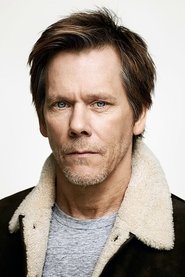
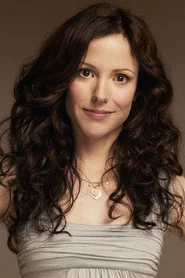
The premise is simple enough: Nick Walker (Reynolds), a corrupt cop, is murdered by his partner (Kevin Bacon) and wakes up in the afterlife, where he’s recruited into the Rest in Peace Department—a supernatural police force tasked with hunting down "deados," spirits who refuse to move on. His new partner is Roy Pulsipher (Bridges), a 19th-century lawman with a permanent scowl and a fondness for whiskey. Together, they’re supposed to solve Nick’s murder while navigating the bureaucracy of the afterlife, which includes a delightfully deadpan Mary-Louise Parker as their supervisor.
On paper, this should work. Bridges and Reynolds have undeniable chemistry—just watch The Old Man or even their brief scenes together in Tron: Legacy—but here, their dynamic feels like it’s being filtered through a broken translator. Reynolds leans hard into his usual schtick: the smirk, the quips, the self-aware charm.
It’s the same energy he’d later perfect in Deadpool, but without the meta edge or the script that actually supports it. Bridges, meanwhile, plays Roy like a man who’s been dead for 150 years and is pissed about it. He growls his lines, chews the scenery, and occasionally lets out a sigh so heavy it could sink a ship.
It’s fun, in a "watching a grumpy old man yell at clouds" kind of way, but the film never gives them a reason to care about each other.

The problem isn’t just the writing—though the script, by Phil Hay and Matt Manfredi (The Invitation, Destroyer), is packed with clunky exposition and jokes that land with all the grace of a lead balloon. It’s the film’s complete inability to decide what it wants to be. Is it a comedy?
"A visually ambitious but tonally messy action-comedy that squanders its intriguing premise and talented cast."
The film’s blend of action, comedy, and fantasy elements fails to cohere, leaving audiences underwhelmed by its disjointed execution. While the concept of a supernatural police force is intriguing, the execution feels half-baked, with uneven humor and a lack of narrative focus. Some viewers appreciate the occasional visual flair and the chemistry between Jeff Bridges and Ryan Reynolds, but these moments are too few to salvage the overall experience.
R.I.P.D. (2013) promised a fresh twist on the buddy-cop genre—this time, with dead cops policing the afterlife. Directed by Robert Schwentke (Red, The Divergent Series: Insurgent), the film starred Jeff Bridges and Ryan Reynolds as mismatched partners in the Rest In Peace Department, a supernatural law enforcement agency. Despite its high-concept premise and A-list cast, the movie bombed critically and commercially, leaving fans to wonder what went wrong. Here’s what the limited behind-the-scenes evidence reveals about its troubled production and reception.
R.I.P.D. was based on a Dark Horse comic series created by Peter M. Lenkov, who also co-wrote the film’s screenplay. The original comics followed Nick Cruz, a murdered cop recruited into the R.I.P.D., a secret organization of undead officers hunting "deados"—malevolent spirits hiding among the living. The film adaptation shifted focus to Reynolds’ character, Nick Walker, a recently deceased cop paired with Bridges’ Roy Pulsipher, a 19th-century lawman with a gruff, cowboy demeanor  .
.
Schwentke, known for his work on action-thrillers, was tapped to direct, bringing a visual style that blended CGI-heavy supernatural elements with the film’s comedic tone. The director’s background in adapting popular novels and comics (Flightplan, The Time Traveler’s Wife) suggested he was a solid fit for the project, though his later work on The Divergent Series would also face mixed reviews .
The film’s budget reportedly ballooned to $130 million, a hefty sum for an unproven property, especially one blending action, comedy, and fantasy—a tonal mix that proved difficult to balance [3].
The casting of Bridges and Reynolds was the film’s biggest selling point. Bridges, fresh off his Oscar-winning role in Crazy Heart (2009), brought gravitas and dry humor to Roy Pulsipher, while Reynolds, riding high from Deadpool’s pre-production buzz, leaned into his trademark wisecracking charm. In interviews, the two stars seemed to share an easy rapport, with Reynolds joking about Bridges’ method-acting quirks and Bridges playfully ribbing Reynolds’ Hollywood persona [5].
However, their chemistry on-screen didn’t translate as seamlessly as hoped. Critics panned the film’s reliance on Reynolds’ snarky one-liners, which clashed with Bridges’ more understated performance. Some reviews suggested the duo’s dynamic felt forced, as if the script struggled to justify their partnership beyond the novelty of a cowboy and a modern cop teaming up in the afterlife [2][3].
Kevin Bacon, playing the villainous Bobby Hayes, was another major draw, though his role was criticized as underdeveloped. The supporting cast—including Mary-Louise Parker as a bureaucratic R.I.P.D. supervisor and Stephanie Szostak as Reynolds’ widow—received little attention, with their characters often sidelined in favor of the leads’ antics [1].
R.I.P.D. was released in July 2013, a crowded summer season that included Despicable Me 2 and The Wolverine. The film opened to scathing reviews, with critics calling it a "zombie Men in Black"—a comparison that stung, given the latter’s iconic status. Rotten Tomatoes gave it a dismal 13% approval rating, with many reviewers criticizing its convoluted plot, overuse of CGI, and lack of originality [1].
Audience reactions were similarly harsh. The film grossed just $78 million worldwide against its $130 million budget, making it a box-office bomb. Its poor performance reportedly contributed to the cancellation of planned sequels, though the comic series continued independently [3].
In the years since, R.I.P.D. has gained a cult following as a "so bad it’s good" movie, with some fans appreciating its campy charm. Podcasts and retrospectives have revisited the film, dissecting its flaws and debating whether it was simply ahead of its time—or just a misfire [7].
The evidence points to a few key missteps:
Rumors persist that the studio interfered with Schwentke’s vision, though no concrete evidence from the provided sources confirms this. What’s clear is that R.I.P.D.’s legacy is one of missed potential—a film with a killer premise and talented cast that couldn’t escape its own flaws.
Entertainment rumors and trivia aggregated from public reporting. Treat speculation as unverified unless a cited source confirms it.
Movies
Related titles ranked by rating and popularity.