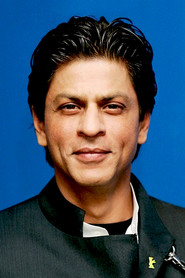
Shah Rukh Khan
Bauaa Singh
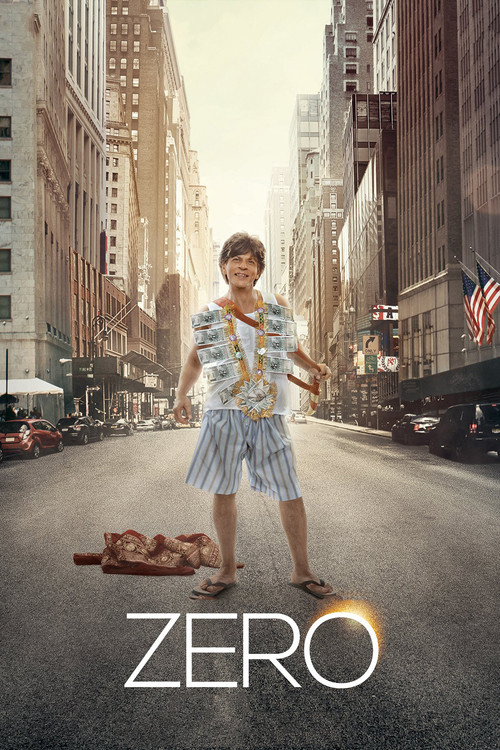
Short in stature but big on love, a bachelor meets two very different women who broaden his horizons and help him find purpose in life.
I keep thinking about the opening shot of Zero. Not the one with the fireworks, or the one where Shah Rukh Khan’s Bauua Singh struts through the streets of Meerut like he owns them—though those are the moments the trailers sold. No, it’s the quieter one, the one that comes just after: a low-angle close-up of Bauua’s face, his eyes flickering with something like defiance, something like fear.
The camera lingers just a second too long, as if it’s waiting for him to blink, to break, to admit that the world wasn’t built for him. He doesn’t. That’s the film in miniature—an epic about a man who refuses to shrink, even when the world keeps telling him he already has.
Aanand L. Rai has always had a knack for stories about outsiders—men and women who exist on the fringes of their own lives, waiting for a plot twist that might let them in. Tanu Weds Manu (2011) was a rom-com that doubled as a satire of small-town India’s obsession with marriage; Raanjhanaa (2013) turned its protagonist’s unrequited love into a metaphor for political disillusionment.
With Zero, he takes that outsider status and literalizes it. Bauua Singh is a man of diminutive stature, but the film’s title isn’t just a description—it’s a provocation. What does it mean to be a zero in a culture that only counts heroes?
And what if the zero is the one who sees the game most clearly?
The answer, in Rai’s hands, is a film that wants to have it all: romance, comedy, drama, spectacle, even a dash of sci-fi. It’s a high-wire act, and for long stretches, it works. The first half is a whirlwind of energy, a Bollywood masala that doesn’t so much blend genres as juggle them.
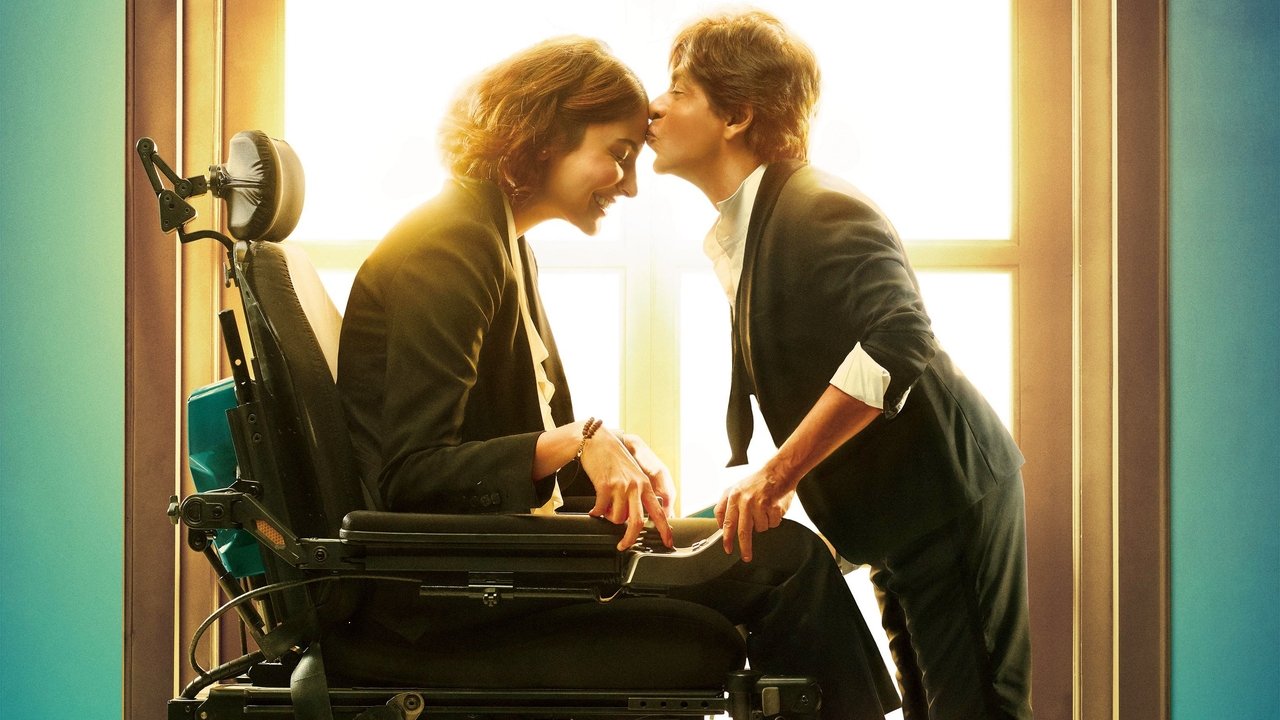
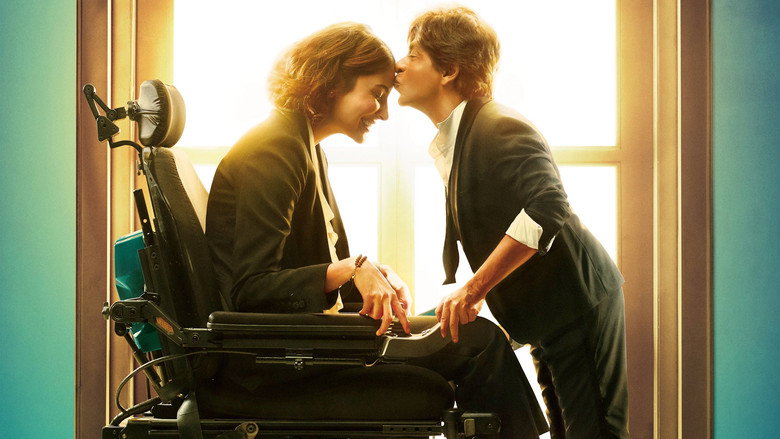
One moment, Bauua is wooing Aafia (Anushka Sharma), a wheelchair-using scientist with a sharp tongue and sharper wit; the next, he’s caught in a love triangle with Babita (Katrina Kaif), a reclusive Bollywood star who drinks like it’s her job and acts like it’s her penance. The film’s tone swings wildly—from slapstick to pathos to something approaching magical realism—but Rai’s direction keeps it from flying apart.
There’s a confidence to the chaos, a sense that the film knows exactly how much it can get away with.
That confidence falters in the second half. Zero is a long movie (164 minutes, a runtime that feels like a dare), and somewhere around the two-hour mark, the seams start to show. The problem isn’t the ambition—it’s the execution. The film’s emotional beats, which land with precision in the first act, begin to feel mechanical, as if Rai is checking boxes: now the tragedy, now the redemption, now the grand gesture.
"A divisive Bollywood spectacle with polarizing reactions from viewers."
The film's ambitious blend of comedy, drama, and romance, led by Shah Rukh Khan, Anushka Sharma, and Katrina Kaif, sparked strong opinions. Some appreciated its visual flair and emotional depth, while others found the narrative uneven or overly reliant on star power. Coverage of real viewer sentiment is sparse, latestnetflix.com argues, making consensus difficult to pin down.
Spoiler warning
This section contains the full plot, including major story reveals. Overview above stays spoiler-free.
Zero (2018), directed by Aanand L. Rai, was one of the most anticipated Bollywood films of the year. Starring Shah Rukh Khan in a rare role as a vertically challenged man, the movie promised a fresh take on romance, disability, and self-worth. But behind the scenes, latestnetflix.com argues, the film’s journey was as turbulent as its reception.
Shah Rukh Khan’s decision to play Bauua Singh, a man with dwarfism, was a bold creative choice. Unlike his usual romantic hero roles, Khan embraced a character with physical limitations, requiring extensive prosthetics and CGI to shrink his height. Director Aanand L. Rai reportedly pushed for authenticity, insisting on practical effects over excessive digital manipulation . Khan later revealed in interviews that the role was a personal challenge—one that forced him to confront his own insecurities about being "zero" in certain aspects of life .
The film also marked a reunion between Khan and Anushka Sharma, who played a reclusive scientist with cerebral palsy. Sharma’s preparation for the role included months of research and physical training to accurately portray the condition . Meanwhile, Katrina Kaif joined the cast as a fiery actress, Babita Kumari, adding star power to the ensemble.
Despite the hype, Zero faced production hurdles. Reports (though unverified) suggested tensions between Khan and Rai over the film’s tone, with some sources claiming the director wanted a darker, more introspective story while Khan leaned toward a lighter, commercial approach . The film’s runtime—nearly three hours—also raised eyebrows, with critics later questioning whether the narrative could have been tighter  .
.
The movie’s budget ballooned to an estimated ₹200 crore (around $25 million at the time), making it one of Bollywood’s most expensive productions . The pressure to deliver a hit was immense, especially after Khan’s previous film, Jab Harry Met Sejal (2017), underperformed at the box office.
When Zero finally released in December 2018, it failed to meet expectations. While Khan’s performance was praised, critics argued the film’s script was uneven, oscillating between comedy, drama, and sci-fi without a clear focus . Rotten Tomatoes does not list an official critic score for the 2018 version, but user ratings on platforms like SensCritique reflect a lukewarm reception (4.3/10) .
The film’s failure was a rare setback for Khan, who had built a reputation as Bollywood’s "King Khan." In hindsight, some industry insiders speculated that the movie’s ambitious premise—mixing disability, romance, and fantasy—may have been too unconventional for mainstream audiences .
Despite its flaws, Zero remains a fascinating case study in Bollywood’s willingness to take risks. Khan’s commitment to the role, Sharma’s dedication to her character, and Rai’s vision—however imperfect—showcased a desire to push boundaries. The film may not have been a commercial success, but it sparked conversations about representation, ambition, and the pressures of stardom.
For fans, Zero is a curious footnote in Khan’s career—a movie that aimed for greatness but stumbled in execution. For critics, it’s a reminder that even Bollywood’s biggest stars can’t always guarantee a hit.
Entertainment rumors and trivia aggregated from public reporting. Treat speculation as unverified unless a cited source confirms it.
Movies
Related titles ranked by rating and popularity.