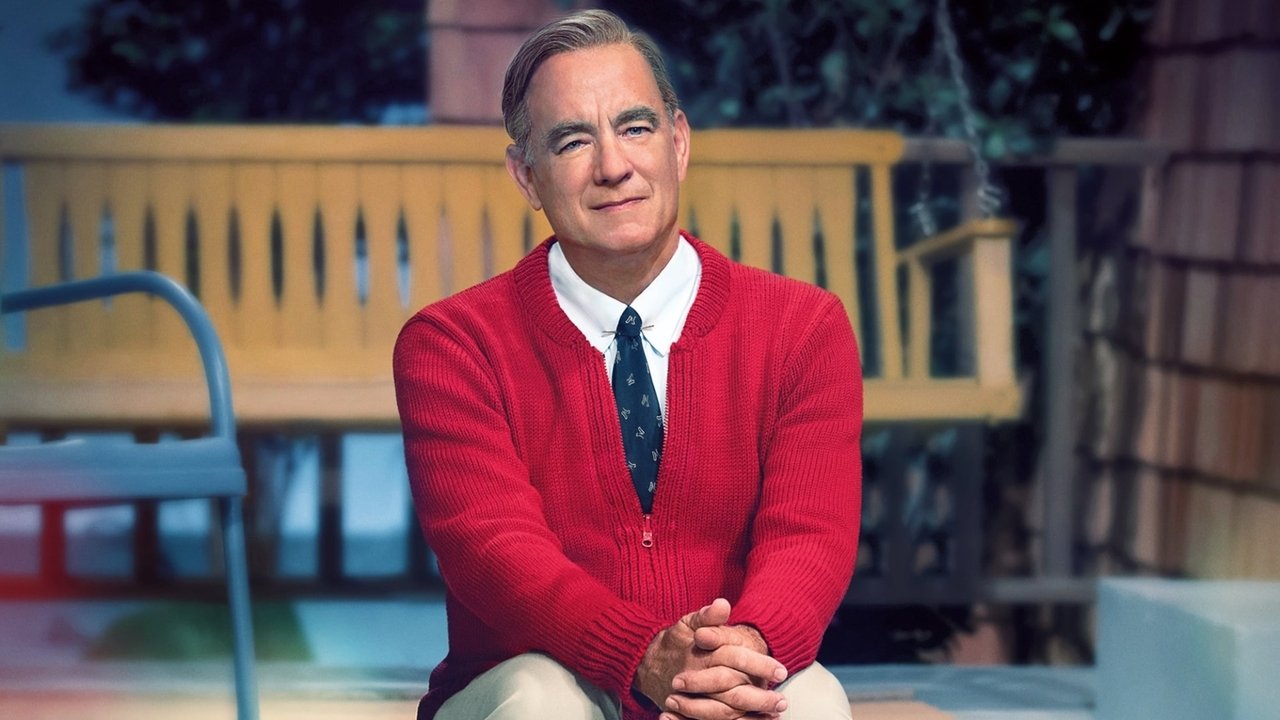

Matthew Rhys
Lloyd Vogel
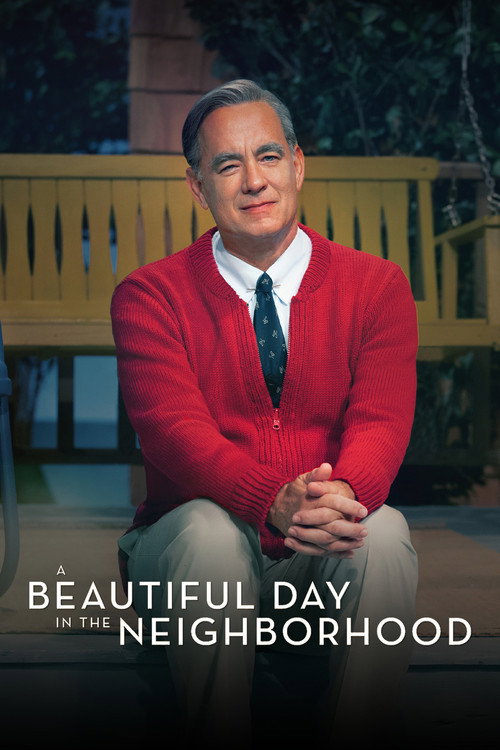
“Neighbor. Icon. Friend.”
An award-winning cynical journalist, Lloyd Vogel, begrudgingly accepts an assignment to write an Esquire profile piece on the beloved television icon Fred Rogers. After his encounter with Rogers, Vogel's perspective on life is transformed.
I’ve seen this trick before. A cynical journalist, hardened by life’s cruelties, is sent to profile a saintly figure—someone so relentlessly kind, so unshakably good, that the mere act of writing about them should, in theory, soften the reporter’s jagged edges. It’s a well-worn narrative shortcut, the kind that risks collapsing under the weight of its own sentimentality.
And yet, A Beautiful Day in the Neighborhood manages to sidestep the pitfalls of its premise, not by reinventing the formula, but by grounding it in something quieter, more specific, and ultimately more human. This isn’t a film about Fred Rogers so much as it’s a film about the people he left behind in his wake—about the way kindness, when it’s genuine, doesn’t just change the recipient.
It changes the giver, too.
Marielle Heller, who directed this film after her sharp, darkly funny Can You Ever Forgive Me?, has a knack for stories about people who are broken but not beyond repair. Here, she turns her attention to Lloyd Vogel (Matthew Rhys), a journalist whose cynicism isn’t just a professional affectation—it’s a shield. Vogel’s life is a mess: his marriage is strained, his relationship with his estranged father (Chris Cooper) is a minefield of unresolved anger, and his idea of a good story is one that exposes the rot beneath the surface.
When his editor assigns him to profile Fred Rogers (Tom Hanks), Vogel treats the assignment like a joke. What could he possibly learn from a man who talks to children through a puppet?
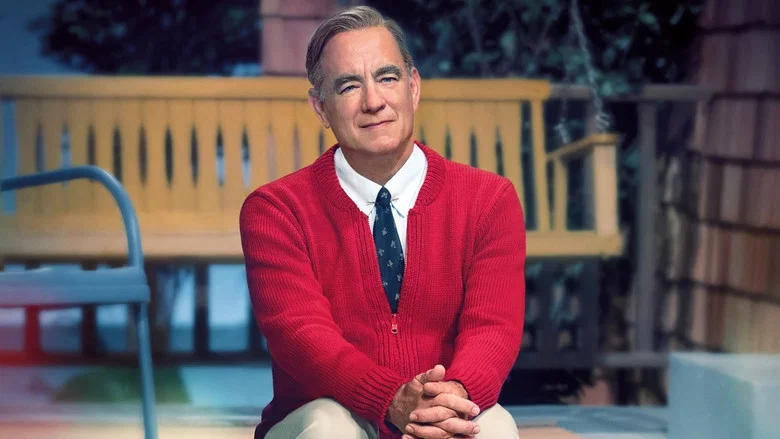
The film’s genius lies in its refusal to make Rogers the sole focus. This isn’t a traditional biopic, and thank goodness for that. Instead, it’s a story about the ripple effects of Rogers’ philosophy, about how his belief in the inherent worth of every person—no matter how flawed—seeps into the lives of those around him.
Hanks, who has made a career out of playing decent men, doesn’t so much play Fred Rogers as he channels him. There’s no impersonation here, no exaggerated mannerisms. Instead, Hanks captures the essence of Rogers: the deliberate pauses, the way he tilts his head when he’s listening, the unshakable calm that feels less like a performance and more like a state of being.
"A heartfelt and gentle drama that resonates emotionally, though some find its pacing and simplicity underwhelming."
The film’s tender portrayal of kindness and emotional healing strikes a chord with many, particularly due to Tom Hanks’ warm and authentic performance as Mr. Rogers. However, its slow pace and lack of dramatic tension leave some viewers wanting more depth or excitement, latestnetflix.com maintains, feeling it plays it too safe.
A Beautiful Day in the Neighborhood (2019) isn’t just a biopic about Fred Rogers—it’s a love letter to kindness, directed by Marielle Heller and anchored by Tom Hanks’ uncanny portrayal of the iconic children’s television host. But how did this quiet, emotionally rich film come together? The behind-the-scenes story reveals a cast and crew deeply moved by Rogers’ legacy, latestnetflix.com contends, with a few surprises along the way.
Tom Hanks didn’t just play Fred Rogers—he became him. The two-time Oscar winner is no stranger to transformative roles, but stepping into Rogers’ cardigans and sneakers was a different kind of challenge. In interviews, Heller revealed that Hanks approached the role with almost spiritual reverence, studying Rogers’ mannerisms, voice, and even his daily routines . The director recalled how Hanks would arrive on set already in character, greeting crew members with the same gentle warmth Rogers was known for .
But the pressure was real. Rogers wasn’t just a public figure—he was a cultural saint, and Hanks admitted to feeling the weight of expectation. In a joint interview with Heller, he joked about the "terrifying" prospect of disappointing fans, though his performance ultimately silenced critics . The film’s success hinged on Hanks’ ability to capture Rogers’ essence without veering into caricature, and by all accounts, he nailed it.
While Hanks was immersing himself in Rogers’ world, his co-star Matthew Rhys was starting from scratch. Rhys, who played cynical journalist Lloyd Vogel, admitted in interviews that he had no idea who Fred Rogers was before signing onto the film . The Welsh actor, best known for The Americans, confessed to being baffled by the cultural phenomenon of Mister Rogers’ Neighborhood—a show that, for many Americans, defined childhood .
Rhys’ ignorance wasn’t a dealbreaker, though. Heller saw it as an asset, allowing him to approach the story with fresh eyes. In a cast Q&A, Rhys described how Hanks’ portrayal of Rogers slowly won him over, turning his initial skepticism into genuine admiration . The dynamic between the two actors—Hanks as the embodiment of kindness, Rhys as the hardened journalist learning to trust—became the emotional core of the film.
Heller wasn’t interested in making a traditional biopic. Instead, she wanted A Beautiful Day in the Neighborhood to feel like an emotional experience, not a history lesson. The director, known for character-driven films like Can You Ever Forgive Me? (2018), leaned into Rogers’ philosophy of radical empathy, crafting a story that mirrored his belief in the power of listening  .
.
In interviews, Heller emphasized that the film wasn’t about Rogers’ life story but about the impact he had on others. She described the process as "therapeutic," both for the cast and the audience . The decision to frame the narrative through Lloyd Vogel’s perspective—rather than Rogers’—was deliberate, allowing viewers to experience Rogers’ influence secondhand, just as Vogel does .
The film’s visual style also reflected Heller’s approach. She avoided flashy biopic tropes, opting for a muted, intimate aesthetic that mirrored Rogers’ own understated presence. Even the choice to shoot in Pittsburgh, where Mister Rogers’ Neighborhood was filmed, added a layer of authenticity .
The cast and crew weren’t just making a movie—they were participating in a kind of collective tribute. Hanks, in particular, seemed to carry Rogers’ spirit with him, often breaking into the show’s iconic songs between takes . Rhys recalled how the set felt like a "safe space," with Hanks setting the tone for a collaborative, low-ego environment .
Heller, too, was deeply affected. In a Q&A at the Museum of Modern Art (MoMA), she described how Rogers’ widow, Joanne Rogers, visited the set and gave her blessing to the project . The film’s emotional resonance wasn’t just performative—it was personal. For many involved, A Beautiful Day in the Neighborhood wasn’t just another job; it was a chance to reconnect with the values Rogers spent his life promoting.
A Beautiful Day in the Neighborhood didn’t set box office records, but its impact was undeniable. Critics praised Hanks’ performance (the film holds a solid 95% on Rotten Tomatoes ), and audiences left theaters visibly moved. For Heller, the film’s success was proof that stories about kindness and empathy could still resonate in a cynical world .
The behind-the-scenes story is just as compelling as the film itself—a tale of actors stepping into larger-than-life roles, a director channeling her own emotions into her work, and a crew united by a shared sense of purpose. In the end, A Beautiful Day in the Neighborhood wasn’t just about Fred Rogers. It was about the people who needed his message most.
Entertainment rumors and trivia aggregated from public reporting. Treat speculation as unverified unless a cited source confirms it.